Alpine A220
The Alpine A220 marks Alpine’s late-1960s move toward larger-engined endurance ambitions. Its long-tailed silhouette is memorable, but the more useful collector story is the difference between a programme’s objective, its actual results and the later history of each surviving car.
The Alpine A220 marks Alpine’s late-1960s move toward larger-engined endurance ambitions. Its long-tailed silhouette is memorable, but the more useful collector story is the difference between a programme’s objective, its actual results and the later history of each surviving car.
Alpine A220 at a glance
| Manufacturer | Alpine |
|---|---|
| Model family | A220 |
| Profile scope | Competition archive |
| Inventory reference | ALP-023 |
Why the A220 belongs in a rare-car encyclopedia
A race car can be historically important because it records an ambitious direction, even when that direction did not produce the hoped-for success. The A220 invites precisely that kind of reading. It belongs to Alpine’s late-1960s endurance story and offers a comparison with both the smaller A210 and the later A440 programme. For a collector, the challenge is to understand the particular car rather than turn the marque’s eventual success into an achievement attributed to every earlier prototype.
A distinct model and programme
The supplied inventory places the A220 in 1968 and describes a three-litre Le Mans prototype. ACO’s historical record lists the A220 among Alpine’s 1968 and 1969 Le Mans entries. Alpine’s own retrospective links the disappointing end of this phase with the later restart of its endurance effort in 1973. These sources support the model’s historical position. They do not establish an exact manufacturing total or one configuration shared by all cars across both seasons.
What the Le Mans record can tell you
An entry list establishes participation; a result establishes a recorded outcome. Neither automatically resolves the identity of a vehicle shown in a modern display. The ACO summary groups several Alpine models together in some years, so its combined results should not be redistributed among chassis without supporting evidence. A collector profile should connect each result to a particular car and crew where that relationship is documented. Leave unassigned results at programme level instead of filling gaps by assumption.
Reading the long-tail silhouette
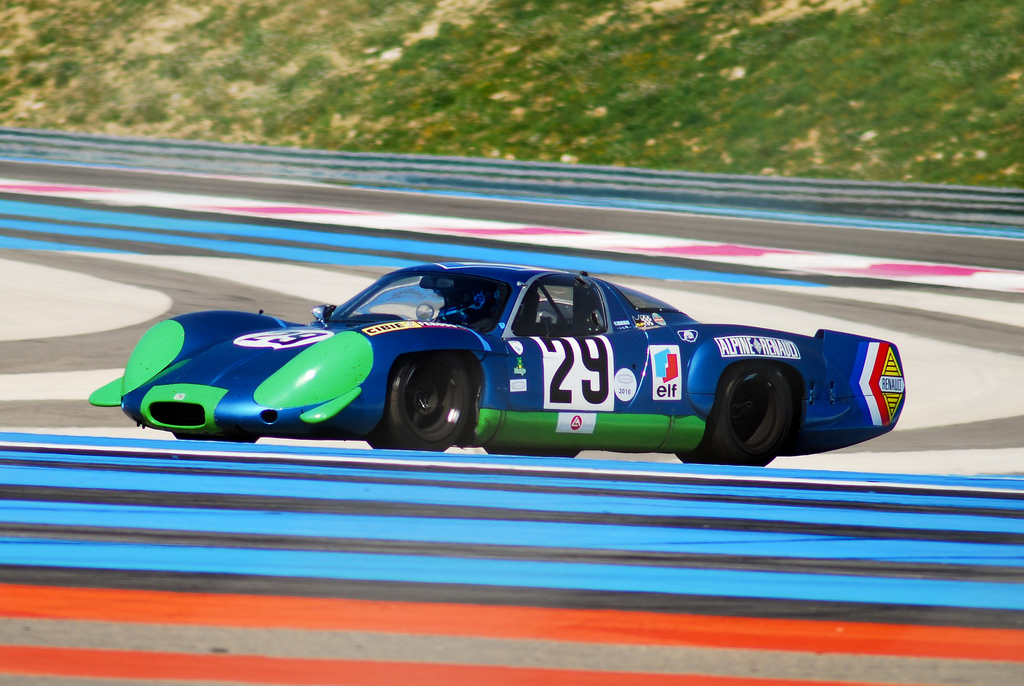
The A220’s extended body makes it a strong visual anchor for an endurance collection. Use that appearance as the starting point for research, not its conclusion. Compare roof shape, rear extensions, vents, body joints and the arrangement of the engine cover across dated images. A modern historic-event photograph may show a restoration representing one period state. It may also show changes required for present use. The caption should say what the image depicts and avoid implying that it is a period photograph.
Rarity without an invented number
The inventory describes the A220 as very limited. This draft does not translate that phrase into an unsupported precise total. Completed new cars, rebuilt cars, converted chassis and spare structures can produce different counts in a prototype programme. Before accepting a number, ask for the underlying chassis list and the counting rule. A photograph of several cars together is not a census. The numeric production and survivor fields remain blank here, and the entry stays in the competition Archive pending any further production review.
Configuration and identity
Separate the identity of the chassis from the configuration represented by the present car. A race number, sponsor scheme or long-tail body can be reproduced. Authentication should connect surviving structure, identification evidence and a dated history of changes. If a car was modified for another event or later competition use, that change deserves its own chapter. A return to an earlier appearance should be described as a restoration to that configuration rather than as an uninterrupted survival in that state.
Inspecting an A220
The initial inspection should map the car against the dossier. Have a specialist identify the primary structure and explain repairs or replaced areas. Review suspension attachment points, drivetrain mounts, braking components and the relationship between the body and structure. Ask for photographs taken during disassembly, not just pictures of the completed restoration. These can reveal what was preserved and what was fabricated. An impressive external finish is useful for presentation but provides little evidence about the history of concealed sections.
The mechanical file
Request engine build records with identification, component specification and dates. Review the history of the gearbox, cooling system and fuel system in the same way. Record whether a replacement was chosen to reproduce a period configuration or to support reliable modern demonstration. For an active historic racer, discuss inspection intervals and present condition with the people who maintain it. A rare prototype’s mechanical needs are best assessed around its actual construction and use, rather than with a generic road-car service schedule.
Restoring a competition narrative
The most convincing restoration narrative explains its choices. Which event does the livery represent? Which source determined the shape of a replaced panel? What evidence supports the engine configuration? What has been changed for current activity? Preserve photographs and notes for each decision. Where a detail remains uncertain, mark it as such. This makes the car easier to study and prevents a present-day interpretation from gradually becoming an unqualified historical claim as it passes from catalogue to catalogue.
A220, A210 and A440: a useful comparison
Display the A220 as a separate chapter between earlier small-capacity prototypes and the later two-litre programme. The relationships help a reader follow Alpine’s endurance ambitions without collapsing the models into a single specification table. The A210 offers a documented small production set; the A440 explains a later starting point. Their counts, engines and results belong to their own records. Comparing them this way gives the collection an engineering narrative rather than a row of visually similar blue cars.
Frequently asked questions
When did the A220 appear at Le Mans?
ACO’s reviewed historical record includes the A220 in 1968 and 1969.
Is there a verified production number in this profile?
No. A complete scoped manufacturing total has not been established.
Is the included photo a 1968 race photograph?
No. It was taken at Paul Ricard in 2010 and is captioned accordingly.
Does Alpine’s later Le Mans victory belong to the A220?
No. The later winning programme is a separate chapter and must not be assigned to this model.
Explore related Alpine profiles
Sources
- Alpine: Heritage in action at Le Mans Classic
- Alpine: 60th anniversary, competition history
- ACO: Alpine participation record at the 24 Hours of Le Mans
Historical statements follow the linked manufacturer, club, homologation and vehicle records. Inspection and collecting guidance is editorial analysis. Individual catalogue claims remain attributed to the relevant car and source.
Photography and credit
Alpine A220 on the Paul Ricard circuit in April 2010. A historic-event photograph, not a period 1968 image. Photo: Nicolas Garcia / Wikimedia Commons · CC BY 2.0. Original file supplied without content retouching. WordPress may resize display copies and website layouts may crop them.
Why this machine matters
The Alpine A220 marks Alpine’s late-1960s move toward larger-engined endurance ambitions. Its long-tailed silhouette is memorable, but the more useful collector story is the difference between a programme’s objective, its actual results and the later history of each surviving car.
Built in limited numbers
The inventory describes the A220 as very limited. This draft does not translate that phrase into an unsupported precise total. Completed new cars, rebuilt cars, converted chassis and spare structures can produce different counts in a prototype programme. Before accepting a number, ask for the underlying chassis list and the counting rule. A photograph of several cars together is not a census. The numeric production and survivor fields remain blank here, and the entry stays in the competition Archive pending any further production review.
Gallery
Specifications
Factory specifications may vary by model year, market and configuration.
Identity & production
- Official model
- Alpine A220
- Base model
- A220
- Country of manufacture
- France