Rare compact cars: five very different answers to a small-car brief
A small car makes its priorities hard to hide. There is only so much room for an engine, passengers, luggage and the hardware that connects them. Change one part of the brief and the consequences quickly appear elsewhere.
Limited-run compact cars can make those consequences especially clear. A rear seat disappears. A driven rear axle arrives. A conventional hatchback becomes a two-seat efficiency project. The dimensions may remain modest while the decisions become unusually ambitious.
These five examples follow that use of space. Performance is one motivation, but it is not the only one: Volkswagen’s XL1 pursued low energy consumption with the same seriousness that the others applied to their sporting identities. Together, they ask a useful question: what is the manufacturer willing to accommodate, simplify or give up to make a small car do something distinctive?
01 / Making room for quattro — Audi A1 quattro
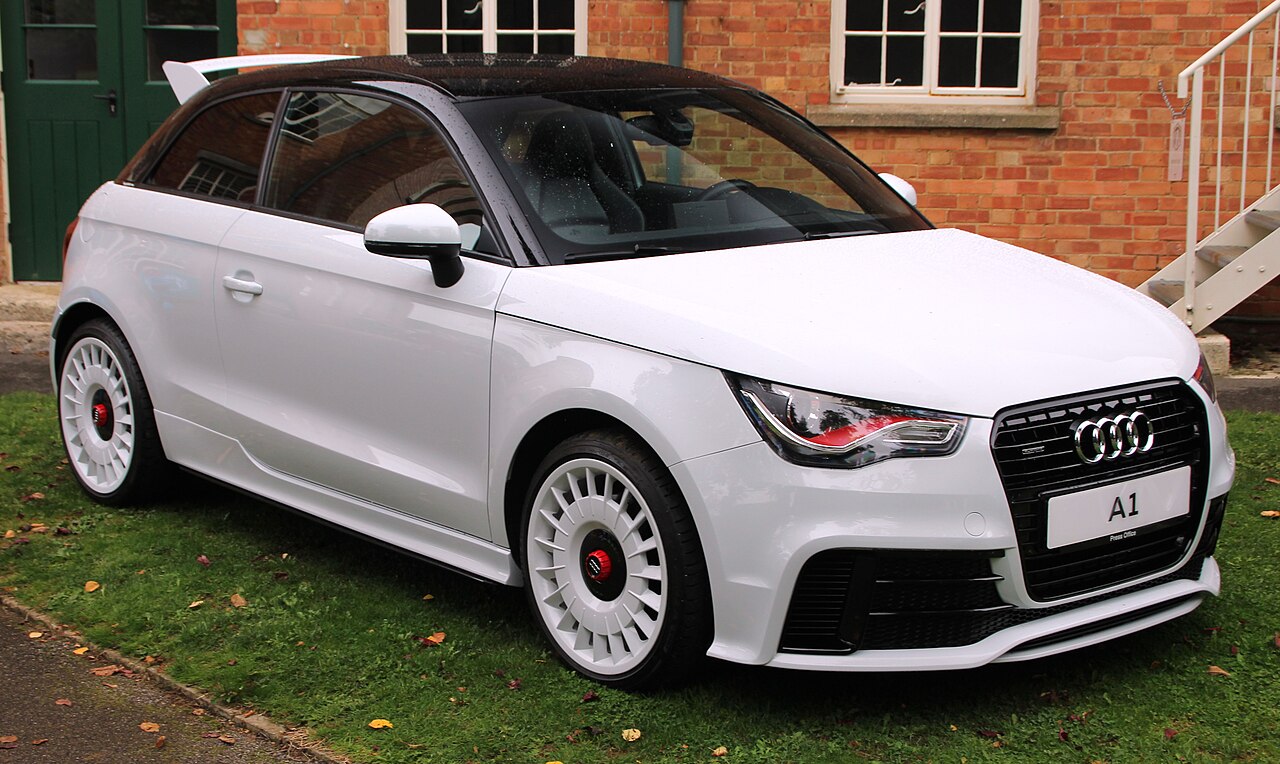
Audi announced the A1 quattro with a 2.0-litre turbocharged engine, six-speed manual gearbox and four-wheel drive, in a series limited to 333 cars. Its launch account describes the drive system sending more power rearward as conditions require. The edition predates the later S1 and has its own identity. [1]
The packaging achievement is the subject here. Introducing a driven rear axle into a small hatchback involves more than finding room for another badge. The driveline has to coexist with the floor, rear suspension and the space expected of the vehicle.
That makes the A1 quattro a useful first stop in this collection. It retains a recognisable compact-car outline while allocating space to a more elaborate drivetrain. The white body and contrasting details establish its visual identity; the hardware underneath explains why this particular A1 deserves its own record.
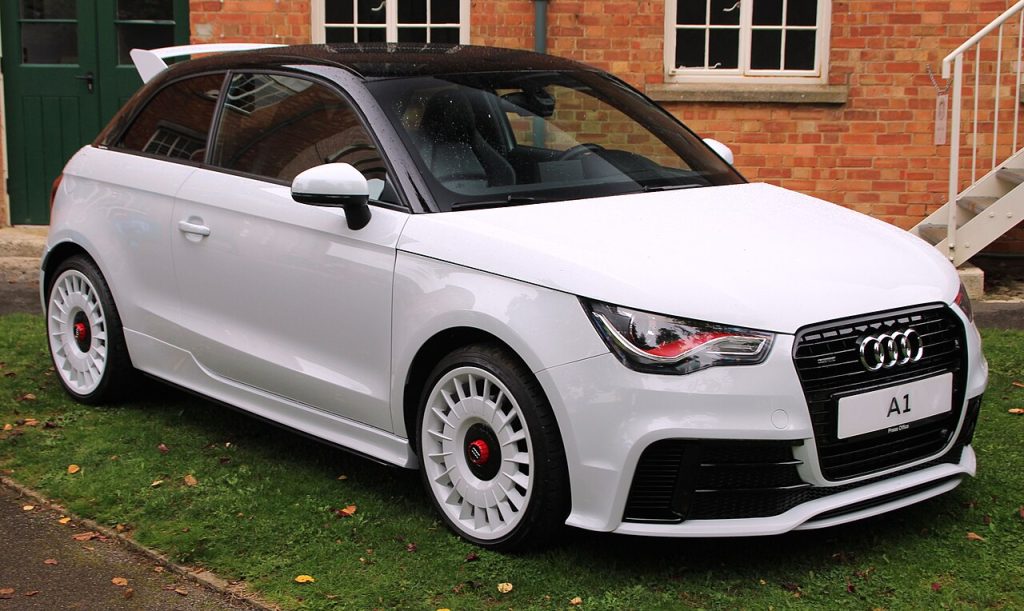
Audi A1 quattro
The Audi A1 quattro is the 333-car compact performance edition announced in December 2011 for 2012 availability. Audi specified a 188 kW two-litre turbo engine, a six-speed manual gearbox and all-wheel drive,…
Explore the full profile02 / Two seats, a clearer brief — MINI John Cooper Works GP
The F56-generation MINI John Cooper Works GP was presented in November 2019 for a 3,000-car series. MINI’s launch material specifies two seats and reduced acoustic insulation, along with substantial chassis and body changes. The linked profile concerns that generation, separate from the earlier 2006 and 2012 GP programmes. [2]
Removing rear seats is an unusually direct way of declaring what a small car is for. It changes the relationship between the compact exterior and the cabin’s usefulness. The body still carries the recognition of a MINI three-door, but the passenger provision has been rewritten.
The exposed carbon-fibre wheel-arch extensions add another layer to the packaging story. They describe the wider stance visually and make the limited-series development visible from outside. Seat count, body width and material choice are all parts of the same decision about where this particular MINI places its emphasis.

2019 MINI John Cooper Works GP — F56
The F56 John Cooper Works GP is the third modern GP and a particularly concentrated expression of MINI performance. Its two-seat cabin and 3,000-car programme establish a complete vehicle identity. The 2019…
Explore the full profile03 / Keeping the longitudinal layout — BMW 1 Series M Coupé
BMW’s retrospective records 6,331 examples of the 1 Series M Coupé delivered. It identifies the inline-six engine, manual transmission and rear-wheel drive as defining features of the compact E82 model. Those details establish a very different layout from the front-drive hatchbacks elsewhere in this selection. [3]
An inline-six and rear-wheel drive organise the car around a longitudinal powertrain. The cabin, transmission tunnel and rear axle belong within that arrangement. The small coupé therefore gives its occupants a different set of proportions and spatial compromises from a transverse-engine hatchback.
Its appeal as a design study lies in that concentration of familiar BMW elements inside a compact body. Rather than reading the 1M simply as a smaller version of a larger M car, look at the relationship between its short overall form, flared bodywork and chosen mechanical layout. The individual programme brings those elements together in a specific way.
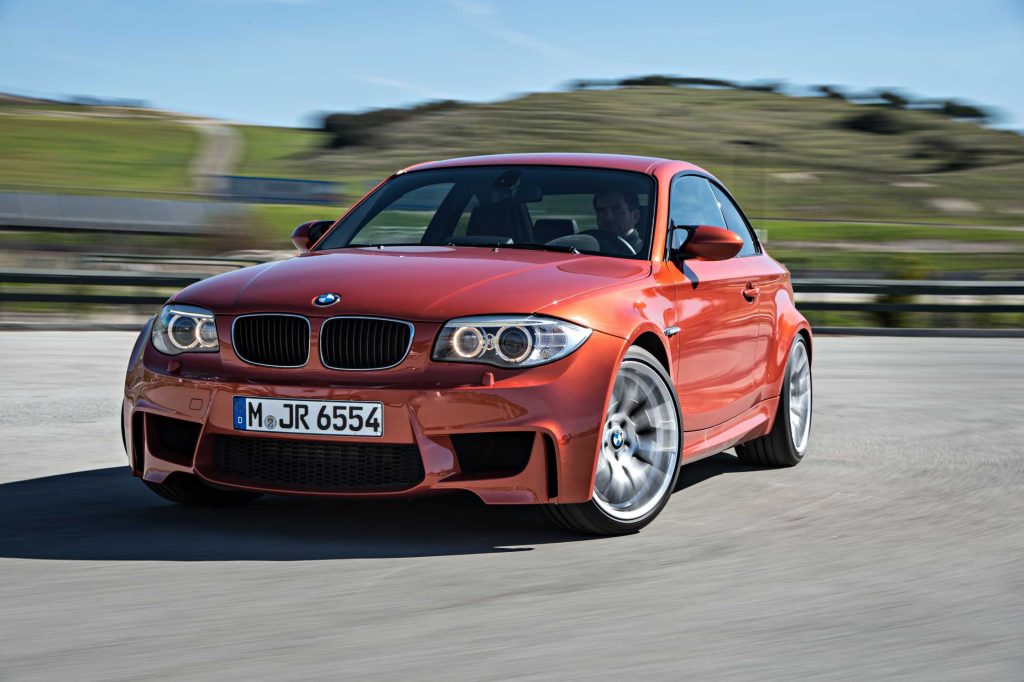
BMW 1 Series M Coupé E82 (2011)
The 2011 BMW 1 Series M Coupé E82 places full M-model development in a shorter-bodied coupé. Its turbocharged six-cylinder engine, manual transmission and wide stance give it an identity distinct from ordinary…
Explore the full profile04 / Spending the engineering budget on efficiency — Volkswagen XL1
Volkswagen’s XL1 production presentation describes a two-seat diesel plug-in hybrid with a carbon-fibre-reinforced plastic structure and an exceptionally low body. Its published dimensions put it under four metres long. The quoted 0.9 l/100 km figure belongs to the manufacturer’s contemporary test-cycle claim, rather than a promise for every journey. [4]
The XL1 changes the definition of ambition in this collection. Its unusual shape and lightweight construction serve an energy-consumption brief. The passenger compartment, narrow body and aerodynamic surfaces are organised around reducing the demands placed on the powertrain.
A small footprint can therefore support something more radical than a faster hatchback. The XL1 uses its limited-series format to question the normal allocation of width, height, mass and power. Looking at it alongside the performance cars makes the common subject clearer: each project chooses which demands deserve the available space and materials.
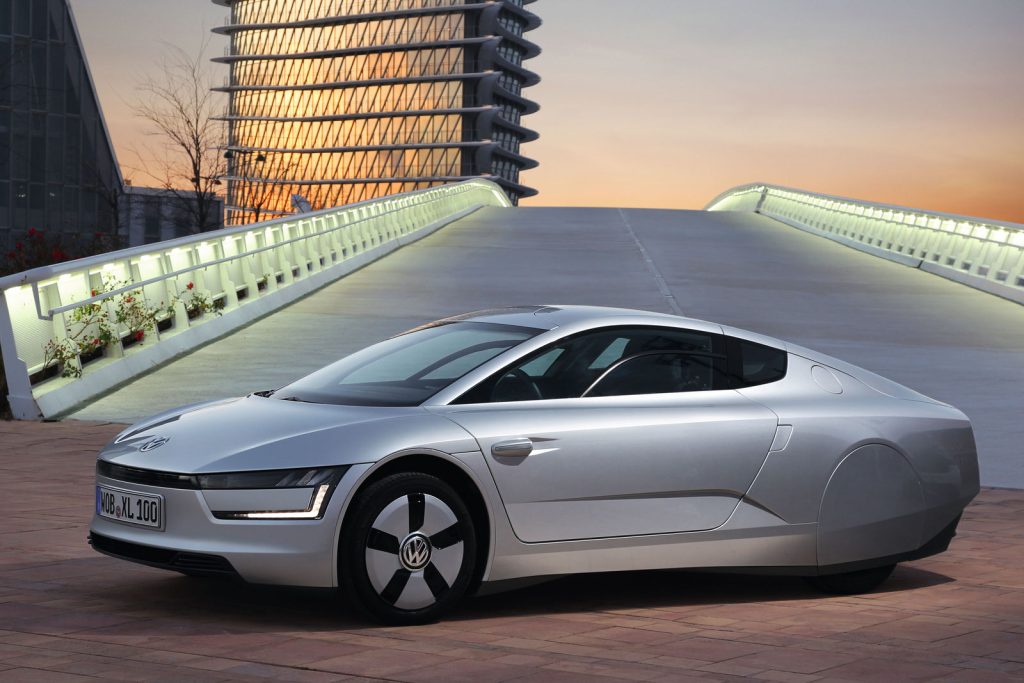
2014 Volkswagen XL1
The XL1 brought an unusually uncompromising efficiency brief into small-series production: a lightweight two-seat body, diesel plug-in hybrid and closely controlled aerodynamic form. Volkswagen’s sources distinguish a 250-car contemporary plan from a…
Explore the full profile05 / Editing the hatchback — Volkswagen Golf GTI Clubsport S
Volkswagen’s 2016 Clubsport S presentation specified a 400-car limited edition with two seats, a manual gearbox and the rear bench removed for weight reduction. The S designation identifies this particular programme; the standard Clubsport is a separate version of the GTI. [5]
The Golf reaches a two-seat solution from a different starting point than the XL1. Rather than developing a dedicated efficiency body, it edits an established hatchback package around a more focused performance brief. The familiar shape makes the change in passenger provision especially easy to understand.
Beside the MINI GP, it also demonstrates that similar decisions need not produce interchangeable cars. Both remove rear seating, yet each belongs to a different platform, generation and development programme. The value of placing them in one collection is to study how an apparently simple choice changes the meaning of two familiar small-car shapes.
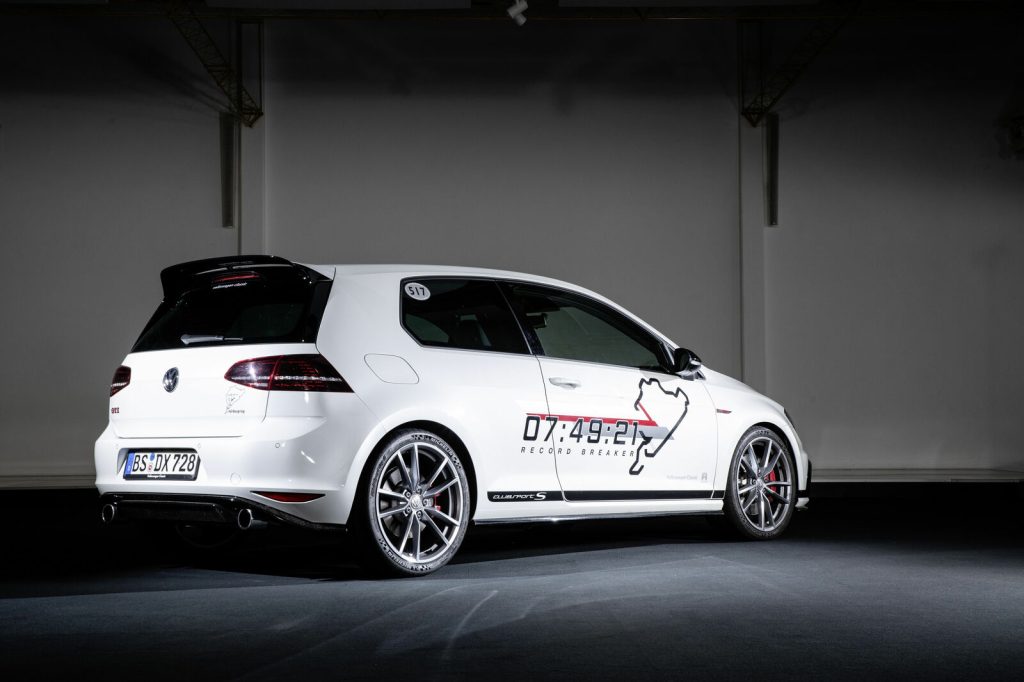
2016 Volkswagen Golf GTI Clubsport S
The 2016 Golf GTI Clubsport S concentrated the seventh-generation GTI around a lightweight, two-seat performance brief. Volkswagen reports a 400-car programme and a 228 kW, 310 PS specification. Its Nürburgring history belongs…
Explore the full profileBegin with the space
A useful way to revisit these cars is to sketch their priorities before looking at output. Where is the engine? Which wheels are driven? How many people does the factory specification accommodate? What does the shape reveal about the brief?
The answers create a more informative collection than a single acceleration table. They connect the A1’s additional driveline hardware, the BMW’s longitudinal engine, the two-seat hatchbacks and the XL1’s dedicated low-energy body without pretending they were designed to solve the same problem.
Compactness makes those differences unusually visible. There is little spare space in which to hide a decision, which is precisely why these five small-series cars are worth a closer look.
Sources & further reading
- Audi: A1 quattro introduction — Manufacturer release covering drivetrain, specification and the 333-car edition.
- MINI: the new John Cooper Works GP — November 2019 launch material, 3,000-car programme and two-seat interior.
- BMW M: 1 Series M Coupé retrospective — Manufacturer account including 6,331 deliveries and mechanical layout.
- Volkswagen: the XL1, the car — Production presentation covering dimensions, structure, powertrain and test-cycle consumption.
- Volkswagen: Golf GTI Clubsport S press kit — 2016 manufacturer presentation and 400-car, two-seat specification.
Continue exploring
Follow another set of small-series engineering decisions in Japanese performance specials, or continue through the vehicle archive.