2014 Volkswagen XL1
Explore the Volkswagen XL1: history, verified identity, specification references, rarity evidence and real credited photos.
The XL1 brought an unusually uncompromising efficiency brief into small-series production: a lightweight two-seat body, diesel plug-in hybrid and closely controlled aerodynamic form. Volkswagen’s sources distinguish a 250-car contemporary plan from a later heritage reference of 200. Both are kept visible here, with no invented reconciliation or exact completed total.
From efficiency studies to a customer car
The XL1 followed earlier Volkswagen one-litre-car investigations, but the customer model belongs to its own small-series production period. The manufacturer heritage record places hand manufacture at Osnabrück from March 2014, with initial customer deliveries in May. The original inventory’s 2013 date remains relevant to the presentation period and is preserved in the evidence. These dates should not be split into separate limited editions: they describe stages of one production XL1 story.
Volkswagen: production history and later 200 reference
The hybrid system serves a very specific brief
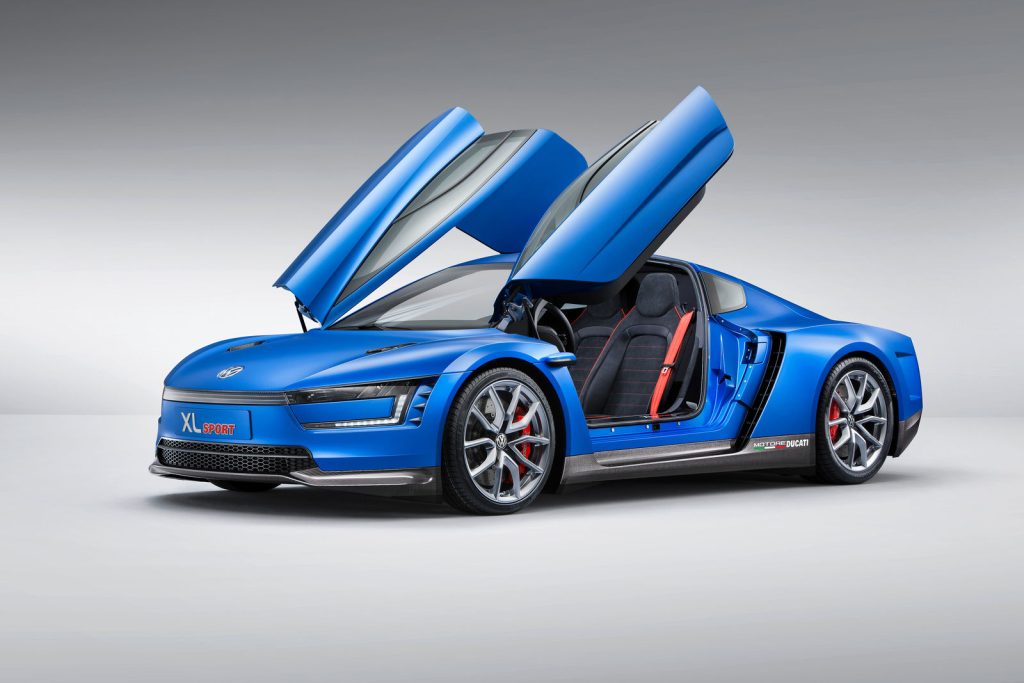
Volkswagen’s contemporary technical account describes a 0.8-litre two-cylinder TDI at 35 kW, paired with a 20 kW electric motor and a seven-speed DSG. These component ratings are not simply added to make an unqualified combined-output claim. The small combustion engine, electrical assistance and plug-in energy storage were organised around efficiency. A concept-only or later sporting derivative requires its own specification. In particular, the Ducati-powered XL Sport is not an engine option inside the customer diesel-hybrid XL1 allocation.
The shape follows the energy target
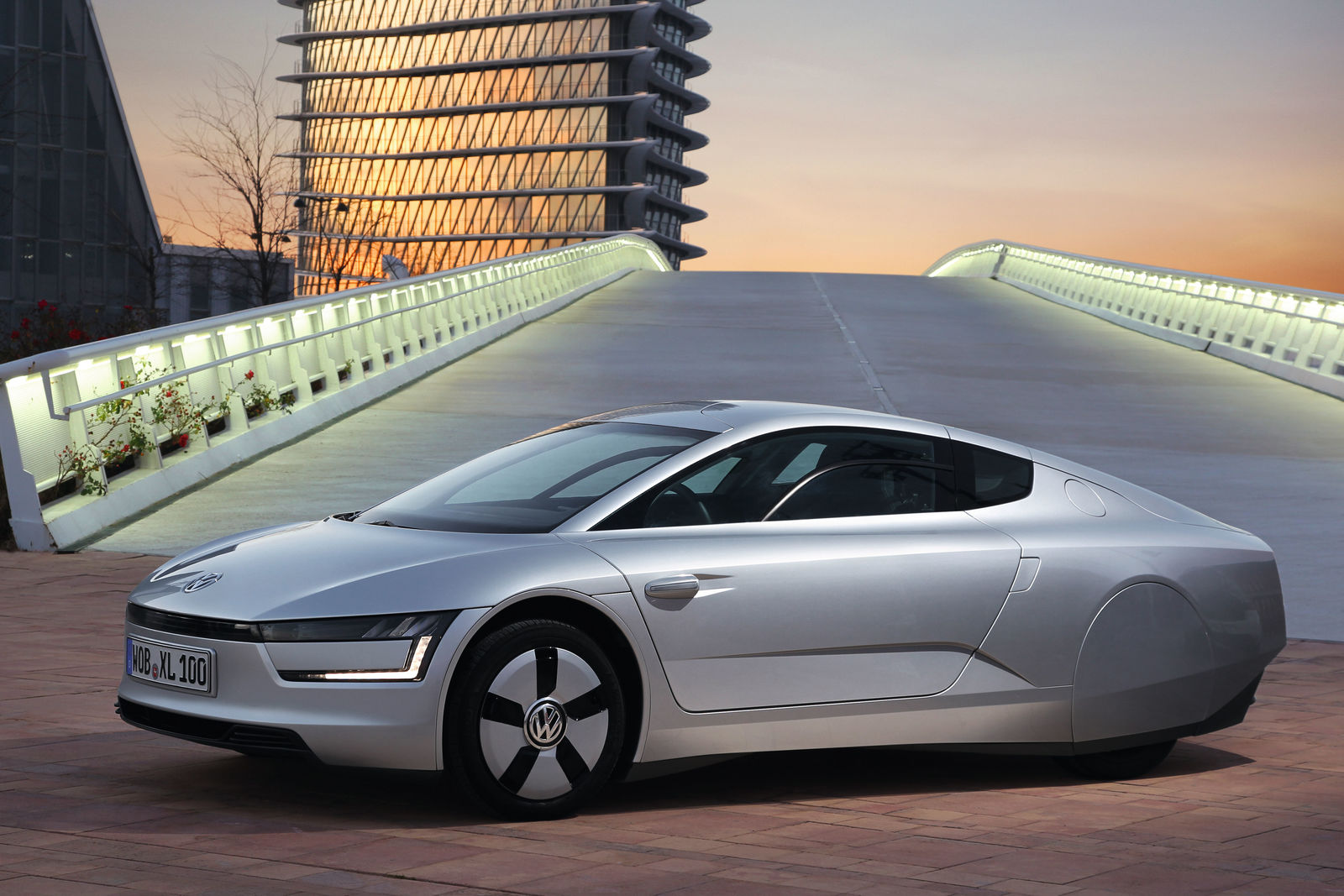
The low body, covered rear wheel openings and tightly tapered outline make the engineering brief visible. Volkswagen describes carbon-fibre-reinforced construction and camera-based rearward viewing. As design interpretation, the XL1’s unusual appearance comes from treating air resistance and mass as organising principles rather than adding an economy badge to a conventional coupe. Its period test-cycle consumption figures should retain their original testing context. They are not a promise that every owner will achieve the same result on every trip.
Volkswagen: production history and later 200 reference
Keep the conflicting programme references visible
The 2014 XL Sport announcement states that 250 XL1 would be built. The later XL1 heritage page instead describes a limit of 200. These are different manufacturer references from different dates; this article does not silently choose one as an independently verified final chassis census. Both remain below the collection’s rarity threshold, so the identity can be profiled while the count stays qualified. A complete reconciliation would need production and development-car records covering the same defined scope.
Volkswagen: original hybrid engineering
Document the production XL1 rather than an earlier study
The selected manufacturer photograph belongs to the 2013 production presentation. Earlier L1 or pre-production XL1 studies have related shapes but distinct configurations, and the XL Sport is another named project. For an individual customer car, retain the build identity, delivery papers and factory specification, recording battery or composite-body repairs separately. Those records are more informative than a repeated online production figure. The archive preserves the source discrepancy so future research can improve the count without rewriting the vehicle’s identity.
Specifications and identity reference
| Public profile period | 2014 production; 2013 presentation retained |
|---|---|
| Construction location | Osnabrück; hand manufacture |
| Hybrid components | 0.8-litre TDI, 35 kW; electric motor, 20 kW |
| Transmission | Seven-speed DSG |
| Contemporary programme plan | 250, stated in the 2014 XL Sport release |
| Later heritage reference | 200; not treated as a reconciled final census |
Rarity and production scope
The complete production XL1 programme is covered. A contemporary manufacturer release states a 250-car plan, while the later factory heritage account describes a 200-unit limit. Both references are disclosed without treating their difference as a verified development-car split. The stored programme reference is the contemporary 250 plan, explicitly qualified; exact completed production remains blank. Earlier concepts and XL Sport are excluded.
What the photograph represents
Volkswagen’s 2013 production-presentation image explicitly names the XL1. It shows the silver small-series body with covered rear wheel openings and the factory setting retained. It is not the earlier tandem-seat L1 or the later Ducati-powered XL Sport, and it does not reconcile the conflicting 250 and 200 references.
Related Volkswagen profiles
Frequently asked questions
Was the final total definitely 250?
The sources do not justify that certainty: a contemporary 250 plan conflicts with a later heritage reference of 200. The discrepancy remains explicit.
Is the XL Sport included in the XL1 allocation?
No. It is a separate named concept with a Ducati petrol engine, not a customer XL1 hybrid configuration.
What is the production-count boundary for this profile?
The complete production XL1 programme is covered. A contemporary manufacturer release states a 250-car plan, while the later factory heritage account describes a 200-unit limit. Both references are disclosed without treating their difference as a verified development-car split. The stored programme reference is the contemporary 250 plan, explicitly qualified; exact completed production remains blank. Earlier concepts and XL Sport are excluded.
Sources and further reading
- Volkswagen: production history and later 200 reference
- Volkswagen: original hybrid engineering
- Volkswagen: contemporary 250 plan
Research checked 19 October 2026. Linked manufacturer heritage pages, factory announcements and official distributor publications support the specifically identified claims. Photographic descriptions identify the illustrated subject. Design analysis and suggested authentication steps are editorial interpretation.
Built in limited numbers
The complete production XL1 programme is covered. A contemporary manufacturer release states a 250-car plan, while the later factory heritage account describes a 200-unit limit. Both references are disclosed without treating their difference as a verified development-car split. The stored programme reference is the contemporary 250 plan, explicitly qualified; exact completed production remains blank. Earlier concepts and XL Sport are excluded.
Gallery
Specifications
Factory specifications may vary by model year, market and configuration.
Identity & production
- Official model
- Volkswagen XL1
Sources and verification
Source citations are being prepared for this profile.