2004 Peugeot 907 Concept
Explore the 907 Concept: history, verified identity, specification references, rarity evidence and real credited photos.
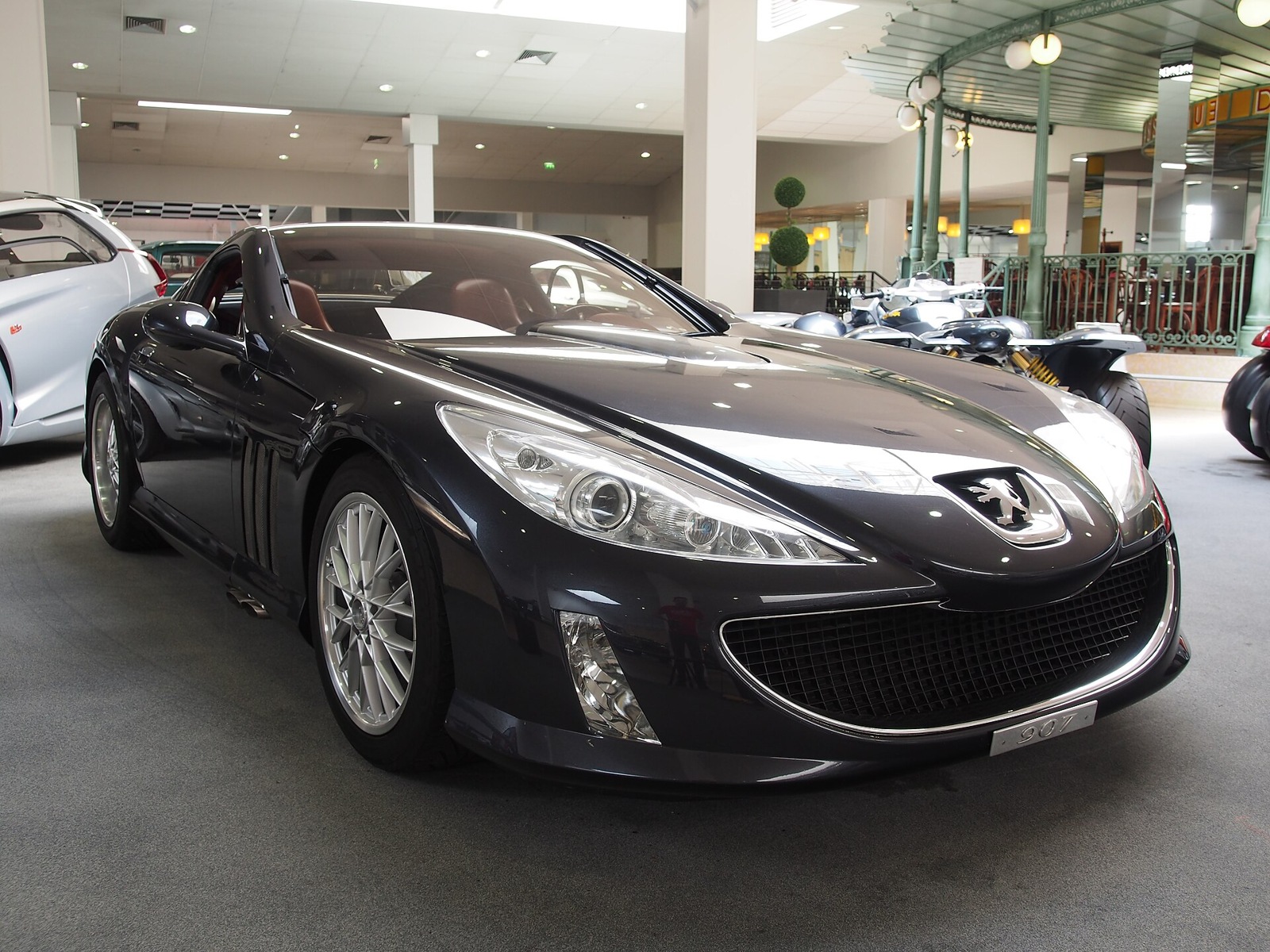
Peugeot's 907 put a bespoke V12 beneath a long bonnet and paired it with a compact two-seat grand-touring body. Presented at the 2004 Paris show, it explored a much more traditional sporting layout than the marque's compact electric or three-wheeled concepts. The physical vehicle and its manufacturer-published engine description are the subject here. It was not a catalogue model, a customer-production supercar or the diesel-powered 908 endurance racer.
A grand tourer outside the normal range
Peugeot's original Paris material presented 907 as an exceptional vehicle extending the brand's design vocabulary. A long bonnet and rear-set cabin made the engine part of the visual story, rather than hiding it within a familiar family-car form. This is why the concept remains interesting beyond its peak-output figure: it used the proportions and materials of a grand tourer to ask what a very different sort of Peugeot could look and feel like.
Peugeot: original Paris 2004 concept specification
The bespoke twelve-cylinder engine
The manufacturer identifies a six-litre V12 and a 500 PS reference in the original show material. Its later retrospective explains the relationship with the brand's V6 experience rather than suggesting that customers could order the same engine from the normal range. These are historical manufacturer descriptions. They do not establish a certified road-car performance rating or the surviving vehicle's present power, and no unverified maximum-speed claim is needed to explain the engineering interest.
A six-speed transmission and a different brief
The original announcement describes a sequential six-speed gearbox, supporting the concept's sporting character. That is a specific reference and should not be replaced with the transmission of a contemporary production coupé merely because both are Peugeots. For the physical concept, any later drivetrain changes would need workshop records. The important narrative is the complete grand-touring proposition, with engine, transmission and seating arranged around a purpose-built demonstration rather than a retail equipment package.
Peugeot: original Paris 2004 concept specification
The cabin’s mixture of materials
Peugeot's show description pairs leather and Alcantara with wood detailing on the controls. Those material choices give the small cabin a different emphasis from the electronic theatre of Quasar or the functional presentation of a rally car. Their interest is in the relationship between traditional grand-touring cues and a contemporary concept body. A photograph can illustrate the visible surfaces without certifying every material, structural component or installed system beneath them.
Peugeot: dedicated 907 V12 retrospective
A physical concept with a separate archive identity
The 907 must remain distinct from 908 RC, which proposed a diesel-powered four-seat configuration, and from the 908 HDi FAP racing programme. Numbering similarities are not a production lineage or a shared allocation. Dated manufacturer material, exhibition records and custody documentation establish the 907's history. The sources describe a one-off concept, but this profile does not convert that wording into an independent audit of every design model, development object and completed physical build.
Specifications and identity reference
| Presentation | Paris Motor Show, 2004 |
|---|---|
| Vehicle proposition | Two-seat grand-touring concept |
| Engine reference | Bespoke 6.0-litre V12 |
| Original published output | 500 PS; manufacturer reference |
| Transmission reference | Sequential six-speed |
| Cabin materials described | Leather, Alcantara and wood details |
| Distinct identities | 908 RC concept and 908 HDi FAP race car |
| Physical-build census | Not independently reconciled |
Rarity and production scope
Verified physical 907 concept. Engine and gearbox values are attributed to the original manufacturer show description. One-off wording is retained as programme context, not an independently audited census; no customer allocation is assigned.
This is an Archive record. Concepts, restored heritage vehicles, works cars and competition programmes are not added to customer road-production totals. A programme profile does not establish how many physical chassis were made, and repeated exhibition appearances do not create additional vehicles.
What the photograph represents
Physical Peugeot 907 grand-touring concept photographed at the L’Aventure collection. The image illustrates the exhibit rather than a customer production V12 model.
Related Peugeot heritage profiles
Frequently asked questions
Was the V12 a normal Peugeot showroom engine?
The retrospective identifies a bespoke concept installation, not a catalogue V12 model.
Is 907 the same subject as the 908 racing car?
No. The physical grand-touring concept and endurance programme have separate identities.
What is the production-count boundary for this profile?
Verified physical 907 concept. Engine and gearbox values are attributed to the original manufacturer show description. One-off wording is retained as programme context, not an independently audited census; no customer allocation is assigned.
Sources and further reading
Research checked 16 October 2026. Linked factory, heritage and specialist-register records support the specifically attributed claims. Photographic descriptions identify the illustrated subject. Design analysis and suggested authentication steps are editorial interpretation.
Built in limited numbers
Verified physical 907 concept. Engine and gearbox values are attributed to the original manufacturer show description. One-off wording is retained as programme context, not an independently audited census; no customer allocation is assigned.
Gallery
Specifications
Factory specifications may vary by model year, market and configuration.
Identity & production
- Official model
- Peugeot 907 Concept
Sources and verification
Source citations are being prepared for this profile.