1986 Peugeot Proxima Concept
Explore the Proxima Concept: history, verified identity, specification references, rarity evidence and real credited photos.
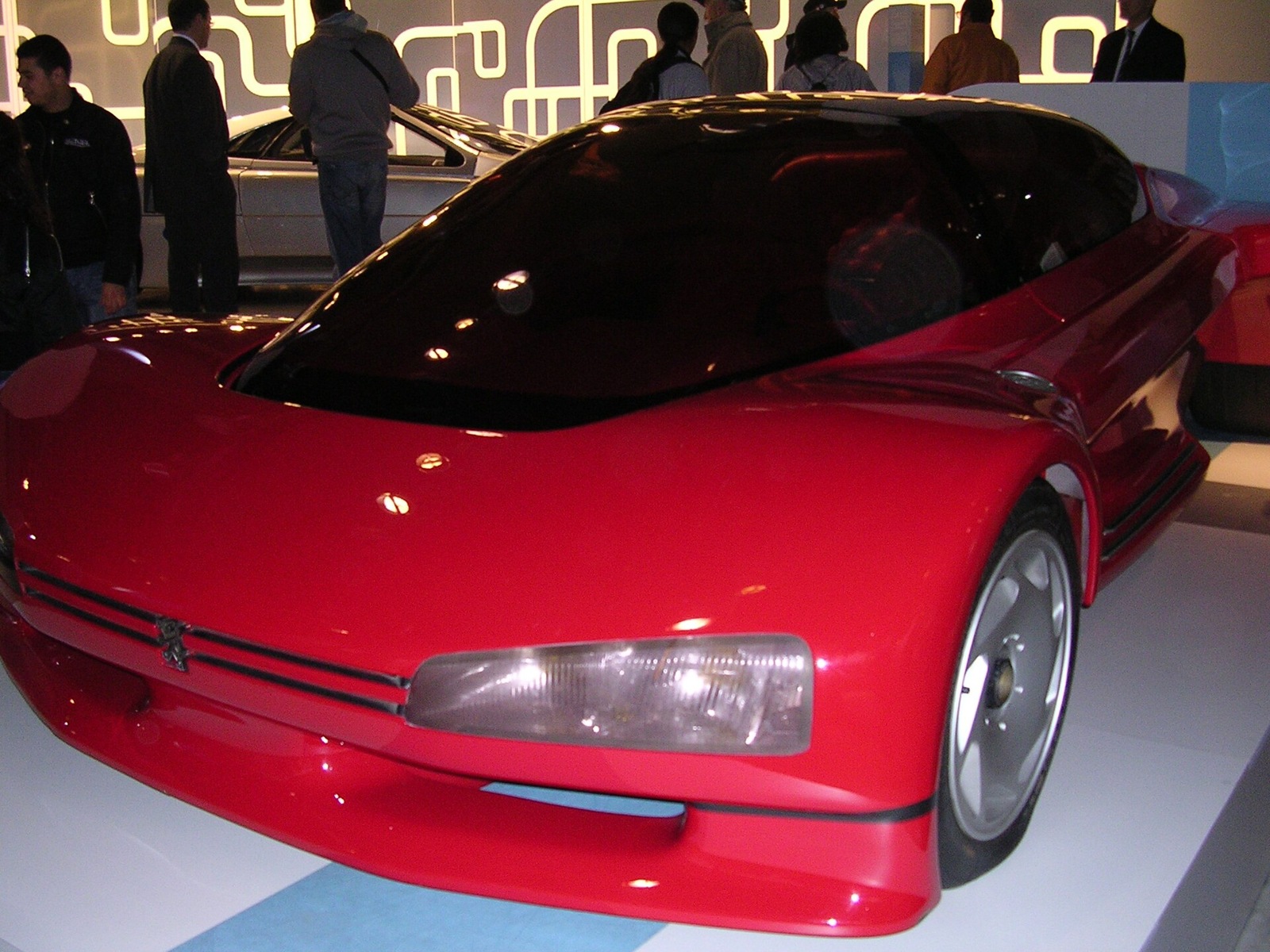
The Proxima combined a low, wide body with a sweeping transparent canopy and an ambitious electronics-led view of the future. Peugeot presented it in 1986 between the Quasar and Oxia, giving the marque a second major concept statement during its Group B era. Its historical interest lies in the relationship between experimental materials, performance and an unusually information-rich cabin. This profile keeps those manufacturer descriptions separate from an independently tested operating specification.
The middle chapter of an eighties trilogy
Peugeot's retrospective places Proxima after the 1984 Quasar and before the 1988 Oxia. This chronology matters because the three are often grouped visually despite having distinct bodies and engineering propositions. Proxima's name invokes the nearby star Proxima Centauri, fitting the project's space-age presentation. It was a factory concept rather than a customer sports-car allocation, and its appearance at later events belongs to its display history rather than a new production year.
Peugeot: dedicated Proxima design and technology retrospective
A canopy instead of conventional access
The wide, low body and large transparent canopy dominate the vehicle's proportions. Peugeot's later account describes an unusual opening arrangement rather than a conventional pair of doors. That choice makes entry, visibility and heat management part of the design experiment. It also explains why a side photograph is especially informative: the relationship between the glazed cabin and low body is central to Proxima's identity, not simply a decorative detail added to a normal road car.
Materials and a twin-turbo V6 proposition
Peugeot describes composite construction and a twin-turbo V6, but its own retrospectives do not use a perfectly uniform output reference. The 2020 overview quotes 680 horsepower, while the later dedicated account discusses 600 CV and also acknowledges the higher figure found in other descriptions. This profile preserves that discrepancy instead of silently presenting the largest number as a verified measurement. A specific test or workshop configuration would need its own dated technical record.
Peugeot: dedicated Proxima design and technology retrospective
The cabin as a technology laboratory
The manufacturer associates Proxima with extensive electronic displays, computing and vehicle-monitoring ideas. These should be understood as a concept programme's proposals and historical equipment descriptions, not as proof that every modern function worked to present standards. A digital display in an exhibit cannot establish satellite-navigation accuracy, current software capability or an operational driver-assistance certification. The more useful historical question is how Peugeot used the cabin to explore the growing role of information in driving.
Peugeot: concept-car programme history
Separating the exhibit from the specification legend
Use the physical form, dated manufacturer material and custody records to follow Proxima through later displays. The various performance numbers should retain their source and date, particularly when copied into a specification table. Repeated exhibitions do not establish multiple cars, and a scale model is not evidence for a completed concept chassis. No exclusive one-of-one or surviving-build census is assigned here without a reconciled physical inventory and construction record.
Specifications and identity reference
| Introduction | 1986 |
|---|---|
| Programme position | Between Quasar and Oxia |
| Powertrain proposition | Twin-turbo V6 |
| Body theme | Low composite body and large transparent canopy |
| Cabin theme | Electronic displays and vehicle information systems |
| Output-source discrepancy | 680 hp in 2020 overview; 600 CV / higher references in 2026 account |
| Customer-production status | Concept programme |
| Completed physical-build census | Not assigned |
Rarity and production scope
Verified physical Proxima concept. Manufacturer retrospectives differ in their output presentation; neither is converted into an independently verified engine test. No customer allocation or exclusive physical-build total is assigned.
This is an Archive record. Concepts, restored heritage vehicles, works cars and competition programmes are not added to customer road-production totals. A programme profile does not establish how many physical chassis were made, and repeated exhibition appearances do not create additional vehicles.
What the photograph represents
Physical Peugeot Proxima concept photographed at a display. The image does not resolve the differing output references in manufacturer retrospectives or authenticate current operating systems.
Related Peugeot heritage profiles
Frequently asked questions
Is the maximum quoted output an independently tested figure?
No. The manufacturer histories themselves present differing references, retained as a source discrepancy.
Was Proxima a customer-production supercar?
The selected evidence identifies a factory concept programme.
What is the production-count boundary for this profile?
Verified physical Proxima concept. Manufacturer retrospectives differ in their output presentation; neither is converted into an independently verified engine test. No customer allocation or exclusive physical-build total is assigned.
Sources and further reading
- Peugeot: dedicated Proxima design and technology retrospective
- Peugeot: concept-car programme history
Research checked 16 October 2026. Linked factory, heritage and specialist-register records support the specifically attributed claims. Photographic descriptions identify the illustrated subject. Design analysis and suggested authentication steps are editorial interpretation.
Built in limited numbers
Verified physical Proxima concept. Manufacturer retrospectives differ in their output presentation; neither is converted into an independently verified engine test. No customer allocation or exclusive physical-build total is assigned.
Gallery
Specifications
Factory specifications may vary by model year, market and configuration.
Identity & production
- Official model
- Peugeot Proxima Concept
Sources and verification
Source citations are being prepared for this profile.