2010 Peugeot SR1 Concept
Explore the SR1 Concept: history, verified identity, specification references, rarity evidence and real credited photos.
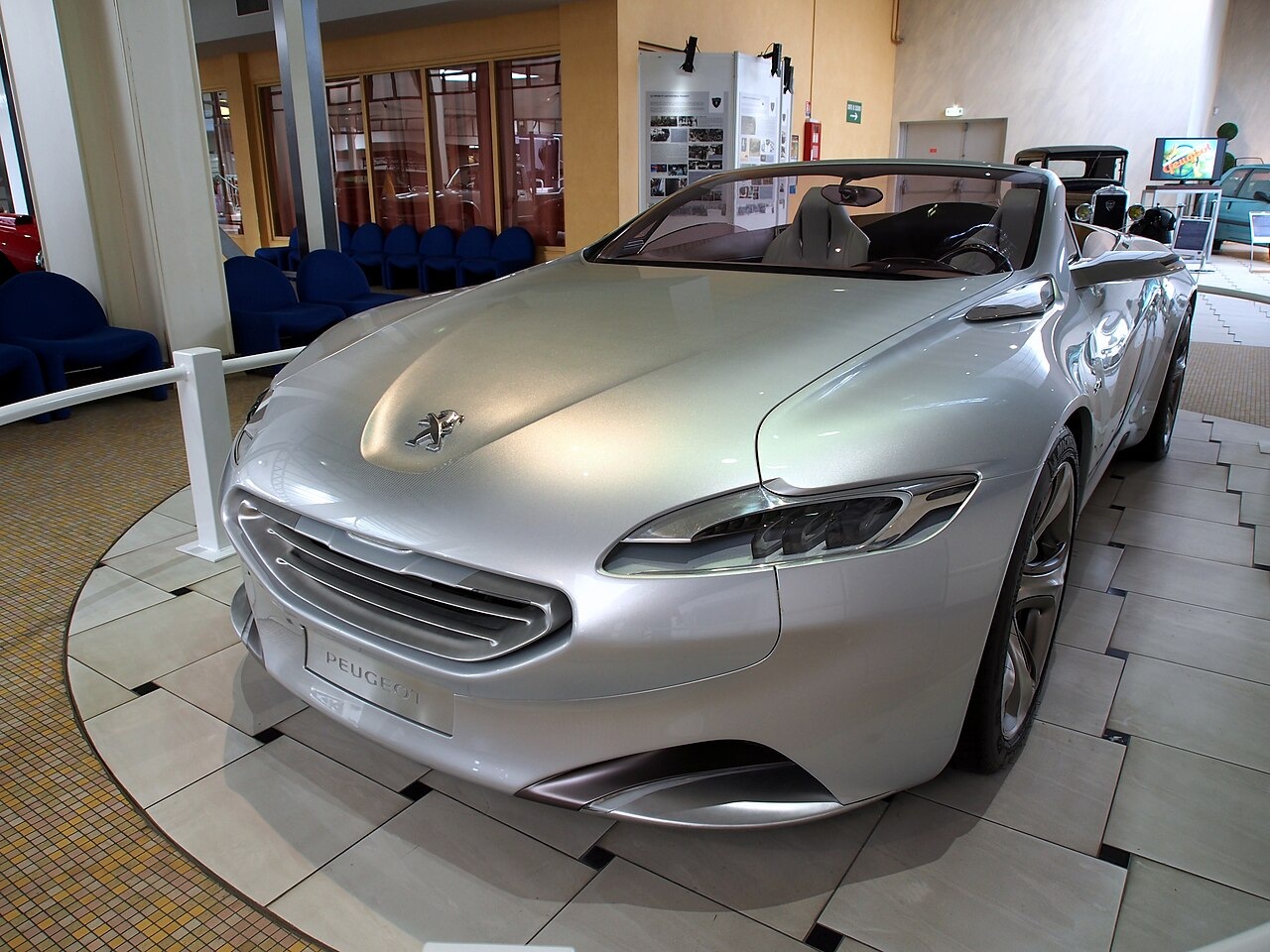
The Peugeot SR1 introduced a quieter, more sculpted interpretation of the French grand tourer in 2010. Its long bonnet, low cabin and three-seat layout gave a physical setting to a new Peugeot design language. Beneath the styling statement, the manufacturer proposed HYbrid4 propulsion and four-wheel steering. The SR1 belongs to the concept archive: its significance comes from the relationship between design and engineering, rather than from a customer production run.
A new direction at Geneva
Peugeot announced the SR1 in January 2010 ahead of its Geneva public presentation. The original release explicitly connected it with future styling and a revised lion emblem. The useful historical point is the change of emphasis: the GT form provided room to experiment with proportions and surface treatment. Reading it as an exact preview of a later showroom model would narrow its role unnecessarily. A concept can establish a vocabulary without promising a production derivative.
Peugeot: original SR1 concept dossier
Three seats inside a grand-tourer silhouette
The factory describes two front seats and a central third seat behind them, with a moving centre console aiding access. This unusual arrangement is more revealing than a generic two-seat roadster label. It creates a different relationship between exterior width, interior space and passenger position. When comparing photographs, distinguish the seating proposal from the body’s visual impression; a view through the windscreen may not reveal the rear place or the mechanism described in the dossier.
The published HYbrid4 proposition
The launch specification paired a front 1.6-litre THP petrol engine rated at 218 hp with a rear electric motor rated at 95 hp, giving a stated combined potential of 313 hp. Peugeot also described four-wheel steering. These are manufacturer concept specifications. They explain the intended architecture, while a current operating assessment would require separate evidence about the exhibited car, its batteries and the control systems fitted at the time of inspection.
Peugeot: original SR1 concept dossier
Reading the design as a complete object
The long front section, compact passenger compartment and restrained rear form encourage the eye to read the SR1 as a single flowing volume. That is an editorial interpretation of the design, rather than a claim about wind-tunnel results. Its proportions also make it useful to compare with the later HX1: the two studies ask different questions about space, even though both explore hybrid-era Peugeot identity. Their shared period does not make them the same vehicle programme.
Peugeot: concept-car strategy and SR1 context
Identifying a genuine SR1 reference
Look for a dated factory caption, a clear view of the overall body and a consistent description of the three-place layout. A scale model, design rendering or later production Peugeot can help explain influence but cannot stand in for the physical concept. Exhibition dates should remain attached to the photograph. A later museum appearance supports identification of the displayed subject without establishing how many development bodies, chassis or non-running styling models the project used.
Specifications and identity reference
| Introduction | 2010; Geneva public presentation |
|---|---|
| Form | Three-seat grand-touring concept |
| Front power unit | 1.6-litre THP petrol; stated 218 hp |
| Rear electric motor | Stated 95 hp |
| Combined potential | Manufacturer concept reference: 313 hp |
| Steering | Four-wheel steering described |
| Production classification | Concept archive; not customer manufacture |
| Count | No exclusive completed-build total assigned |
Rarity and production scope
Verified physical SR1 concept programme. The workbook’s single-example label is not treated as an audited total of every development object; no customer road-production count is assigned.
This is an Archive record. Concepts, restored heritage vehicles, works cars and competition programmes are not added to customer road-production totals. A programme profile does not establish how many physical chassis were made, and repeated exhibition appearances do not create additional vehicles.
What the photograph represents
Physical Peugeot SR1 concept photographed in a collection display. This illustrates the 2010 three-seat GT study, not a production roadster or a present certification of the proposed hybrid systems.
Related Peugeot heritage profiles
Frequently asked questions
Was the SR1 a production roadster?
It is documented as a concept and styling manifesto, rather than a customer road-car series.
How many people was the SR1 designed to carry?
The original dossier describes two front occupants and a third seat centrally behind them.
What is the production-count boundary for this profile?
Verified physical SR1 concept programme. The workbook’s single-example label is not treated as an audited total of every development object; no customer road-production count is assigned.
Sources and further reading
Research checked 16 October 2026. Linked factory, heritage and specialist-register records support the specifically attributed claims. Photographic descriptions identify the illustrated subject. Design analysis and suggested authentication steps are editorial interpretation.
Built in limited numbers
Verified physical SR1 concept programme. The workbook’s single-example label is not treated as an audited total of every development object; no customer road-production count is assigned.
Gallery
Specifications
Factory specifications may vary by model year, market and configuration.
Identity & production
- Official model
- Peugeot SR1 Concept
Sources and verification
Source citations are being prepared for this profile.