1947 Tama Electric Car Heritage Vehicle
Explore the Tama Electric Car Heritage Vehicle: history, verified identity, specification references, rarity evidence and real credited photos.
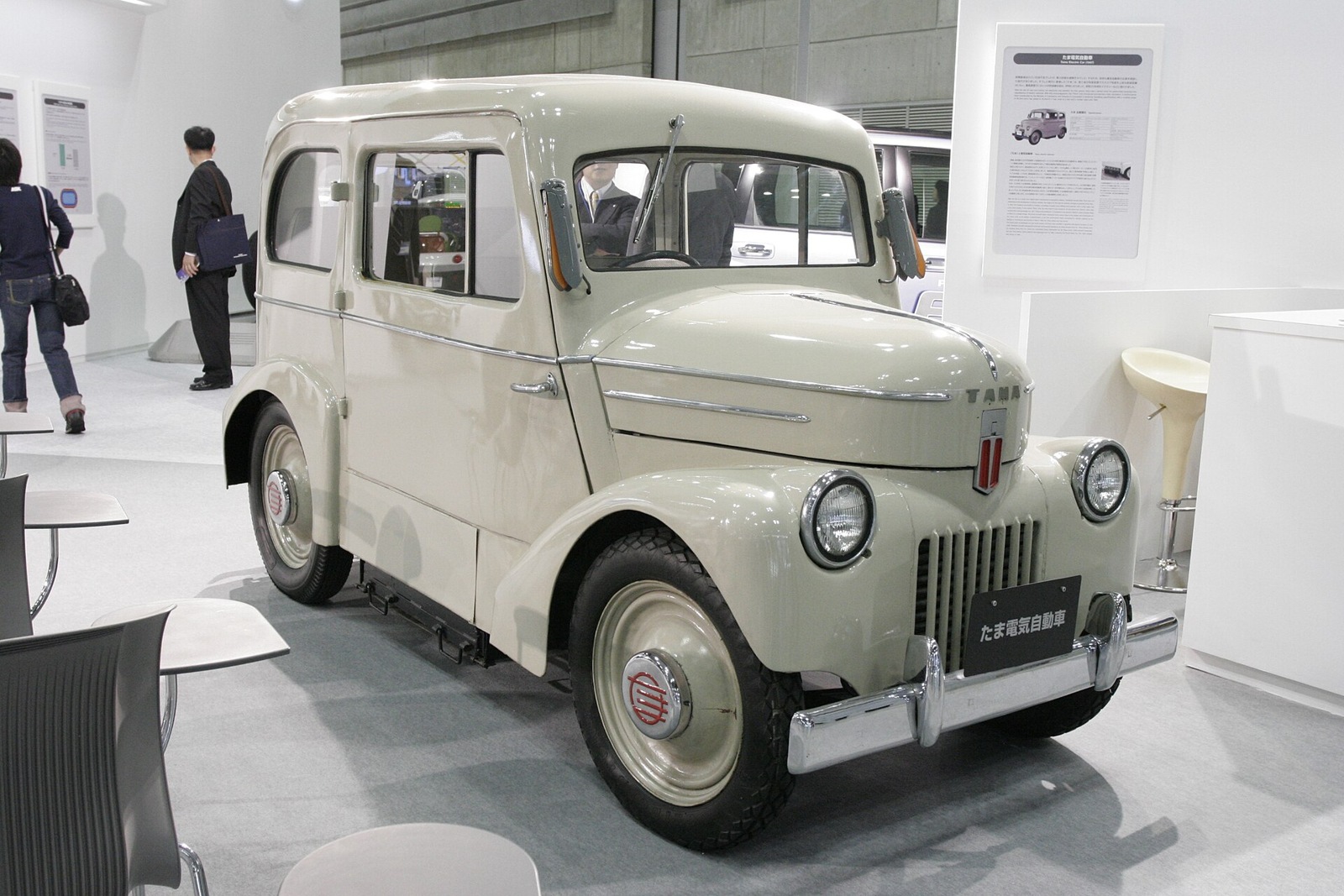
The Tama Electric Car puts Nissan's electric-vehicle ancestry in a very different setting from the modern performance EV. Built in postwar Japan, this compact four-seat sedan answered a shortage of petroleum with an electric drivetrain and lead-acid batteries. Nissan preserves a restored, running example in its Heritage Collection. Its importance is the documented vehicle and its historical role, rather than an invented one-car production run. The correct reference year is 1947, replacing the inventory's 1952 date.
A practical response to postwar conditions
Nissan traces Tama to Tokyo Electro Automobile, a company formed from the aviation industry that later became Prince. Oil was scarce while electricity was comparatively available. That background explains the car more clearly than treating it as an early attempt at an electric supercar. It was transportation designed around the resources people could obtain. The four-seat body, modest dimensions and taxi use make the preserved sedan a useful record of daily mobility as well as engineering history.
Nissan Heritage Collection: Tama Electric Car
Reading the range figures correctly
The Heritage Collection lists a cruising range of 65 kilometres per charge. Its narrative separately reports 96 kilometres in the first Electric Vehicle Performance Test, with a maximum speed of 35 km/h. These are different documentary figures, not interchangeable promises of everyday range. Battery condition, route and test procedure matter when interpreting any period EV result. A responsible profile preserves the distinction instead of choosing the larger number for a headline and presenting it as a guaranteed operating specification.
A restored vehicle with a continuing story
Nissan states that the collection car returned to running condition in 2010, restored to its 1947 specification as the production LEAF arrived. That restoration is part of the object's history. It should accompany photographs and exhibition records rather than disappear behind the word original. Restoration can preserve a vehicle's educational role while renewing consumable components. The appropriate collector record would distinguish retained structure, reconstructed parts and later battery work wherever the restoration file provides that information.
Nissan Heritage Collection: Tama Electric Car
The name and the manufacturer lineage
The model code E4S-47 I describes an electric four-seat sedan, its year and initial type. Tama takes its name from the factory's locality. Prince's later merger with Nissan in 1966 explains why it belongs in Nissan's heritage collection, but does not make the car a 1947 Nissan-branded production model. Keeping the original marque visible makes searches more accurate and prevents the family tree from erasing the company that actually developed the vehicle.
Nissan Heritage Collection: Tama Electric Car
How to document the preserved example
An identification file should link the vehicle to Nissan's collection entry and restoration account before making chassis-specific claims. Contemporary body details, motor identification and battery installation are useful supporting records. A museum photograph establishes what was exhibited on that occasion; it does not by itself prove which electrical components survive from 1947. For this archive, the verified subject is the restored heritage vehicle and its original design, with no unsupported survivor census or production total.
Specifications and identity reference
| Original marque | Tama; Tokyo Electro Automobile lineage |
|---|---|
| Reference year | 1947 |
| Model | E4S-47 I |
| Motor | DC series-wound; rated 3.3 kW |
| Battery reference | Lead-acid; 40 V / 162 Ah |
| Seats | 4 |
| Dimensions | 3,035 × 1,230 × 1,630 mm |
| Listed range / test result | 65 km cruising reference; 96 km reported test result |
Rarity and production scope
A documented preserved heritage vehicle, not a verified single-unit production programme. The collection example was restored to running condition in 2010. No worldwide build or survivor total is assigned. Its archive identity is separate from the Tama truck and later Tama models.
This is an Archive record. Concepts, restored heritage vehicles, works cars and competition programmes are not added to customer road-production totals. A programme profile does not establish how many physical chassis were made, and repeated exhibition appearances do not create additional vehicles.
What the photograph represents
Restored Tama Electric Car displayed at a later exhibition; heritage-model photograph, not proof of untouched 1947 components.
Related Nissan heritage profiles
Frequently asked questions
Was the Tama built in 1952?
Nissan dates this E4S-47 I design to 1947. The profile corrects the spreadsheet date.
Why are two range figures quoted?
The collection lists 65 km as a cruising reference and reports 96 km from a historical performance test; they describe different evidence.
What is the production-count boundary for this profile?
A documented preserved heritage vehicle, not a verified single-unit production programme. The collection example was restored to running condition in 2010. No worldwide build or survivor total is assigned. Its archive identity is separate from the Tama truck and later Tama models.
Sources and further reading
Research checked 16 October 2026. Manufacturer records support identity and the specifically attributed historical figures. Photographic descriptions identify the illustrated subject. Design analysis and suggested authentication steps are editorial interpretation.
Built in limited numbers
A documented preserved heritage vehicle, not a verified single-unit production programme. The collection example was restored to running condition in 2010. No worldwide build or survivor total is assigned. Its archive identity is separate from the Tama truck and later Tama models.
Gallery
Specifications
Factory specifications may vary by model year, market and configuration.
Identity & production
- Official model
- Tama Electric Car Heritage Vehicle
Sources and verification
Source citations are being prepared for this profile.