1985 Nissan MID4 Experimental Concept
Explore the MID4 Experimental Concept: history, verified identity, specification references, rarity evidence and real credited photos.
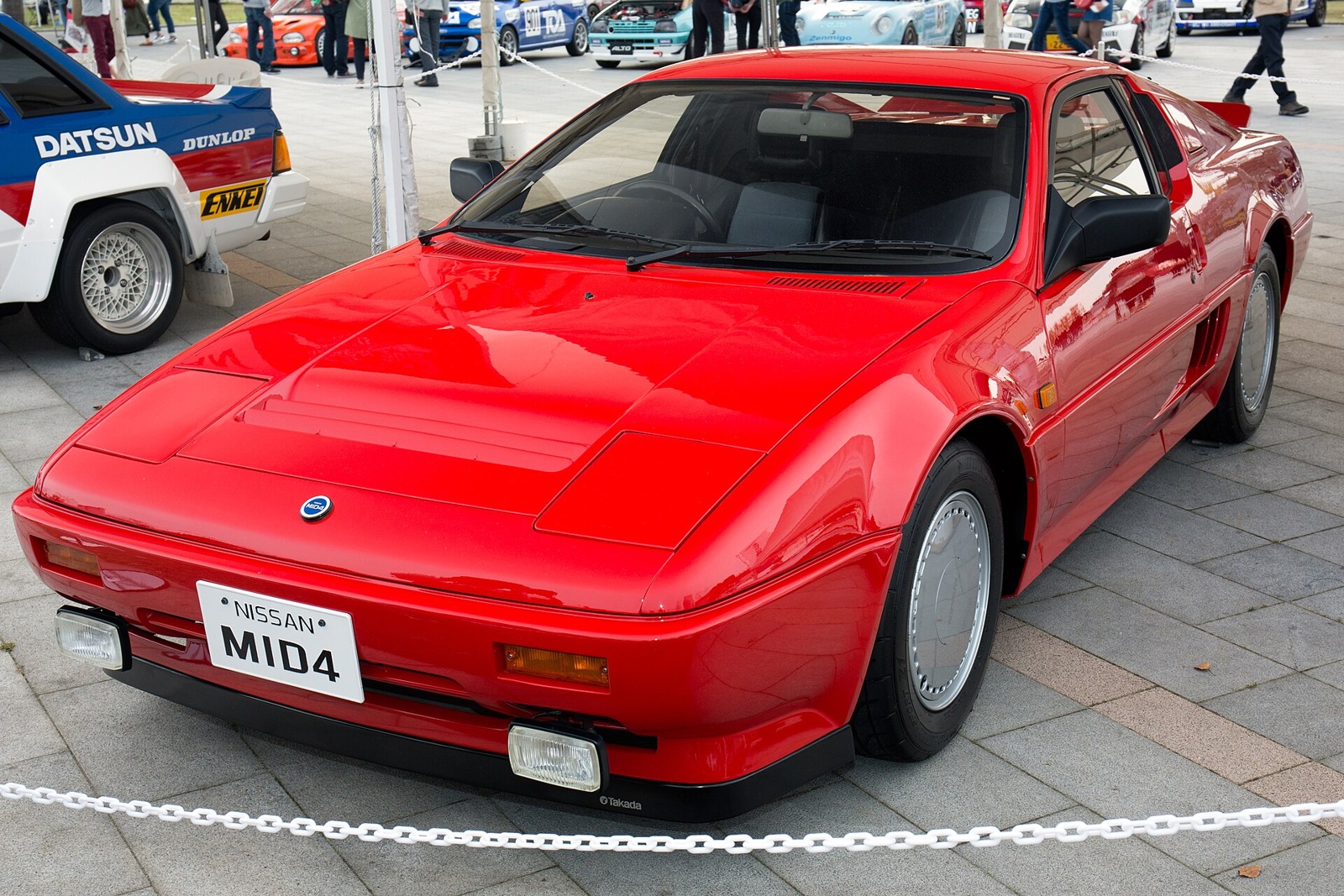
The 1985 Nissan MID4 explored a mid-engine, four-wheel-drive sports-car layout before the company's later halo production cars took shape. Nissan preserves the model in its heritage timeline and its original 1985 Tokyo Motor Show release identifies the physical show project. Its importance is as an experimental vehicle, not a cancelled production edition with a verified one-car run. The first MID4 also needs to remain distinct from the visibly and mechanically evolved MID4-II of 1987.
An engineering idea made physical
MID4's name links engine position and four-wheel drive, a useful summary of the experiment's central architecture. A concept like this can study the arrangement of major systems as well as public reaction to a new shape. That is different from a rendering that exists only to illustrate a design proposal. Nissan's heritage and show records establish a real vehicle programme, allowing it to sit in the archive without requiring an invented road-production allocation.
Nissan: original 1985 Tokyo Motor Show announcement
The 1985 documentary anchor
Nissan's contemporary Tokyo Motor Show announcement names the MID4 alongside other research vehicles. The heritage gallery separately places it in 1985. Together these provide a stronger date and identity than a modern photograph caption alone. They do not, by themselves, settle a complete census of prototypes or every specification used during development. This article deliberately keeps its factual core around the physical project and architecture rather than repeating an unsupported acceleration or top-speed claim.
Why the mid-engine arrangement matters
Moving an engine behind the passenger compartment changes how a sports car must package cooling, luggage, service access and structure. Four-wheel drive adds another set of drivetrain packaging decisions. Those are engineering implications of the layout, not claims about a particular measured handling result. The MID4 can therefore be read as a study in integration: its interest lies in the combination of systems and the effort to make them coexist in a compact sports-car body.
Nissan: original 1985 Tokyo Motor Show announcement
Keeping MID4 and MID4-II separate
The 1987 MID4-II has its own manufacturer collection entry, including a twin-turbo engine specification and later suspension details. Those figures must not be backdated onto the 1985 vehicle simply because both share the MID4 name. A photograph should likewise be checked for which stage it shows. Separate profiles let the development sequence remain clear without multiplying every exhibition appearance into another unique prototype.
Nissan Heritage Gallery: MID4, 1985
What an archive record can establish
For a concept, the most useful evidence includes dated show material, manufacturer photographs, technical announcements and any later restoration or demonstration records. A display image can establish the exhibited form, but not the current running condition of every system. This profile follows the original concept programme and labels its limitations. It makes no claim that the car reached customer production, that only one physical chassis was built, or that a production descendant is mechanically identical.
Specifications and identity reference
| Reference year | 1985 |
|---|---|
| Manufacturer | Nissan |
| Status | Physical experimental concept |
| Core architecture | Mid-engine; four-wheel drive |
| Contemporary record | Nissan 1985 Tokyo Motor Show announcement |
| Heritage record | Nissan gallery, MID4, 1985 |
| Later development | MID4-II, 1987; separate profile |
| Production total | No verified prototype census assigned |
Rarity and production scope
Verified physical 1985 concept programme. The inventory's one-primary-prototype description is not treated as proof that only one chassis existed. No customer-production total, audited prototype count or current running-condition claim is assigned.
This is an Archive record. Concepts, restored heritage vehicles, works cars and competition programmes are not added to customer road-production totals. A programme profile does not establish how many physical chassis were made, and repeated exhibition appearances do not create additional vehicles.
What the photograph represents
Original-generation MID4 photographed at Motorsport Japan in 2015; later display image, not the 1985 show setting or proof of present running condition.
Related Nissan heritage profiles
Frequently asked questions
Was MID4 a production model?
This profile documents the experimental concept programme, not customer production.
Can the MID4-II’s 330 PS figure be used for this car?
No. That specification belongs to the later 1987 development and is not transferred to the 1985 concept.
What is the production-count boundary for this profile?
Verified physical 1985 concept programme. The inventory's one-primary-prototype description is not treated as proof that only one chassis existed. No customer-production total, audited prototype count or current running-condition claim is assigned.
Sources and further reading
- Nissan: original 1985 Tokyo Motor Show announcement
- Nissan Heritage Gallery: MID4, 1985
- Nissan Heritage: later MID4-II
Research checked 16 October 2026. Manufacturer records support identity and the specifically attributed historical figures. Photographic descriptions identify the illustrated subject. Design analysis and suggested authentication steps are editorial interpretation.
Built in limited numbers
Verified physical 1985 concept programme. The inventory's one-primary-prototype description is not treated as proof that only one chassis existed. No customer-production total, audited prototype count or current running-condition claim is assigned.
Gallery
Specifications
Factory specifications may vary by model year, market and configuration.
Identity & production
- Official model
- Nissan MID4 Experimental Concept
Sources and verification
Source citations are being prepared for this profile.