1956 Citroën C10 Coccinelle Prototype
Explore the 1956 Citroën C10 Coccinelle Prototype: sourced history, design, specifications and rarity evidence, with credited documentary photos.
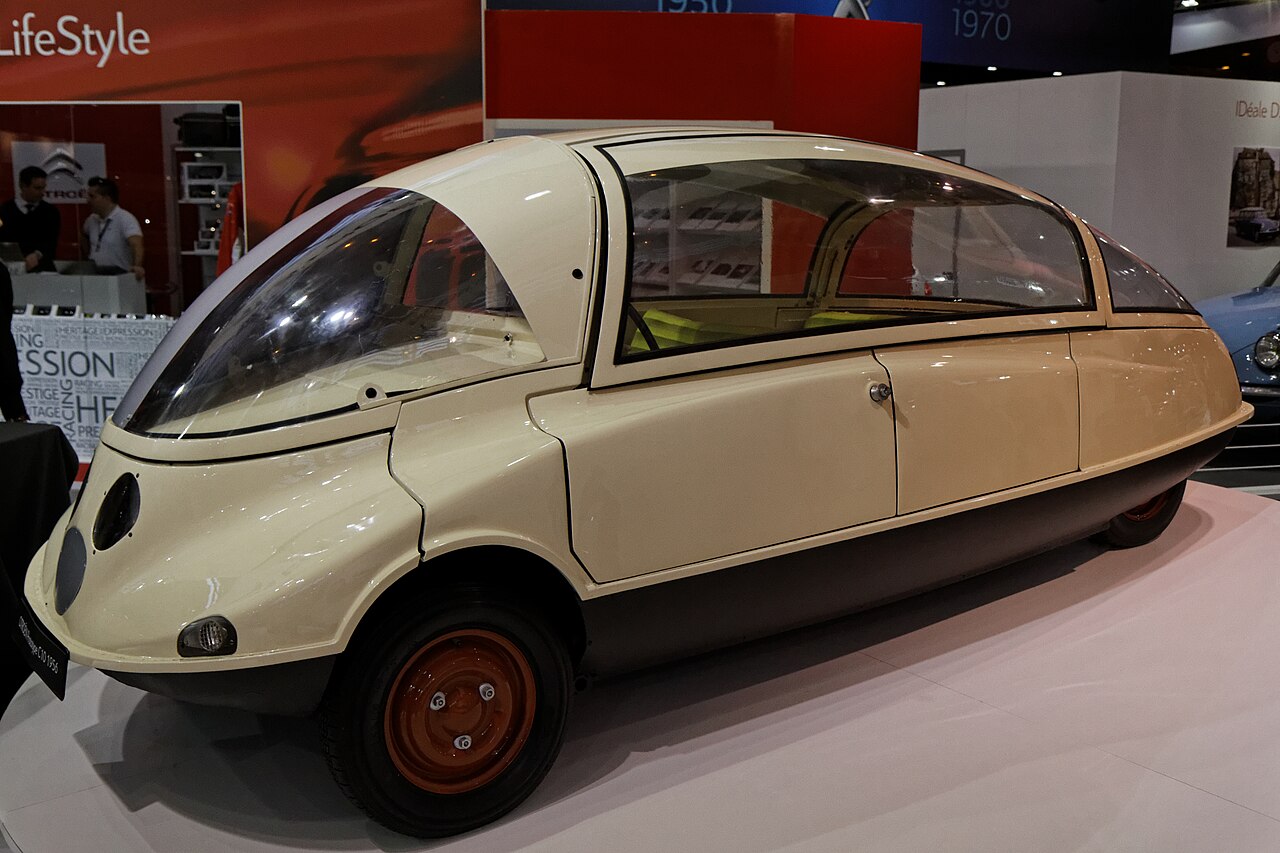
The 1956 Citroën C10 Coccinelle looks like a compact passenger pod long before that phrase became fashionable. Its enclosed, tapering body makes this physical prototype an unusually vivid study of how much family-car space can fit inside an unconventional outline.
A documented single experimental vehicle
Citroën Origins identifies the C10 as a 1956 prototype and records one manufactured. Its archive lists four seats, a 382 kg kerb mass and dimensions of 3.84 metres long, 1.55 metres wide and 1.40 metres high. Aluminium body construction, butterfly doors and hydropneumatic suspension are included among the recorded innovations. These details describe the experimental car; they do not establish a customer production range.
A concept of this kind is valuable because its shape embodies a question. How compact can a usable passenger compartment become if the car is organized differently? The surviving object allows that question to be considered through a real body and cabin rather than through a sketch alone. Its small physical scale strengthens the effect of its generous glazing.
The Coccinelle silhouette in the photograph
The museum photograph shows a cream body with a dark belt around its lower edge. A broad curved windscreen leans forward into the nose, while the glazed cabin stretches toward the rear. The little front wheel appears low beneath a body that encloses most of the visible mechanical volume. The side’s long horizontal division helps the viewer follow the taper.
The striking feature is the difference between the front and rear treatment. The front gathers into a rounded face, while the passenger enclosure carries the eye backward in a smooth sweep. This produces the visual impression of a small vehicle shaped around airflow and accommodation. The image supports that reading of the form; it is not a wind-tunnel measurement.
Doors, materials and the packaging question
Butterfly doors make entry part of the experiment. An unconventional opening can offer a dramatically different relationship between the occupant and the body aperture, but the photograph alone cannot establish its everyday convenience. A careful technical history should add opening-sequence pictures or period drawings to the attractive closed-body view.
The archive’s aluminium and mass information provides a useful second perspective. The C10’s visual softness does not mean it was conceived as a heavy luxury object. Readers can examine the lightness theme alongside the four-seat layout, while avoiding modern assumptions about crash compliance or production cost. Those questions belong to different evidence and a different regulatory period.
Why C10 matters beside later Citroën concepts
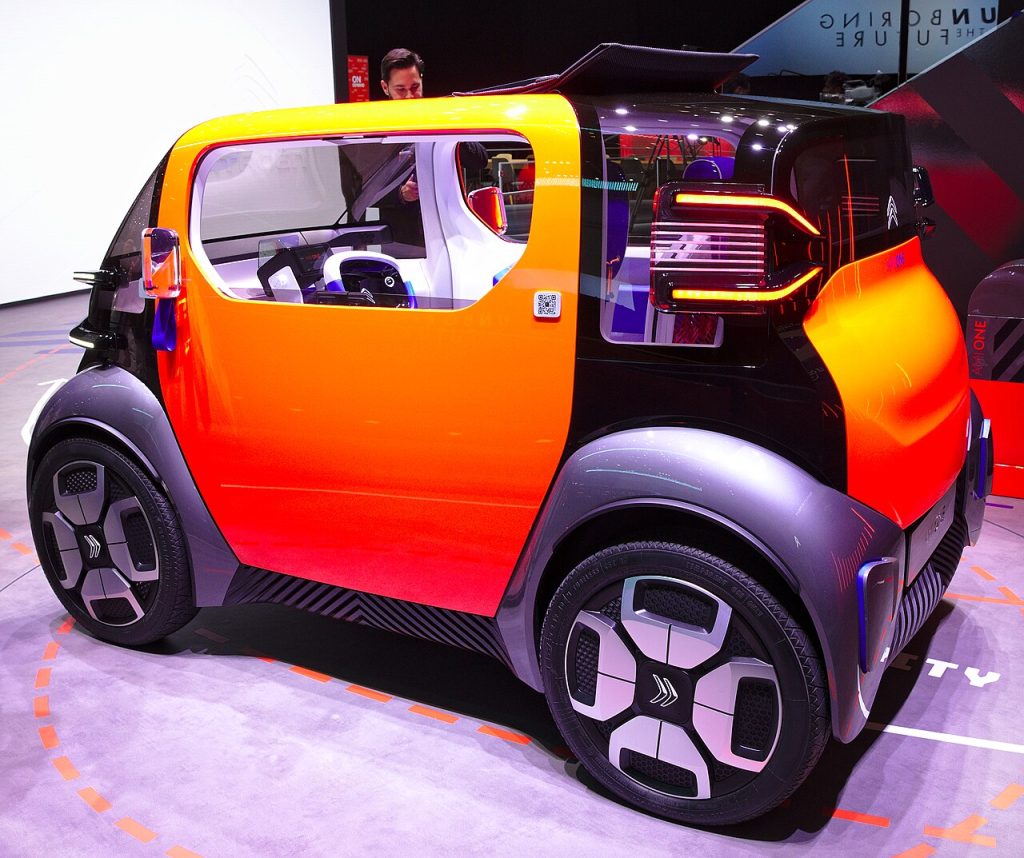
The C10 offers a productive comparison with Osmose. Both can be approached as studies in passenger space, access and the visual footprint of a small car. Their bodies come from very different eras, and their technical arrangements should remain distinct, but the design questions connect them. Looking across the two helps explain why Citroën’s experimental archive rewards more than a chronological list.
For preservation, unusual door hardware and body fittings deserve the same attention as the silhouette. Detail photographs, conservation records and dated display images can show how the physical object has been maintained. A single-vehicle archive entry becomes more useful when it records the object’s condition and interventions over time, instead of reducing its significance to the phrase “one built.”
Specifications and verified rarity
| Reference year | 1956 |
|---|---|
| Model / project | C10 Coccinelle Prototype |
| Body / role | Experimental MPV |
| Seats | Four |
| Dimensions | 3.84 × 1.55 × 1.40 m |
| Archive kerb mass | 382 kg |
| Body and suspension | Aluminium body; hydropneumatic suspension; butterfly doors |
| Rarity scope | Citroën Origins explicitly records one C10 manufactured in 1956. |
| Exact manufacturing tally | 1 |
| Inventory reference | CIT-024 — Verified |
Frequently asked questions
How many C10s does the official archive record?
One manufactured vehicle.
Was it a four-seat car?
Yes. Citroën Origins lists four seats.
Is C10 a production MPV?
It is an experimental prototype, presented here as an archive vehicle rather than a customer model range.
What should a preservation record emphasize?
Door mechanisms, unusual body fittings, dated condition photographs and conservation history.
What rarity or archive scope is verified?
Citroën Origins explicitly records one C10 manufactured in 1956.
Who took the supplied photograph?
Thesupermat via Wikimedia Commons, under CC BY-SA 3.0. Keep the photographer, original-file link and licence credit with the image.
Related Citroën profiles
Sources and photo credits
Photograph: Thesupermat via Wikimedia Commons original file, CC BY-SA 3.0. Source photograph supplied without local cropping, retouching or text removal. A source-provided thumbnail is used where available. C10 prototype at Rétromobile 2014. Later exhibition photo of the 1956 archive vehicle.
Built in limited numbers
Citroën Origins explicitly records one C10 manufactured in 1956.
Gallery
Specifications
Factory specifications may vary by model year, market and configuration.
Identity & production
- Official model
- C10 Coccinelle Prototype