1998 Citroën C3 Lumière Concept
Explore the 1998 Citroën C3 Lumière Concept: sourced history, design, specifications and rarity evidence, with credited documentary photos.
The 1998 Citroën C3 Lumière explores a compact car with a distinctly rounded personality. Its importance lies in the concept’s own shape and interior, together with the documented connection to the C3 that later reached production.
The Lumière chronology begins in 1998
Citroën’s C3 history dates the Lumière concept to the 1998 Paris Motor Show. Another manufacturer account identifies the design context with Donato Coco. The reference year is therefore 1998, correcting the inventory’s 1999. The later production C3 is a related historical chapter, not the same physical vehicle or an interchangeable source of specifications.
That chronological boundary makes the archive record more useful. A concept can influence a production car while retaining its own experiments, fittings and proportions. Describing the influence does not require pretending that the final customer model copied every feature. The comparison becomes stronger when the differences remain visible.
The collection photographs explain body and cabin
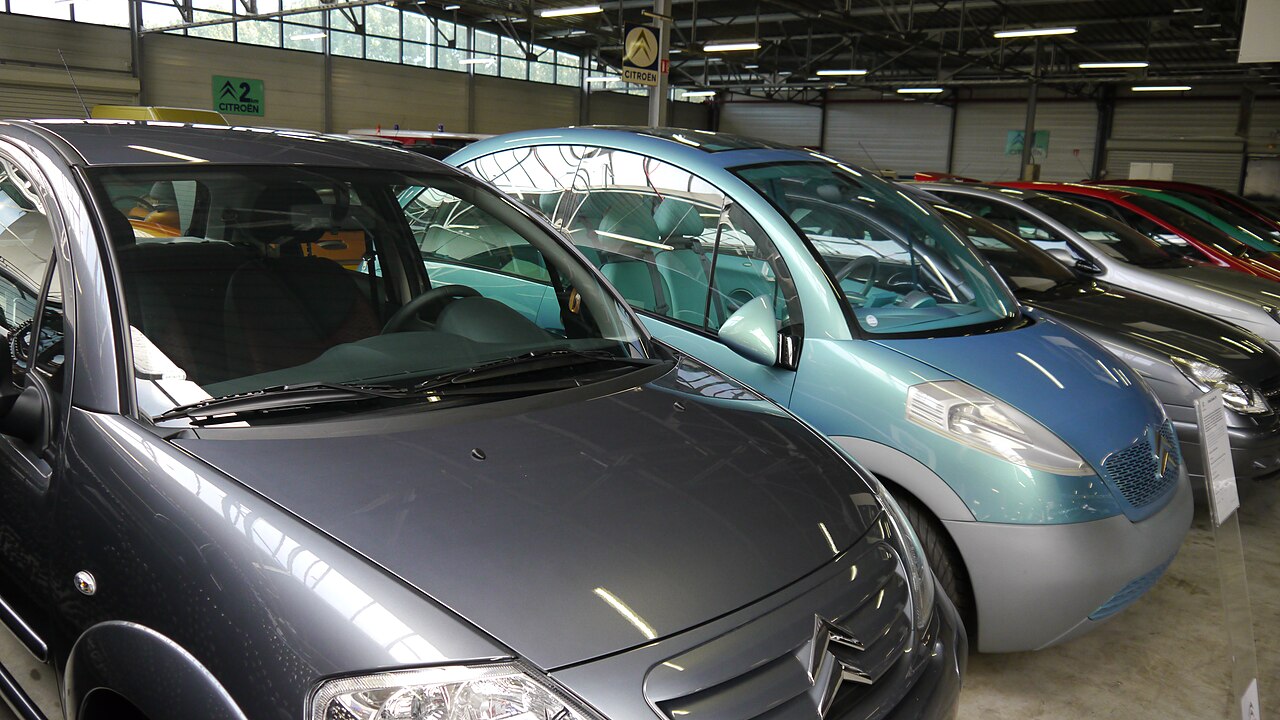
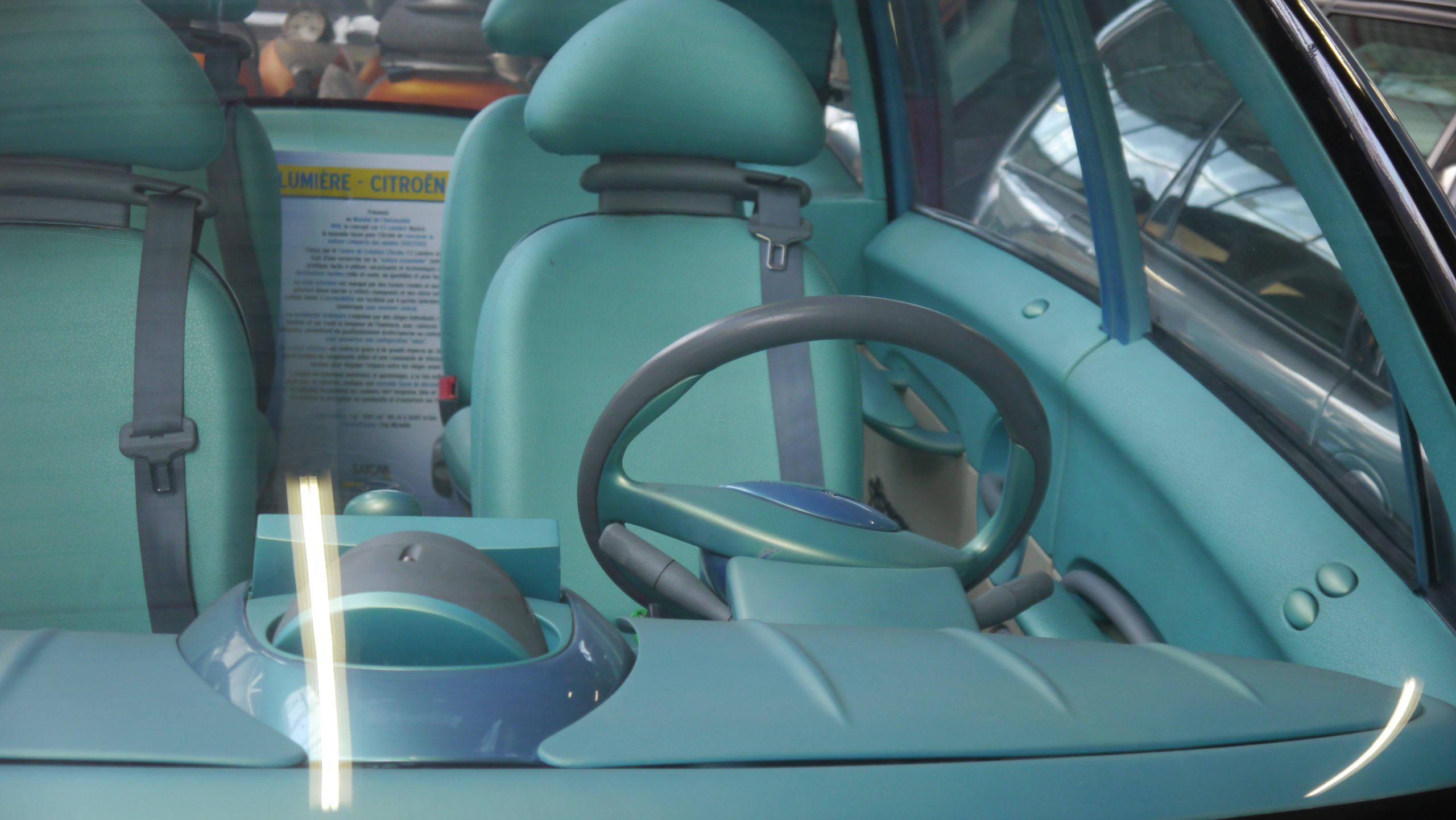
The exterior view identifies the blue rounded concept among other cars at the Conservatoire. Part of the foreground is occupied by a neighbouring vehicle, so the second supplied photograph is especially valuable: it looks directly into the Lumière cabin. A display card bearing the concept’s name appears between the seats.
The interior shows pale blue-green seats, a simple circular steering wheel and a sculpted dashboard with contrasting blue details. Large glazed surfaces surround the occupants. The shapes inside are rounded rather than sharply segmented, supporting the body’s friendly visual character. Reflections across the windscreen are retained as part of the documentary image rather than removed to simulate a studio photograph.
A compact car’s identity can begin inside
The cabin view suggests an inviting, almost furnishing-like treatment of the passenger space. That is a design interpretation based on what is visible, not a measured claim about comfort. A photograph can show the form and colour of a seat; it cannot determine how supportive it feels over a long journey.
This distinction allows the concept to be discussed with confidence. The reader can examine how the dashboard, seats and glazing contribute to the visual experience, while practical claims remain tied to appropriate evidence. An archive of drawings and period interior photographs would deepen the story by showing which choices were present from the beginning and which emerged later.
Connecting the concept with the C3 story
The manufacturer’s documented relationship to the later C3 gives Lumière a natural place in a marque history. The concept profile should lead into the production story through design themes and chronology, while leaving engine, trim and manufacturing totals with the model to which they belong.
Lumière also makes an effective companion to C-AirPlay. Both can be read as compact-car design propositions, but their visible emphasis differs: one builds a rounded, enclosed cabin identity, while the other uses an open upper body and lower side glazing to explore exposure. The paired profiles offer a focused way to compare different interpretations of a small Citroën.
Specifications and verified rarity
| Reference year | 1998 |
|---|---|
| Model / project | C3 Lumière Concept |
| Body / role | Compact concept car |
| Debut year | 1998, corrected from inventory’s 1999 |
| Design context | Compact car precursor to the first production C3 |
| Designer context | Citroën’s history identifies Donato Coco |
| Archive subject | The Lumière concept, not a production C3 trim |
| Rarity scope | Physical C3 Lumière concept presented in 1998; distinct from the later production C3. Exact fabrication tally unset. |
| Exact manufacturing tally | Not established |
| Inventory reference | CIT-111 — Verified |
Frequently asked questions
Did C3 Lumière debut in 1999?
Citroën’s history supports 1998.
Is it a production C3 edition?
No. It is the separate concept precursor.
Can production C3 engines be assigned to it?
Not without concept-specific evidence; they are not imported into this profile.
Why include an interior photograph?
It shows the distinctive cabin clearly and complements the partially obstructed exterior view.
What rarity or archive scope is verified?
Physical C3 Lumière concept presented in 1998; distinct from the later production C3. Exact fabrication tally unset.
Who took the supplied photograph?
Klaus Nahr from Germany via Wikimedia Commons, under CC BY-SA 2.0. Keep the photographer, original-file link and licence credit with the image.
Related Citroën profiles
Sources and photo credits
Photograph: Klaus Nahr from Germany via Wikimedia Commons original file, CC BY-SA 2.0. Source photograph supplied without local cropping, retouching or text removal. A source-provided thumbnail is used where available. C3 Lumière at the Citroën Conservatoire; neighbouring vehicles partially obscure the foreground. The concept’s interior is supplied in a second photograph.
Photograph: Klaus Nahr from Germany via Wikimedia Commons original file, CC BY-SA 2.0. Source photograph supplied without local cropping, retouching or text removal. A source-provided thumbnail is used where available. Interior of C3 Lumière at the Conservatoire, with the named display card visible between the seats.
Built in limited numbers
Physical C3 Lumière concept presented in 1998; distinct from the later production C3. Exact fabrication tally unset.
Gallery
Specifications
Factory specifications may vary by model year, market and configuration.
Identity & production
- Official model
- C3 Lumière Concept