2005 Citroën C-AirPlay Concept
Explore the 2005 Citroën C-AirPlay Concept: sourced history, design, specifications and rarity evidence, with credited documentary photos.
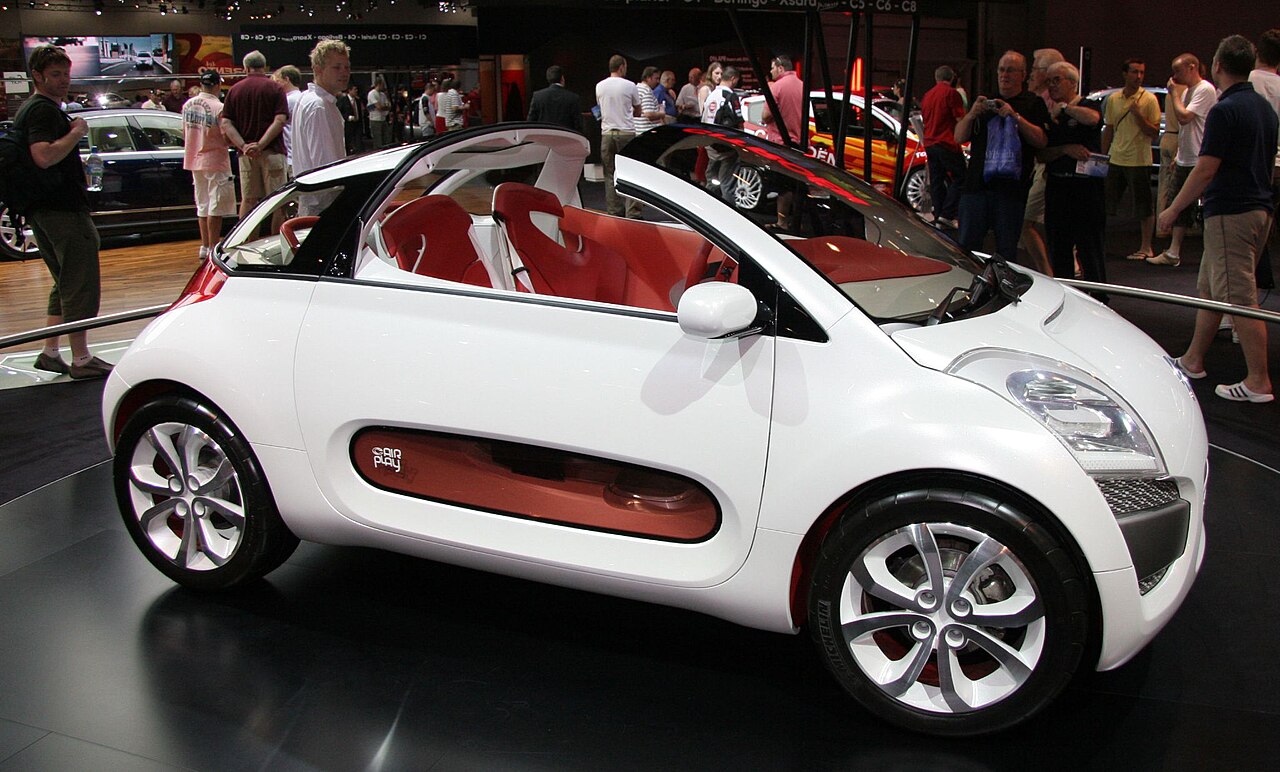
The 2005 Citroën C-AirPlay treats a very small car as an invitation to experience the surroundings. Its open upper body and unusual lower door glazing make the passenger space feel visually connected to the street rather than sealed away from it.
A single compact-car proposal
Citroën Origins records one manufactured C-AirPlay, presented at Bologna in 2005. The official archive gives two seats and dimensions of 3.30 by 1.68 by 1.39 metres. It lists Stop & Start, SensoDrive with steering-wheel paddles and a touch-sensitive central-seat area among the concept features. The archive’s unqualified power field is not converted into an unsupported output unit.
The subject is the physical concept, not the later customer Airplay trim names. A shared word in an edition title does not establish shared bodywork or an identical mechanism. C-AirPlay’s distinctive package should remain the centre of this record, with the production-trim story handled separately if it is documented.
The show photograph makes exposure visible
The supplied British motor-show photograph shows a white body, red cabin details and a broad opening in the upper passenger area. The lower side contains a long transparent panel with rounded ends. Large wheels and a short body give the car a compact, concentrated appearance. Visitors in the background preserve the public exhibition context.
The low window is especially revealing. It introduces a view through a part of the door that would normally be opaque, changing the visual relationship between an occupant and the space beside the car. The photograph can show that design choice directly. It cannot establish how distracting or useful the feature would feel during everyday driving.
Small size and a different passenger experience
Compactness is often discussed only as a measurement. This concept invites another question: what does a small car allow its occupants to see and feel? The open upper body and transparent side treatment make that question visible, so the passenger experience can be discussed without inventing a performance story.
For a technical archive, preserve images of the seating area, controls and glazing construction alongside the overall view. These details explain how the small body accommodates its unusual features. They also prevent the concept from being reduced to a charming silhouette whose actual fittings have disappeared from the historical record.
C-AirPlay and C-Buggy belong in a paired reading
C-Buggy provides a natural counterpart through the shared interest in an exposed passenger space. The later concept removes more enclosure and shifts the visual language toward outdoor play. C-AirPlay remains a compact urban proposition with an identifiable door structure and a different relationship to the environment.
The pair is useful because it shows how a design theme can be developed through contrasting bodies. The comparison remains about the visible and documented proposals; it does not imply identical mechanical systems or a common manufacturing run. Separate titles, photo sources and build records keep both objects clear.
Specifications and verified rarity
| Reference year | 2005 |
|---|---|
| Model / project | C-AirPlay Concept |
| Body / role | Two-seat compact concept |
| Debut | Bologna Motor Show, 2005 |
| Seats | Two |
| Dimensions | 3.30 × 1.68 × 1.39 m |
| Controls / efficiency | SensoDrive paddles; Stop & Start |
| Rarity scope | Citroën Origins explicitly records one C-AirPlay manufactured in 2005. |
| Exact manufacturing tally | 1 |
| Inventory reference | CIT-123 — Verified |
Frequently asked questions
How many does Citroën Origins record?
One manufactured C-AirPlay.
Where was it introduced?
At the 2005 Bologna Motor Show.
Is it the same as a production Airplay trim?
No. This profile concerns the distinct physical concept.
Why is the lower door window significant?
It makes a normally opaque part of the cabin visually open to the surroundings.
What rarity or archive scope is verified?
Citroën Origins explicitly records one C-AirPlay manufactured in 2005.
Who took the supplied photograph?
Brian Snelson from Hockley, Essex, England via Wikimedia Commons, under CC BY 2.0. Keep the photographer, original-file link and licence credit with the image.
Related Citroën profiles
Sources and photo credits
Photograph: Brian Snelson from Hockley, Essex, England via Wikimedia Commons original file, CC BY 2.0. Source photograph supplied without local cropping, retouching or text removal. A source-provided thumbnail is used where available. C-AirPlay at the British International Motor Show in 2006. Later show photo of the 2005 concept.
Built in limited numbers
Citroën Origins explicitly records one C-AirPlay manufactured in 2005.
Gallery
Specifications
Factory specifications may vary by model year, market and configuration.
Identity & production
- Official model
- C-AirPlay Concept