BMW L7 Individual — Karl Lagerfeld, 2000
Discover BMW L7 Individual history, specifications and rarity, with sourced details, FAQs and authentic photographs with visible credits.
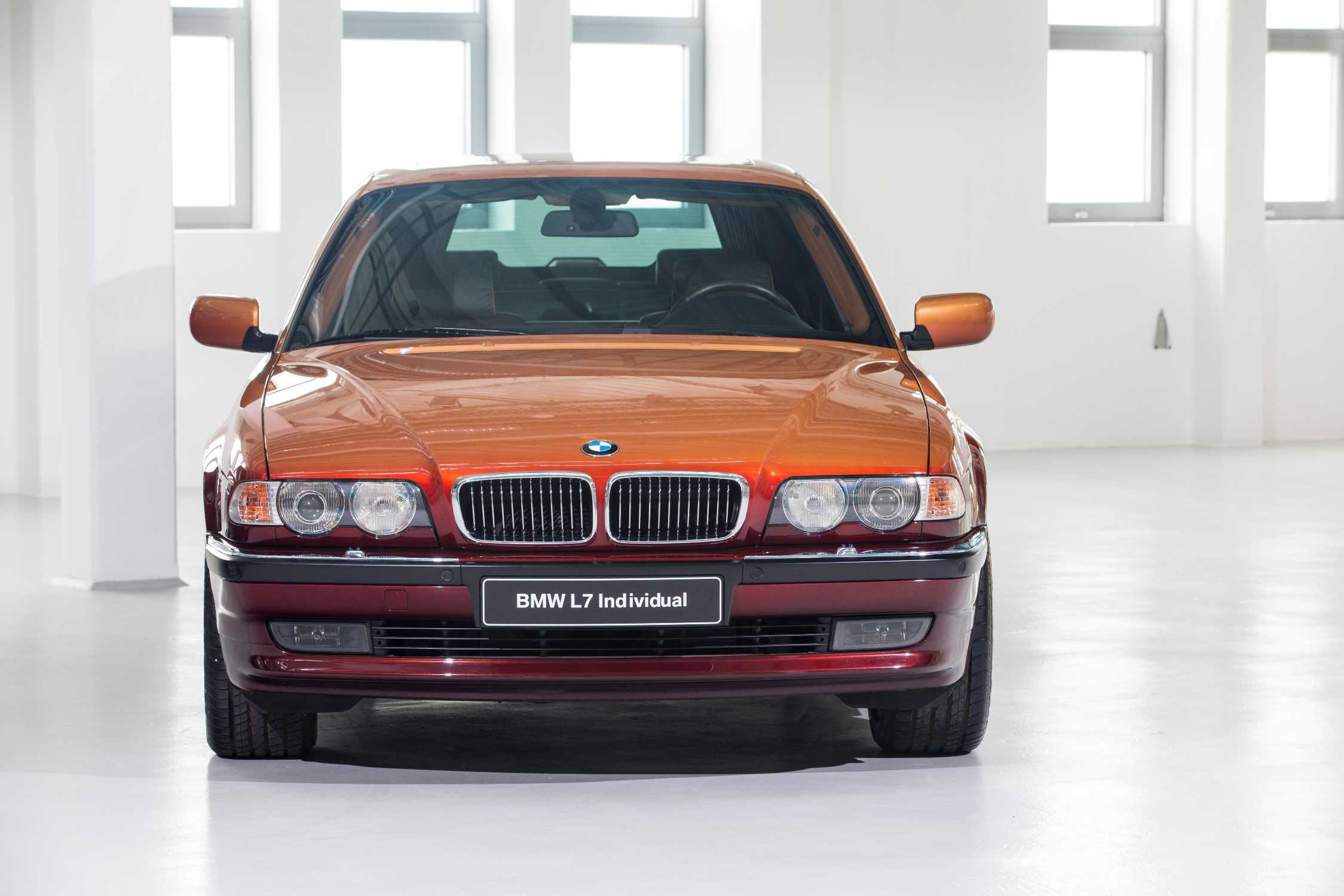
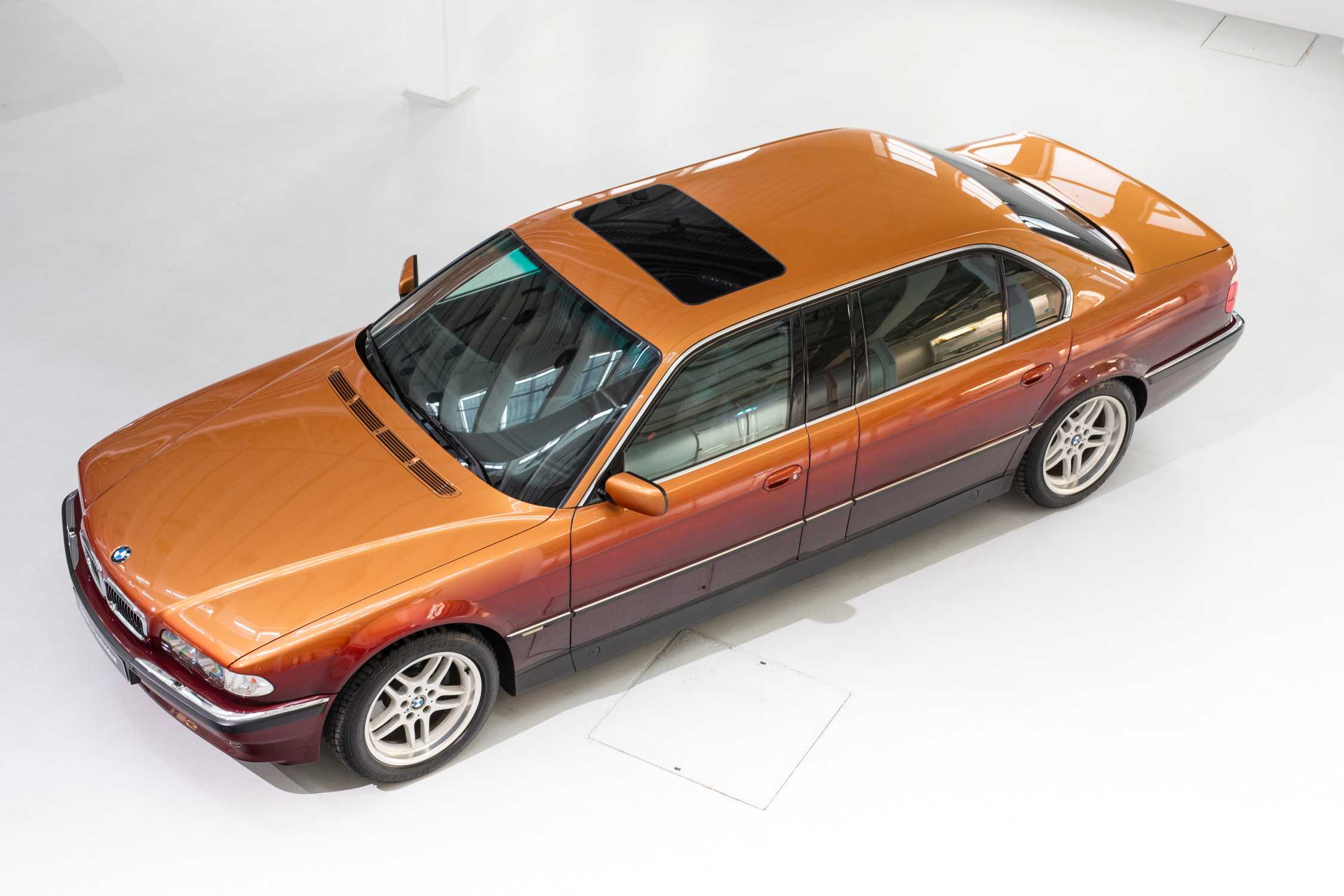
The Karl Lagerfeld BMW L7 Individual is a one-off E38-generation luxury saloon associated with the year 2000. Its extended body, two-tone finish and personalized cabin place it within BMW Individual’s bespoke commissioning story. The vehicle’s rarity is the documented individual commission, not the total production of the L7 model.
Record: BMW-037 · BMW Individual one-off · Germany · 2000.
Specifications and rarity
| Item | Documented reference and scope |
|---|---|
| Factory project reference | 2000 |
| Base vehicle | BMW L7, E38; based on the 750iL family |
| Engine | 5.4-litre V12 |
| Published output / torque | 240 kW (326 hp); 490 Nm |
| Factory acceleration reference | 0–100 km/h in 7 seconds |
| Length | 5.37 metres; 39 cm longer than the standard 7 Series and 25 cm longer than the long-wheelbase version |
| Exterior finish | Gold Orange and Chestnut Bronze Metallic |
| Rarity scope | One Karl Lagerfeld Individual commission; not the entire L7 production run |
Karl Lagerfeld’s L7 is a personal luxury commission
This corrects the workbook’s 1992 E32 identification. BMW’s history discusses earlier Lagerfeld-related 7 Series work as well, but the supplied gold-and-bronze L7 is the later E38 vehicle. Keeping those projects separate prevents a famous owner’s name from merging different cars into one inaccurate profile.
An extended 7 Series with a different sense of proportion
BMW gives the L7 a length of 5.37 metres. It describes the body as 39 centimetres longer than the standard 7 Series and 25 centimetres longer than the already extended version. Those comparisons explain why the car has such a distinctive profile even before the custom finish is considered.
The extension changes the visual relationship between the front cabin and the rear passenger space. In the supplied exterior views, the car reads as a deliberately stretched luxury saloon. That proportion is central to its identity; it is not an ordinary short-wheelbase 7 Series with a special paint colour.
For readers comparing generations, the E38 designation is essential. An E32 from the early 1990s is a different body and project context. The correct chassis family allows the photography, model history and year to agree rather than forcing them into an inherited workbook label.
Two-tone colour makes the commission immediately recognizable
BMW identifies the paired finishes as Gold Orange and Chestnut Bronze Metallic. The contrast emphasizes the long body and gives the Individual commission an unmistakable visual character. The colour names preserve a level of specificity that a general gold-and-brown description would lose.
A two-tone finish can also change how body surfaces appear in a photograph. Highlights on the upper and lower sections separate the long saloon into visible areas, while the extended middle portion makes those areas unusually prominent. This is an observation of the supplied vehicle, rather than a claim that the paint changes its mechanical performance.
The finish is useful for finding the documented car in archive images, but it does not substitute for provenance. A later recreation of the colour scheme would not become the original Lagerfeld commission. The link between the factory’s account and the photographed object remains the stronger identifier.
V12 power within a luxury brief
BMW lists a 5.4-litre V12, 240 kW or 326 hp, and 490 Nm for the L7. Its account gives a seven-second 0–100 km/h reference and describes a vehicle weighing approximately 2.2 tonnes. The figures place the commission within a large, powerful luxury-saloon context.
The emphasis differs from the lightweight M3s in this batch. The L7 uses space, finish and personalization to establish its character. Its V12 supports that luxury brief, while the long body provides an unusually generous platform for an individual cabin arrangement.
Those different purposes explain why a rare-car collection should not be organized only by acceleration. A bespoke L7 and a homologation M3 can each deserve a separate entry for clear but different reasons. Their specifications help explain their priorities without creating a false competition between unlike projects.
The cabin and the meaning of BMW Individual
A personal commission is most interesting when its documented choices are treated as part of the complete car. The exterior finish is the visible introduction, while the cabin carries the relationship between the automobile and its intended user. The L7’s extended passenger space gives those choices room to become a defining feature.
BMW Individual connects a factory vehicle with more specific material, colour and equipment decisions. In this case, Lagerfeld’s involvement provides the personal association, while the E38 L7 supplies the mechanical and architectural foundation. Neither alone fully explains the object.
The profile does not turn every Individual-equipped 7 Series into a one-off. A factory option programme can produce many vehicles, whereas this entry counts the specific Lagerfeld commission. That scope keeps the rarity claim attached to a documented car rather than to a broad marketing label.
Clean photographs of the correct L7
The supplied factory photographs identify a BMW 7 Series styled by Karl Lagerfeld in the June 2021 archive context. Their imagery corresponds with the E38 L7 and its distinctive two-tone treatment. The modern source date is separate from the year 2000 project reference.
Both images are retained as supplied photographs without a black archive information panel embedded underneath. Captions carry BMW AG’s image credit, source links and the stated press terms. Those credits remain visible to a reader of the Vehicle Profile, rather than existing only in hidden metadata.
The one-off count excludes other Lagerfeld-related BMWs and the wider L7 model run. That makes the corrected identity practical: a reader can recognize the right vehicle, understand its luxury brief and follow its factory source without confusing it with an earlier 7 Series project.
Frequently asked questions
Is this a 1992 E32?
No. The documented two-tone L7 is an E38 Individual commission associated by BMW with 2000.
How many are counted here?
One Lagerfeld commission, not the production total of all BMW L7s.
What are the two exterior colours?
Gold Orange and Chestnut Bronze Metallic.
How long is the L7?
BMW gives 5.37 metres, 39 cm longer than the standard 7 Series and 25 cm longer than the long-wheelbase version.
What engine specification does BMW publish?
A 5.4-litre V12 with 240 kW, 326 hp and 490 Nm.
Are the photographs from the year 2000?
Their factory archive context is June 2021. The project’s historical reference year remains 2000.
Explore related verified BMW profiles
- BMW 850 CSi Art Car — David Hockney, 1995
- BMW 525i Art Car — Esther Mahlangu, 1991
- BMW 730i Art Car — César Manrique, 1990
Sources and photo credits
- BMW M: Individual one-offs including the 2000 E38 L7
- BMW: Karl Lagerfeld Individual commission archive
Photo: BMW AG / BMW Group PressClub · Press/editorial use only. BMW-supplied press photograph under BMW PressClub terms. Original supplied photograph retained without local cropping or content alteration.
Photo: BMW AG / BMW Group PressClub · Press/editorial use only. BMW-supplied press photograph under BMW PressClub terms. Original supplied photograph retained without local cropping or content alteration.
Why this machine matters
The one-off count excludes other Lagerfeld-related BMWs and the wider L7 model run. That makes the corrected identity practical: a reader can recognize the right vehicle, understand its luxury brief and follow its factory source without confusing it with an earlier 7 Series project.
Built in limited numbers
One Karl Lagerfeld Individual commission; not the entire L7 production run
Gallery
Specifications
Factory specifications may vary by model year, market and configuration.
Identity & production
- Official model
- BMW L7 Individual — Karl Lagerfeld, 2000
- Base model
- 7 Series E38
- Worldwide production
- 1
Powertrain & performance
- Engine
- 5.4-litre V12