BMW M8 E31 Prototype (1992)
Discover BMW M8 E31 Prototype (1992) history, specifications and rarity, with sourced details, FAQs and authentic photographs with visible credits.
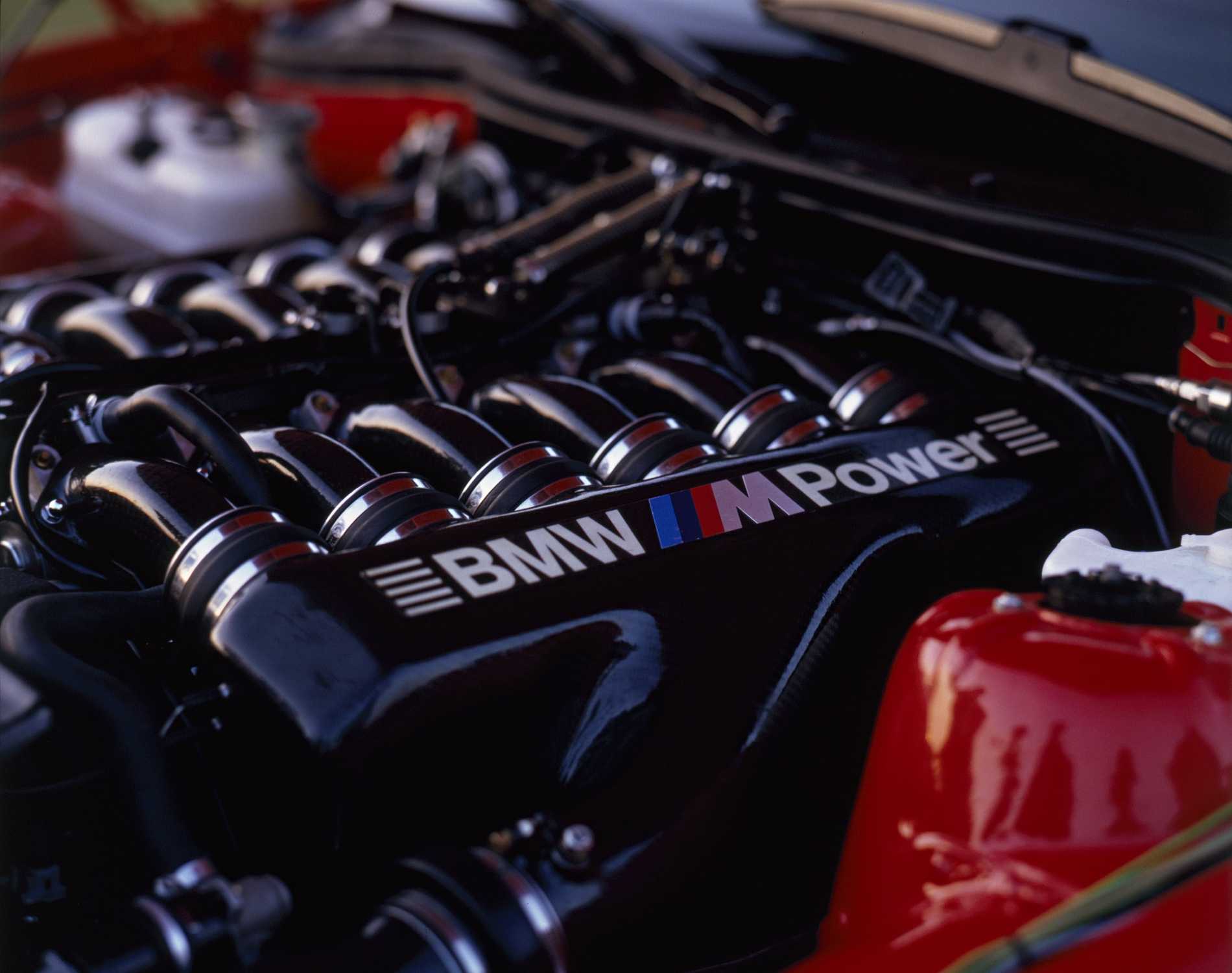
BMW’s E31 M8 prototype explored an extreme version of the first 8 Series, combining a six-litre V12 with a lighter and more focused body. The factory’s current account identifies a 1992 build. It remained a one-off engineering project rather than becoming a customer production model.
Record: BMW-033 · Factory prototype one-off · Germany · 1992.
Specifications and rarity
| Item | Documented reference and scope |
|---|---|
| Factory build reference | 1992 |
| Engine | 6,064 cc naturally aspirated V12; BMW lists S70/2 |
| Published output / torque | 640 hp at 7,500 rpm; 650 Nm at 5,600 rpm |
| Transmission | Six-speed manual |
| Factory weight reference | 1,443 kg |
| Public reveal | 2010, after years outside public view |
| Rarity scope | One factory E31 M8 prototype; never a series-production M8 |
The E31 M8 that remained a prototype
This profile corrects the workbook’s earlier year while preserving BMW-033 as the inventory reference. It also separates the red E31 prototype from later M8 development cars. A photograph merely captioned M8 prototype can show a much newer generation, so the E31 identity is checked against the vehicle’s actual shape.
A V12 specification far beyond an ordinary 8 Series
BMW publishes 6,064 cc displacement, 640 hp at 7,500 rpm and 650 Nm at 5,600 rpm for the prototype. It lists the engine designation as S70/2 and associates it with a six-speed manual transmission. These are factory prototype references, not specifications for a series-built 850i or 850 CSi.
The larger output is only part of the story. A prototype can investigate the relationship between engine, cooling, bodywork and weight without committing that combination to production. The M8’s significance is therefore an engineering proposition expressed through a physical vehicle, rather than a special-edition badge applied to a normal showroom car.
The table deliberately does not supply an invented acceleration result. BMW’s description of the prototype does not establish a measured 0–100 km/h time for this profile. A striking power figure should not be used as permission to fill a missing performance field with a calculation presented as a test.
Cooling openings and a different front-end treatment
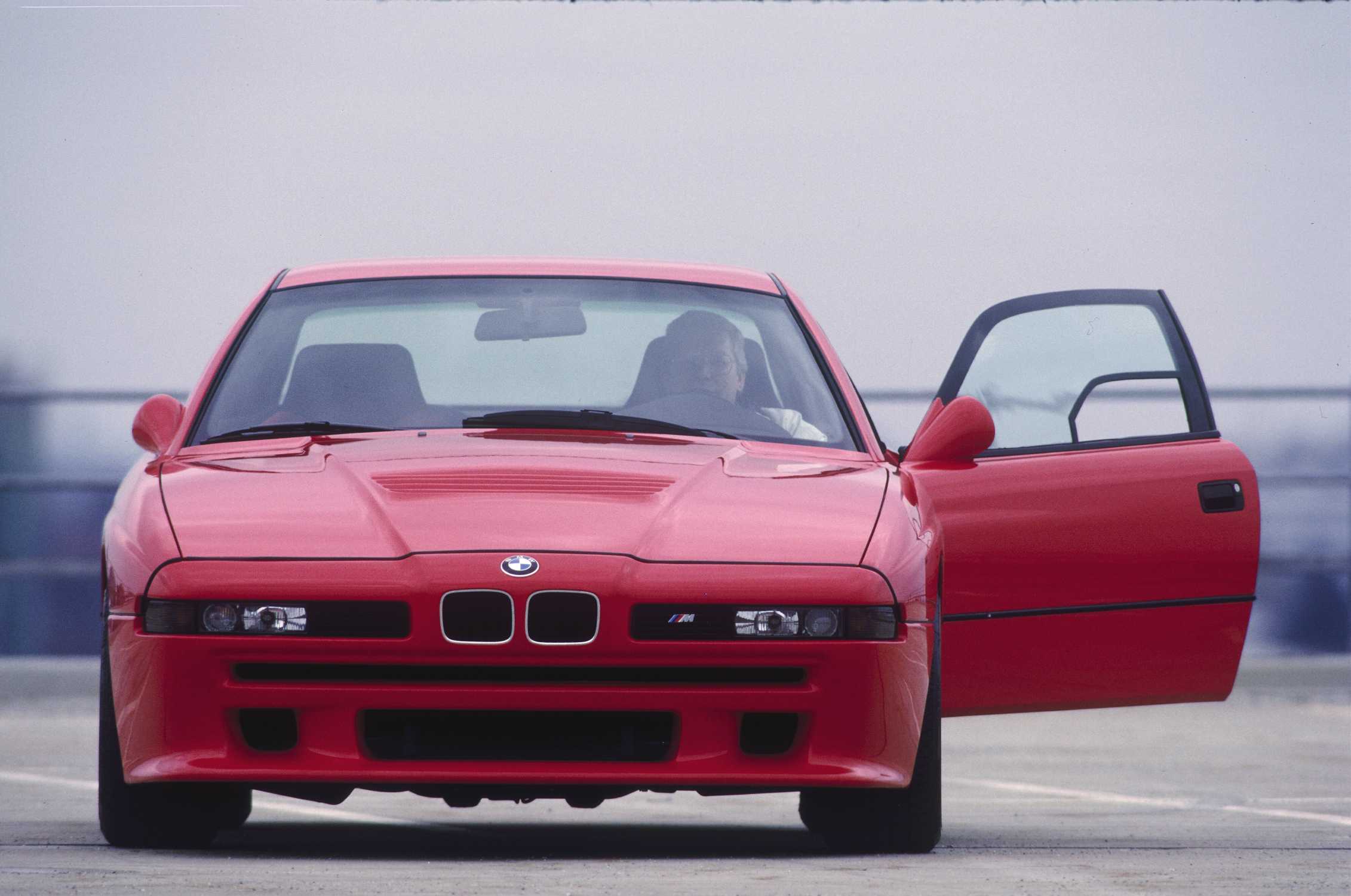
The red car is recognizable through its widened body and prominent side openings. Its headlights sit in the front bumper instead of following the production E31’s familiar pop-up arrangement. These visible changes give the prototype an appearance that is related to the 8 Series but clearly distinct from a standard coupé.
The side openings are particularly important in a photographic comparison. Together with the broader body, they make the prototype more than a car with different wheels. They also illustrate how an ambitious engine installation affects the surrounding vehicle, connecting the powertrain story with the physical surfaces.
The supplied factory photographs show the actual E31 object. Images of a later camouflaged M8 prototype were excluded during preparation. That separation prevents a common archive mistake: matching a model name while missing the generation to which the image belongs.
Weight reduction and a focused interior
BMW describes lightweight body components, including glass-fibre-reinforced plastic parts, and publishes a 1,443 kg weight reference. Its account also identifies a carbon intake and a cabin with sporting materials and equipment. These details put the high output in the context of a complete development project.
The interior is therefore another place to look for the prototype’s distinct purpose. A luxury grand touring coupé and an extreme experimental M car can share a body family while prioritizing very different experiences. The material and equipment choices help explain that difference without requiring a claim that the prototype was available for road customers.
The listed mass remains a factory reference for the documented car. It should not be compared casually with another vehicle’s weight using an unknown definition. Dry weight, kerb weight and a measured exhibition weight are different descriptions; this profile preserves the source’s scope instead of implying a universal basis.
A delayed public story rather than a cancelled production total
The prototype became publicly visible in 2010 after years away from public view. Its earlier absence helped make the vehicle unusually intriguing within BMW history. The later reveal does not change its build identity or create a 2010 model-year production series.
The rarity count is one factory prototype. That is not equivalent to saying that one customer M8 was sold, and it does not include the later series-production M8 family. A prototype count concerns a specific object and project, while a retail edition count concerns a run of cars built for customers.
The 850 CSi provides a useful contemporary comparison because it represents a different E31 outcome. Hockney’s 850 CSi Art Car adds another one-off story on the same broad platform. Keeping those entries separate allows readers to explore engineering rarity and artistic rarity without merging unrelated identities.
Photographs that establish the right generation
The BMW Canada archive captions identify the supplied views as the E31 M8 prototype in an August 2019 photographic context. Their publication date is much later than the car’s factory build reference. The caption retains both the historical object identity and the modern archive context.
A full-car view makes the extended cooling treatment, roofline and red body easy to compare. The second view supplies another perspective on the same prototype. Both images carry BMW AG credits and source links outside the picture, rather than a black archive information section attached to the photograph.
The M8’s lasting interest comes from the relationship between an ambitious mechanical proposal and a single surviving factory object. The documented specification and correct photographs explain that relationship more convincingly than an unsupported top-speed or acceleration claim.
Frequently asked questions
What year does BMW identify for the E31 M8 prototype?
The factory’s current account lists a 1992 build, correcting the earlier workbook date.
How many were made?
One factory prototype is counted here; it was not a customer production series.
What engine figures does BMW publish?
6,064 cc, 640 hp at 7,500 rpm and 650 Nm at 5,600 rpm.
Did it have a manual gearbox?
BMW identifies a six-speed manual transmission.
When was it publicly revealed?
BMW records its public appearance in 2010 after years outside public view.
Are later camouflaged M8 prototypes included?
No. This entry and its photographs concern the red E31 prototype only.
Explore related verified BMW profiles
- BMW 850 CSi Art Car — David Hockney, 1995
- BMW M1 E26 — Road Supercar and Procar Foundation
- BMW M3 GT E36 (1995)
Sources and photo credits
Photo: BMW AG / BMW Group PressClub · Press/editorial use only. BMW-supplied press photograph under BMW PressClub terms. Original supplied photograph retained without local cropping or content alteration.
Photo: BMW AG / BMW Group PressClub · Press/editorial use only. BMW-supplied press photograph under BMW PressClub terms. Original supplied photograph retained without local cropping or content alteration.
Why this machine matters
The M8’s lasting interest comes from the relationship between an ambitious mechanical proposal and a single surviving factory object. The documented specification and correct photographs explain that relationship more convincingly than an unsupported top-speed or acceleration claim.
Built in limited numbers
One factory E31 M8 prototype; never a series-production M8
Gallery
Specifications
Factory specifications may vary by model year, market and configuration.
Identity & production
- Official model
- BMW M8 E31 Prototype (1992)
- Base model
- 8 Series E31
- Worldwide production
- 1
Powertrain & performance
- Engine
- 6,064 cc naturally aspirated V12; BMW lists S70/2
- Transmission
- Six-speed manual