BMW M3 GT E36 (1995)
Discover BMW M3 GT E36 (1995) history, specifications and rarity, with sourced details, FAQs and authentic photographs with visible credits.
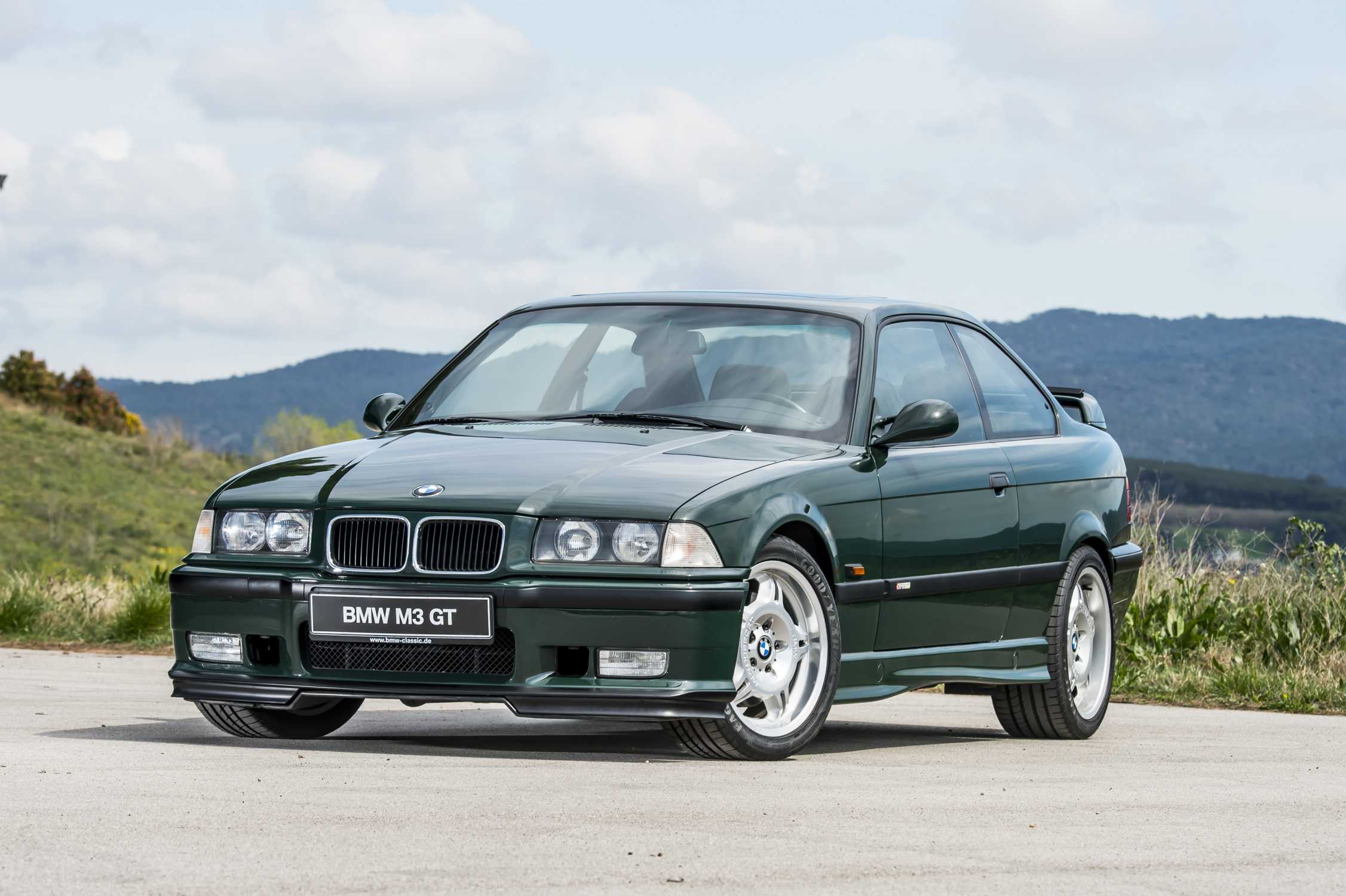
The 1995 BMW M3 GT is a limited E36 coupé combining a developed three-litre six-cylinder with distinctive green body and cabin finishes. BMW’s current model account gives a total of 356, including five pre-production cars. The GT earns its own profile through a coherent factory package, rather than through colour alone.
Record: BMW-043 · Limited homologation edition · Germany · 1995.
Specifications and rarity
| Item | Documented reference and scope |
|---|---|
| Edition reference | 1995 |
| Engine | S50B30, 3.0-litre naturally aspirated inline-six |
| Published output / torque | 217 kW (295 hp); 323 Nm at 3,900 rpm |
| Factory acceleration reference | 0–100 km/h in 5.9 seconds |
| Transmission / layout | Five-speed manual; rear-wheel drive |
| Exterior finish | British Racing Green, code 312 |
| Cabin | Mexico Green Nappa leather and Amaretta trim |
| Edition count scope | BMW’s 356 total includes five pre-production cars; do not add another five |
The green E36 M3 with a focused European identity
The documented edition year is 1995, correcting the workbook’s earlier reference. Its European S50B30 specification also distinguishes it from the US-market M3 Lightweight in the same batch. These are related special M3s with different engines, purposes and production scopes.
A developed S50B30 with six individual throttles
BMW describes the GT’s three-litre naturally aspirated inline-six as producing 217 kW, or 295 hp, with 323 Nm at 3,900 rpm. Its account discusses shorter intake passages, revised camshaft timing and six individual throttle valves. Those details make the mechanical development more informative than a power figure alone.
The engine remains in the early E36 M3’s three-litre family. It should not be given the displacement of the later 3.2-litre European M3, nor the specification of the US three-litre M3. The shared model badge can hide substantial differences between those configurations.
BMW publishes a 5.9-second 0–100 km/h reference for the GT. The table keeps it with the same factory account as the engine specification. It does not substitute a test result from another E36 variant or a modified privately owned car.
British Racing Green and a matching cabin identity
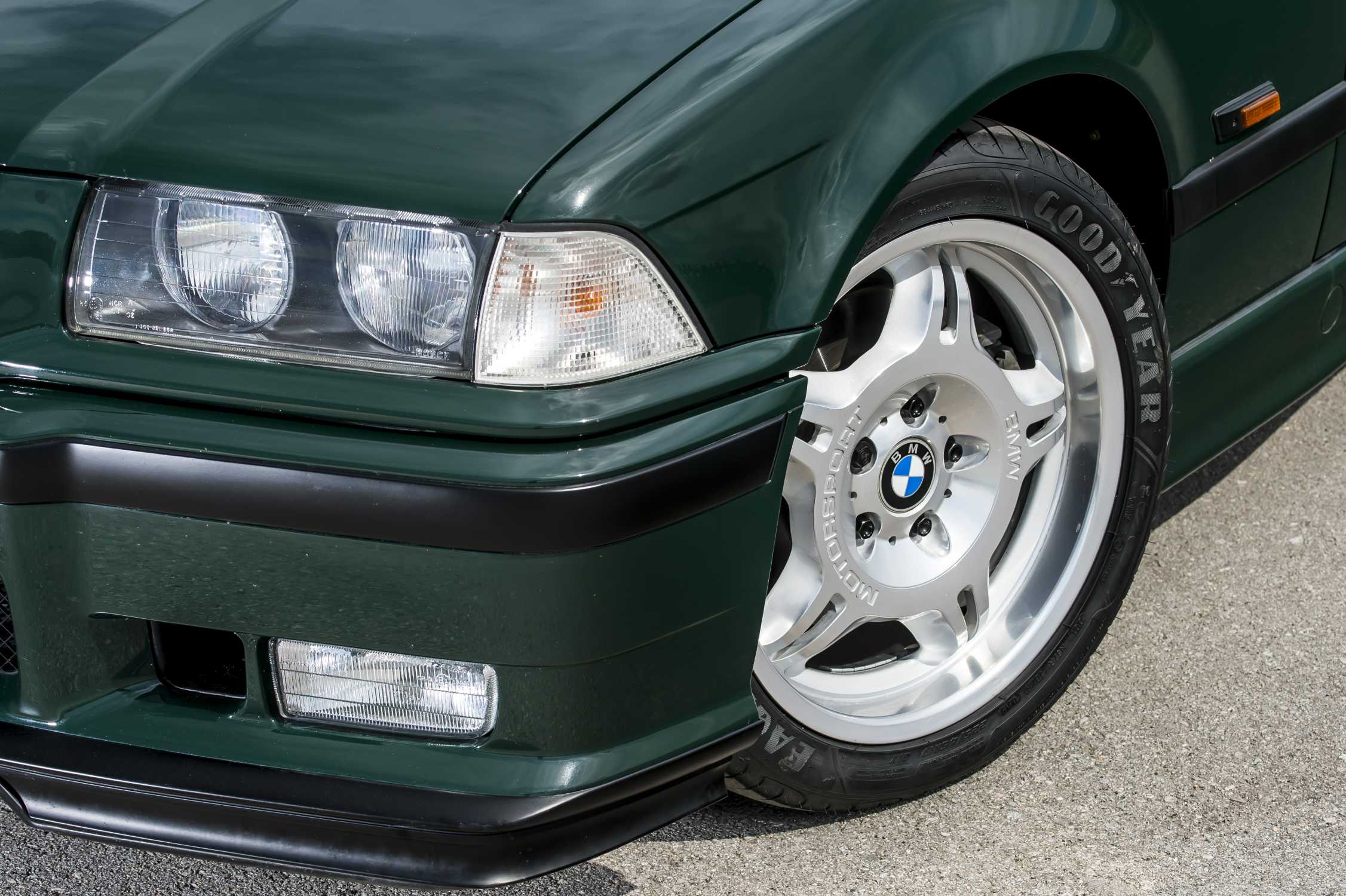
The official model account identifies British Racing Green, colour code 312, across the limited series. That single-colour treatment gives the GT a particularly strong visual identity. It also makes the car easy to recognize in a collection photograph alongside more conventionally coloured E36 M3s.
The cabin combines Mexico Green Nappa leather with Amaretta trim. Its relationship with the exterior is part of the edition’s coordinated specification. Carbon trim and other focused details add to a package that can be read through materials as well as engine development.
Colour is still a clue rather than complete proof. An ordinary E36 M3 can be repainted, and a modified car can acquire GT-style parts. A correct identification should connect the original records and full edition specification with the photographed vehicle. This profile uses BMW’s explicitly identified GT archive images.
Lightweight doors, aerodynamic details and the complete package
BMW identifies aluminium doors, distinctive front and rear aerodynamic elements and seventeen-inch forged wheels in its GT account. These belong to the edition’s development brief. They make the car more than a standard M3 offered in a memorable colour.
The exterior photographs are useful because they show how these elements fit the E36 body. The relatively smooth coupé shape creates a different impression from the flared E30 M3. The GT’s additions therefore operate within a changed model architecture, rather than repeating the visual language of Sport Evolution exactly.
A detail view of the front and wheel area complements the full-car image. It allows readers to examine the visible finish and component relationships while still having a complete vehicle reference. The two photographs serve different visual tasks without implying that they represent separate cars.
Understanding the 356-car total
BMW’s current GT account expressly includes five pre-production cars in its published total of 356. The count should therefore not be written as 356 plus five. This profile preserves that scope instead of combining numbers from differently framed accounts into an unsupported new total.
Older descriptions sometimes quote a rounded or differently scoped customer-series figure. The record here does not invent a reconciliation by silently assigning missing cars to a category. It presents the current factory total with the inclusion statement that accompanies it. That is enough to make the rarity field meaningful and reviewable.
As with the other limited editions, an original build total is not a surviving census. It establishes the scale of the factory programme, not the number currently registered, unmodified or available in one market.
GT and Lightweight: related generation, separate stories
The US M3 Lightweight is a valuable comparison because it shows another special E36 approach. Its market-specific engine and weight-saving brief differ from the European GT’s developed S50B30 and coordinated green specification. Neither is simply the other car with different paint.
Sport Evolution supplies the earlier-generation homologation comparison. Moving between the three profiles shows how special M3 projects can combine engineering, market requirements and edition identity in different proportions. The relationship helps explain the family without duplicating the individual entries.
The supplied GT photographs belong to BMW’s April 2016 heritage archive. Their date is a photographic context, while 1995 remains the edition year. BMW AG receives the visible photo credit, with direct archive links and press-use terms alongside each clean image.
Frequently asked questions
What year is the E36 M3 GT?
BMW’s model account identifies the edition with 1995.
How many does BMW count?
356 in the current factory account, explicitly including five pre-production cars.
Should five be added to 356?
No. Those five are already included in the stated total.
Which engine does it use?
The European S50B30 three-litre inline-six, with BMW publishing 217 kW or 295 hp.
What was the exterior colour?
British Racing Green, code 312.
Is it the same as the US M3 Lightweight?
No. Both are special E36 M3s, but their market-specific engines, equipment and production programmes are distinct.
Explore related verified BMW profiles
Sources and photo credits
- BMW M: E36 M3 GT edition, engine and scoped 356 total
- BMW: thirty years of the M3, historical edition context
Photo: BMW AG / BMW Group PressClub · Press/editorial use only. BMW-supplied press photograph under BMW PressClub terms. Original supplied photograph retained without local cropping or content alteration.
Photo: BMW AG / BMW Group PressClub · Press/editorial use only. BMW-supplied press photograph under BMW PressClub terms. Original supplied photograph retained without local cropping or content alteration.
Why this machine matters
The supplied GT photographs belong to BMW’s April 2016 heritage archive. Their date is a photographic context, while 1995 remains the edition year. BMW AG receives the visible photo credit, with direct archive links and press-use terms alongside each clean image.
Built in limited numbers
BMW’s 356 total includes five pre-production cars; do not add another five
Gallery
Specifications
Factory specifications may vary by model year, market and configuration.
Identity & production
- Official model
- BMW M3 GT E36 (1995)
- Base model
- M3 E36
- Worldwide production
- 356
Powertrain & performance
- Engine
- S50B30, 3.0-litre naturally aspirated inline-six
- Transmission
- Five-speed manual; rear-wheel drive