BMW M3 Cecotto Edition E30 (1989)
Discover BMW M3 Cecotto Edition E30 (1989) history, specifications and rarity, with sourced details, FAQs and authentic photographs with visible credits.
The 1989 BMW M3 Cecotto Edition brings the E30 M3’s touring-car associations into a small road-car series named for Johnny Cecotto. Its appeal comes from the combination of the original M3 body, a high-revving four-cylinder engine and an edition identity tied to a real BMW racing driver. It occupies a different place in the range from the preceding Evolution II and the later 2.5-litre Sport Evolution.
Record: BMW-028 · Limited driver tribute edition · Germany · 1989.
Specifications and rarity
| Item | Documented reference and scope |
|---|---|
| Edition year | 1989 |
| Engine | S14, 2,302 cc naturally aspirated inline-four |
| Published output | 215 hp; retain the source’s stated unit |
| Transmission / layout | Five-speed manual; front engine, rear-wheel drive |
| Edition count scope | 480 Cecotto cars; excludes the 25 Ravaglia cars within the combined 505-car series |
| Identification | Driver-signature cabin plaque and edition-specific finish details |
| Related series total | 505 Cecotto/Ravaglia cars combined; do not add 505 to 25 |
The BMW M3 Cecotto Edition celebrates a driver through a road car
The count used here is 480 Cecotto cars. Another 25 cars in the related programme carried Roberto Ravaglia’s name. Together they form the familiar 505-car Cecotto/Ravaglia series. Keeping those groups separate lets readers compare the two driver editions without counting the same cars twice. BMW-028 covers Cecotto; BMW-029 covers Ravaglia.
Why the driver’s name matters
A driver tribute creates a link between a customer road car and the people associated with the marque’s competition programme. It does not make the road car an ex-works racing chassis. The Cecotto Edition’s named identity belongs to its original edition specification, rather than to a later owner’s decision to add racing graphics.
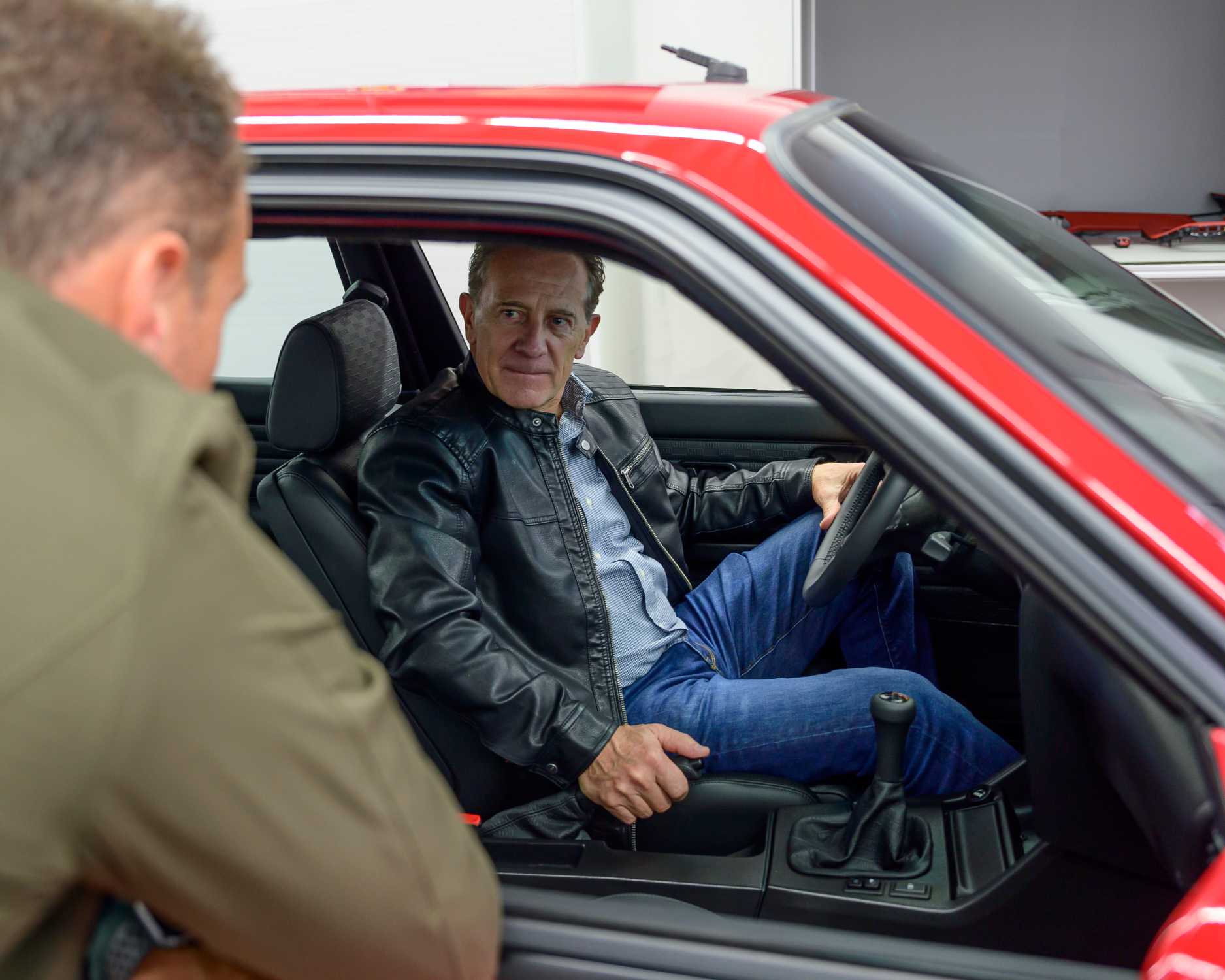
That distinction is particularly useful with the E30 M3. The model appeared in touring-car competition in many different liveries and configurations. A photograph of Cecotto seated in an E30 M3 explains the driver association, while a photograph of the Cecotto Edition explains the road car. The two photographs in this profile deliberately retain those different descriptions.
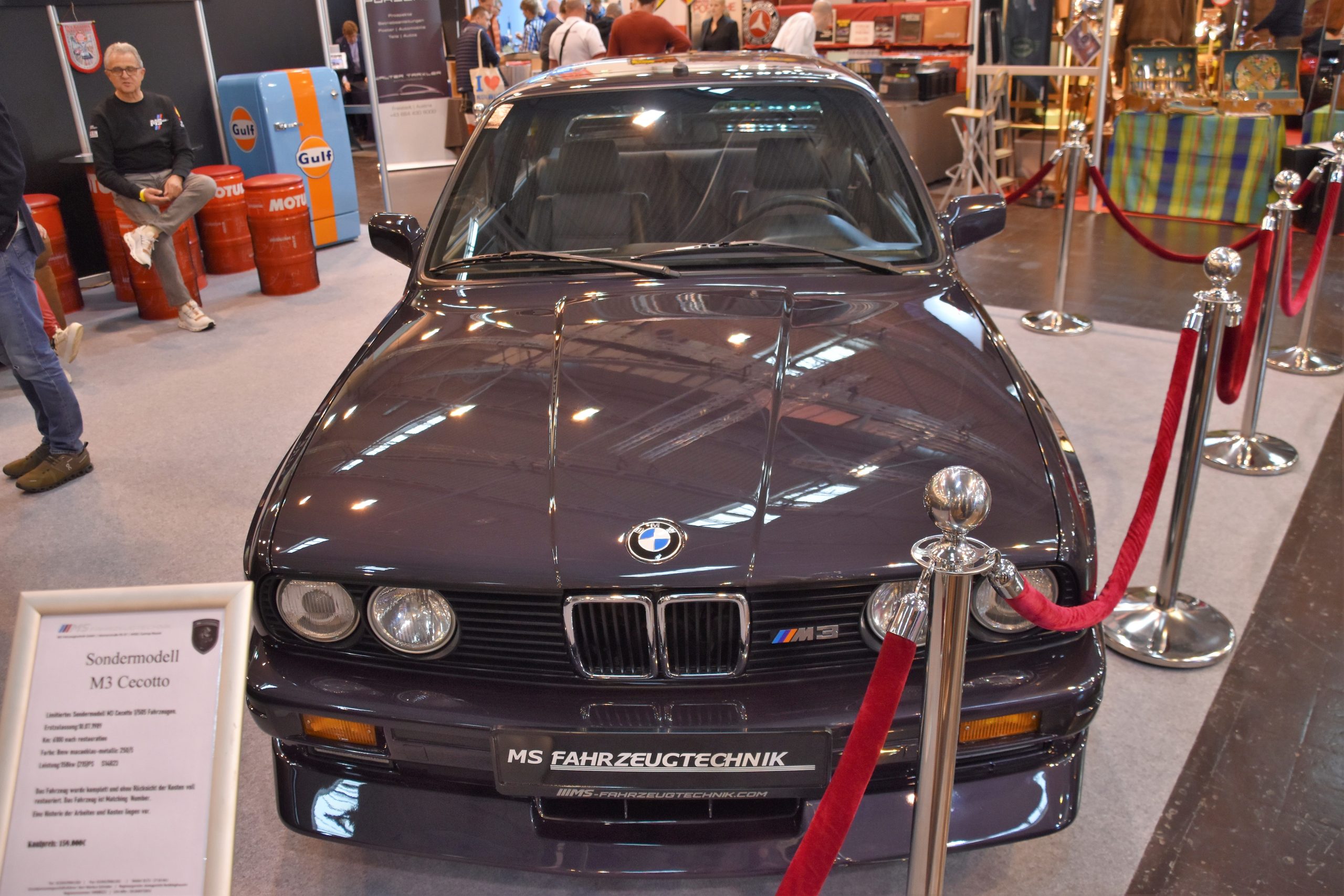
The secondary image shows Johnny Cecotto seated in an E30 M3 in BMW’s October 2020 tribute photography. It is driver context, not a second verified example of the 1989 customer edition. The featured photograph shows the actual Cecotto Edition at Techno Classica Essen in 2023, identified by the photographer’s published caption.
A 2.3-litre S14 rather than the later Sport Evolution engine
The technical reference is a naturally aspirated S14 four-cylinder with 2,302 cc displacement and a published 215 hp output. The five-speed manual gearbox and rear-wheel-drive arrangement keep the edition within the original M3’s mechanical family. This is a compact performance coupé whose identity depends on more than the number on an engine specification sheet.
Engine displacement helps distinguish this car from the subsequent Sport Evolution. That model moved to approximately 2.5 litres and a higher published output. The Cecotto remains a 2.3-litre edition. Copying the later car’s capacity into this profile would make a more impressive table while describing the wrong vehicle.
The same care applies to power units. Historical European publications use hp, PS or CV in ways that should remain attached to their source. This profile retains BMW’s published reference instead of silently treating every historical unit as an identical modern measurement. It also avoids borrowing a speed or acceleration result from a differently specified M3.
Edition details and the problem with identifying a car by colour alone
The cabin signature plaque is a useful starting point when reading an edition photograph. BMW also documents coordinated engine-bay finish details, with the valve cover and air collector associated with the body colour. These details give the edition a coherent identity rather than a single decorative badge.
Several colours are associated with the programme, including Misano Red, Macao Blue and Nogaro Silver. Colour can narrow a visual comparison, but it cannot independently establish an edition. A repainted ordinary M3 can share the same colour, and an authentic edition can have a restoration history. For identification, the original documentation, edition details and complete vehicle should agree.
The front end needs equal care. BMW’s historical Spanish material describes fog lamps returning on this special edition. Its appearance should therefore not be casually described using the brake-cooling openings of an Evolution II. The supplied road-car image can be enlarged to study the actual front bumper rather than relying on a generic E30 M3 description.
How the Cecotto and Ravaglia entries fit together
The two profiles describe different named portions of one limited programme. Their combined total is 505, with 480 assigned here to Cecotto and 25 assigned to Ravaglia. This is a useful example of why a production number needs a defined scope: a programme total and an edition subtotal can both be correct, but they answer different questions.
The Evolution II profile provides an earlier homologation comparison, while Sport Evolution shows a later engineering step. Neither should be treated as a synonym for Cecotto. A model family can contain mechanically related cars whose special significance comes from different decisions: competition development, a driver tribute or a particular market arrangement.
For a collection organized by distinct vehicle identities, the Cecotto’s place is therefore clear. It is a limited road-car edition with a named sporting connection. The driver photograph adds context, the edition photograph supplies the visual reference, and the scoped count keeps that story from inflating the inventory.
Frequently asked questions
How many BMW M3 Cecotto Editions were made?
This profile uses 480 Cecotto cars, excluding the separate 25 Ravaglia cars. Together the two groups total 505.
Is the Cecotto Edition the same as the Ravaglia Edition?
They are related 1989 driver editions within one 505-car programme, but carry different driver identities.
What engine does the Cecotto Edition use?
A 2,302 cc S14 naturally aspirated four-cylinder, with BMW publishing 215 hp.
Is it a 2.5-litre Sport Evolution?
No. Sport Evolution is the later 600-car model with a larger engine and its own specification.
Does the secondary photograph establish a second Cecotto Edition?
No. It shows Johnny Cecotto in an E30 M3 in BMW’s October 2020 driver photography and is explicitly labelled driver context.
Who photographed the featured Cecotto Edition?
Charles, known on Flickr as usf1fan2, photographed it at Techno Classica Essen on 15 April 2023. The photograph is licensed CC BY 2.0.
Explore related verified BMW profiles
- BMW M3 Ravaglia Edition E30 (1989)
- BMW M3 Evolution II (E30, 1988)
- BMW M3 Sport Evolution E30 (1990)
Sources and photo credits
- BMW Classic: Cecotto and Ravaglia edition reference
- BMW M: first-generation M3 and its distinct editions
- BMW Spain: M3 heritage; 480 Cecotto cars and edition details
- BMW: Johnny Cecotto driver portrait archive
Photo: Charles (usf1fan2) / Wikimedia Commons · CC BY 2.0. Photograph licensed CC BY 2.0 by Charles (usf1fan2). Original supplied photograph retained without local cropping or content alteration.
Photo: BMW AG / BMW Group PressClub · Press/editorial use only. BMW-supplied press photograph under BMW PressClub terms. Original supplied photograph retained without local cropping or content alteration.
Why this machine matters
For a collection organized by distinct vehicle identities, the Cecotto’s place is therefore clear. It is a limited road-car edition with a named sporting connection. The driver photograph adds context, the edition photograph supplies the visual reference, and the scoped count keeps that story from inflating the inventory.
Built in limited numbers
480 Cecotto cars; excludes the 25 Ravaglia cars within the combined 505-car series
Gallery
Specifications
Factory specifications may vary by model year, market and configuration.
Identity & production
- Official model
- BMW M3 Cecotto Edition E30 (1989)
- Base model
- M3 E30
- Worldwide production
- 480
Powertrain & performance
- Engine
- S14, 2,302 cc naturally aspirated inline-four
- Transmission
- Five-speed manual; front engine, rear-wheel drive