BMW M3 Ravaglia Edition E30 (1989)
Discover BMW M3 Ravaglia Edition E30 (1989) history, specifications and rarity, with sourced details, FAQs and authentic photographs with visible credits.
The 1989 BMW M3 Ravaglia Edition is a small named group within the E30 M3’s Cecotto/Ravaglia programme. BMW identifies 25 Ravaglia cars out of the combined 505. Its rarity is therefore a defined edition subtotal, not a second production run of 505 cars and not a count of every M3 associated with Roberto Ravaglia.
Record: BMW-029 · Limited driver tribute edition · Germany · 1989.
Specifications and rarity
| Item | Documented reference and scope |
|---|---|
| Edition year | 1989 |
| Engine | S14, 2,302 cc naturally aspirated inline-four; 16 valves |
| BMW UK fleet output | 215 hp at 6,750 rpm; 230 Nm at 4,600 rpm |
| Transmission / layout | Five-speed manual; rear-wheel drive |
| BMW UK fleet performance | 0–62 mph in 6.7 seconds; 143 mph, specific published fleet reference |
| Edition count scope | 25 Ravaglia cars within the combined 505-car Cecotto/Ravaglia programme |
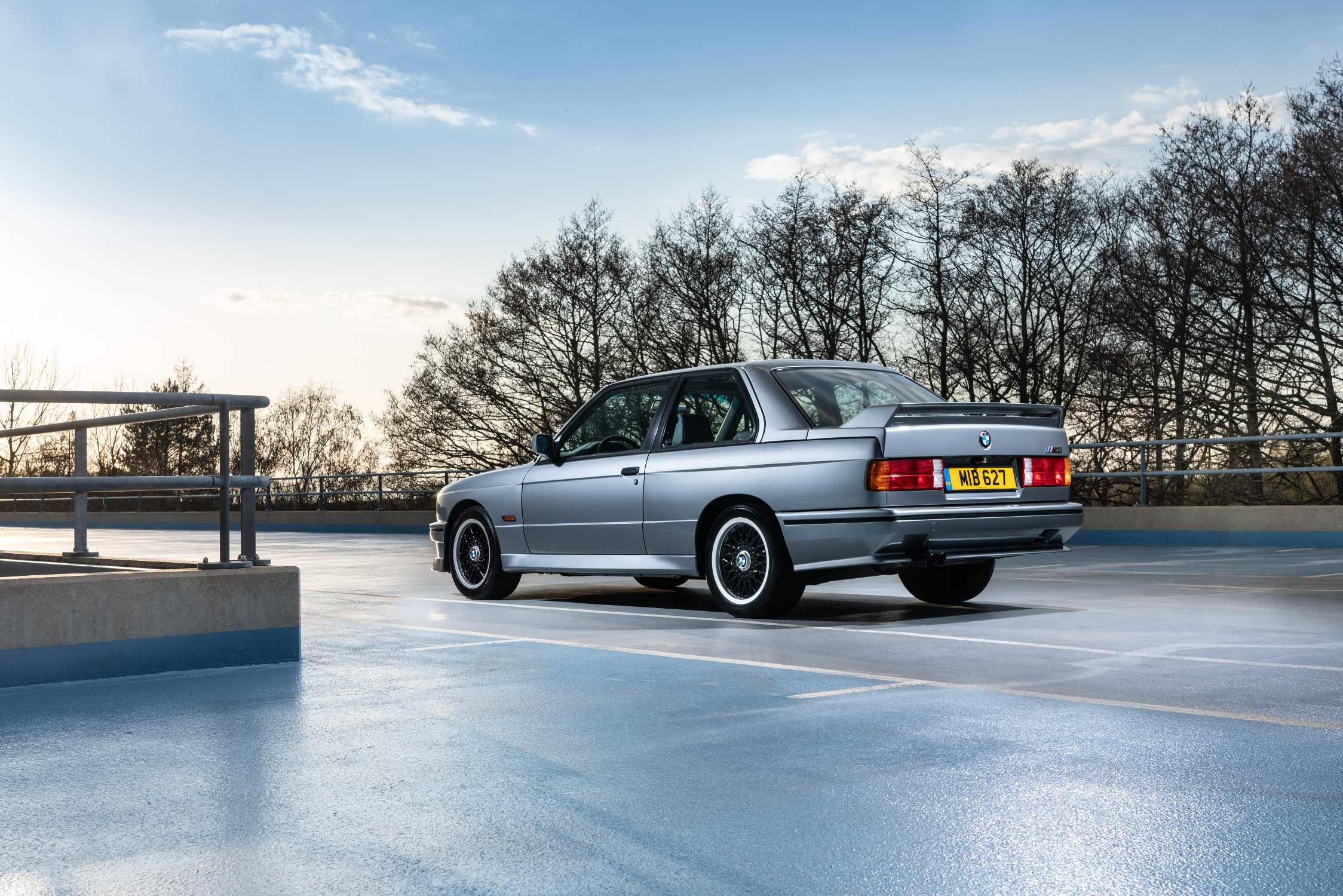
| Photographed factory reference | BMW UK historic fleet car MIB 627 |
Twenty-five cars with Roberto Ravaglia’s name
The entry follows the Ravaglia Edition identity through its sporting association, shared mechanical foundation and factory photographic reference. BMW’s UK historic fleet provides a particularly useful example: its 1989 car carries registration MIB 627 and is documented in a dedicated technical sheet. That makes the photographs more informative than an anonymous image of a similarly coloured M3.
A tribute edition in the original M3 family
The driver name gives this edition its distinguishing identity. Within the same generation, the M3 could be encountered as a standard road model, a homologation development, a named special edition or a racing car. These categories often overlap visually, but they should not be collapsed into one label.
The Ravaglia name also appears in the earlier Europameister story. That does not make the Europameister and the 1989 Ravaglia Edition the same series. Year, edition designation and count must stay together. A signature associated with the driver can have meaning in more than one programme, so a signature alone is insufficient to identify which programme a car belongs to.
Here the name belongs to the 25-car Ravaglia subgroup. The companion Cecotto profile covers the remaining 480 cars in the shared programme. Those separate entries let an enthusiast follow each tribute without producing a duplicate programme total.
The factory fleet specification gives the numbers a clear context
BMW UK’s reference sheet identifies a 2,302 cc S14 engine, a four-cylinder layout and a sixteen-valve cylinder head. It lists 215 hp at 6,750 rpm and 230 Nm at 4,600 rpm. These figures explain the road car’s mechanical character without importing the output of a DTM racing engine.
The same sheet publishes 6.7 seconds from rest to 62 mph and a 143 mph top speed. They are retained here as the UK fleet’s published historical reference. This is preferable to mixing a speed quoted on a general model page with an acceleration result drawn from another variant. A useful specification table gives readers a consistent source context.
The five-speed manual and rear-wheel-drive arrangement complete the basic picture. The important comparison is with other E30 M3 road editions, not with a modern turbocharged M3. Their shared badge does not imply the same engine layout, electronic systems or transmission choices across generations.
Reading the supplied photographs of MIB 627
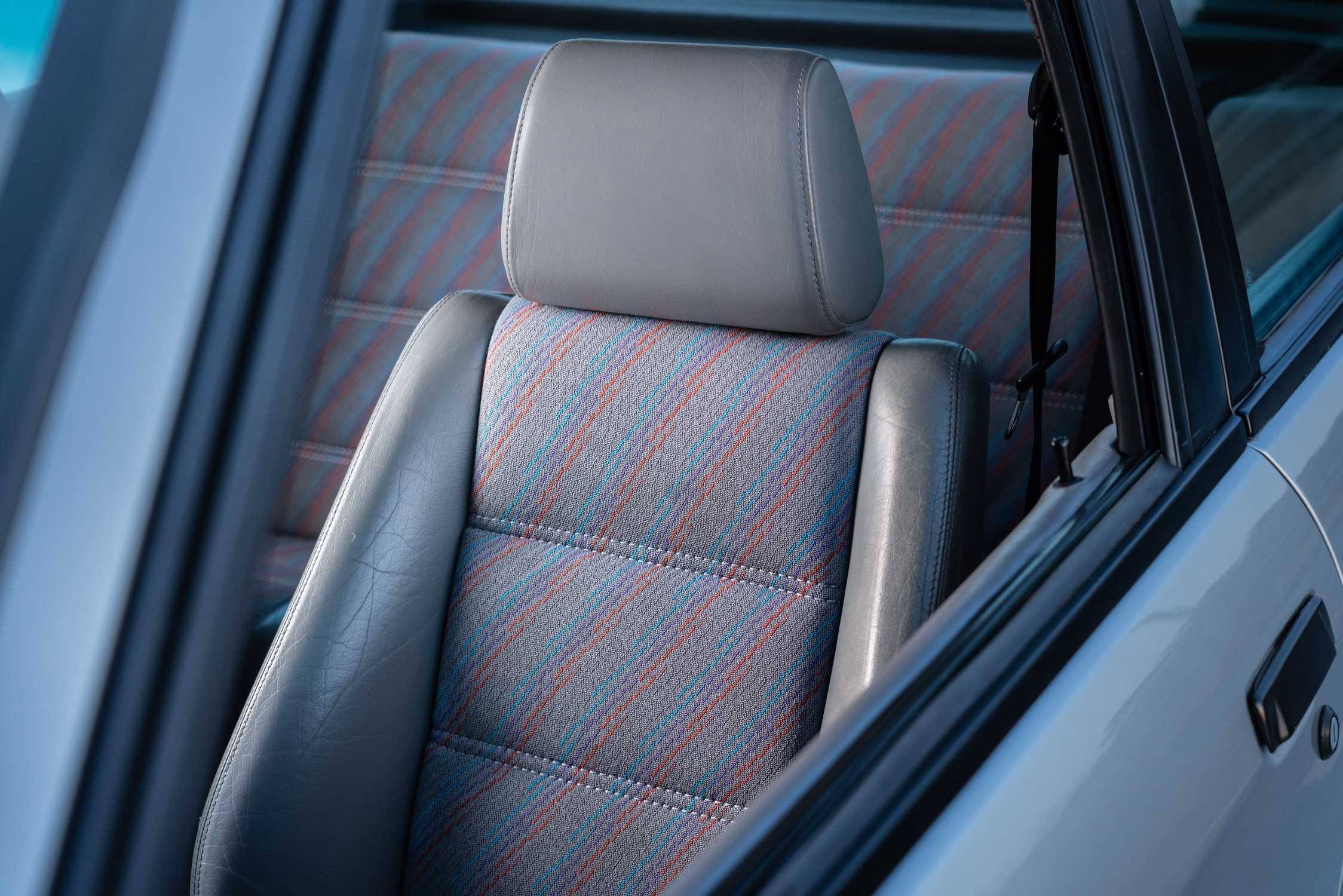
The two supplied BMW UK photographs show the same historic fleet car from different angles. The registration provides a visible connection with the factory technical sheet. It is a reference example of the Ravaglia Edition, rather than an attempt to document every car in the 25-car group.
A complete exterior view shows how much of the E30 M3’s character comes from its body architecture: the compact cabin, pronounced wheel arches and rear wing work together. The edition’s driver association sits within that established form. It does not require an exaggerated body kit or a race number to make the car distinct.
When studying a photograph, first establish which car the archive identifies, then examine its features. A Macao Blue or Nogaro Silver E30 M3 is not automatically a Ravaglia Edition. The factory’s documented identity and the connection to MIB 627 are stronger evidence than colour alone. Both photographs retain BMW’s own image source and visible credit.
Rarity without double counting
A count of 25 describes the original named subgroup. It is not a surviving-population estimate, and it does not establish how many examples remain in a particular country. Those are different questions that require individual vehicle histories and a dated census.
The small subtotal makes this entry especially sensitive to casual arithmetic. Adding a headline Cecotto count of 505 to another 25 Ravaglia cars would create a total of 530 for a programme BMW describes as 505. The inventory therefore uses 480 for Cecotto and 25 for Ravaglia, with the shared programme total stated separately in both profiles.
The result is a more useful collection record. Readers can compare the named driver editions, trace the factory reference photographs and move to the Evolution II or Sport Evolution for a different kind of rarity. Each link leads to a distinct subject whose count has its own meaning.
Frequently asked questions
How many Ravaglia Edition M3s were built?
BMW identifies 25 Ravaglia cars within the combined 505-car Cecotto/Ravaglia series.
Should 25 be added to 505 Cecotto cars?
No. The 25 are included in 505; the disjoint split used here is 480 Cecotto plus 25 Ravaglia.
Which car appears in the supplied pictures?
BMW UK’s historic fleet M3, registration MIB 627, documented as a 1989 Ravaglia Edition.
What engine does it have?
The UK factory sheet specifies a 2,302 cc S14 four-cylinder with sixteen valves and 215 hp.
Are the performance figures for a racing M3?
No. The stated 6.7-second 0–62 mph time and 143 mph speed come from the factory’s road-car fleet reference.
Is this the same as the M3 Europameister?
No. The earlier Europameister and the 1989 Ravaglia Edition are separate named series, despite their connection with the same driver.
Explore related verified BMW profiles
Sources and photo credits
- BMW M: first-generation M3 and its distinct editions
- BMW UK: historic press fleet reference
- BMW UK: 1989 Ravaglia M3 MIB 627 technical sheet
- BMW Classic: Cecotto and Ravaglia edition reference
Photo: BMW AG / BMW Group PressClub · Press/editorial use only. BMW-supplied press photograph under BMW PressClub terms. Original supplied photograph retained without local cropping or content alteration.
Photo: BMW AG / BMW Group PressClub · Press/editorial use only. BMW-supplied press photograph under BMW PressClub terms. Original supplied photograph retained without local cropping or content alteration.
Why this machine matters
The result is a more useful collection record. Readers can compare the named driver editions, trace the factory reference photographs and move to the Evolution II or Sport Evolution for a different kind of rarity. Each link leads to a distinct subject whose count has its own meaning.
Built in limited numbers
25 Ravaglia cars within the combined 505-car Cecotto/Ravaglia programme
Gallery
Specifications
Factory specifications may vary by model year, market and configuration.
Identity & production
- Official model
- BMW M3 Ravaglia Edition E30 (1989)
- Base model
- M3 E30
- Worldwide production
- 25
Powertrain & performance
- Engine
- S14, 2,302 cc naturally aspirated inline-four; 16 valves
- Transmission
- Five-speed manual; rear-wheel drive