BMW M3 Sport Evolution E30 (1990)
Discover BMW M3 Sport Evolution E30 (1990) history, specifications and rarity, with sourced details, FAQs and authentic photographs with visible credits.
The 1990 BMW M3 Sport Evolution is the 600-car homologation model that took the original M3 to approximately 2.5 litres and a published 238 hp. Its significance comes from a connected package of engine development, adjustable aerodynamic elements and focused cabin details. It is the most powerful production development of the E30 M3 described in BMW’s model history.
Record: BMW-032 · Limited homologation edition · Germany · 1990.
Specifications and rarity
| Item | Documented reference and scope |
|---|---|
| Model reference year | 1990; production December 1989–March 1990 |
| Engine | S14, 2,467 cc naturally aspirated inline-four |
| Published output | 238 hp (175 kW) at 7,000 rpm |
| Transmission / layout | Five-speed manual; rear-wheel drive |
| Factory speed reference | 248 km/h |
| Body colours | Brilliant Red or Gloss Black |
| Edition count scope | 600 Sport Evolution road cars; excludes other E30 M3 editions |
The final E30 M3 development stage
Although commonly identified with 1990, BMW’s catalogue places production from December 1989 to March 1990. That distinction explains how a car can belong to the 1990 model story while carrying an earlier build date. The edition count remains 600, separate from Evolution II, Cecotto and Ravaglia.
A larger S14 and a different development goal
The 2,467 cc four-cylinder is the key mechanical identifier. It advances beyond the 2.3-litre configurations used by the earlier editions. BMW publishes 238 hp, or 175 kW, at 7,000 rpm. The naturally aspirated layout preserves the first M3’s high-revving character while increasing displacement.
This is why an Evolution II cannot be described as a Sport Evolution simply because both have additional spoilers. Their engines and edition specifications are different. The names refer to distinct stages in the M3 programme, and a useful profile keeps the engineering changes tied to the correct stage.
The five-speed manual and rear-wheel-drive layout give the specification its period context. A modern comparison can help explain how the M3 family changed, but it should not replace this car’s mechanical identity with the turbocharging, automatic gearboxes or electronically managed systems of later generations.
Adjustable aerodynamics make the shape more than decoration
BMW identifies adjustable aerodynamic elements as part of the Sport Evolution’s distinguishing specification. The front treatment and rear spoiler contribute to the car’s purposeful appearance. Their importance is not simply that the car looks more aggressive; adjustment makes them part of a functional development package.
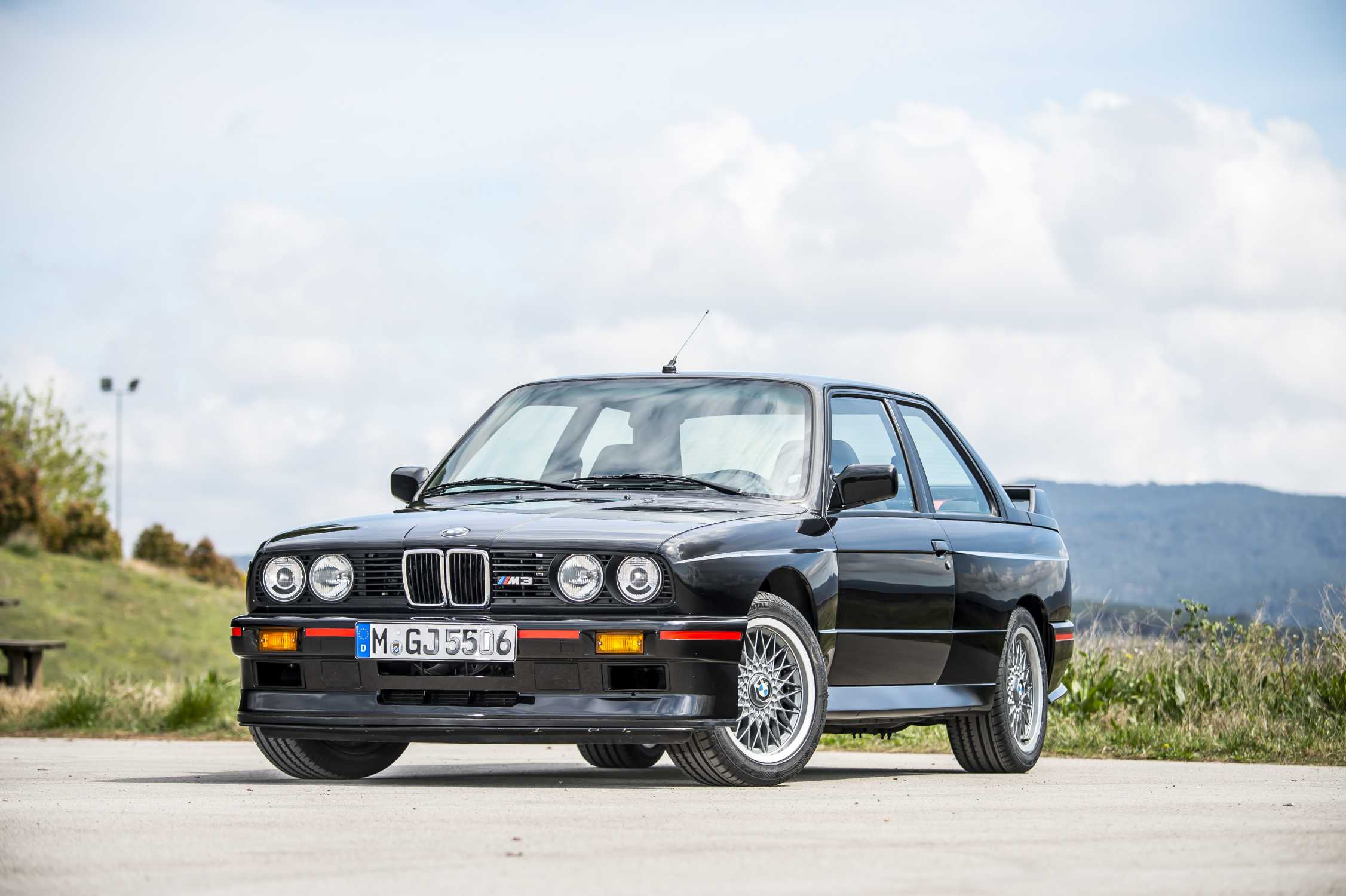
The supplied exterior photograph shows the relationship between the bumper, wheel arches and rear wing. Those elements belong to the complete M3 silhouette. A detail photographed in isolation can show a component, but the full-car view explains how that component sits within the body.
A later-added spoiler cannot by itself establish Sport Evolution identity. The engine, interior specification, original records and edition details must agree. This matters especially with a celebrated model whose appearance is easy to imitate. The profile therefore describes the documented factory edition rather than using one visual clue as proof.
Two colours and a focused cabin
BMW lists Brilliant Red and Gloss Black as the two original body-colour choices. These are more useful identifiers than a general description such as red or black, because named finishes are part of the edition’s documented specification. They still need to be considered alongside the rest of the car.
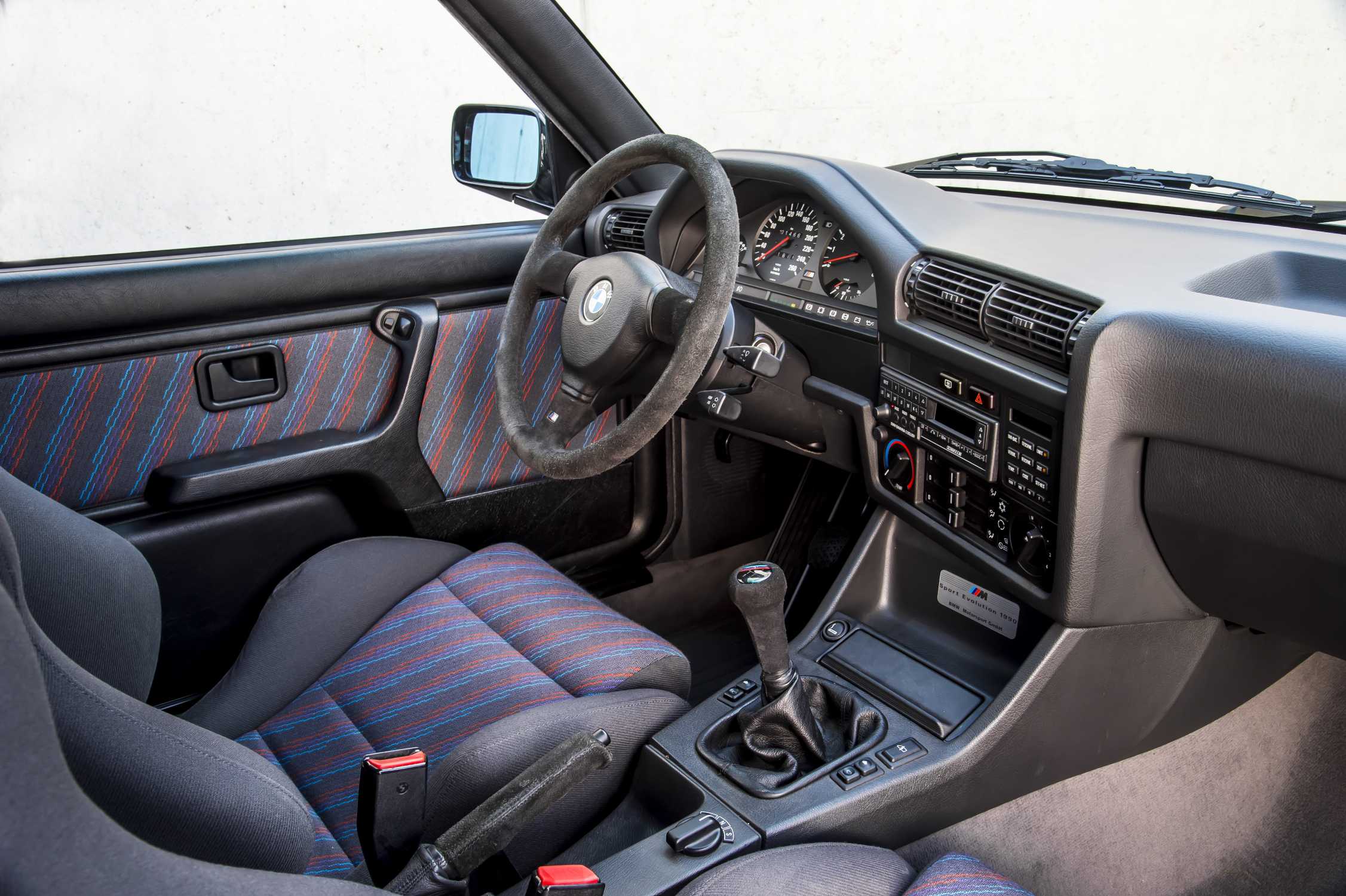
Inside, the model is associated with one-piece sports seats, red belts and a suede-covered steering wheel, gear knob and handbrake grip. The cabin photograph is valuable because the seats and controls are not fully visible in an exterior view. It gives the edition’s more focused driving environment a clear visual reference.
These details also help distinguish the Sport Evolution from the preceding driver editions. The Cecotto and Ravaglia stories center on a named tribute within a 2.3-litre programme. The Sport Evolution’s identity centers on a further homologation development, larger engine and corresponding equipment. Their rarity stories are related through the M3 family but are not identical.
A short production window and a precisely scoped count
The count of 600 belongs to Sport Evolution road cars. It should not be applied to all E30 M3s, all homologation developments or all cars fitted with a Sport Evolution-style wing. The December-to-March production window gives that count a specific historical setting.
An original production total also differs from a current survival count. Knowing that 600 were built does not establish how many remain unmodified, how many retain their original engine or how many are registered in one country. Those questions concern individual histories and require different evidence.
The narrow scope makes comparisons more useful. Evolution II provides the preceding 220 hp development; Cecotto and Ravaglia provide the named driver-edition comparison. Taken together, the profiles show that rarity can arise from different kinds of factory decisions within the same model generation.
What the photographs contribute to the profile
The BMW-supplied photographs identify the Sport Evolution in the factory’s April 2016 heritage context. They show the historical car as photographed much later than its original production period. The image date and the car’s model year are therefore recorded separately.
The exterior image establishes the complete vehicle, while the cabin image shows the seat and control treatment. Both are clean photographs without an archive information panel embedded beneath the car. Their visible credits and source links sit in captions where readers can follow them without confusing them with bodywork or period signage.
The model’s appeal comes from the coherence of its specification. Engine capacity, aero adjustment, colour choices and interior details belong to one limited development rather than an assortment of unrelated upgrades. That coherent identity is what earns Sport Evolution its own place in a rare-car collection.
Frequently asked questions
How many Sport Evolution M3s were built?
BMW records 600 Sport Evolution road cars.
Was it produced only during 1990?
BMW’s catalogue gives December 1989–March 1990, while 1990 remains the usual model reference.
What is the engine capacity?
2,467 cc, commonly described as 2.5 litres, with a naturally aspirated S14 four-cylinder.
How much power does BMW publish?
238 hp, equivalent to the published 175 kW reference, at 7,000 rpm.
Which colours were offered?
Brilliant Red and Gloss Black.
Is Sport Evolution the same as Evolution II?
No. It is the later, larger-engined 600-car development; Evolution II has its own edition identity and count.
Explore related verified BMW profiles
- BMW M3 Evolution II (E30, 1988)
- BMW M3 Cecotto Edition E30 (1989)
- BMW M3 Ravaglia Edition E30 (1989)
Sources and photo credits
- BMW Classic: Sport Evolution catalogue data
- BMW M: first-generation M3 and its distinct editions
- BMW: thirty years of the M3, historical edition context
Photo: BMW AG / BMW Group PressClub · Press/editorial use only. BMW-supplied press photograph under BMW PressClub terms. Original supplied photograph retained without local cropping or content alteration.
Photo: BMW AG / BMW Group PressClub · Press/editorial use only. BMW-supplied press photograph under BMW PressClub terms. Original supplied photograph retained without local cropping or content alteration.
Why this machine matters
The model’s appeal comes from the coherence of its specification. Engine capacity, aero adjustment, colour choices and interior details belong to one limited development rather than an assortment of unrelated upgrades. That coherent identity is what earns Sport Evolution its own place in a rare-car collection.
Built in limited numbers
600 Sport Evolution road cars; excludes other E30 M3 editions
Gallery
Specifications
Factory specifications may vary by model year, market and configuration.
Identity & production
- Official model
- BMW M3 Sport Evolution E30 (1990)
- Base model
- M3 E30
- Worldwide production
- 600
Powertrain & performance
- Engine
- S14, 2,467 cc naturally aspirated inline-four
- Transmission
- Five-speed manual; rear-wheel drive