Bentley Blower No. 1 — Birkin Single-Seater
Birkin’s Blower No. 1 is the individual Bentley identified as chassis HB3402 and registration UU5871. Its single-seater form belongs to a changing competition history, particularly associated with Brooklands. The profile distinguishes this historic machine from Team Car No. 2, the road-production Blower series and later Bentleys carrying commemorative Number 1 branding.
Birkin’s Blower No. 1 is the individual Bentley identified as chassis HB3402 and registration UU5871. Its single-seater form belongs to a changing competition history, particularly associated with Brooklands. The profile distinguishes this historic machine from Team Car No. 2, the road-production Blower series and later Bentleys carrying commemorative Number 1 branding.
Bentley Blower No. 1 — Birkin Single-Seater at a glance
| Manufacturer | Bentley |
|---|---|
| Model / family | 4½ Litre Blower |
| Profile scope | Named historic competition chassis |
| Historical reference year | 1929 |
| Inventory reference | BEN-014 |
| Engine reference | 4½ Litre supercharged four-cylinder family; later installed specification requires dated records |
| Documented individual subject | Birkin Blower No. 1, HB3402 / UU5871 |
The identity of Blower No. 1
A famous racing name is useful only when it leads to an identifiable vehicle. The UK export-review report identifies the Birkin single-seater as chassis HB3402, registration UU5871, and dates the object to 1929–1931. Those details establish the subject more precisely than a generic photograph captioned Blower Bentley. They also separate it from Bentley’s Heritage Collection Team Car No. 2, UU5872. The consecutive-looking registrations make confusion easy, particularly when images circulate without their original descriptions. This profile therefore keeps chassis, registration and configuration together. The single-seater is not a separate new production edition every time its body changes. It is a historic competition vehicle with a development story. That distinction allows the different appearances to be studied as stages of one documented history instead of being counted as unrelated limited-run cars.
A car shaped for Brooklands
The export report describes Birkin’s car as designed predominantly for Brooklands track competition and notes that it was among the fastest cars around the Outer Circuit on two occasions. That is the historical significance to retain. A Brooklands lap record, a road speed guarantee and an endurance-race result are different kinds of performance evidence. Their figures should not be combined into a modern specification sheet without explaining the event and configuration. The single-seat layout gives the car an obvious visual distinction from an open touring Blower, but its purpose goes beyond the absence of passenger seats. It reflects a specialised competition approach, where body form, mechanical preparation and the type of circuit belong together. A reader gets more from that relationship than from an unsupported claim that the car is simply the fastest or best Bentley of its period.
Birkin and Dorothy Paget
The government account places Henry Tim Birkin and his patron Dorothy Paget at the centre of the car’s racing story. Their roles explain how a specialised competition vehicle could be developed outside a straightforward customer-model programme. Patronage, workshop effort and a driver’s technical priorities form part of the machine’s history, rather than serving merely as colourful names beside it. For a collector profile, those relationships should be tied to documented use or development. Ownership by a prominent person is not proof that every later component was fitted during that ownership. Nor should a story about Birkin’s broader racing activity be attributed automatically to this chassis. The most informative narrative identifies the individual car first, then explains the people and decisions associated with the configuration being discussed. That keeps the biography connected to the engineering.
Several bodies and a changing mechanical life
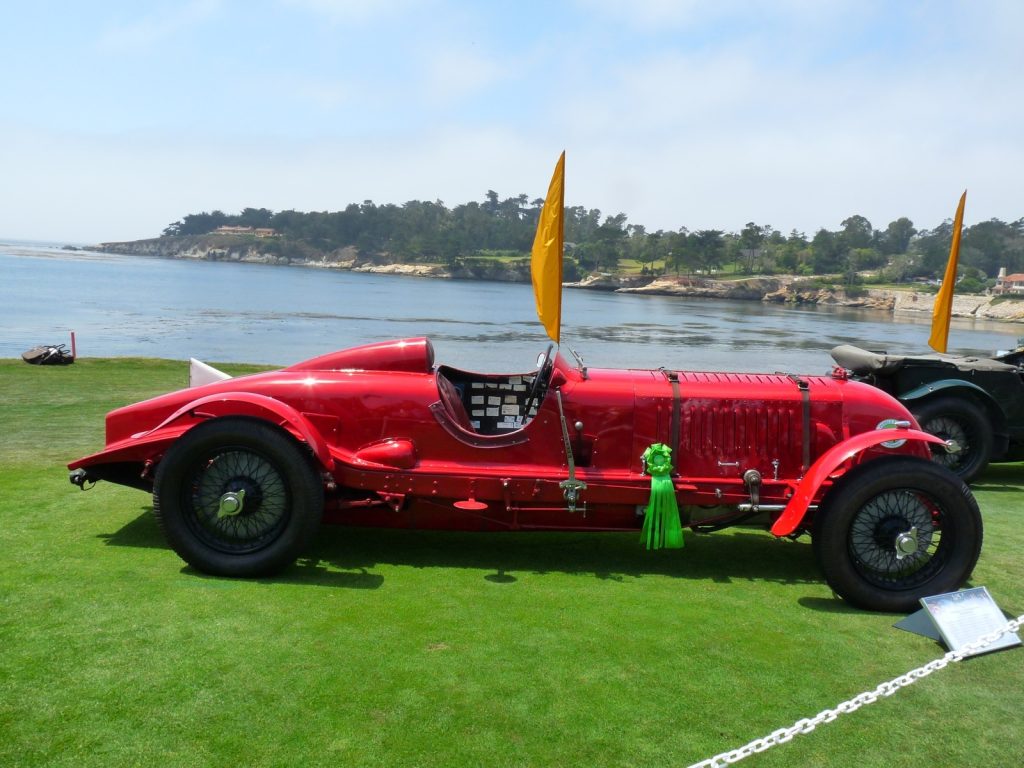
The UK report records a continuous history with multiple body configurations and describes the present single-seater body as not wholly original to that iteration. It also notes that the car did not have its original engine at the time of the review. These details are important, not incidental caveats. A historic racing car can have a recognisable identity while accumulating substantial physical changes. The single-seater photograph included here illustrates a later presentation of the vehicle; it is not evidence that the depicted body and engine are untouched 1929 material. Good documentation distinguishes the original build, subsequent development, component separation and later restoration. That approach makes the surviving machine easier to understand and avoids two misleading extremes: treating every change as destroying all historical identity, or treating continuous identity as proof that nothing important changed.
The export-review record as a useful source
The 2013/14 export report is particularly useful because it identifies the object and summarises the historical arguments considered in the review. It is not a present-day condition report, and this profile does not use it as a current ownership or valuation statement. The underlying lesson for a reader is how a car’s identity, engineering and competition significance can be discussed separately. A vehicle may matter for the study of racing technology even when it has been rebuilt, and that significance is not identical to the proportion of original material it retains. When reading an old auction or institutional report, preserve its date. A later restoration or sale may have changed the situation. The archive can still use the historical record without presenting every detail as a claim about the car’s present location or specification.
Recognising the pictured single-seater
The bundled photograph by Craig Howell identifies Birkin Blower No. 1 at Pebble Beach in 2009. Its narrow competition presentation helps distinguish it from the four-seat touring machines that dominate popular Blower imagery. Use the photograph to observe body shape, seating arrangement and the relationship of the exposed wheels to the body. Use the written identity records to establish which car those features belong to. A racing number or red paint alone would not authenticate a vehicle, particularly when replicas, models and commemorative editions also use famous Bentley imagery. The credit and event date remain visible so the photograph can be interpreted as a modern display of a historic car. They prevent it from being mistaken for a period Brooklands photograph or an independently verified image of the car as originally constructed.
One historic car, several different counting questions
This record follows HB3402 as an individual competition chassis. It does not create a new numerical production edition called No. 1, and it does not add another road car to the fifty production Blowers merely because this profile exists separately. Different database records can describe a series and an important car within its wider history without increasing the original population. The same principle applies to later components or body forms: counting each one as a complete new car would misrepresent the object history. Readers interested in rarity should ask what is being counted before comparing figures. A road-series production total, a racing-team allocation, a single named chassis and a modern commemorative edition all answer different questions. Clear scope is especially valuable here because the shared word Blower can otherwise make unrelated totals appear interchangeable.
How No. 1 fits beside Team Car No. 2
Read the No. 1 and No. 2 profiles together to explore the difference between a Brooklands-focused single-seater history and the original team car associated with the 1930 Le Mans campaign. Their shared engine family does not give them the same competition record or development sequence. Old Number One, the Speed Six winner, is another separate vehicle whose similar name can cause confusion. For an enthusiast assembling a study file, keep one page for each chassis and a separate page for the broader production programme. Add dated photographs under the appropriate configuration, then connect the pages through explained comparisons. That organisation turns a collection of famous names into a coherent historical account. Blower No. 1 earns its place through its own identity and specialised racing development, without borrowing victories or originality claims from other Bentleys.
Frequently asked questions
Which chassis is Blower No. 1?
The UK export-review report identifies the Birkin single-seater as HB3402, registration UU5871.
Is it the same car as Bentley’s Team Car No. 2?
No. Team Car No. 2 is identified separately as HB3403 and UU5872.
Is the surviving single-seater completely original?
The dated government review describes multiple body configurations and replacement material, including a non-original engine. Continuous historical identity and untouched material are different claims.
Does the No. 1 name describe a road-production edition?
No. This profile follows an individual historic competition car. Modern commemorative Bentley editions are separate programmes.
Explore related vehicle profiles
- Bentley Blower — Original Production Cars
- Bentley Blower Team Car No. 2 — UU5872
- Bentley Speed Six — Old Number One
Sources
- UK export-review report — Birkin single-seater HB3402, case 3
- Vintage Bentley Register — No. 1 Birkin Blower history
- Vintage Bentley Register — HB3402 and UU5871
Historical facts follow the linked manufacturer, race-organizer, institutional and specialist records. Visual comparisons and documentation priorities are editorial analysis. Dated specifications, restoration accounts and published estimates retain their original scope; they do not certify a car’s current condition.
Photography and credit
Birkin Blower No. 1 in its single-seater presentation at the 2009 Pebble Beach Concours. This later appearance does not establish that all parts or bodywork are original. Photo: Craig Howell from San Carlos, CA, USA / Wikimedia Commons · CC BY 2.0. Resized proportionally where needed and saved as JPEG; no additional cropping or color alteration. Use under the linked Creative Commons license; adapted photographs retain the same license when ShareAlike applies.
Why this machine matters
Birkin’s Blower No. 1 is the individual Bentley identified as chassis HB3402 and registration UU5871. Its single-seater form belongs to a changing competition history, particularly associated with Brooklands. The profile distinguishes this historic machine from Team Car No. 2, the road-production Blower series and later Bentleys carrying commemorative Number 1 branding.
Built in limited numbers
HB3402 / UU5871 established by government export review; original1929 identity and1929–1931 development separated. Rebuilt body and non-original engine disclosed from dated report.
Gallery
Specifications
Factory specifications may vary by model year, market and configuration.
Identity & production
- Official model
- Bentley Blower No. 1 — Birkin Single-Seater
- Base model
- 4½ Litre Blower
Powertrain & performance
- Engine
- 4½ Litre supercharged four-cylinder family; later installed specification requires dated records