Bentley Blower Team Car No. 2 — UU5872
Bentley’s original Team Blower No. 2 is the historic UU5872, chassis HB3403. It competed at Le Mans in 1930 and later became the reference car for Bentley’s modern continuation programme. Its team designation and Le Mans race number 9 describe the same vehicle, so the inventory’s separate No. 9 row is treated as an alias.
Bentley’s original Team Blower No. 2 is the historic UU5872, chassis HB3403. It competed at Le Mans in 1930 and later became the reference car for Bentley’s modern continuation programme. Its team designation and Le Mans race number 9 describe the same vehicle, so the inventory’s separate No. 9 row is treated as an alias.
Bentley Blower Team Car No. 2 — UU5872 at a glance
| Manufacturer | Bentley |
|---|---|
| Model / family | 4½ Litre Blower |
| Profile scope | Named historic competition chassis |
| Historical reference year | 1929 |
| Inventory reference | BEN-017 |
| Engine reference | 4,398 cc supercharged inline-four petrol |
| Documented individual subject | Team Car No. 2, HB3403 / UU5872; Le Mans number9 alias |
| Manufacturer power reference | 240 bhp; Heritage Collection specification, not universal installed condition |
| Inventory date note | 1930 in supplied inventory; historical build or launch reference corrected above |
The original No. 2 and the number 9 connection
Team Car No. 2 is a vehicle identity within Birkin’s original competition programme. Number 9 is associated with its 1930 Le Mans appearance and with Bentley’s later commemorative edition. Those are different kinds of labels, not evidence of two separate historic cars. Bentley’s continuation announcement identifies the master vehicle as HB3403, engine SM3902 and registration UU5872. That combination provides the useful anchor for this profile. The inventory’s Team Car No. 9 row is therefore retained as an alias to this subject rather than imported as another one-car profile. Race numbers can change between events, while team names and registrations may remain useful through a longer period. Keeping each label in its own context makes the story clearer and prevents the archive from inflating rarity through duplicate names.
Birkin’s team and a different engineering ambition
Bentley’s heritage account describes the team cars as developed at Birkin & Co with Dorothy Paget’s support. The Blower programme represents a distinct approach to extracting performance from the four-cylinder Bentley, using supercharging rather than relying solely on increased displacement. The interesting comparison is with the Speed Six, whose successful works campaigns developed alongside this different solution. A profile can recognise the energy and technical ambition behind the Blower without turning that ambition into a claim of universal racing superiority. The car’s history includes competition, repair and subsequent preservation. Each stage deserves its own evidence. For a reader exploring the engineering, the front-mounted supercharger is a starting point for understanding the system, not a substitute for the engine and installation records that establish the actual specification of UU5872.
The 1930 Le Mans campaign
The manufacturer places Tim Birkin in Team Car No. 2 at the 1930 Le Mans race and records its retirement, while the winning works Speed Six was driven by Woolf Barnato and Glen Kidston. That separation is essential. The Blower can be a legendary entrant without being the winner, and the event becomes easier to understand when the different Bentley efforts remain distinct. The source recounts Birkin’s duel with the Mercedes entry, but this profile avoids treating a dramatic incident as a laboratory comparison of the two cars. A race combines preparation, reliability, driver decisions and changing conditions. For a historical file, preserve the driver pairing, entry identity, event date and result. A modern recreation of a racing photograph or a continuation car wearing period numbers should remain clearly captioned as a later illustration.
Why chassis and body chronology matter
UU5872’s history includes rebuilding and body changes, as the Heritage Collection record explains. Its present identity should therefore be read as the history of a surviving competition vehicle, not a claim that every piece is the material assembled at its first build. In a carefully maintained record, chassis work, coachwork and mechanical alterations should appear as dated events. That gives readers a way to understand why different photographs of the car can vary. It also discourages the assumption that a complete-looking touring body means a car never experienced major racing repairs. The important question is not whether a historical machine changed, but whether those changes are described and connected to a coherent identity account. A photograph helps show a configuration; the records explain how the vehicle arrived at that configuration.
Published specification and its proper scope
Bentley lists a 4,398 cc four-cylinder engine with an Amherst Villiers Roots-type supercharger, a four-speed gearbox and a racing power reference of 240 bhp for its Heritage Collection account. These are manufacturer-published references for the named team car, not default specifications for every production Blower. A road example and a competition example may differ in preparation, and a rebuilt historical engine may have a documented later configuration. For the archive, attach the specification to its source and describe what it represents. Avoid mixing a road-series output, a team-car top speed and a modern continuation measurement into one unqualified table. The most useful table identifies the engine family and car identity clearly, while the narrative explains the technical context and the limits of applying those figures to a present mechanical inspection.
The reference car for modern continuations
Bentley used UU5872 as the master reference for the Blower Continuation Series, recording components through scanning and detailed reconstruction work. That project establishes an engineering relationship between the historic car and newly built vehicles. It does not mean that the new cars were built in 1929 or that they add to the original team-car allocation. The manufacturer’s 2020 announcement describes Car Zero and a twelve-customer-car programme separately. Readers should retain that distinction when comparing photographs, specifications or production figures. A continuation can preserve knowledge of manufacturing techniques while remaining a modern object. Meanwhile, UU5872 remains the named historic source vehicle. Each deserves a separate profile because the production date and identity differ, even when the design correspondence is intentionally close.
Recognising the authentic subject in photographs
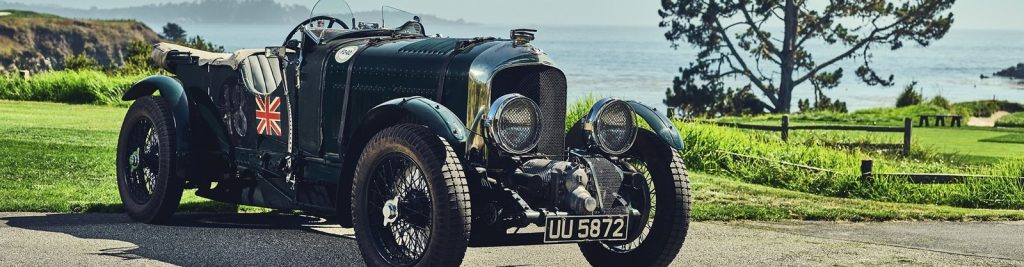
The featured Bentley Newsroom photograph belongs to the original Team Car No. 2 Heritage Collection record. Its credit links to the manufacturer’s subject page and editorial-use terms. That is stronger evidence than selecting a generic green Blower photograph on appearance alone. The caption nevertheless stops short of certifying every current component or the car’s present mechanical condition. For historical comparisons, organise photographs by date and source, then check registration, body configuration and any event number against the associated record. These checks are particularly useful because modern continuations and replicas can resemble the historic car closely. A source-labelled photograph lets a reader enjoy the appearance while understanding what the image actually establishes. Its role is to illustrate the named vehicle, not to settle every question of provenance or material originality.
A significant car without a duplicate profile
UU5872 has enough history to support a detailed standalone guide: an original competition identity, a notable Le Mans campaign and a later role in Bentley’s continuation work. It does not need an extra No. 9 entry to make that history more important. The related profiles explain the broader production Blowers, Birkin’s No. 1 single-seater and the Speed Six winner Old Number One. Together they offer a useful comparison of engineering direction and competition outcome. Readers can move between the cars while keeping their chassis and results straight. This is also the practical benefit of an encyclopedia built around verified identities. It can connect familiar names naturally, preserve aliases for discovery and still maintain a single reliable record for one historic machine.
Frequently asked questions
What is Team Blower No. 2’s identity?
Bentley identifies the original master car as chassis HB3403, engine SM3902 and registration UU5872.
Is Team Car No. 9 a different Bentley?
The inventory’s Le Mans No. 9 label refers to the same UU5872 subject. It is stored as an alias, not a second imported profile.
Did UU5872 win the 1930 Le Mans race?
No. It retired. Barnato and Kidston won in a works Speed Six.
Are the continuation Blowers the original car?
No. They are newly constructed vehicles in a separate programme that used UU5872 as an engineering reference.
Explore related vehicle profiles
- Bentley Blower — Original Production Cars
- Bentley Blower No. 1 — Birkin Single-Seater
- Bentley Speed Six — Old Number One
Sources
- Bentley Heritage Collection — original Team Blower No. 2, UU5872
- Bentley — first new Blower and the original master car, December 2020
- Bentley — Number 9 Edition and its historic inspiration, March 2019
Historical facts follow the linked manufacturer, race-organizer, institutional and specialist records. Visual comparisons and documentation priorities are editorial analysis. Dated specifications, restoration accounts and published estimates retain their original scope; they do not certify a car’s current condition.
Photography and credit
Bentley Team Blower No. 2, UU5872, in Bentley’s Heritage Collection. The original historic car is distinct from the modern continuation cars. Photo: Bentley Motors (copyright credit) / Bentley Newsroom · Bentley Newsroom: free editorial reproduction. Resized proportionally where needed and saved as JPEG; no additional cropping or color alteration. Editorial vehicle-profile use only; the newsroom terms exclude advertising, marketing and sales use. Photographer not named on the supplied record.
Why this machine matters
Bentley’s original Team Blower No. 2 is the historic UU5872, chassis HB3403. It competed at Le Mans in 1930 and later became the reference car for Bentley’s modern continuation programme. Its team designation and Le Mans race number 9 describe the same vehicle, so the inventory’s separate No. 9 row is treated as an alias.
Built in limited numbers
Factory-built reference year1929 corrects inventory1930 race-year shorthand. BEN-018 is alias, not second vehicle. Original HB3403/UU5872 distinct from12 modern customer continuations and Car Zero.
Gallery
Specifications
Factory specifications may vary by model year, market and configuration.
Identity & production
- Official model
- Bentley Blower Team Car No. 2 — UU5872
- Base model
- 4½ Litre Blower
Powertrain & performance
- Engine
- 4,398 cc supercharged inline-four petrol