Audi e-tron Vision Gran Turismo
The Audi e-tron Vision Gran Turismo brought a game-derived design onto a real circuit as an electric demonstrator in 2018. Audi described a three-motor, 600 kW system and a racing-taxi role around Formula E events. This profile covers the physical all-electric concept, with photographs of real demonstration running rather than game imagery.
The Audi e-tron Vision Gran Turismo brought a game-derived design onto a real circuit as an electric demonstrator in 2018. Audi described a three-motor, 600 kW system and a racing-taxi role around Formula E events. This profile covers the physical all-electric concept, with photographs of real demonstration running rather than game imagery.
Audi e-tron Vision Gran Turismo at a glance
| Manufacturer | Audi |
|---|---|
| Model / programme | e-tron Vision Gran Turismo |
| Profile scope | Physical concept archive |
| Historical reference year | 2018 |
| Inventory reference | AUDI-053 |
| Engine reference | Published three-motor electric propulsion system |
| Exact original object count | Unresolved; no numeric production badge populated |
| Manufacturer power reference | 600 kW |
| Object scope | Factory-described functioning physical one-off; no complete development-object census |
From a digital proposal to a physical demonstrator
Audi’s April 2018 announcement describes the e-tron Vision Gran Turismo as a functioning physical one-off developed from a virtual racing-car design. Its racing-taxi programme was due to begin at the Rome Formula E event that month. The source gives three 200 kW electric motors, with one at the front axle and two at the rear, for a 600 kW system reference. These are manufacturer descriptions of the demonstrator. The programme should not be confused with an entered Formula E competition car merely because its appearances were associated with that championship’s events.
Correcting the inventory year
The workbook dates the subject to 2017, but the primary launch and the game developer’s announcement place this public presentation in April 2018. The profile therefore uses 2018 and preserves the original inventory year in the reconciliation record. That correction does not claim a complete internal development timeline. Design work and construction can precede a public launch. The important editorial point is to identify which event a date refers to rather than treating every year attached to a project as interchangeable. A documented public presentation provides a clearer reference for the physical car’s archive profile.
The all-electric car and the other game version
Polyphony Digital’s announcement identifies two Audi Vision Gran Turismo cars in the game, including the all-electric e-tron version and another virtual version. This article is scoped to the real e-tron demonstrator. Specifications from a digital vehicle should not be inserted into the physical car’s technical record just because the bodies share visual language. For an archive, label game screenshots, renderings and physical photographs separately. Each is valuable evidence of a different part of the project. The relationship becomes more interesting when readers can see where a virtual proposal was translated into a functioning object.
Published performance versus present condition
Audi gives a 1,450 kg weight reference and acceleration from zero to 100 km/h in under 2.5 seconds for the announced concept. Those values remain labelled as manufacturer references, rather than an independent test of the surviving object. The vehicle’s present battery, control equipment and operating condition require their own documentation. A dramatic figure is useful for understanding the engineering brief, but cannot replace a technical assessment for a future demonstration. Keeping the original specification and current equipment record separate also makes it easier to understand any later conservation work without rewriting the launch history.
Why a real track photograph matters
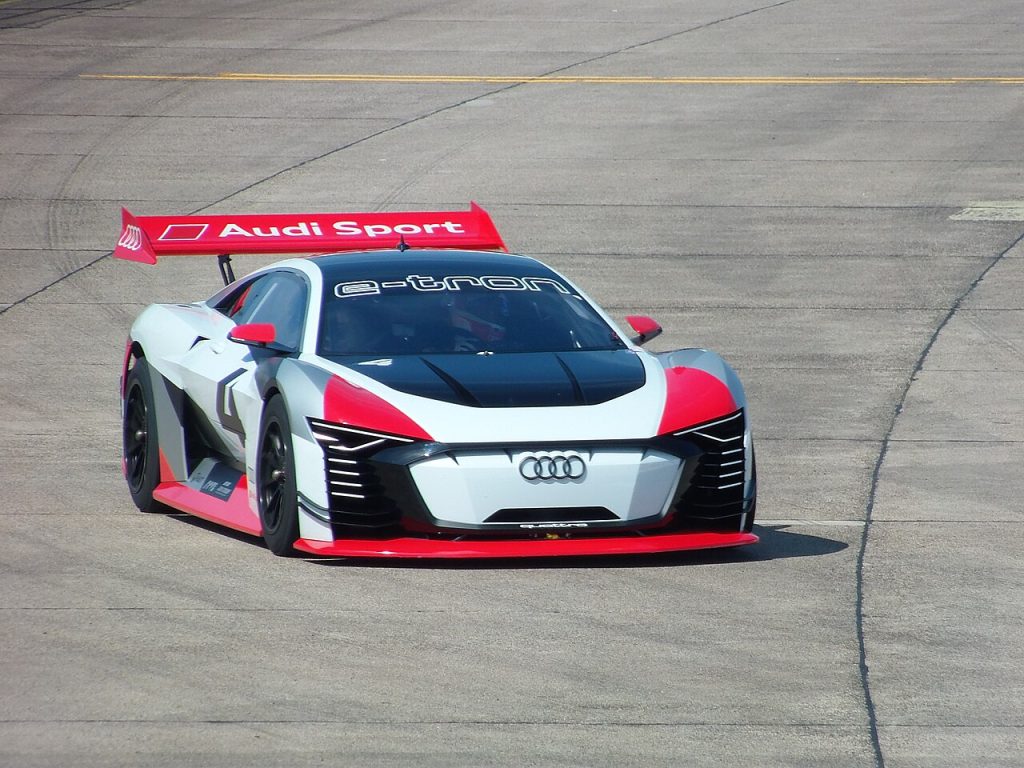
The bundled photograph is identified as the e-tron Vision Gran Turismo performing demonstration laps at the 2018 Berlin E-Prix. That setting gives the article a physical, dated reference instead of relying only on promotional artwork. It shows the visible car on the circuit at the time of exposure, while the factory record explains its technical proposal. The photograph does not establish a timed lap, prove a battery capacity or document every component. Use it to ground the object’s presence and appearance. Any future gallery should keep that distinction clear when placing game images beside photographs of the real vehicle.
The visual connection with earlier Audi competition cars
Audi’s launch explicitly connects the demonstrator’s design and colours with the 90 quattro IMSA GTO. The comparison is a visual and historical reference, not a transfer of the older car’s race record. Study how the body graphics and broad competition stance communicate that memory, then read each subject’s own technical account. The electric car asks a different engineering question from the historic five-cylinder racer. Their connection provides a useful route through the archive precisely because they are distinct. An homage can help explain a design without making it a continuation chassis or a competitor in the original racing category.
Rarity and a documented one-off description
The primary launch calls the physical demonstrator a one-off, which supports the programme’s exceptional character. The numeric production badge is nevertheless left unset because the reviewed material does not provide a complete inventory of development models, chassis and display objects. The documented one-off description is preserved in the object-scope field. This avoids turning a public presentation phrase into a census of every project object. There is no customer edition allocation to compare with ordinary road-car sales. For an archive concept, the significance comes from a clearly identified physical programme and its documented use, rather than a fabricated retail production total.
What a demonstrator’s operating file should preserve
Keep technical sheets, workshop records, component changes, event appearances and conservation decisions together. Record the installed battery and propulsion equipment separately from the original announcement. A specialist should assess the actual object before any operation, while a static display can focus on the documented design and presentation history. These are proposed archive practices, not findings about the current vehicle. Electric demonstration cars can have a development history that ordinary road-car service books do not capture. A transparent file lets a future curator understand what remains original, what has changed and which historical claims the surviving object supports.
The racing-taxi role and visitor experience
A racing taxi gives invited passengers a way to experience a demonstrator with a professional driver; it is a different activity from competitive classification. Describe a documented appearance according to its actual role. Do not turn a circuit photograph into a race result or suggest that the car scored championship points. For an exhibition, that distinction can become a useful explanation of how concepts are used beyond a motor-show stand. The car’s history includes a public-facing demonstration brief. Recording that brief accurately helps connect its technical proposal with the events at which people encountered the physical object.
Why the e-tron Vision Gran Turismo deserves its own profile
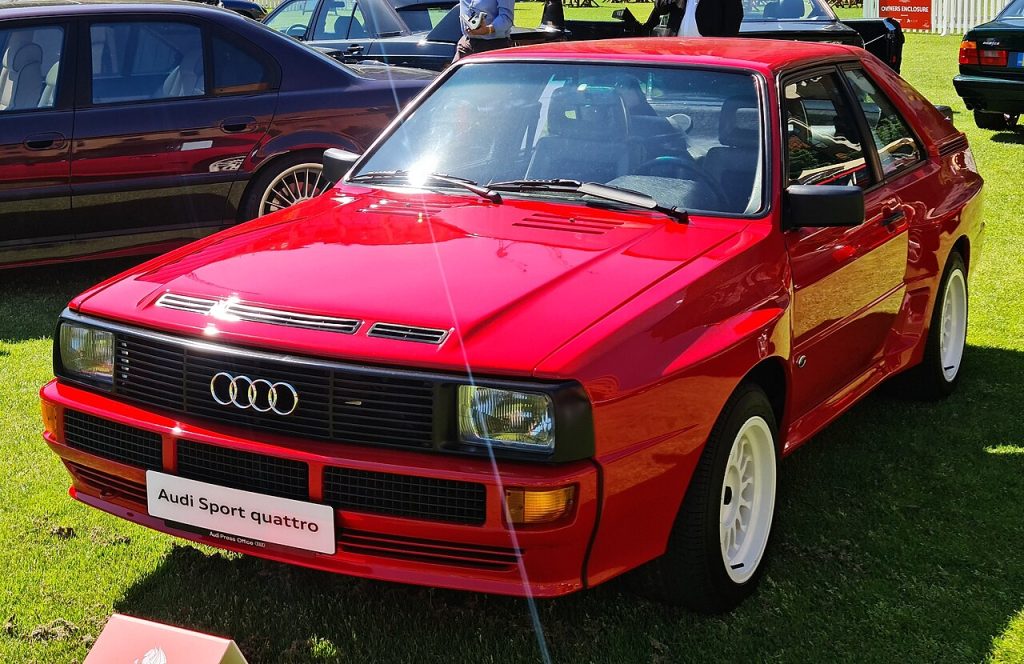
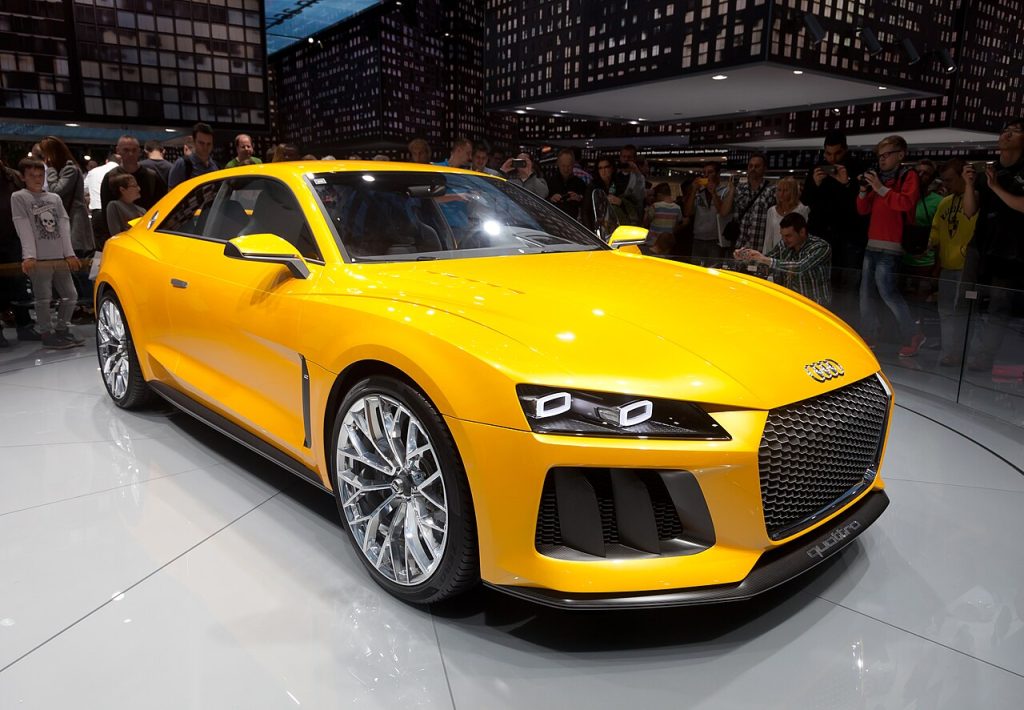
The project makes the boundary between digital design and physical engineering unusually visible. It can be compared with the 2013 Sport quattro hybrid concept as a different approach to performance electrification, and with the earlier IMSA GTO for its documented visual reference. The R8 LMS adds a contrasting competition programme. Those links encourage readers to explore distinct histories rather than borrow specifications between them. The strongest account preserves the 2018 public launch, the physical demonstrator’s identity and the separate virtual versions. Its collector significance is an archive story about translation from proposal to object, not a prediction of a sale price.
Frequently asked questions
Was the e-tron Vision Gran Turismo a real car?
Yes. Audi’s 2018 launch describes a functioning physical electric demonstrator, and the bundled photograph records demonstration laps in Berlin that year.
Why was the inventory year changed to 2018?
The manufacturer and game developer announcements place the public launch in April 2018. The workbook’s 2017 value is preserved as an inventory correction.
What powertrain did Audi describe?
Three electric motors rated at 200 kW each, with one at the front and two at the rear, for a published 600 kW system reference.
Did it compete as a Formula E race car?
The documented role was a racing taxi and demonstrator around Formula E events, not an entered championship competition car.
Explore related vehicle profiles
Sources
- Audi Japan — e-tron Vision Gran Turismo physical demonstrator, April 2018
- Polyphony Digital — the two Audi Vision Gran Turismo cars, April 2018
History and published specifications follow the linked manufacturer records. Visual comparisons, documentation questions and inspection priorities are editorial analysis. Photographs retain their original subject descriptions and separate rights records.
Photography and credit
Physical Audi e-tron Vision Gran Turismo performing demonstration laps at the 2018 Berlin E-Prix, as identified by the photographer. Not a game screenshot or a Formula E competition car. Photo: KAgamemnon / Wikimedia Commons · CC BY-SA 4.0. Wikimedia thumbnail resized from original; no cropping or color changes.
Why this machine matters
The Audi e-tron Vision Gran Turismo brought a game-derived design onto a real circuit as an electric demonstrator in 2018. Audi described a three-motor, 600 kW system and a racing-taxi role around Formula E events. This profile covers the physical all-electric concept, with photographs of real demonstration running rather than game imagery.
Built in limited numbers
The primary launch calls the physical demonstrator a one-off, which supports the programme’s exceptional character. The numeric production badge is nevertheless left unset because the reviewed material does not provide a complete inventory of development models, chassis and display objects. The documented one-off description is preserved in the object-scope field. This avoids turning a public presentation phrase into a census of every project object. There is no customer edition allocation to compare with ordinary road-car sales. For an archive concept, the significance comes from a clearly identified physical programme and its documented use, rather than a fabricated retail production total.
Gallery
Specifications
Factory specifications may vary by model year, market and configuration.
Identity & production
- Official model
- Audi e-tron Vision Gran Turismo
- Base model
- e-tron Vision Gran Turismo
Powertrain & performance
- Engine
- Published three-motor electric propulsion system