Final second-generation Alpine A110 R 70
Alpine’s July 2026 factory account identifies the final second-generation A110 as an R 70 in Alpine Blue with a black roof. This is a documented final-chassis milestone within an existing series, not a newly created one-car edition. Its individual identity still requires factory provenance.
Alpine’s July 2026 factory account identifies the final second-generation A110 as an R 70 in Alpine Blue with a black roof. This is a documented final-chassis milestone within an existing series, not a newly created one-car edition. Its individual identity still requires factory provenance.
Final second-generation Alpine A110 R 70 at a glance
| Manufacturer | Alpine |
|---|---|
| Model family | A110 II |
| Profile scope | Factory milestone archive |
| Inventory reference | ALP-115 |
| Milestone scope | One final factory chassis within R 70; not a one-car edition |
The last chassis as a factory milestone
Alpine’s 1 July 2026 account marks the completion of the second-generation A110 programme at Dieppe. It identifies the final car as an R 70 and describes its exterior presentation. That establishes a factory milestone with a specific model relationship. It does not create an additional retail edition simply because only one physical vehicle occupies the final position. Keep the milestone designation attached to the individual object and retain the parent R 70 classification. This preserves the historical subject without creating an unsupported production category.
Alpine Blue, with a black roof
The manufacturer describes the final R 70 in Bleu Alpine, rendered here as Alpine Blue, with a black roof. This must not be silently changed to Bleu Caddy or La Bleue because those names identify different definitions elsewhere in the inventory. Colour descriptions and edition identities require their own evidence. For the actual final car, retain the factory specification and dated factory imagery in the individual file. A general blue R 70 photograph is not enough to establish milestone status. The useful account preserves both the documented appearance and the documentary link to the last chassis.
Rarity: one milestone object, not one-car production
The final position identifies one documented milestone object. It does not mean that R 70 production totalled one, or that the whole second-generation family qualifies under a one-car count. Alpine’s completion account records 28,701 second-generation A110s; that family figure has a different scope from the R 70 announcement and the final physical car. This guide leaves edition-limit and completed-production fields unset for the milestone entry. A dedicated milestone field records the one-object scope. The distinction prevents the last chassis from being counted as an extra factory edition or used to disguise the scale of the wider family.
The R 70 parent relationship
The February 2025 announcement defines an R 70 parent offering of 770 cars. The final chassis belongs within that established programme according to the factory completion account. Its special position in the sequence should therefore be described as provenance, not added as another car outside the parent allocation. The announced cap remains distinct from a reconciled completed-build register. An individual milestone can be historically meaningful even when it is part of a broader series. Preserve the parent context and the evidence of final position together, so readers understand which claim concerns model definition and which concerns the particular object.
The earlier final allocation of 1,750
The October 2025 countdown release announced 1,750 cars in the closing production phase, spanning different versions. That phase is separate from the final single chassis and from the R 70 parent offering. Do not add the numbers or describe all phase cars as one numbered edition. The later completion report establishes the finished family chronology, while the earlier announcement documents the planned closing allocation. A useful history can show both with dates and scope labels. It should avoid making the last car’s importance depend on confusing an allocation, a named model series and a manufacturing milestone.
Factory chronology before individual custody
The completion announcement supports the end-of-production event and model identification. It does not by itself establish a complete later ownership, sale or handover history for the final car. Keep those fields open until reliable records identify what happened to the physical object. If a museum, owner or seller later claims custody, correlate that claim with factory identification and transfer documentation. A photograph beside an end-of-production sign may offer context but not a complete chain of title. The strongest milestone file follows the car through dated records instead of filling gaps with assumptions about where a significant final example ought to be.
Authenticating the actual final vehicle
Seek factory confirmation connecting the VIN and build record to the final-chassis designation, plus delivery specification, event records and subsequent custody evidence. The public account reviewed here does not supply a complete individual VIN file. Do not infer the VIN from a serial sequence or use a high edition number as a substitute. A blue R 70 with matching appearance could be a genuine parent-series car without being the final object. Authentication should answer the milestone question directly. Preserve original records and explain any remaining gaps so that later custodians can independently check the identity claim.
Condition after the production event
Establish a dated condition baseline and compare it with the factory specification, photographs and subsequent maintenance or movement records. A milestone does not guarantee untouched material, negligible mileage or exceptional mechanical condition. An appropriate specialist should assess structure, fitted components, finish and maintenance needs for the intended use. Record repairs and replacements separately from the factory identity. This keeps the car’s historical position understandable while still describing the machine that survives. A careful catalogue can respect the industrial event and provide a useful ownership assessment without allowing either to stand in for the other.
Keeping industrial history with the object
Retain factory event material, contemporaneous announcements and relevant photographs alongside the individual car records. Distinguish verified participants and dates from later recollections. The final chassis connects a model programme to the manufacturing site’s transition, which gives it a historical role beyond its colour or equipment. That context should remain sourced rather than become a broad claim that every last example is automatically more valuable. A future exhibition can connect the manufacturing event to the vehicle’s documented history.
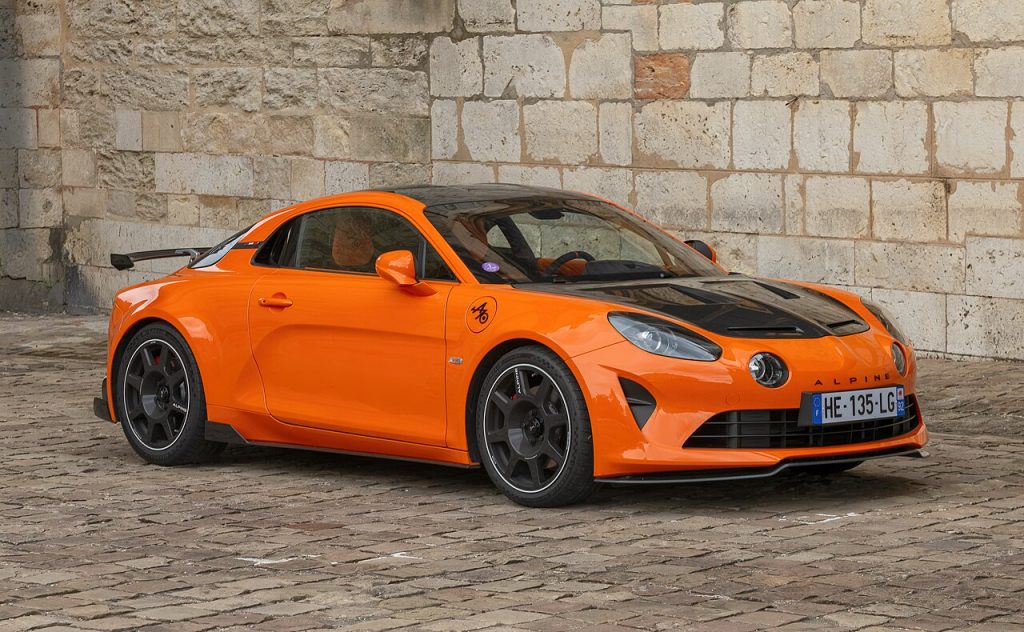
The orange R 70 reference photograph
The bundled licensed image shows an orange parent-series R 70, not the final Alpine Blue chassis with a black roof. Its caption makes that limitation explicit and corrects the source’s misleading Ultime title using visible details and the manufacturer comparison. It must not be recoloured or relabelled to imitate the missing milestone photograph. An authenticated licensed image of the actual final car remains a publication hold. Keep the reference author, source, licence and resizing note visibly linked. The eventual final-object image should have its own rights record and an identification trail matching the factory milestone.
One vehicle record, several useful links
Create one physical vehicle record for the final chassis and link it to the R 70 guide and the closing production-phase archive. Store final-position evidence separately from model and subset counts. This avoids duplicate chassis entries and allows readers to follow the wider history without confusing the milestone with a newly manufactured derivative. Related links are context, not proof of object identity. If stronger factory documentation later becomes available, refine the individual file while preserving the model relationship. Accurate data structure is especially useful for a final example because its significance depends on a position within an existing sequence.
What remains open before publication
Two gaps remain: authenticated licensed final-object photography and a complete individual identification file. The manufacturer milestone is documented, but that does not remove the need for object-level provenance when cataloguing a particular car. Keep the hold visible and add evidence with dates and sources. The broader family count also remains separate from rare-edition eligibility under the collection’s 7,500-car ceiling. The guide can preserve a valuable industrial-history entry while avoiding presenting the whole family as a qualifying limited edition or promising unsupported ownership and collecting conclusions.
Frequently asked questions
Was the final second-generation A110 an R 70?
Yes. Alpine’s July 2026 completion account identifies the final car as an R 70.
Was it Bleu Caddy?
The manufacturer describes Alpine Blue with a black roof; that is not a verified Bleu Caddy subset designation.
Does this create a one-car factory edition?
No. One final milestone object sits within the existing R 70 programme.
Does the supplied photo show the final chassis?
No. The orange R 70 is an explicitly labelled parent reference; an authenticated licensed final-car image remains required.
Explore related Alpine profiles
Sources
- Alpine: final second-generation chassis and completed family totals, July 2026
- Alpine: R 70 and its three tricolour subsets, February 2025
- Alpine: final 1,750 production allocation, October 2025
Historical statements follow the linked manufacturer and competition-programme records. Inspection and collecting guidance is editorial analysis. Individual catalogue claims remain attributed to the relevant car and source.
Photography and credit
Orange A110 R 70 parent-series reference only; not the documented final Alpine Blue chassis. Source incorrectly calls the pictured R 70 an Ultime. Authenticated licensed final-chassis photograph remains a publication hold. Photo: Rolf Kranz / Wikimedia Commons · CC BY-SA 4.0. Wikimedia thumbnail resized from the original; no cropping or colour changes.
Why this machine matters
Alpine’s July 2026 factory account identifies the final second-generation A110 as an R 70 in Alpine Blue with a black roof. This is a documented final-chassis milestone within an existing series, not a newly created one-car edition. Its individual identity still requires factory provenance.
Built in limited numbers
The final position identifies one documented milestone object. It does not mean that R 70 production totalled one, or that the whole second-generation family qualifies under a one-car count. Alpine’s completion account records 28,701 second-generation A110s; that family figure has a different scope from the R 70 announcement and the final physical car. This guide leaves edition-limit and completed-production fields unset for the milestone entry. A dedicated milestone field records the one-object scope. The distinction prevents the last chassis from being counted as an extra factory edition or used to disguise the scale of the wider family.
Gallery
Specifications
Factory specifications may vary by model year, market and configuration.
Identity & production
- Official model
- Final second-generation Alpine A110 R 70
- Base model
- A110 II