Alpine A110 Future
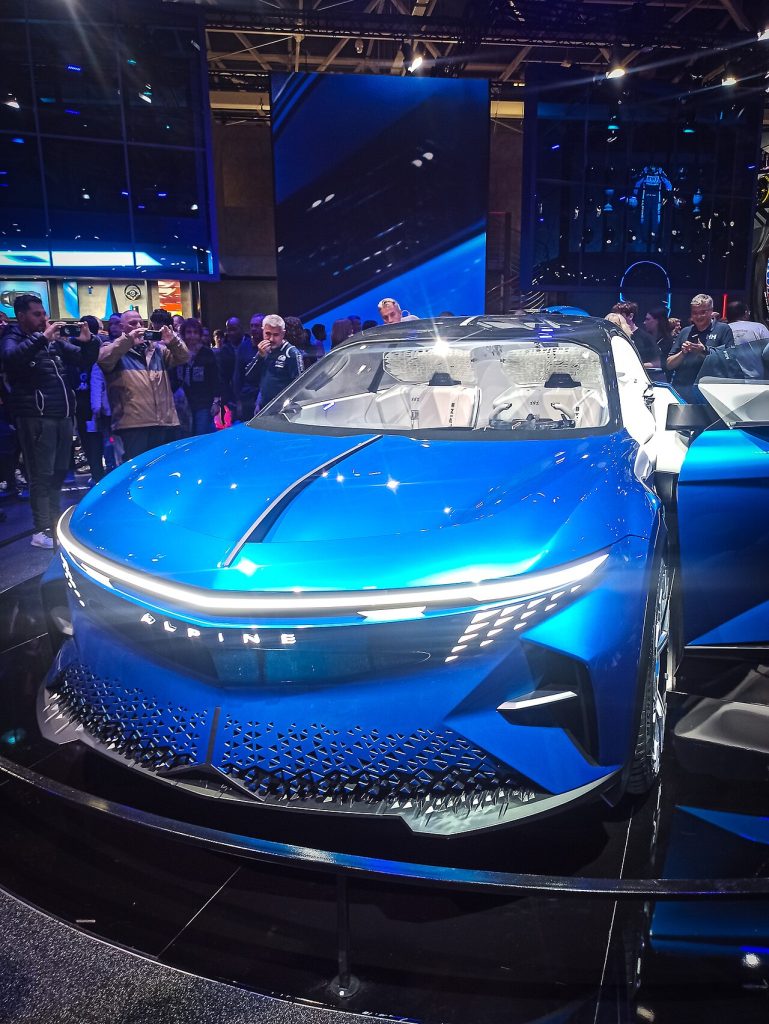
The Alpine A110 Future is the 2026 electric development mule for the next A110 generation. It publicly demonstrates technology intended for the APP platform, rather than reveal a finished retail specification or final body design. Its identity is separate from E-ternité and the later sculptural preview.
The Alpine A110 Future is the 2026 electric development mule for the next A110 generation. It publicly demonstrates technology intended for the APP platform, rather than reveal a finished retail specification or final body design. Its identity is separate from E-ternité and the later sculptural preview.
Alpine A110 Future at a glance
| Manufacturer | Alpine |
|---|---|
| Model family | Concept / prototype |
| Profile scope | Concept archive |
| Inventory reference | ALP-113 |
| Programme technology | Electric development mule; platform claims separately scoped |
A development mule with a public name
Alpine revealed the A110 Future name on 3 July 2026 ahead of Goodwood. The vehicle’s purpose was to develop technology for the next-generation A110, not to launch a numbered customer edition. A model guide should retain the mule designation and date prominently. It establishes which object and stage of work are being discussed. A familiar A110 silhouette can otherwise encourage readers to treat a research vehicle as a finished production derivative. The archive can explain the development role without inventing a retail equipment package or a confirmed customer-car performance specification.
Goodwood’s documented dynamic debut
The manufacturer’s 9 July 2026 account confirms the public dynamic debut, with Pierre Gasly driving and the Duke of Richmond as passenger. This supports a dated running demonstration beyond the earlier announcement of planned activity. A demonstration is still distinct from a homologated road-car launch, a competition result or a completed durability programme. Keep those scopes separate. An individual collecting file would need to identify the physical mule used and its configuration. The public event establishes programme history without proving a complete chassis count or permanent ownership status.
APP technology with its announcement date
The reveal describes an aluminium platform, two battery packs and a rear dual-motor arrangement, with an 800-volt cell-to-pack approach. These are dated platform-programme statements rather than an independently verified installed specification for every development object. Preserve the source scope and avoid filling missing retail power, range or charging fields from expectations. A technical comparison can explain architecture while leaving measured capability to its own evidence. The useful distinction is between what the manufacturer says it is developing, what a particular mule contains and what an eventual customer car will deliver.
The mule is not the final exterior design
The September 2026 sculpture release explains that the running mule used modified bodywork based on the current A110 to accommodate the new platform. It distinguishes that vehicle from the sculptural design preview. A profile should not use the mule’s surfaces as definitive evidence of the production car’s final appearance. Likewise, a sculpture cannot stand in for the running development object. Keeping each stage labelled makes the design story more intelligible. Readers can appreciate what the mule demonstrates technically without assuming that every visible proportion is a settled retail bodywork decision.
Rarity: public appearance without an object census
The reviewed public releases establish the named development programme and its demonstration, not a complete count of all mules, prototypes or associated models. Leave numerical production fields unset. A factory clarification could establish whether the public vehicle remained one physical object through later work, but visual continuity alone is insufficient. The collecting record should seek identification, build and modification history for any surviving machine. This keeps a rare-prototype archive useful while avoiding a one-off claim that is more precise than the evidence. A named mule and a verified global single-object census are different findings.
Keeping E-ternité and Future distinct
The earlier electric research programme has its own dated profile and physical evidence. Do not transfer its battery, motor or performance data into Future because both concern an electric A110 direction. A thematic connection can explain why the vehicles belong in the same exhibition without making them the same technical object. The relationship should be supported by sources rather than assuming uninterrupted chassis development. An archive is more useful when it shows the separate research stages and identifies what each actually demonstrated. Shared marque and silhouette are context, not proof of identical hardware or physical continuity.
Authenticating a surviving development object
Seek factory identification, build documents, test records, exhibition chronology and documentation of any subsequent reconfiguration. Establish the present installed systems and the object’s connection to the public Future programme. A familiar exterior or copied graphics are not a sufficient authentication file. Development vehicles can change considerably while retaining a programme name, and those changes should be recorded as part of their history. If systems were removed or replaced for display, describe the conversion directly. The collecting significance remains understandable when the catalogue explains what survives and which technical claims remain source-dependent.
High-voltage preservation and support
Qualified specialists should assess the actual electrical systems, battery condition, isolation requirements and documentation before operation or work. An advanced platform description does not establish that a retired mule can be supported like a production car. Determine the tools, personnel, diagnostic access and associated equipment needed for its intended role. Static conservation and running demonstration may require different decisions. Keep the assessment with the object. This gives a future custodian a practical account of preservation needs while avoiding a promise that a research prototype will remain operable after its original development support changes.
Environmental and performance claims need evidence
A battery-electric architecture is a technical classification, not proof of a complete lifecycle environmental result or a universal performance advantage. Keep manufacturer ambitions attributed and separate from measurements. A useful profile can explain the research direction without repeating a first-or-best claim as an independently established fact. Wider comparisons need defined conditions, comparable vehicles and their own sources. The mule’s historical role does not depend on overstating those conclusions. Its significance comes from a documented development stage and public demonstration, with the technical evidence preserved at the level that the available records support.
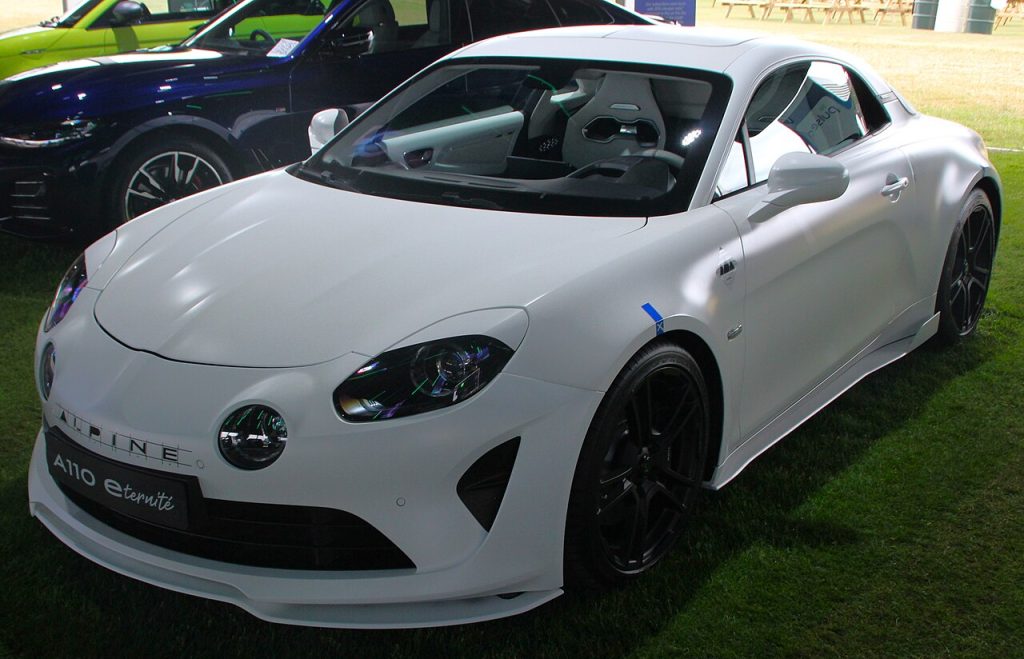
The historical reference photograph
The bundled licensed image shows the earlier E-ternité prototype at Goodwood in 2023. It is explicitly historical context, not a picture of A110 Future in 2026. An authenticated licensed Future photograph remains a publication hold. The reference must not be relabelled or edited to imitate the missing vehicle. Keep its author, source, licence and resizing note visibly linked. A specific Future feature should eventually include its own dated identification and technical views, so the visual evidence supports the object described rather than rely on a related research-car silhouette.
Comparison with other Alpine prototypes
Compare programme purpose, public dates, confirmed running status and documented technical scope. A hydrogen demonstrator, electric concept, development mule and sculpture answer different research questions. Do not build a simple output ranking from unrelated stages or fill one object’s missing fields with another’s specifications. Related links should help readers understand that range of roles. For an individual collecting decision, provenance, surviving configuration, condition and available support are central. This allows the archive to connect the marque’s research work without flattening distinct physical objects and proposals into one undated future-car story.
Updating a still-developing record
Treat this guide as a dated research account and add reliable new evidence with explicit scope. A final production reveal, another mule appearance or a factory transfer could answer different questions; none should automatically rewrite every earlier technical field. Keep programme chronology and physical-object history separate. Preserve source versions and explain significant corrections. The archive’s role is to identify what A110 Future was publicly called, what it demonstrated and what an individual object file would need to establish. That remains useful while the wider production programme and public design information continue to evolve.
Frequently asked questions
What is A110 Future?
The named 2026 electric development mule for the next-generation A110 programme.
Did it run publicly at Goodwood?
Alpine’s July 2026 account confirms the public dynamic debut.
Does its body show the final production design?
No. The manufacturer distinguishes the modified mule body from the later sculptural design preview.
Is the bundled image the Future mule?
No. It is a clearly labelled earlier E-ternité reference; a licensed authenticated Future image remains needed.
Explore related Alpine profiles
Sources
- Alpine: A110 Future mule reveal and APP technology, July 2026
- Alpine: A110 Future public dynamic debut, 9 July 2026
- Alpine: later sculpture is distinct from the running Future mule, September 2026
Historical statements follow the linked manufacturer and competition-programme records. Inspection and collecting guidance is editorial analysis. Individual catalogue claims remain attributed to the relevant car and source.
Photography and credit
Earlier A110 E-ternité electric research prototype at Goodwood in 2023, used as historical context only; not the 2026 A110 Future mule. Exact Future photograph remains a publication hold. Photo: MrWalkr / Wikimedia Commons · CC BY-SA 4.0. Wikimedia thumbnail resized from the original; no cropping or colour changes.
Why this machine matters
The Alpine A110 Future is the 2026 electric development mule for the next A110 generation. It publicly demonstrates technology intended for the APP platform, rather than reveal a finished retail specification or final body design. Its identity is separate from E-ternité and the later sculptural preview.
Built in limited numbers
The reviewed public releases establish the named development programme and its demonstration, not a complete count of all mules, prototypes or associated models. Leave numerical production fields unset. A factory clarification could establish whether the public vehicle remained one physical object through later work, but visual continuity alone is insufficient. The collecting record should seek identification, build and modification history for any surviving machine. This keeps a rare-prototype archive useful while avoiding a one-off claim that is more precise than the evidence. A named mule and a verified global single-object census are different findings.
Gallery
Specifications
Factory specifications may vary by model year, market and configuration.
Identity & production
- Official model
- Alpine A110 Future
- Base model
- Concept / prototype