Alpine A424
The Alpine A424 is the marque’s LMDh hybrid endurance prototype, entering the FIA World Endurance Championship’s Hypercar category in 2024. Its rare-vehicle record needs a chassis history, not a road-edition plaque range. Development, race results and later seasons remain separately dated.
The Alpine A424 is the marque’s LMDh hybrid endurance prototype, entering the FIA World Endurance Championship’s Hypercar category in 2024. Its rare-vehicle record needs a chassis history, not a road-edition plaque range. Development, race results and later seasons remain separately dated.
Alpine A424 at a glance
| Manufacturer | Alpine |
|---|---|
| Model family | A424 |
| Profile scope | Competition archive |
| Inventory reference | ALP-096 |
| Propulsion | Hybrid competition programme |
| Engine reference | Single-turbo 3.4-litre V6 with hybrid systems — development programme reference |
From development to the 2024 works campaign
The A424 programme was running in development during 2023 before its 2024 championship debut. Alpine’s August development report records the first checks and an initial test session. Its joint motorsport launch at Enstone then presented the endurance campaign alongside Formula One. This chronology distinguishes an early test machine, a season race specification and a static show object. A catalogue should establish which of those histories belongs to the vehicle being described. The A424 model name provides a programme connection, while the individual technical and competition records establish what a particular chassis actually did.
The hybrid LMDh architecture
Alpine’s development announcement identifies a single-turbo 3.4-litre V6, Xtrac transmission and hybrid systems integrated with the chassis. The programme belongs to the Hypercar category, with LMDh describing its technical route. Those terms are related but should not be treated as interchangeable labels for every prototype. Preserve the date and regulatory context of any output figure; this profile does not turn an early development claim into a timeless race setting. An individual machine’s configuration needs build and preparation records, particularly where the hardware or calibration evolved after its earliest public appearance.
Rarity: entries do not equal total chassis
The two works entries are not a completed-production census. Race numbers, spare monocoques, development cars, replacements and exhibition objects can have different relationships to the programme. The reviewed sources do not reconcile the full physical chassis register, so the numerical production field remains blank. A collecting catalogue should request a scoped account from the factory or team before declaring an exact total. This distinction is central to competition machines: a small grid presence can establish limited participation while leaving the number of manufactured structures and their subsequent histories unresolved.
Fuji milestones with their dates intact
The A424’s first WEC podium came at Fuji in September 2024 with Nicolas Lapierre, Mick Schumacher and Matthieu Vaxiviere. Its first victory followed at Fuji in September 2025 with Ferdinand Habsburg, Paul-Loup Chatin and Charles Milesi. These are distinct milestones in separate seasons. A photograph from another event does not document either result, and an individual chassis cannot inherit them without a chassis-level link. Keep the results in the model history while reserving personal race provenance for the vehicle that can be matched to the team’s records.
What a chassis provenance file should establish
Begin with the factory identity and a chronological list of tests, races, rebuilds and changes of custody. Correlate event entries with preparation sheets, photographs and the team’s chassis records wherever available. A race number can move between machines, while a major replacement can change which physical structure carries the history. Explain those transitions directly. A clear file does more than repeat a driver list; it shows the connection between the object, its specification and the events claimed for it. Unsupported event attribution should remain a research question rather than become a headline.
Reading race photographs as evidence
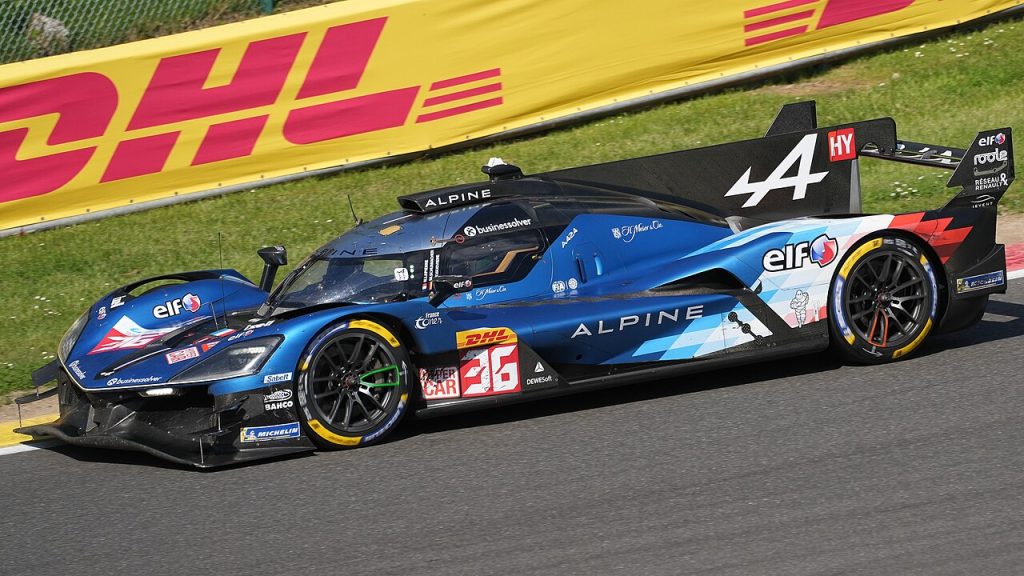
Use event photographs to corroborate livery, bodywork and the configuration visible at a particular time. Record the photographer’s date and location, then check them against programme records. A side view may show a race number but not a chassis identification mark. Avoid treating sponsor graphics or a driver association as sufficient proof of a serial identity. Where several views support a configuration, retain the set and identify its limits. A photo collection is valuable evidence when it is interpreted carefully, and much weaker when a caption silently makes claims the image cannot show.
Condition after a competition life
A specialist inspection should address the actual structure, repair history, drivetrain, hybrid equipment and associated technical records. Review mileage and operating hours in the context of testing and race use, rather than use cosmetic presentation as a shorthand for condition. Ask what was retained, replaced or decommissioned after the active programme. A body restored to a familiar livery can look complete while differing materially from its race configuration. The catalogue should identify those differences so a reader understands whether the object is a running competition car, a conserved chassis or an exhibition conversion.
Support is part of an operating plan
A modern endurance prototype needs more than an engine and a place to drive. Establish the availability of technical documentation, specialist personnel, diagnostic access, spares and the systems required for its actual configuration. Qualified operators should evaluate the hybrid system before operation or servicing. This is a practical collecting consideration rather than a claim that every acquired chassis will remain usable indefinitely. A well-supported static preservation project can also be worthwhile. Describe the intended role honestly so conservation decisions are not confused with promises about future track capability.
Keeping components and history together
Maintain an inventory of bodywork, wheels, electronics, removed assemblies and any associated display equipment transferred with the chassis. Record identifying marks, dates and the evidence connecting each item to the vehicle. Some parts may have their own competition history or may have moved across the team’s cars. Do not combine their stories into a single uninterrupted account without support. Preserve original labels and documentation where possible. This helps a future custodian distinguish genuine programme material from later display parts and reconstruct the relationship between the present object and its period configuration.
Comparison with the earlier A480
An archive can connect successive endurance programmes without implying that they share one technical identity. Compare the stated category, architecture, season and documented chassis history, then explain what changed. A collecting decision should consider the particular object’s provenance, completeness and support rather than rely solely on the model’s highest result. Related profiles provide the background, while the individual file determines what can be claimed. This approach makes a cross-generation comparison useful to both readers interested in racing history and custodians assessing what it would mean to preserve a specific machine.
The period Spa photograph
The supplied image identifies number 36 at the 2024 Spa endurance event. It illustrates a period A424 race presentation, not the Fuji podium or the later victory. Its caption does not assign a serial number. Keep the author, source, licence and image-change note visibly attached, including when the image is used in a gallery. An individual-car feature should add authenticated identity and condition photographs. The distinction lets the guide use strong visual context while preserving the documentary standard needed for a chassis-specific collecting claim.
A catalogue that can grow with evidence
Keep the model history stable and add individual chassis records beneath it when evidence becomes available. Store tests, race results, changes of configuration and transfers as dated events. A new factory statement should refine the record without requiring unsupported totals to be defended. If a particular machine is offered for sale, review its documents independently of this model guide. The archive’s purpose is to make the programme intelligible and to identify the questions an individual file must answer. That remains useful even when a complete public register has not been released.
Frequently asked questions
Is A424 a road-car limited edition?
No. It is a hybrid LMDh endurance competition programme in the WEC Hypercar category.
Do two works entries mean two were built?
No. Entry numbers do not reconcile development chassis, spares, replacements or show objects.
When did its first WEC victory occur?
Alpine records the first A424 victory at Fuji in September 2025, after its 2024 debut season.
Does the photograph identify the winning chassis?
No. It shows number 36 at Spa in 2024 without establishing an individual serial identity.
Explore related Alpine profiles
Sources
- Alpine: A424 hybrid architecture and engine integration, August 2023
- Alpine: A424 first development runs, August 2023
- Alpine: joint A424 and A524 launch at Enstone, 7 February 2024
- Alpine: A424 first WEC podium at Fuji, September 2024
- Alpine: A424 first victory at Fuji, September 2025
Historical statements follow the linked manufacturer and competition-programme records. Inspection and collecting guidance is editorial analysis. Individual catalogue claims remain attributed to the relevant car and source.
Photography and credit
Number 36 Alpine A424 at the 2024 Spa endurance event; no individual chassis serial or podium provenance inferred. Photo: MarcelX42 / Wikimedia Commons · CC BY-SA 4.0. Wikimedia thumbnail resized from the original; no cropping or colour changes.
Why this machine matters
The Alpine A424 is the marque’s LMDh hybrid endurance prototype, entering the FIA World Endurance Championship’s Hypercar category in 2024. Its rare-vehicle record needs a chassis history, not a road-edition plaque range. Development, race results and later seasons remain separately dated.
Built in limited numbers
The two works entries are not a completed-production census. Race numbers, spare monocoques, development cars, replacements and exhibition objects can have different relationships to the programme. The reviewed sources do not reconcile the full physical chassis register, so the numerical production field remains blank. A collecting catalogue should request a scoped account from the factory or team before declaring an exact total. This distinction is central to competition machines: a small grid presence can establish limited participation while leaving the number of manufactured structures and their subsequent histories unresolved.
Gallery
Specifications
Factory specifications may vary by model year, market and configuration.
Identity & production
- Official model
- Alpine A424
- Base model
- A424
Powertrain & performance
- Engine
- Single-turbo 3.4-litre V6 with hybrid systems — development programme reference
Sources and verification
- media.alpinecars.com
- media.alpinecars.com
- media.alpinecars.com
- media.alpinecars.com
- media.alpinecars.com