BMW M5 CS — F90
Explore BMW M5 CS: rarity, history, specifications, FAQs and credited photos.
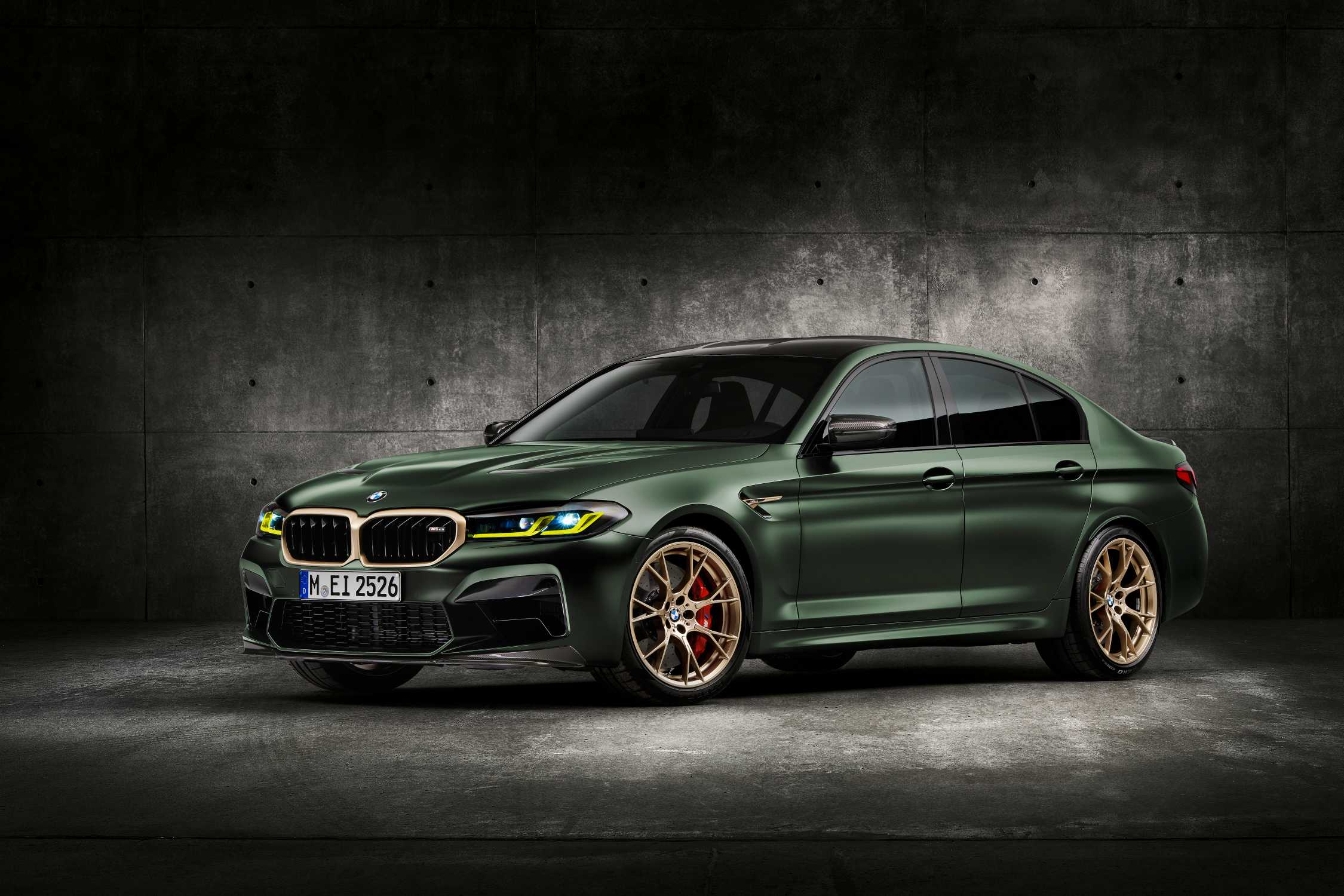
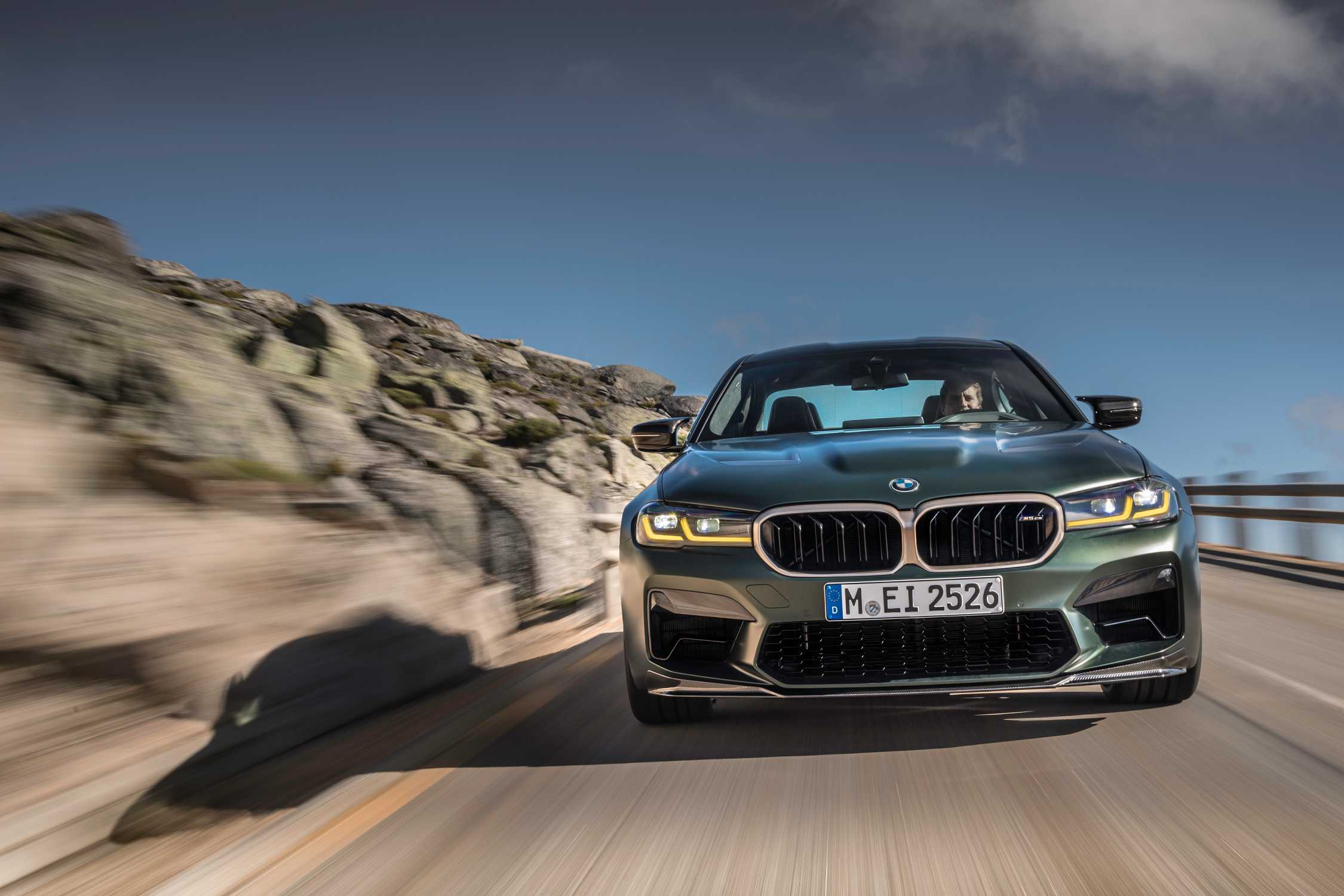
The F90 BMW M5 CS brought Competition Sport thinking to the M5 in 2021. Its four-seat cabin and weight-focused construction changed the flagship performance sedan’s character, combining the utility of four doors with an unusually concentrated specification.
Record: BMW-119 · Competition Sport edition · Germany · 2021.
Specifications and rarity
| Item | Documented reference and scope |
|---|---|
| Count and scope | 1,100 worldwide limit stated by BMW Japan in April 2021 |
| Regional subset | Five initially offered in Japan; not an extra global count |
| Engine | 4.4-litre twin-turbo V8; 467 kW / 635 metric hp |
| Performance | Factory 0–100 km/h: 3.0 seconds |
| Layout | Four seats; M xDrive; eight-speed M Steptronic |
| Weight reference | 70 kg reduction versus M5 Competition in global launch |
Origins and history
The launch is often described simply as limited production, leaving the count uncertain in English-language summaries. BMW Japan’s April 2021 release supplies a specific worldwide reference of 1,100 and an initial Japanese offering of five. This profile uses that factory-stated limit with its date and source, rather than presenting it as a separately audited tally of every completed chassis.
Design and engineering
The twin-turbo V8’s global launch output is 467 kW or 635 metric horsepower. BMW quotes three seconds to 100 km/h and a 70 kg weight reduction relative to the M5 Competition. M xDrive and an eight-speed M Steptronic gearbox channel that performance through a road-going sedan architecture.
The most telling cabin change is the rear seating. Individual seats replace the usual bench, reinforcing the CS’s four-person layout. Gold Bronze accents, carbon components and yellow light signatures supply visible identifiers, but the car’s purpose is clearer when the seating, reduced mass and chassis specification are considered together. Its appeal rests on that combination rather than one decorative element.
Why this BMW matters
The M5 CS occupies a distinctive point in the M5 story: a sedan whose special-series identity involves meaningful changes to construction and accommodation. Its rarity is attached to a dedicated model specification, not to an ordinary M5 wearing a rare colour alone.
The four-seat arrangement also gives it a useful comparison with smaller CS cars. BMW carried a performance philosophy into a larger body while keeping an unusually intimate rear cabin. This is an interpretation of the documented design rather than a claim that every owner uses it on track. A collection record can describe the engineering intent without inventing driving impressions or implying guaranteed future appreciation.
Identity and original specification
Authenticate an example through its factory identity and complete build specification. Check the four-seat interior, carbon equipment and original finish against delivery records. A modified M5 Competition can resemble portions of the CS, so badges and yellow lighting alone are insufficient.
The primary profile year is the 2021 introduction; some markets used a 2022 model-year designation. Keep those roles distinct. The Japanese release’s global limit and its five-car local offering also belong in separate fields. Later registrations or export history do not create additional editions, and the subsequent G90 M5 is a different generation with a different powertrain concept.
Frequently asked questions
How rare is the M5 CS — F90?
BMW Japan stated a worldwide limit of 1,100 in April 2021, with five initially offered locally. The figure is attributed as a launch limit, not an audited completion total.
What makes this version different?
The weight-focused CS specification and four individual seats distinguish it from the M5 Competition, alongside dedicated visual and chassis details.
Which year belongs in the vehicle record?
The F90 CS debuted in 2021; North American references may use model year 2022. This record preserves the introduction year and notes that distinction.
Is it the same as other similarly named BMWs?
It is separate from the F90 M5 Competition and from the later hybrid G90. Neither shares the CS series identity merely through an M5 badge.
How should an example be authenticated?
Confirm the factory model and build records, then match its four-seat cabin, carbon parts and original configuration. Cosmetic conversions are not sufficient.
What do the photographs show?
The images show the actual F90 M5 CS factory presentation, with its characteristic exterior and cabin treatment.
Explore related verified BMW profiles
Sources and photo credits
- THE NEW BMW M5 CS: THE MOST POWERFUL BMW M CAR EVER
- BMW Mモデルのラインアップにおいて最もパワフルなエンジン搭載のMハイ・パフォーマンス・モデル「BMW M5 CS」が誕生
Photo: BMW Group / BMW Group PressClub · Press/editorial use only. BMW-supplied press photograph under BMW PressClub terms. Original supplied photograph retained without local cropping or content alteration.
Photo: BMW Group / BMW Group PressClub · Press/editorial use only. BMW-supplied press photograph under BMW PressClub terms. Original supplied photograph retained without local cropping or content alteration.
Why this machine matters
The primary profile year is the 2021 introduction; some markets used a 2022 model-year designation. Keep those roles distinct. The Japanese release’s global limit and its five-car local offering also belong in separate fields. Later registrations or export history do not create additional editions, and the subsequent G90 M5 is a different generation with a different powertrain concept.
Built in limited numbers
1,100 worldwide limit stated by BMW Japan in April 2021
Gallery
Specifications
Factory specifications may vary by model year, market and configuration.
Identity & production
- Official model
- BMW M5 CS — F90
- Base model
- M5
- Worldwide production
- 1100
Powertrain & performance
- Engine
- 4.4-litre twin-turbo V8; 467 kW / 635 metric hp