BMW M3 Touring Concept E46 (2000)
Discover BMW M3 Touring Concept E46 (2000) history, specifications and rarity, with sourced details, FAQs and authentic photographs with visible credits.
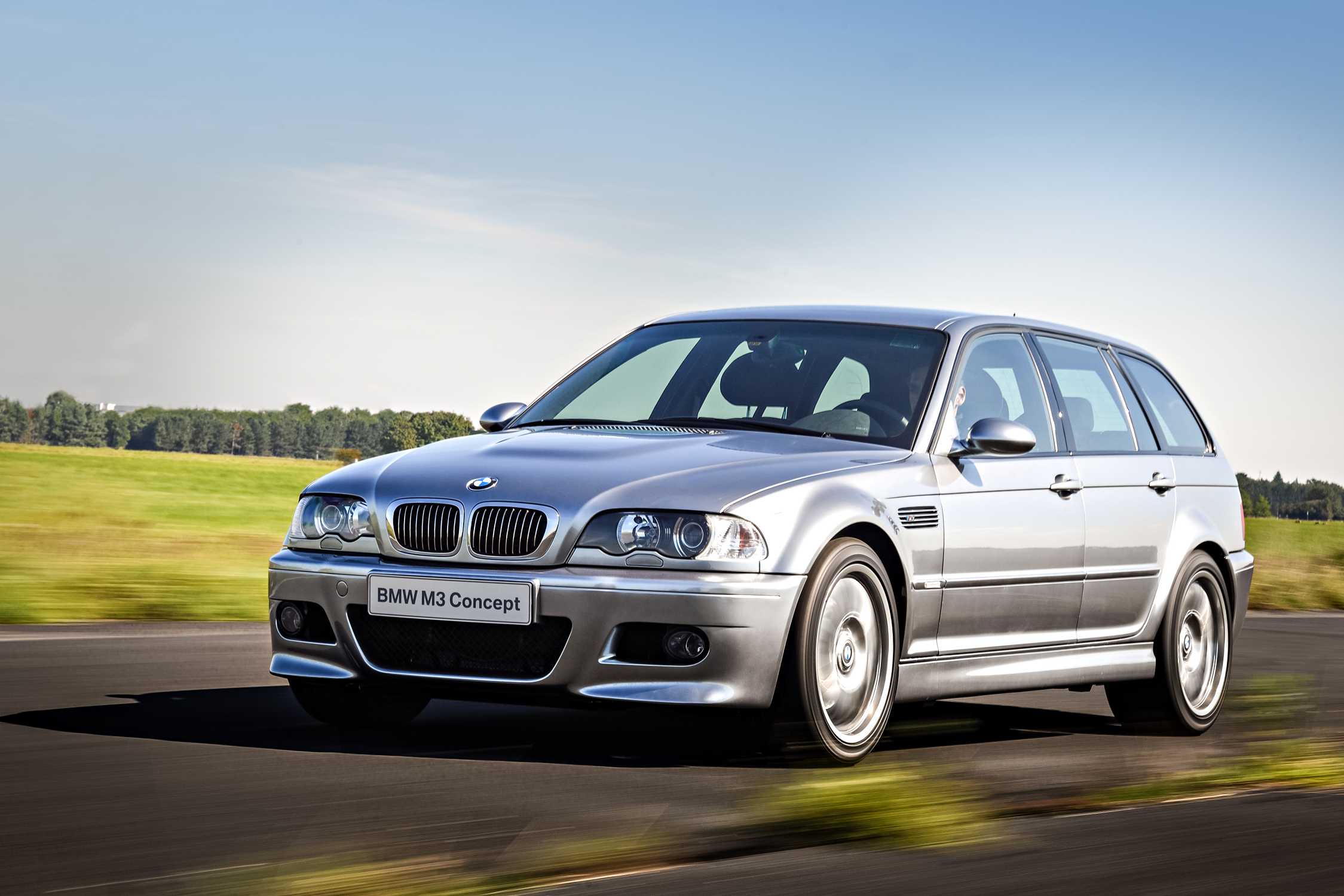
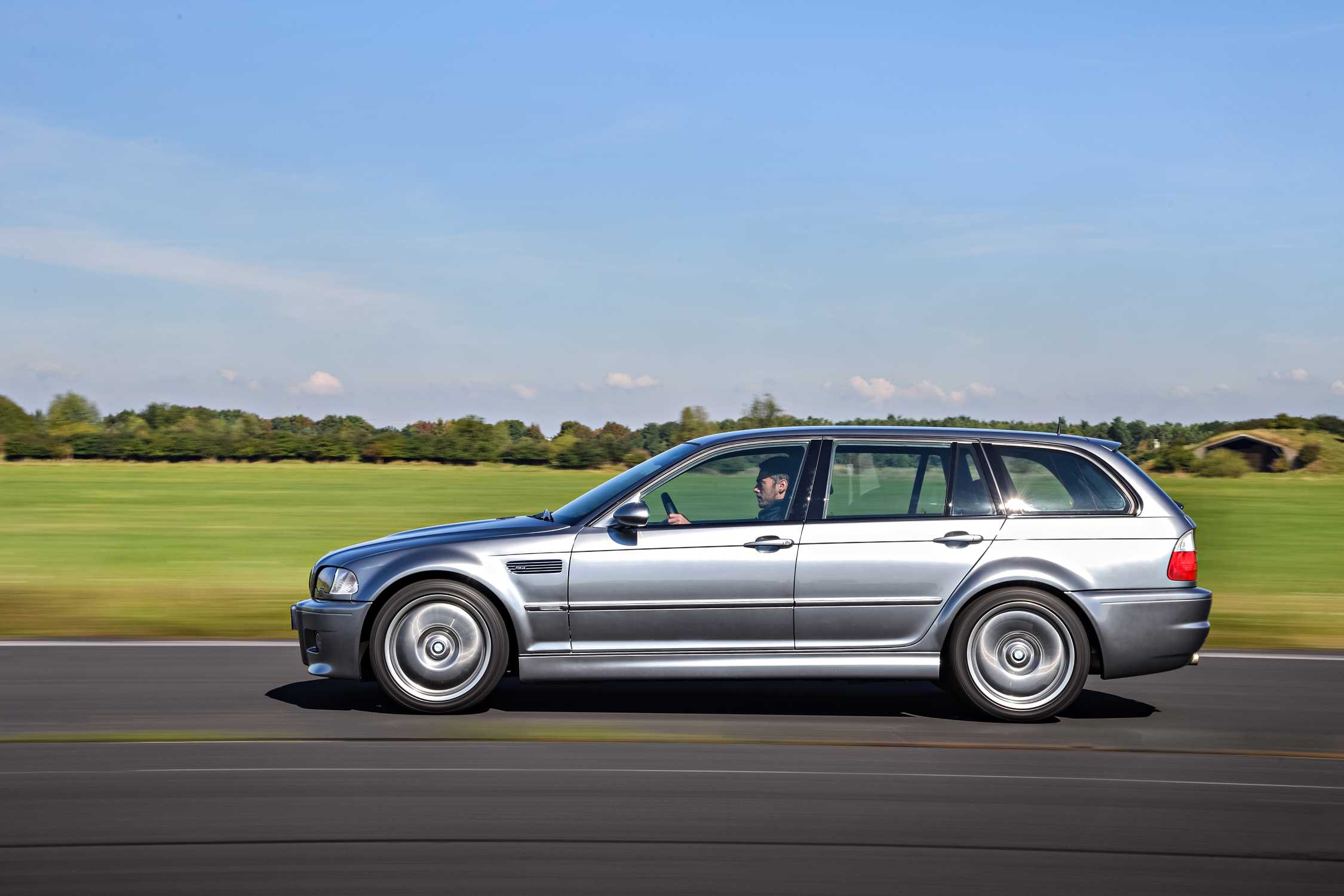
BMW constructed the E46 M3 Touring concept in 2000 to test whether the M3’s performance architecture could be integrated with an estate body. It is a physical feasibility study, not an official customer E46 M3 body variant. BMW says the project never entered series production and was publicly presented in 2016.
Record: BMW-055 · Factory feasibility prototype · Germany · 2000.
Specifications and rarity
| Item | Documented reference and scope |
|---|---|
| Project year | 2000 |
| Engine | S54B32, 3.2-litre naturally aspirated inline-six |
| Published output / torque | 252 kW (343 hp); 365 Nm |
| Exterior finish | Chrome Shadow metallic |
| Design challenge | M3 rear axle and widened wheel housings integrated with Touring doors and loading space |
| Cabin | Alcantara bolsters with special F1 seat-cover material |
| Public unveiling | 2016 |
| Count scope | One factory E46 M3 Touring concept; never a customer production model |
The original E46 M3 estate that stayed a concept
The single-car count covers this original factory concept. It excludes ordinary E46 Touring production and later privately built M3 conversions. BMW-055 follows the documented project from its engineering challenge to its distinctive finish and cabin.
The rear doors had to work with the M3’s wider body
A wide rear wheel housing is easy to draw on an estate silhouette, but integrating it with a functioning rear door creates a more demanding problem. The opening, door edge and surrounding body all need to meet coherently. BMW identifies this relationship as a central part of the feasibility study.
The problem is architectural rather than simply decorative. A broad wheel arch can affect how a door terminates and how the adjacent surfaces flow. Resolving that on a complete car provides evidence that an idea can be made physically workable, even if it does not establish the commercial case for production.
The photographs show the resulting estate body with recognizable M3 details. Its rear passenger doors and elongated roof make the change of use clear. The car adds everyday carrying potential while retaining a performance-model visual identity.
Packaging the rear axle without losing the loading area
BMW’s account also discusses combining the M3’s rear axle arrangement with useful Touring cargo space. That challenge illustrates why turning a coupé into an estate is more involved than extending its roof. Structure, suspension and the passenger compartment compete for space within the same vehicle.
An estate’s usefulness depends on access as well as volume. The tailgate opening and loading area need to work as part of the complete body. The prototype’s significance lies in exploring that combination with the performance model’s architecture, rather than assuming that a shared generation makes everything interchangeable.
Rigidity is another part of the problem identified in the factory history. A larger rear opening changes the body’s structural context. A feasibility car helps its developers assess the integrated result, while a collection profile can explain the question without pretending to publish the confidential engineering measurements.
S54 power belongs to the concept, but a coupé time is not a Touring test
BMW lists the S54B32 inline-six, 3.2 litres, 252 kW or 343 hp and 365 Nm in its concept account. These provide a clear mechanical foundation. The project aimed to combine an M3 engine and chassis character with the estate package.
The same account discusses the production coupé’s acceleration, but that is not a measured result for the Touring prototype. This profile does not transfer the coupé’s time into the concept’s performance table. The engine identity is established; a separate Touring acceleration test is not supplied by that reference.
The distinction improves comparison with the M3 CSL. Both belong to the E46 story, but the CSL concentrates on weight reduction and its own developed specification. The Touring concept investigates utility and body packaging. Their shared engine family does not make their technical outcomes identical.
Chrome Shadow and an unusual cabin treatment
BMW identifies the prototype’s finish as Chrome Shadow metallic and describes a layered painting process that gives emphasis to the body contours. In the supplied views, the finish helps the wider surfaces remain visible without a bright graphic treatment.
The cabin uses Alcantara bolsters with a special seat-cover material called F1. BMW’s account describes that material as having a metallic quality. It contributes to the concept’s individual presentation rather than repeating an ordinary E46 interior specification unchanged.
Those appearance choices make the feasibility car an intentional complete object. A prototype can serve an engineering purpose and still receive a carefully developed finish. Its visual identity helps explain why it remains interesting as a collection vehicle after the immediate packaging question has been answered.
The 2016 reveal and the difference from modern M3 Tourings
BMW’s history places the public presentation in 2016, sixteen years after the concept’s creation. The later reveal brought a previously private project into the wider M3 story. It did not turn the E46 into a retroactive series-production estate.
The car can be compared with later factory M3 Touring models, but the distinction should stay explicit. This entry documents the original E46 concept and its particular construction context. Later customer models belong to another generation and another production programme.
The two BMW heritage photographs show the concept’s complete body from different angles in September 2016. They let the reader examine the estate proportions and the M3 surface treatment together. Their captions retain BMW’s credit and source context, while the count remains one distinct factory feasibility car.
Frequently asked questions
Did BMW sell an E46 M3 Touring?
The documented 2000 factory concept never entered customer series production.
When did the public first see this concept?
BMW’s project history says 2016.
Which engine does it use?
The S54B32 naturally aspirated 3.2-litre inline-six, with 252 kW or 343 hp.
What was the main body challenge?
Integrating the rear doors and loading space with the M3’s wider wheel housings and rear axle architecture.
What is the finish called?
Chrome Shadow metallic.
Are private E46 M3 Touring conversions included in the count?
No. This profile counts the one original factory concept only.
Explore related verified BMW profiles
Sources and photo credits
Photo: BMW AG / BMW Group PressClub · Press/editorial use only. BMW-supplied press photograph under BMW PressClub terms. Original supplied photograph retained without local cropping or content alteration.
Photo: BMW AG / BMW Group PressClub · Press/editorial use only. BMW-supplied press photograph under BMW PressClub terms. Original supplied photograph retained without local cropping or content alteration.
Why this machine matters
The two BMW heritage photographs show the concept’s complete body from different angles in September 2016. They let the reader examine the estate proportions and the M3 surface treatment together. Their captions retain BMW’s credit and source context, while the count remains one distinct factory feasibility car.
Built in limited numbers
One factory E46 M3 Touring concept; never a customer production model
Gallery
Specifications
Factory specifications may vary by model year, market and configuration.
Identity & production
- Official model
- BMW M3 Touring Concept E46 (2000)
- Base model
- M3 E46
- Worldwide production
- 1
Powertrain & performance
- Engine
- S54B32, 3.2-litre naturally aspirated inline-six