BMW M3 GTR Street E46 (2001)
Discover BMW M3 GTR Street E46 (2001) history, specifications and rarity, with sourced details, FAQs and authentic photographs with visible credits.
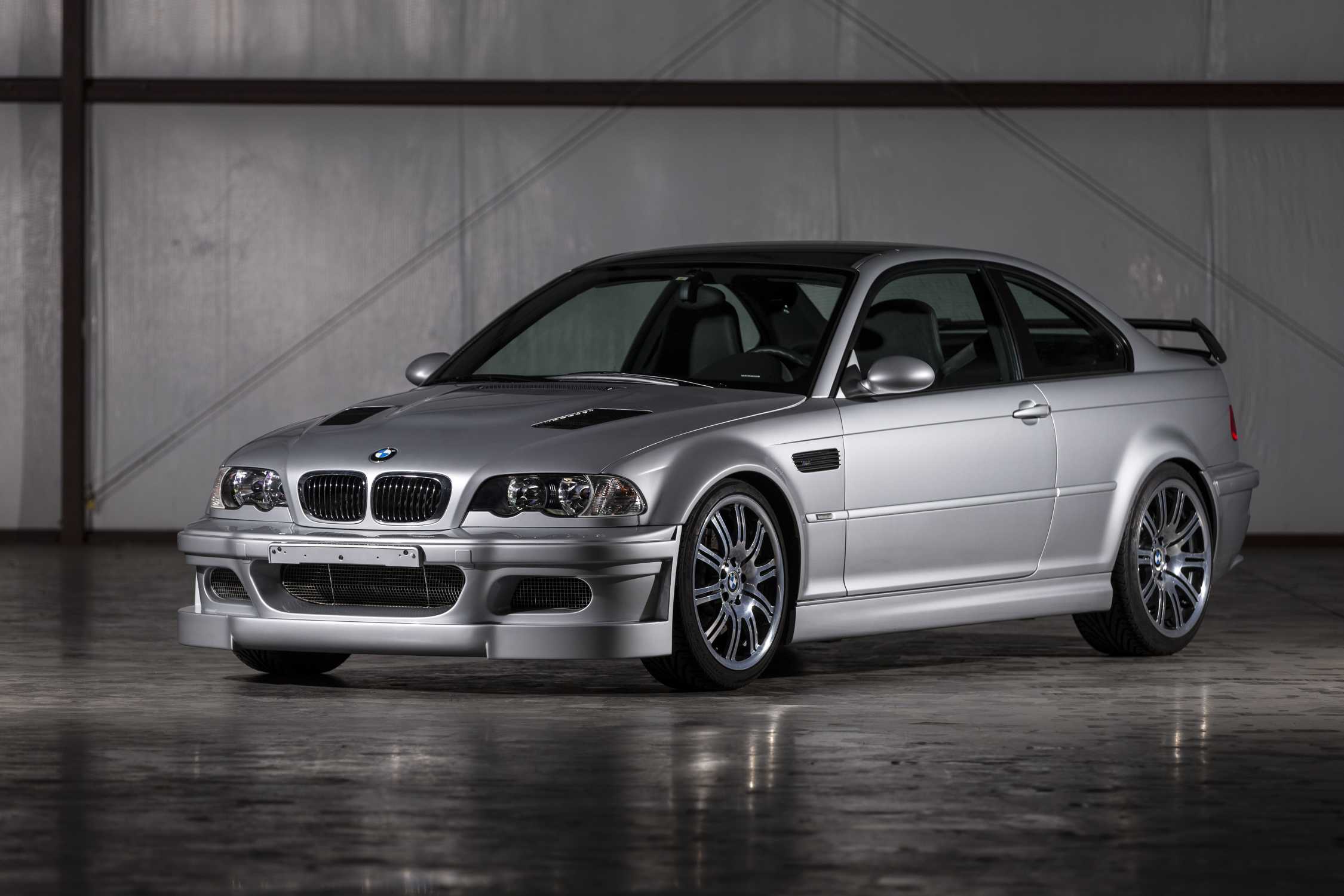
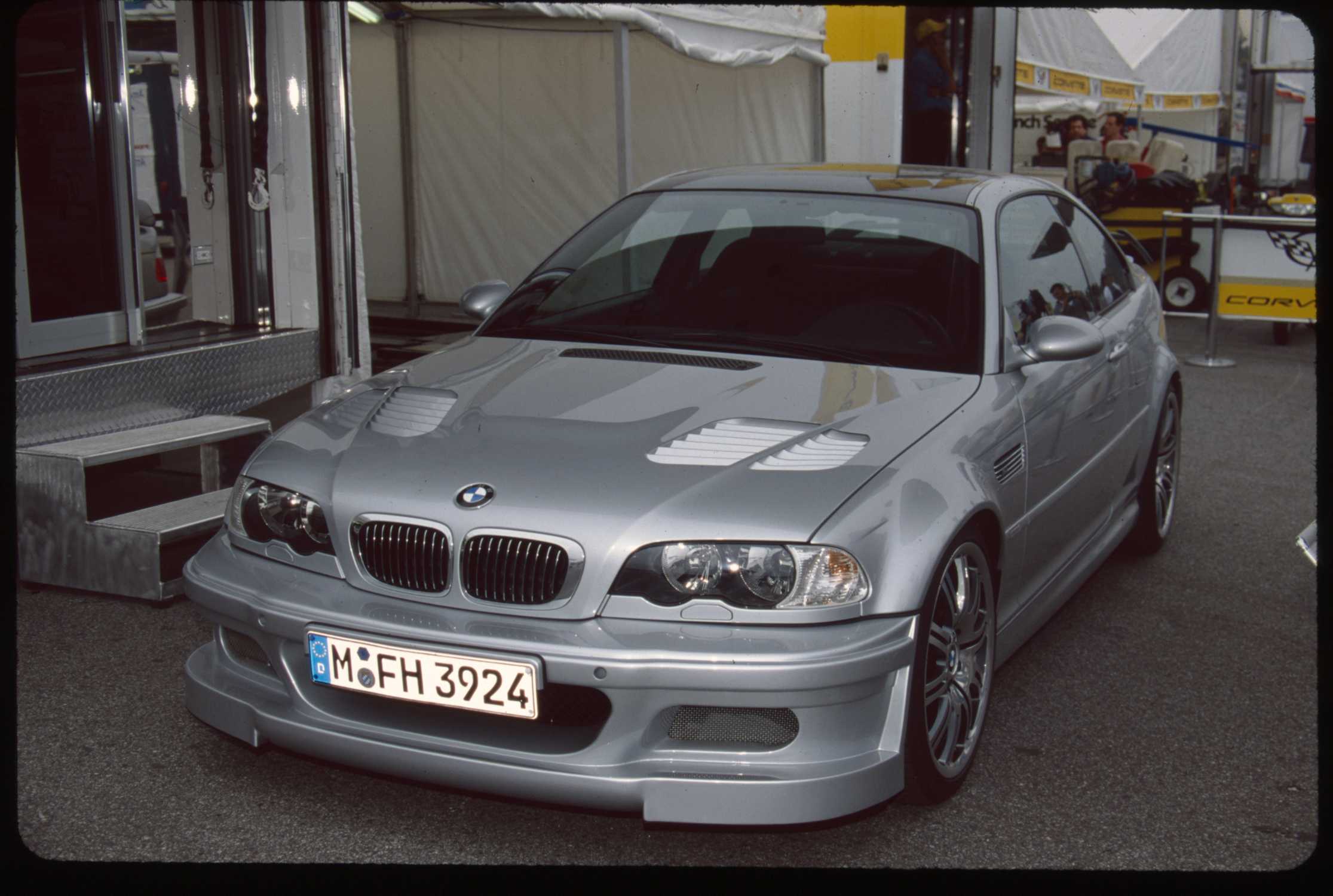
The 2001 BMW M3 GTR Street, or Straßenversion, gave the E46 M3 a road-going V8 configuration tied to BMW’s American Le Mans Series programme. Its purpose was not to become a normal engine option for the M3 range. It supplied the road counterpart required by the racing project’s homologation context.
Record: BMW-057 · Road homologation special · Germany · 2001.
Specifications and rarity
| Item | Documented reference and scope |
|---|---|
| Reference year | 2001 |
| Engine | P60B40, 3,997 cc naturally aspirated V8; dry-sump lubrication |
| Published road output | 258 kW (350 hp), separate from racing output |
| Transmission | Six-speed manual with twin-disc clutch |
| Published weight reference | 1,350 kg |
| Count scope | Three production-level road cars; BMW’s 2025 history also records seven development cars, ten completed in the programme |
| Cabin | Recaro seats; rear seats removed |
| Purpose | Road homologation counterpart of the ALMS M3 GTR |
The V8-powered M3 built for a homologation problem
BMW’s detailed 2025 history separates three production-level examples from seven engineering development cars. Ten cars were completed across that programme. This profile uses three for the production-level road-car count and states the wider ten-car scope separately, instead of presenting ten customer cars as a settled fact.
Why the racing programme needed a road counterpart
A production-based competition category links the racing car to a road-model foundation. The GTR’s purpose-built V8 created a problem because that engine was not a normal E46 M3 showroom configuration. A small road programme addressed that relationship.
The resulting car is therefore best understood through its purpose. A regular E46 M3 uses a six-cylinder engine; the GTR road car exists because the racing version used a V8. The mechanical change is central to its identity, rather than a later private engine swap.
Homologation history can involve proposed quantities, proof-of-production statements and completed vehicles. Those are related stages, but they should not be treated as interchangeable numbers. The production field here follows the later factory breakdown that explicitly distinguishes development and production-level examples.
A P60 V8 with road output and racing-derived lubrication
BMW identifies a 3,997 cc P60B40 V8 for the road car and publishes 258 kW or 350 hp. The road figure is lower than the racing engine’s published output. Keeping the two configurations separate prevents the profile from giving the Street car a competition specification it did not carry in that form.
Dry-sump lubrication is an important part of the mechanical story. It stores the main oil supply separately and uses a pumping arrangement suited to maintaining lubrication under demanding vehicle movement. That explains why the system matters without implying that the road car and race car have identical operating requirements.
The six-speed manual with twin-disc clutch also distinguishes the Street configuration from the race transmission discussed in BMW’s history. Shared engine ancestry does not mean every drivetrain component and setting is the same.
Carbon components and a reduced cabin
BMW describes carbon-fibre-reinforced plastic components and an extensively reworked interior. The roof, aerodynamic sections and other parts contribute to a lightweight brief, while Recaro seats and the removal of rear seating give the cabin a focused character.
The complete exterior retains an E46 coupé silhouette, but its front treatment, bonnet venting and rear wing make the special purpose visible. These are not enough to identify a GTR on their own: a modified standard M3 can acquire a similar appearance. Factory identity and the original records remain essential.
The supplied clean photographs show a documented road version. One modern archive view establishes the complete car; a period-context view places it in the 2001 programme. They provide useful visual evidence without replacing the source account of what each category of car represented.
Three production-level cars and seven development cars
The 2025 BMW USA history gives a particularly useful breakdown: ten completed cars, seven later recycled engineering development vehicles and three production-level examples retained in the BMW Group Classic collection. The scope resolves the difference between a programme total and the final production-level group.
The older BMW M account says ten road-legal cars were produced. Rather than erase that wording or combine it with the later breakdown to produce thirteen, this record states the later category distinction explicitly. The three and ten figures answer different questions when their scopes are preserved.
The workbook’s planned-ten wording is therefore refined into a documented completed-programme description. There is no need to estimate how many private owners received cars, invent a survival census or turn the museum group into evidence of a current sale opportunity.
A separate road car, not the famous game livery
The M3 GTR racing car became widely recognizable through motorsport and popular culture, but its racing appearance is not the identity of the Street version. A blue-and-silver game-inspired livery on a racing GTR should not be used as an unexplained photograph of the road homologation car.
This profile uses BMW’s explicitly identified road-version images. Their source captions are attached to the individual pictures, keeping the period context and modern archive publication distinct. The result is a record a reader can compare directly with the sources.
The CSL provides the clearest E46 customer-series comparison. Its six-cylinder engine and 1,383-car production scope describe a different lightweight project. The GTR Street’s rare identity rests on its V8 homologation purpose and tightly defined road-car group, not merely on belonging to the same M3 generation.
Frequently asked questions
How many M3 GTR Street cars does this profile count?
Three production-level examples, following BMW USA’s detailed 2025 breakdown.
Where does the number ten come from?
BMW records ten completed programme cars: seven engineering development cars and three production-level examples.
Should three be added to ten?
No. The three are part of the ten-car programme total.
What engine does the Street car use?
A 3,997 cc P60B40 V8 with dry-sump lubrication; BMW publishes 258 kW or 350 hp for the road configuration.
Does it have the race car’s transmission?
BMW describes a six-speed manual and twin-disc clutch for the Street version, distinct from the race transmission.
Is it the same model as the M3 CSL?
No. The CSL is a separate six-cylinder lightweight production edition with its own specification and count.
Explore related verified BMW profiles
Sources and photo credits
- BMW M: M3 GTR Street configuration
- BMW USA 2025 history: ten programme cars, seven development and three production-level
- BMW USA: M3 GTR road version launch
Photo: BMW AG / BMW Group PressClub · Press/editorial use only. BMW-supplied press photograph under BMW PressClub terms. Original supplied photograph retained without local cropping or content alteration.
Photo: BMW AG / BMW Group PressClub · Press/editorial use only. BMW-supplied press photograph under BMW PressClub terms. Original supplied photograph retained without local cropping or content alteration.
Why this machine matters
The CSL provides the clearest E46 customer-series comparison. Its six-cylinder engine and 1,383-car production scope describe a different lightweight project. The GTR Street’s rare identity rests on its V8 homologation purpose and tightly defined road-car group, not merely on belonging to the same M3 generation.
Built in limited numbers
Three production-level road cars; BMW’s 2025 history also records seven development cars, ten completed in the programme
Gallery
Specifications
Factory specifications may vary by model year, market and configuration.
Identity & production
- Official model
- BMW M3 GTR Street E46 (2001)
- Base model
- M3 E46
- Worldwide production
- 3
Powertrain & performance
- Engine
- P60B40, 3,997 cc naturally aspirated V8; dry-sump lubrication
- Transmission
- Six-speed manual with twin-disc clutch