BMW M3 CSL E46 (2003)
Discover BMW M3 CSL E46 (2003) history, specifications and rarity, with sourced details, FAQs and authentic photographs with visible credits.
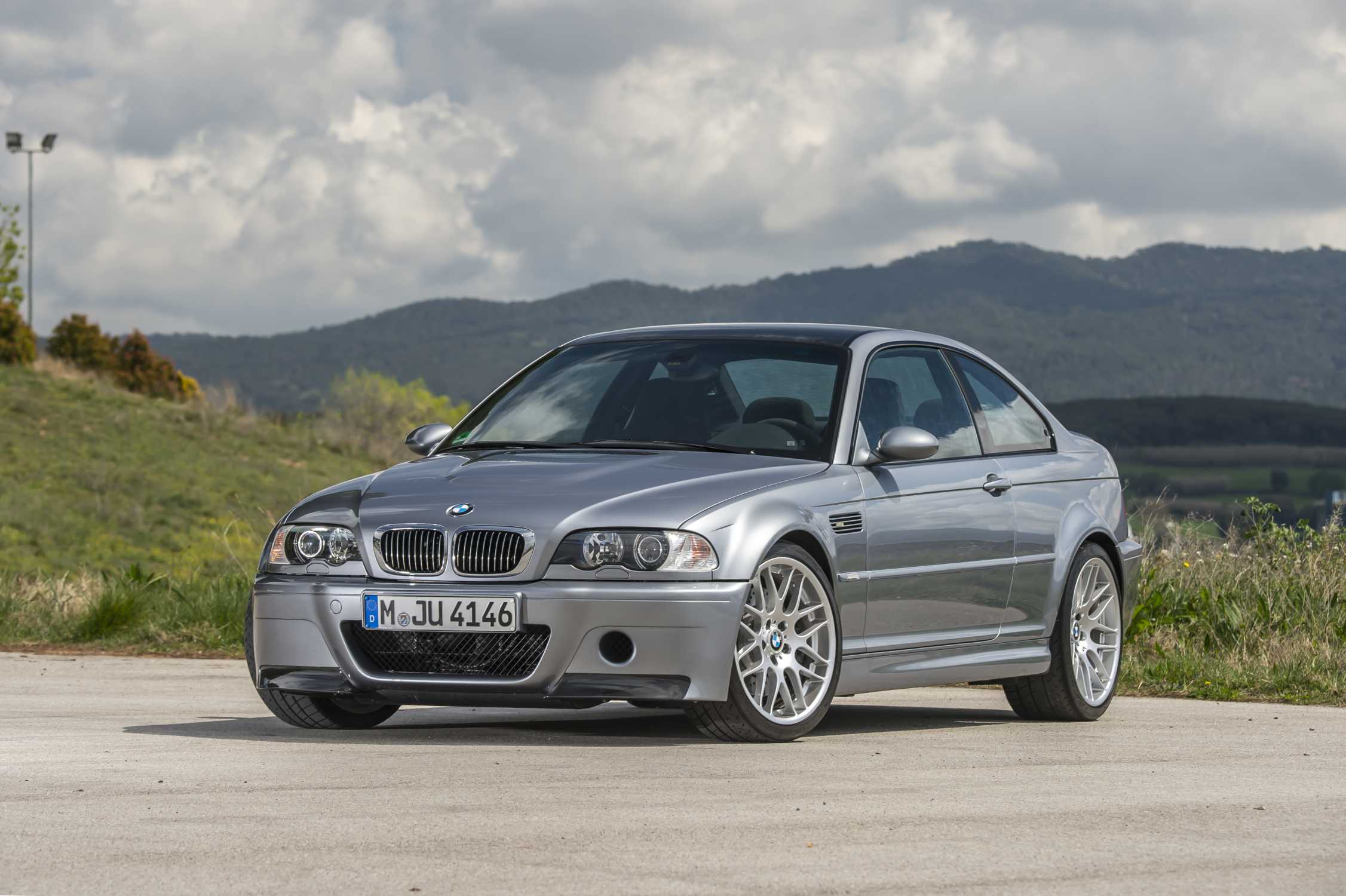
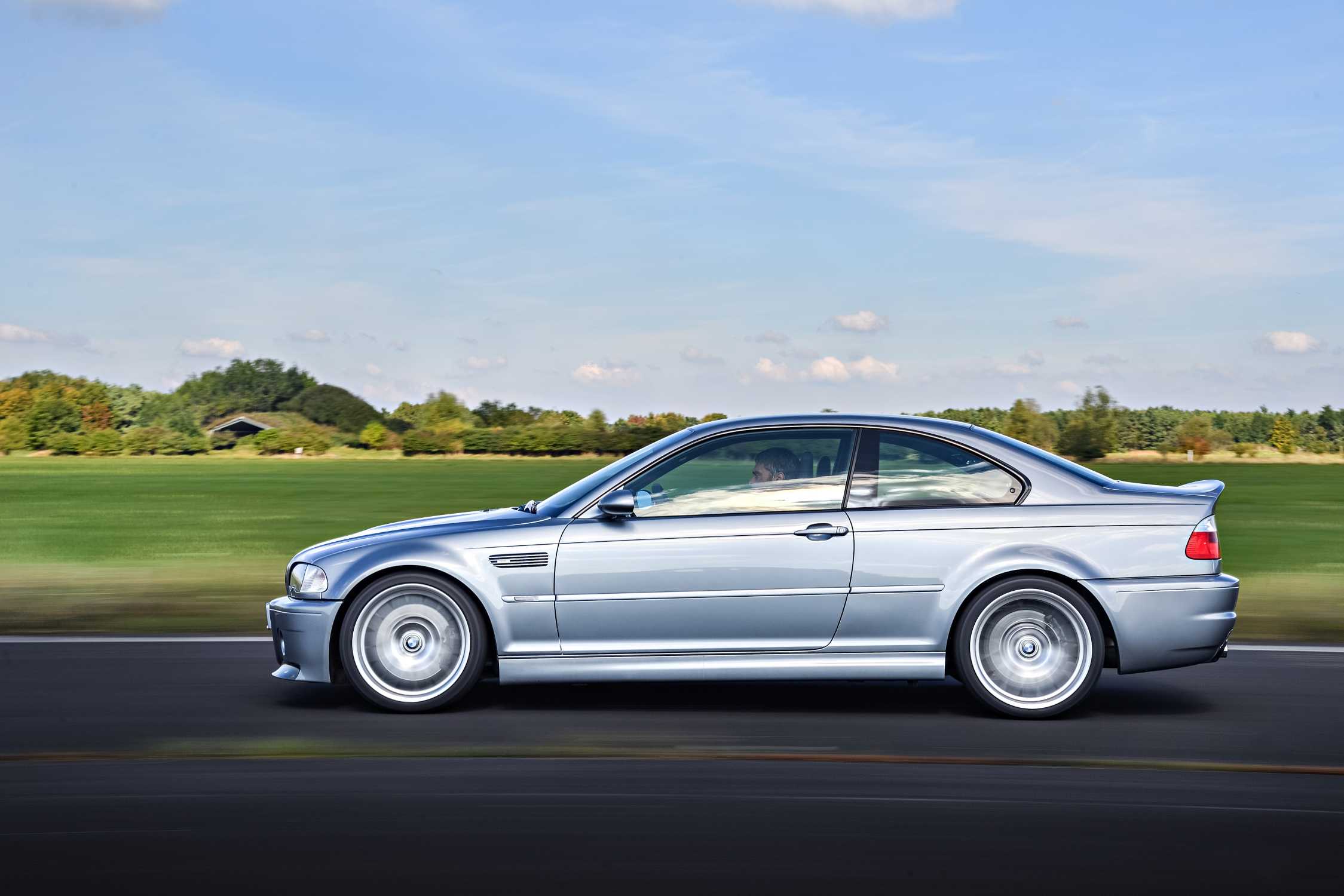
The 2003 BMW M3 CSL E46 is a 1,383-car lightweight edition that pairs a more powerful naturally aspirated straight-six with a deliberate reduction in mass. Its identity rests on the complete factory package: carbon construction, a distinctive intake system, focused chassis equipment and a specification developed around the CSL brief.
Record: BMW-058 · Limited production lightweight edition · Germany · 2003.
Specifications and rarity
| Item | Documented reference and scope |
|---|---|
| Edition count | 1,383 M3 CSL cars worldwide; separate from the standard M3 and later Competition equipment |
| Engine | 3,246 cc S54B32HP naturally aspirated straight-six |
| Output | 265 kW / 360 hp; European factory specification |
| Transmission | Six-speed SMG II automated manual; rear-wheel drive |
| Published weight | 1,385 kg, 110 kg below the factory’s standard M3 comparison |
| Performance reference | 0–100 km/h in 4.9 seconds, factory specification |
| Exterior colours | Silver Grey metallic or Sapphire Black metallic |
| Defining construction | Carbon-fibre-reinforced plastic roof and extensive lightweight components |
The E46 M3 with a concentrated lightweight brief
The initials connect this car with BMW’s earlier lightweight coupé tradition. In the E46 generation, that idea became a specific edition rather than a general description of any M3 fitted with lighter wheels or a carbon roof. Production scope and mechanical configuration make the difference meaningful.
Its rarity is the documented worldwide edition total. That number includes the original CSL production group; it does not count replicas, privately modified M3s or later cars whose owners have installed CSL-style equipment. Those vehicles may share visual cues without sharing the original factory identity.
The S54 six-cylinder engine and carbon intake
The CSL retains the E46 M3’s naturally aspirated straight-six architecture, developed into the S54B32HP specification. BMW publishes 265 kW and 360 hp. The output is an edition-specific reference, rather than a figure borrowed from the V8-powered GTR programme.
The carbon intake assembly is one of the most recognizable mechanical features. It belongs to the wider effort to sharpen the response and character of the car, alongside engine development and weight reduction. Its importance is greater than its appearance in an engine-bay photograph.
This keeps the CSL story distinct from the M3 GTR Street. Both are exceptional E46 projects, but the GTR’s V8 homologation purpose and the CSL’s customer-production lightweight brief explain different cars. Treating one as a substitute for the other would obscure both the engineering and the production history.
A carbon roof and a complete weight-reduction programme
BMW’s published 1,385 kg reference represents a reduction of 110 kg against its standard M3 comparison. The figure belongs to the factory’s comparison conditions; it should not be used as a promise that every surviving car, with every equipment choice and modification, will weigh precisely the same.
The carbon-fibre-reinforced plastic roof is a defining part of the package. Reducing mass high in the body has a different consequence from removing the same mass near the floor, because the position of weight affects the car’s overall mass distribution. The roof therefore serves both a visible and an engineering role.
Lightweight seating, interior components and other material changes support the same brief. The cabin expresses the edition’s priorities, but equipment history still matters. A car photographed without a radio or air conditioning should not be used to imply that every CSL necessarily left the factory with identical comfort equipment.
SMG II and the focused chassis specification
The factory transmission is the six-speed SMG II automated manual. It uses a manual gearbox architecture with automated shifting and clutch control. It is not the seven-speed dual-clutch transmission associated with later M3 generations.
That distinction helps a reader understand the car on its own terms. The CSL combines a high-revving six-cylinder engine with an electronically managed version of the period six-speed transmission, rather than the drivetrain of a modern M car transplanted into an older body.
The chassis and wheel specification support the lightweight programme. BMW publishes a 4.9-second 0–100 km/h reference for the CSL, but the useful identity evidence remains the complete factory configuration. A performance claim, wheel design or body component in isolation cannot authenticate an original edition car.
Two paint choices and a recognizable exterior
Silver Grey metallic and Sapphire Black metallic are the factory exterior colours identified for this edition. The carbon roof, specific front treatment and sculpted rear form give the CSL a coherent appearance without requiring an exaggerated description of every surface as race-derived.
The clean archive photographs supplied here show the actual CSL configuration. A front-quarter photograph establishes its overall shape, and a side view helps a reader compare the proportions and edition details with the standard E46 M3. Each image has an individual source and visible photography credit.
Paint alone is not enough to establish provenance. Repainting, replacement panels and privately fitted components can alter the visual evidence over time. The original identity is best understood through factory records and the complete specification, with photographs serving as useful supporting material.
Why the CSL occupies its own place in M3 history
The CSL sits between the everyday usability of the E46 M3 and a more concentrated lightweight approach. It was a customer-production edition, unlike the one-off E46 Touring concept, and its worldwide total is much larger than the tiny GTR Street production-level group.
Its collector significance follows from that combination of defined production and distinctive engineering. The car gives a clear example of how weight, material choices and engine character can form an edition’s identity without relying solely on an increase in power.
The later availability of CSL-inspired parts or Competition equipment does not expand the original 1,383-car count. Keeping the boundaries clear makes the profile useful to readers comparing real factory editions, and preserves the reason the M3 CSL remains a separate record in this collection.
Frequently asked questions
How many E46 M3 CSL cars were built?
BMW identifies 1,383 cars worldwide for the original CSL edition.
What engine powers the M3 CSL?
The 3,246 cc S54B32HP naturally aspirated straight-six, with a published 265 kW or 360 hp.
Is SMG II a dual-clutch gearbox?
No. It is a six-speed automated manual, distinct from later BMW dual-clutch transmissions.
What colours were offered?
BMW identifies Silver Grey metallic and Sapphire Black metallic.
What is the factory weight reference?
BMW publishes 1,385 kg, a 110 kg reduction against its standard M3 comparison.
Does a CSL-style roof or wheel set make an ordinary M3 a CSL?
No. Authentic edition identity depends on the original factory configuration and records.
Explore related verified BMW profiles
Sources and photo credits
Photo: BMW AG / BMW Group PressClub · Press/editorial use only. BMW-supplied press photograph under BMW PressClub terms. Original supplied photograph retained without local cropping or content alteration.
Photo: BMW AG / BMW Group PressClub · Press/editorial use only. BMW-supplied press photograph under BMW PressClub terms. Original supplied photograph retained without local cropping or content alteration.
Why this machine matters
The later availability of CSL-inspired parts or Competition equipment does not expand the original 1,383-car count. Keeping the boundaries clear makes the profile useful to readers comparing real factory editions, and preserves the reason the M3 CSL remains a separate record in this collection.
Built in limited numbers
1,383 M3 CSL cars worldwide; separate from the standard M3 and later Competition equipment
Gallery
Specifications
Factory specifications may vary by model year, market and configuration.
Identity & production
- Official model
- BMW M3 CSL E46 (2003)
- Base model
- M3 E46
- Worldwide production
- 1383
Powertrain & performance
- Engine
- 3,246 cc S54B32HP naturally aspirated straight-six
- Transmission
- Six-speed SMG II automated manual; rear-wheel drive