BMW M3 Pickup Workshop One-Off (2011)
Discover BMW M3 Pickup Workshop One-Off (2011) history, specifications and rarity, with sourced details, FAQs and authentic photographs with visible credits.
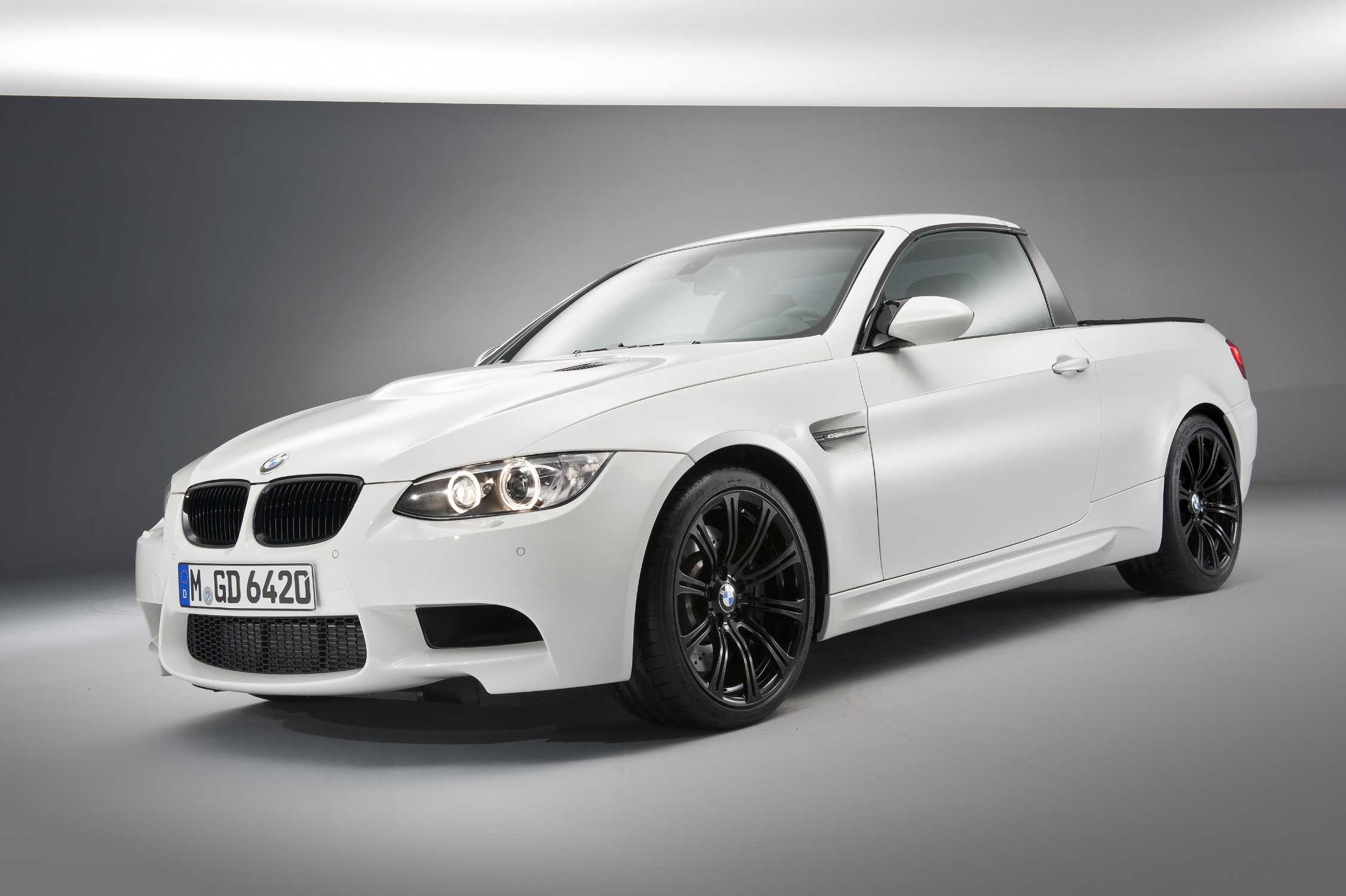
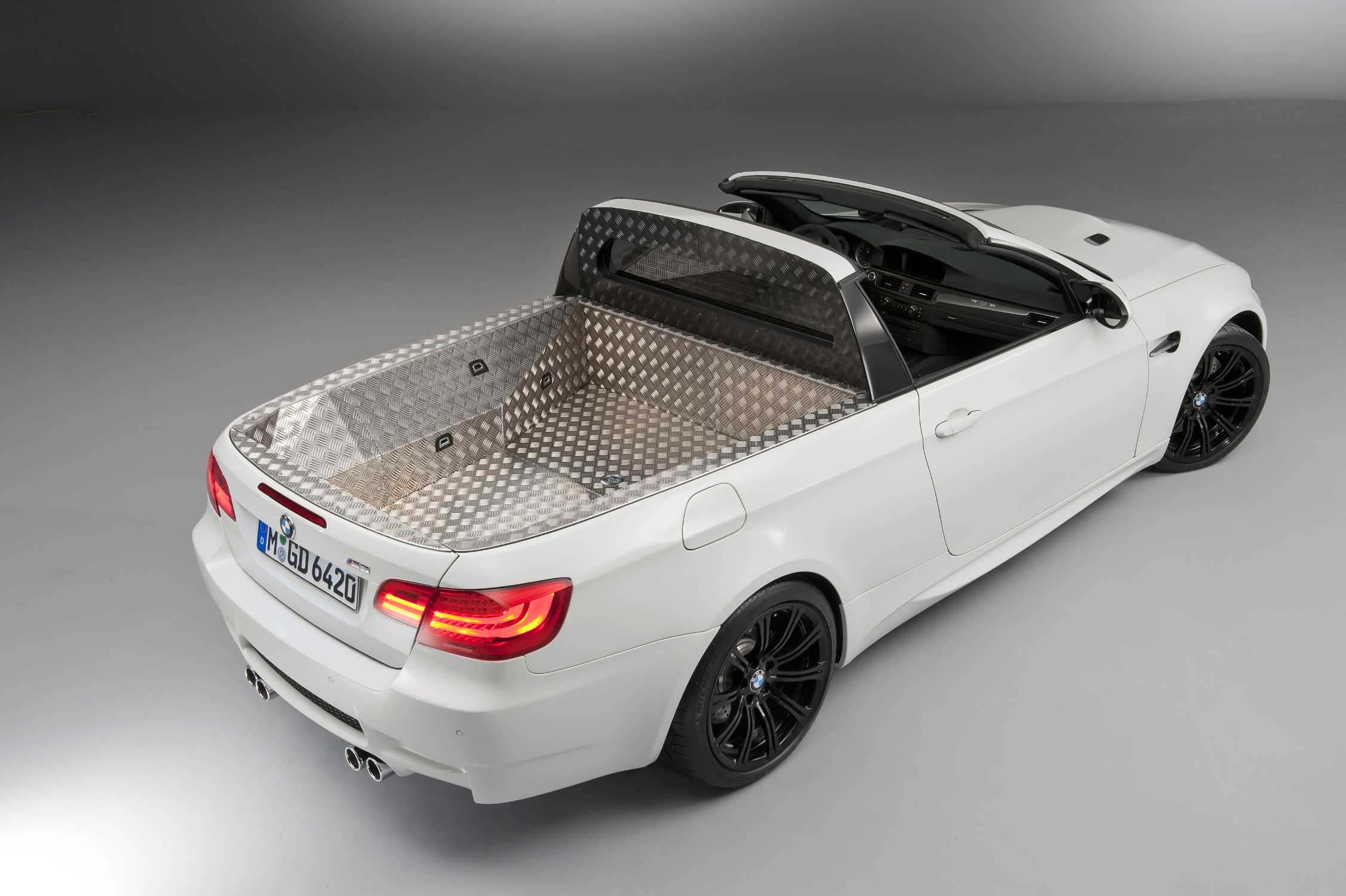
BMW unveiled the M3 Pickup on 1 April 2011, presenting an improbable extra body style for its performance range. The timing invited skepticism, but the vehicle itself was real: a factory-built one-off intended for workshop transport duties at BMW M.
Record: BMW-075 · Factory workshop one-off · Germany · 2011.
Specifications and rarity
| Item | Documented reference and scope |
|---|---|
| Count scope | One 2011 factory pickup; excludes the earlier E30 workshop pickup |
| Public reveal | 1 April 2011 |
| Body origin | Convertible-based fourth-generation M3 conversion |
| Engine | Naturally aspirated V8 |
| Published output | 309 kW / 420 hp in the factory reveal |
| Load capacity | Up to 450 kg, factory claim |
| Roof | Removable Targa panel |
| Purpose | Road-certified BMW M workshop transport vehicle; no series production |
An April Fools reveal with a real vehicle behind it
This distinction gives the project its lasting interest. A humorous public presentation and a functioning physical vehicle are not mutually exclusive. The headline played with expectations, while the underlying car demonstrated a genuine body conversion and a practical factory use.
The record counts the 2011 vehicle only. BMW had built an earlier workshop pickup in the 1980s, but that was another project and another original car. Treating the two as one model with a count of two would obscure their separate construction histories.
The convertible architecture matters to the body description
The project uses the fourth-generation M3’s convertible-based architecture. The workbook’s E92 label is therefore refined here to an E93-based conversion rather than describing an ordinary coupé whose rear seats were simply replaced by a tray.
A convertible body already addresses structural requirements associated with an open roof. That makes its use in an open-cabin conversion understandable, although it does not establish that every reinforcement or panel remained unchanged through the factory work.
The final shape retains an M3 front end and replaces the rear passenger area with a load bed. In the supplied photographs, the body transformation is immediately legible. It is that complete factory object, rather than an illustration of a hypothetical production truck, that this profile documents.
A V8 M3 powertrain in an unexpected format
BMW’s reveal publishes 309 kW or 420 hp from a high-revving V8. The number follows the release’s European convention and should not be silently substituted with another market’s differently expressed output figure.
The powertrain links the pickup to the contemporary M3 family, but the body gives it another use. That combination explains the joke’s plausibility: the car really could combine a performance engine with a workshop carrying role.
The profile does not treat the release’s playful superlatives as a current worldwide ranking. Claims about the fastest pickup would require a defined comparison set and test method. The documented engine, original vehicle and factory purpose provide a firmer basis for its historical identity.
A load bed and removable roof give the project practical meaning
The factory account gives a load capacity of up to 450 kg and describes an aluminum-lined carrying area. Those details make the pickup more than an exterior styling exercise. Its rear section was intended to hold workshop loads.
A removable Targa roof adds another unusual feature. It changes the cabin experience while preserving a different body arrangement from either the standard convertible or a conventional fixed-roof truck. The final project combines elements normally associated with separate vehicle categories.
The complete exterior and elevated rear photograph help explain those choices. One establishes the M3-derived silhouette; the other makes the load bed and roof arrangement easier to understand. The archive captions and credits remain outside the image content.
Road certification and workshop use distinguish it from a model launch
BMW says the 2011 pickup completed the procedures for road certification and would remain a one-off workshop transport vehicle. That is the key production boundary: certification of one vehicle does not mean a customer series was introduced.
The April release initially presents the idea as another body variant before making the one-off purpose clear. An encyclopedia profile benefits from stating the outcome directly, so readers do not leave with the impression that BMW dealers offered an M3 truck range.
The earlier pickup also provides historical context without enlarging this record’s count. Different factory workshop needs produced separate conversions in different generations. Their shared practical theme is a reason to compare them, not a reason to collapse their identities.
Why the pickup deserves a separate place in M3 history
The M3 Pickup shows another role for a performance-car platform: an internal utility vehicle that became a memorable public project. Its rarity comes from one original factory conversion, while its significance comes from the relationship between humor, engineering and actual use.
It can be compared with the M3 Compact and Touring prototypes because each explores another body format around M hardware. Their briefs differ, however. The Compact and Touring examined performance-model packaging; the pickup had an explicitly stated workshop transport role.
Keeping that purpose clear avoids an invented production story. The original photographs and factory release document a real 2011 object with a unique configuration, and that is enough to explain why it belongs among the collection’s verified one-offs.
Frequently asked questions
Was the 2011 M3 Pickup only an April Fools illustration?
No. BMW built a real one-off workshop vehicle, despite the playful 1 April reveal.
How many are counted here?
One 2011 factory conversion; the earlier E30 pickup is a separate car.
What body architecture was used?
The fourth-generation M3 Convertible architecture, identified here as E93-based.
What output did BMW publish?
309 kW or 420 hp for the V8 in the original reveal.
Was it offered as a production M3 body style?
No. BMW stated that it would remain a one-off workshop transport vehicle.
What load capacity did BMW claim?
Up to 450 kg, with a dedicated rear carrying area.
Explore related verified BMW profiles
Sources and photo credits
- BMW USA: real M3 Pickup workshop one-off, April 2011
- BMW: thirty years of M3 history and the two pickup projects
Photo: BMW AG / BMW Group PressClub · Press/editorial use only. BMW-supplied press photograph under BMW PressClub terms. Original supplied photograph retained without local cropping or content alteration.
Photo: BMW AG / BMW Group PressClub · Press/editorial use only. BMW-supplied press photograph under BMW PressClub terms. Original supplied photograph retained without local cropping or content alteration.
Why this machine matters
Keeping that purpose clear avoids an invented production story. The original photographs and factory release document a real 2011 object with a unique configuration, and that is enough to explain why it belongs among the collection’s verified one-offs.
Built in limited numbers
One 2011 factory pickup; excludes the earlier E30 workshop pickup
Gallery
Specifications
Factory specifications may vary by model year, market and configuration.
Identity & production
- Official model
- BMW M3 Pickup Workshop One-Off (2011)
- Base model
- M3 E9x
- Worldwide production
- 1
Powertrain & performance
- Engine
- Naturally aspirated V8