BMW M3 Art Car — Ken Done, 1989
Discover BMW M3 Art Car Ken Done history, specifications and rarity, with sourced details, FAQs and authentic photographs with visible credits.
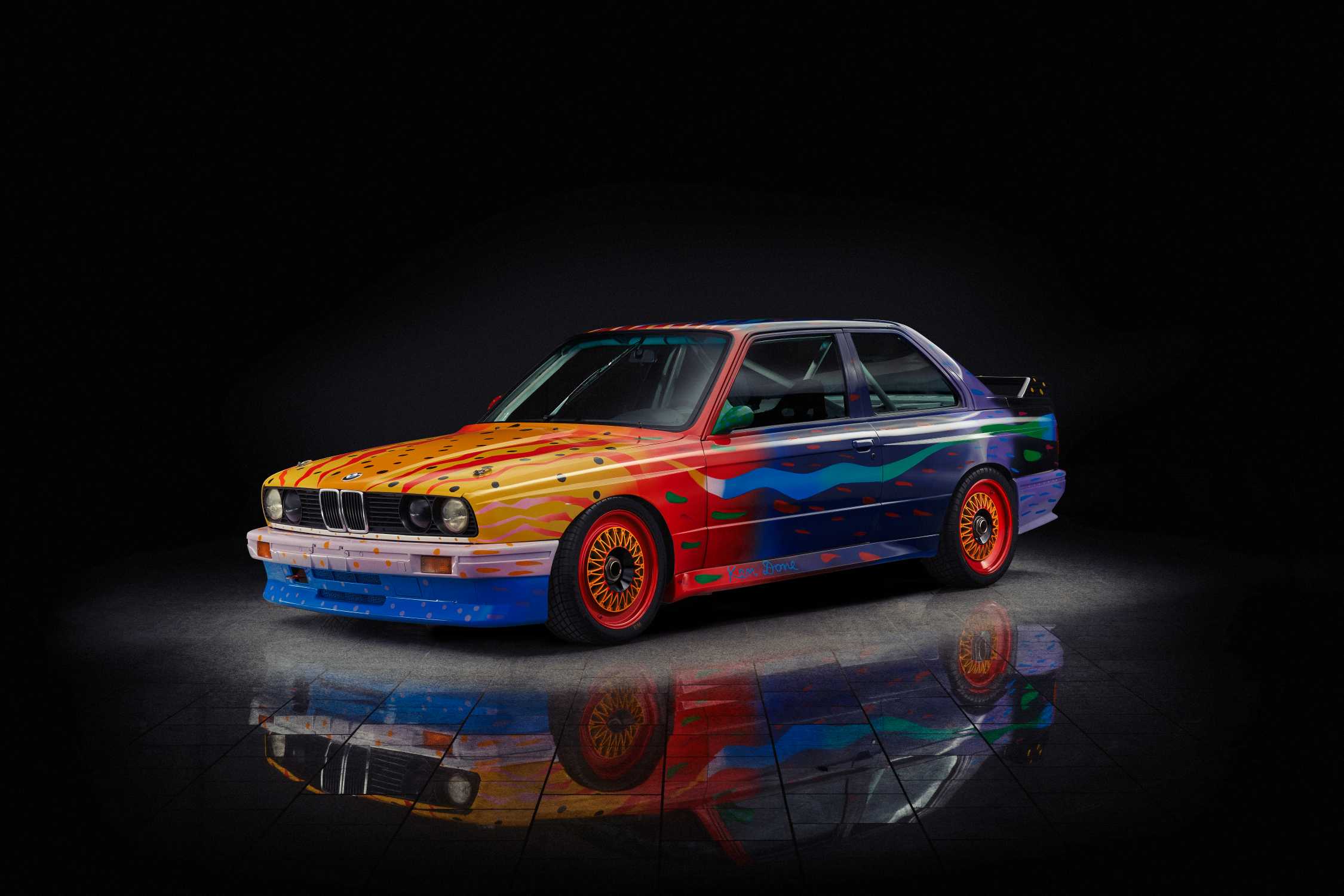
Ken Done’s BMW M3 is the eighth Art Car in the BMW collection, created in 1989. Its vivid surface draws on the artist’s interest in parrots, parrotfish and an energetic image of Australia. The work uses a Group A E30 M3, giving the painted form a competition-car shape with its own history.
Record: BMW-018 · Individual BMW Art Car · Germany · 1989.
Specifications and rarity
| Item | Documented reference and scope |
|---|---|
| Art Car number | 8 |
| Artist / creation year | Ken Done, 1989 |
| Vehicle | BMW M3 Group A racing version, E30 |
| Visual inspiration | Parrots and parrotfish; Australian color and movement |
| Historical engine reference | 2,332 cc inline-four; four valves per cylinder; twin overhead camshafts |
| Factory catalogue reference | 300 bhp; 281 km/h |
| Earlier championship | Jim Richards, 1987 Australian Touring Car Championship, identified by Ken Done’s own project account |
| Count scope | One original individual Art Car |
Ken Done’s BMW M3 captures color and motion
The workbook’s 635 CSi and 1984 identification is corrected here. BMW’s catalogue and Ken Done’s own project account identify the M3 and 1989. The inventory ID stays BMW-018; the public title, chassis and technical references follow the documented object.
How the painting uses the M3’s surfaces
In the factory photographs, strong colors extend across the bonnet, wings and flanks. The forms suggest movement without needing the vehicle to be travelling through the frame. The angular E30 body provides edges against which the flowing painted areas can be read.
Done’s own account connects the design with beauty and speed in birds and fish. That inspiration explains the visual approach more directly than calling the car merely a colorful race livery. The painted work has an artistic theme, while the underlying vehicle retains its recognizable competition architecture.
A complete-car photograph is especially useful because the effect depends on distribution over the whole object. Detail views can reveal brushwork and panel transitions, but the full silhouette shows how the colors cooperate. The supplied gallery preserves BMW’s composition so neither scale of viewing is lost through local cropping.
The championship history came before the artwork
Ken Done’s official account identifies the car as the Group A M3 associated with Jim Richards’s 1987 Australian Touring Car Championship title. BMW’s older catalogue uses a different championship label. This profile follows the more specific title in the artist’s contemporary project account and records the sequence rather than silently repeating the older wording.
The key chronology is straightforward: the competition achievement preceded the 1989 painting. Readers should not infer that the finished Art Car livery was used to win the 1987 championship. A car’s racing biography and its later artistic identity can both be important without being simultaneous.
BMW’s catalogue also describes limited racing use in 1988 before retirement from competition. The history therefore supports a racing platform that became an exhibition artwork, not a newly launched 1989 customer model.
M3 Group A reference specification
The catalogue’s technical entry gives a 2,332 cc four-cylinder, four valves per cylinder and twin overhead camshafts. It publishes 300 bhp and a 281 km/h speed reference. Those are historical figures for the competition-car entry; they should not be assigned to an ordinary E30 road M3.
The compact racing body gives the artwork a different visual support from the large 635 CSi and 730i Art Cars elsewhere in this batch. The proportions, wheel openings and aero surfaces shape the way the viewer reads the painted movement.
The table treats the figures as catalogue references, preserving their context rather than presenting them as a modern test certificate. Artistic transformation by itself is not evidence of a power increase or a new racing homologation.
Original Art Car versus a later tribute
Done’s official website documents a 2026 M4 GT3 EVO tribute livery connected with the Bathurst 12 Hour. That is a later interpretation on another model, separate from the original 1989 M3. It is useful evidence of the design’s continuing influence, but it does not change the original Art Car’s one-object count.
This distinction also governs image selection. A modern M4 wearing related colors would be unsuitable as the unlabelled featured image of the 1989 M3. The photographs supplied here are BMW’s identified images of the original M3 artwork.
Readers can compare it with Nelson’s 1989 M3 without combining the cars. Each artist created a different surface on a distinct racing object. The visible credits keep Done’s artistic authorship separate from BMW’s photographic supply, and the related links preserve the two identities as separate records.
Frequently asked questions
Which BMW did Ken Done paint?
A BMW M3 Group A racing car based on the E30.
When did he create it?
1989, correcting the workbook’s 1984 date.
Which Art Car number is it?
Number 8.
What inspired its visual design?
Done identifies parrots and parrotfish, connecting their color and movement with the racing car.
Did it win its championship in this livery?
The documented 1987 championship preceded the 1989 artwork; the sequence must remain distinct.
Is the 2026 Bathurst M4 the original Art Car?
No. It is a later tribute on a different vehicle model.
Explore related verified BMW profiles
- BMW M3 Art Car — Michael Jagamara Nelson, 1989
- BMW M3 Pickup E30 — The 1986 Workshop One-Off
- BMW M1 Art Car — Andy Warhol, 1979
Sources and photo credits
- BMW Art Car Collection: factory technical and racing histories
- Ken Done: the BMW Art Car
- Ken Done: a tribute to an icon
Ken Done’s 1989 BMW M3 Art Car, photographed by Enes Kucevic for BMW; published in June 2025. Photo: Enes Kucevic / BMW Group PressClub · Press/editorial use only. Clean source photograph supplied without local alterations. © BMW AG. BMW PressClub press/editorial-use terms apply. Artwork: Ken Done, 1989.
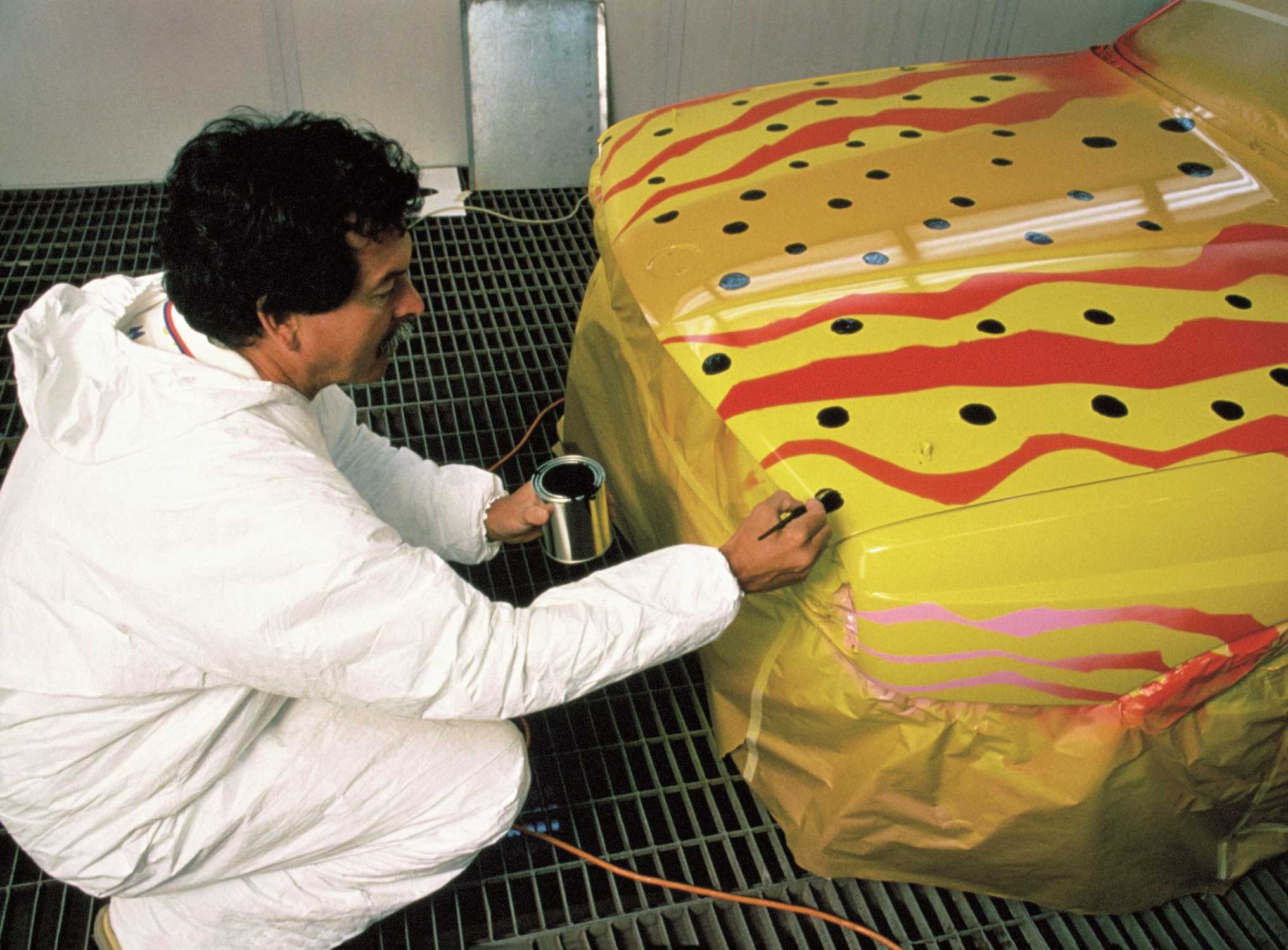
Ken Done working on his BMW M3 Art Car, photographed by Michel Zumbrunn; supplied by BMW in March 2025. Photo: Michel Zumbrunn / BMW Group PressClub · Press/editorial use only. Clean source photograph supplied without local alterations. © BMW AG. BMW PressClub press/editorial-use terms apply. Artwork: Ken Done, 1989.
Why this machine matters
Readers can compare it with Nelson’s 1989 M3 without combining the cars. Each artist created a different surface on a distinct racing object. The visible credits keep Done’s artistic authorship separate from BMW’s photographic supply, and the related links preserve the two identities as separate records.
Built in limited numbers
One original individual Art Car
Gallery
Specifications
Factory specifications may vary by model year, market and configuration.
Identity & production
- Official model
- BMW M3 Art Car — Ken Done, 1989
- Base model
- M3 E30
- Worldwide production
- 1
Powertrain & performance
- Engine
- 2,332 cc inline-four; four valves per cylinder; twin overhead camshafts