Bentley 3 Litre — 1924 Le Mans Winner
The Bentley 3 Litre driven by John Duff and Frank Clement won the 1924 24 Hours of Le Mans. This profile follows the actual winning car, identified in the ACO restoration account as XT1606. Its 2026 restoration provides a particularly useful distinction between surviving original mechanical material and bodywork rebuilt to the race-start configuration.
The Bentley 3 Litre driven by John Duff and Frank Clement won the 1924 24 Hours of Le Mans. This profile follows the actual winning car, identified in the ACO restoration account as XT1606. Its 2026 restoration provides a particularly useful distinction between surviving original mechanical material and bodywork rebuilt to the race-start configuration.
Bentley 3 Litre — 1924 Le Mans Winner at a glance
| Manufacturer | Bentley |
|---|---|
| Model / family | 3 Litre |
| Profile scope | Named historic competition chassis |
| Historical reference year | 1924 |
| Inventory reference | BEN-007 |
| Engine reference | 3 Litre four-cylinder petrol |
| Documented individual subject | The actual 1924 Le Mans winner identified by ACO as XT1606 |
Bentley’s first Le Mans victory
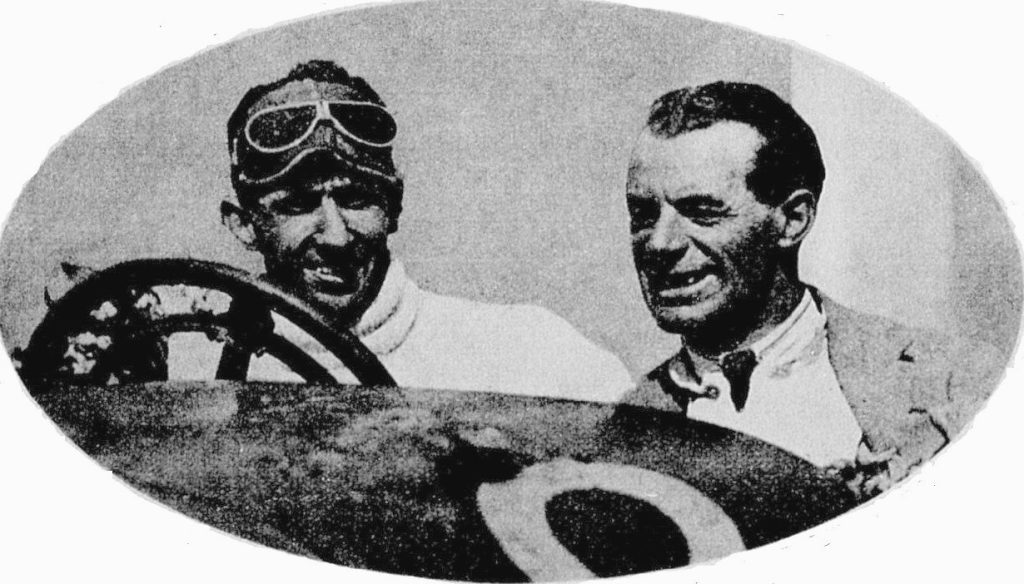
The 1924 victory is a specific milestone in Bentley history: John Duff and Frank Clement won the second running of the 24 Hours of Le Mans in a specially prepared 3 Litre. The achievement belongs to that crew, race and vehicle, rather than to every later Bentley wearing a racing number. It also offers a useful Canadian connection through Duff, without making the car a Canadian-built model. For an encyclopedia profile, the exact winner is more interesting than a general account of all 3 Litres. It connects an individual machine with a recorded competition result. The accompanying photograph shows the winning crew with the car in period, helping anchor the identity in the original event. That historical image should remain distinct from photographs taken after restoration or at modern commemorative appearances.
The identity behind the race number
The ACO’s April 2026 restoration account identifies the winner by registration XT1606 and race number 8. Registration and race number perform different jobs. A number on a car identifies an entry in a particular event; a registration can help connect appearances over time, but neither should replace a proper chassis history. This profile therefore uses the ACO’s account of the actual winning machine and does not assign an unsupported chassis number from an unrelated online listing. That restraint improves the archive rather than weakening it. It keeps an accurately documented subject separate from the many other 3 Litres, recreations and sporting rebodies a reader might encounter. When comparing photographs, match the event date and the source’s identification before assuming that every number 8 or similarly bodied green Bentley is the 1924 winner.
An endurance result with a difficult interruption
The ACO describes a race affected by interference with a rear wheel: a part was hammered into it, preventing removal and costing time in the garage. The Bentley still won. This detail matters because it gives the achievement a concrete challenge beyond a vague statement of durability. It also reminds readers that endurance racing tests a complete operation, including service access, crew decisions and the ability to recover from interruptions. A profile should not invent the sabotage’s perpetrator or motive when the available account does not establish them. The reliable narrative is the documented obstruction, the lost time and the eventual victory. Treat those facts as part of the original race history. They do not justify a claim that the modern restored car would reproduce the same performance under contemporary conditions.
What survives and what was rebuilt
The museum account identifies original engine, chassis, radiator and axle material. It also explains that the car’s bodywork did not match its 1924 state and was rebuilt during the restoration. These two statements belong together. A car can retain important original mechanical structure and still have a newly made body that accurately represents a historical configuration. Describing it merely as original would leave out an important qualification; calling it simply a replica would discard the surviving material and documented identity. The informative approach is to name the retained elements and explain the reconstruction. This helps readers understand what a restoration is attempting to preserve. It also gives later photographs a clear caption: they show the restored historic winner, whereas the period image records the vehicle during its original racing era.
The 2026 restoration as historical research
Vintage Bentley’s June 2026 account reports completion of the restoration and the car’s placement at M24 in Le Mans. The work is useful to readers because it links a physical restoration with documentary investigation. Reconstructing the body to the race-start appearance required questions about the earlier body, later alterations and the evidence supporting a particular configuration. That process is more substantial than choosing attractive period styling. For anyone studying a restored competition car, the strongest file connects individual decisions to photographs, ownership records, mechanical evidence and workshop findings. A presentable finished car does not by itself explain those decisions. The specialist’s dated report and the museum’s account provide complementary perspectives, allowing the profile to distinguish the event’s historical record from the later work undertaken to display the winner coherently.
Reading a period photograph
The bundled image was published in Très Sport mécanique in August 1924 and identifies Duff and Clement with the winning Bentley. It is a historical photograph rather than a modern reenactment or generated illustration. Its publication source is credited, with no invented photographer name. Look at how the crew, body and racing presentation appear together, but remember the limits of a single view. The image cannot reveal every mechanical detail, establish all material that survives today or answer every question about the car’s preparation. It works best beside the written race and restoration records. When comparing it with a modern photograph, differences should prompt a chronological explanation. A later body configuration does not necessarily represent an error; it may reflect a stage in the vehicle’s long life before its most recent restoration.
A single winner within a broader model history
The rarity scope here is the named 1924 winning chassis, not an invented limited edition of all Bentley 3 Litres. Competition significance attaches to a documented individual car and result. Another genuine 3 Litre can be historically important without having won this race, and a modern body copied from the winner does not transfer the original achievement. This is why the profile keeps the car’s identity ahead of appearance or general model specifications. For a collection record, useful headings would include entry history, ownership chronology, retained components, body alterations and restoration evidence. A production total for the wider family would answer a different question. It should not be placed beside the winner as if the vehicle were an ordinary numbered customer edition, nor should a single museum display be treated as a census of surviving examples.
Comparing the winner with EXP2 and the Blowers
EXP2 explains the company’s experimental beginnings and first racing win; XT1606 explains the next level of public achievement through endurance competition. The later Blowers introduce supercharging and a different technical ambition, while Old Number One represents the successful Speed Six campaigns. Keep those chapters connected through internal links, but preserve each car’s own driver pair, event, engine family and identity. The 1924 winner does not need borrowed victories from 1927, 1929 or 1930 to justify its importance. Its interest is already strong: a documented first Le Mans success, a surviving historical machine and a restoration that exposes how evidence shapes our understanding of an old racing car. Read together, the profiles show progress through distinct subjects rather than treating every early Bentley racer as interchangeable.
Frequently asked questions
Who won Le Mans in this Bentley?
John Duff and Frank Clement won the 1924 24 Hours of Le Mans in the specially prepared 3 Litre.
How is the actual winning car identified?
The ACO’s 2026 restoration account identifies it as XT1606, the number 8 Bentley. This profile does not invent a chassis number absent from that record.
Is its present body original to 1924?
The ACO explains that the body was rebuilt to the original race-start appearance during restoration. Important original mechanical components survive.
Where does the restoration record place the car?
Vintage Bentley’s June 2026 report places the completed restoration at M24 in Le Mans. That is a dated collection reference, not a live display-availability guarantee.
Explore related vehicle profiles
Sources
- ACO / M24 — restoration of the actual 1924 Le Mans winner, April 2026
- Vintage Bentley — completion of the 1924 winner restoration, June 2026
- ACO — Bentley Boys and the 1924–1930 victories
Historical facts follow the linked manufacturer, race-organizer, institutional and specialist records. Visual comparisons and documentation priorities are editorial analysis. Dated specifications, restoration accounts and published estimates retain their original scope; they do not certify a car’s current condition.
Photography and credit
John Duff and Frank Clement with their winning Bentley at the 1924 24 Hours of Le Mans; historical photograph published in Très Sport mécanique, August 1, 1924. Photographer not identified. Photo: Très Sport mécanique / Wikimedia Commons · Public domain. Resized proportionally where needed and saved as JPEG; no additional cropping or color alteration. Public domain as documented on the source page; publication in 1924 also predates the U.S. public-domain cutoff.
Why this machine matters
The Bentley 3 Litre driven by John Duff and Frank Clement won the 1924 24 Hours of Le Mans. This profile follows the actual winning car, identified in the ACO restoration account as XT1606. Its 2026 restoration provides a particularly useful distinction between surviving original mechanical material and bodywork rebuilt to the race-start configuration.
Built in limited numbers
Individual 1924 winner XT1606, race number 8, supported by ACO and restoring specialist. Original mechanical material and rebuilt body explicitly separated; no unsupported chassis number.
Gallery
Specifications
Factory specifications may vary by model year, market and configuration.
Identity & production
- Official model
- Bentley 3 Litre — 1924 Le Mans Winner
- Base model
- 3 Litre
Powertrain & performance
- Engine
- 3 Litre four-cylinder petrol