Audi RS 6 Avant GT
A numbered 660-car worldwide RS 6 Avant edition inspired by Audi’s IMSA heritage and the RS 6 GTO concept, combining distinctive carbon bodywork, heritage graphics and special final assembly.
A numbered 660-car worldwide RS 6 Avant edition inspired by Audi’s IMSA heritage and the RS 6 GTO concept, combining distinctive carbon bodywork, heritage graphics and special final assembly.
Audi RS 6 Avant GT at a glance
| Manufacturer | Audi |
|---|---|
| Model / programme | RS 6 |
| Profile scope | Limited worldwide road edition |
| Historical reference year | 2024 |
| Inventory reference | AUDI-095 |
| Engine reference | 4.0-liter twin-turbo V8 petrol |
| Published edition limit | 660 — RS 6 Avant GT; worldwide |
| Manufacturer power reference | 463 kW |
| Manufacturer power reference | 630 PS; concept rating where applicable |
| Manufacturer torque reference | 850 Nm; concept rating where applicable |
From the GTO concept to a customer RS 6 GT
Audi introduced the RS 6 Avant GT in February 2024, tracing its design route through the RS 6 GTO apprentice concept. That connection gives the edition a particularly useful archive story: an experimental physical project informed a named customer road car. The GT must nevertheless be identified separately from the concept that preceded it. Compare their bodywork, graphics and intended roles without assuming the production edition retains every concept feature. This profile follows the GT’s manufacturer specification and limited allocation, while the related GTO entry preserves the earlier study on its own terms. Both become clearer when their relationship is explained without merging the objects.
How many RS 6 Avant GT cars were announced?
Audi’s release specifies 660 units worldwide, with individual numbering in the cabin. This is the named GT edition population, not all C8 RS 6 Avants or every car carrying similar graphics. National-market allocations and later exports must be understood within that worldwide limit. The announcement is stored as a factory edition cap; it is not presented as a new completed VIN census or a current survivor count. For an individual example, connect the number to factory specification and delivery records. A numbered part can be photographed and checked, but it should support the chassis identity rather than replace the documentary evidence behind it.
The V8 platform and published output
The period specification identifies a twin-turbo V8 with 463 kW, 630 PS and 850 Nm, paired with an eight-speed tiptronic transmission and quattro drive. Those figures explain the road edition’s technical basis, while the GT-specific chassis and body details define its particular programme. Audi publishes a 3.3-second acceleration claim to 100 km/h and a maximum speed of 305 km/h. Keep those launch references separate from an independent test or a current assessment of a used car. Any tuning, software revision or hardware change belongs in the individual history, with an explanation of how it differs from the factory configuration.
Carbon bodywork and the GT silhouette
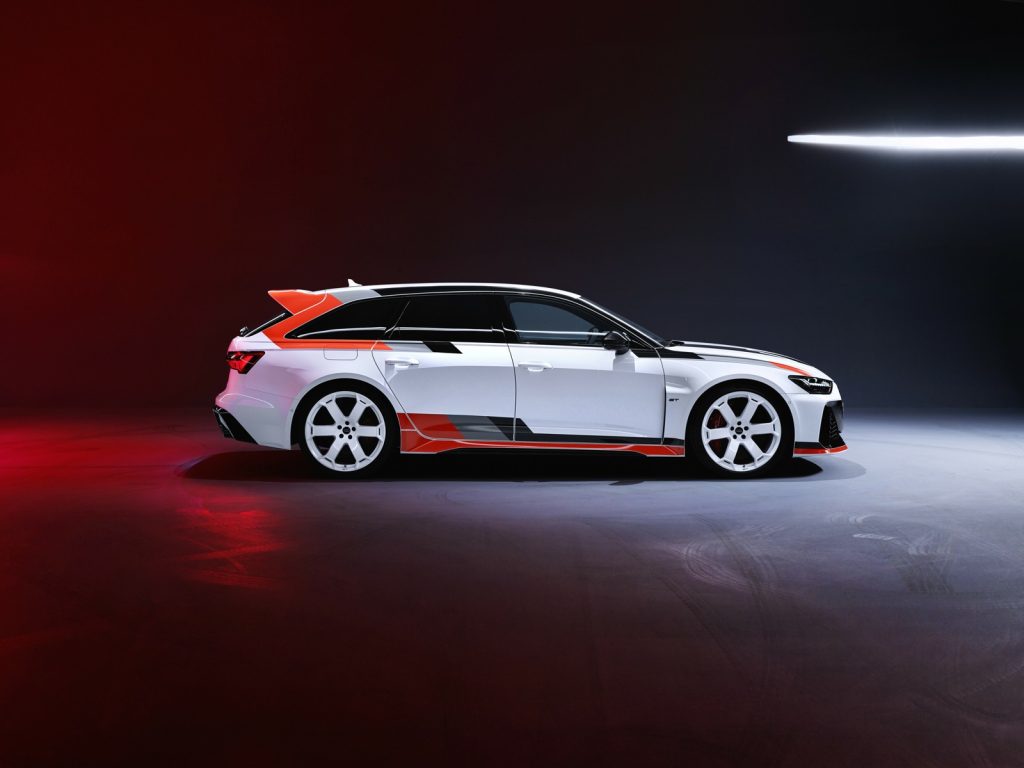
Audi’s release identifies carbon-fiber hood and front fenders, a distinctive rear wing treatment, revised exterior details and the removal of roof rails. These changes create a recognizable whole rather than a single isolated badge. The supplied official side photograph helps readers examine the relationship between the roofline, wheels, graphics and rear spoiler. For a condition review, look beyond whether the parts appear present: request evidence for any damage, repair or replacement. Materials and construction should be assessed by someone qualified to inspect them. A clear component history is useful because a repaired authentic GT and an ordinary Avant fitted with similar pieces make different claims.
Heritage graphics and available finishes
The launch describes different decal treatments and several exterior finishes, so the familiar white launch presentation should not be used as the sole definition of the edition. The supplied image documents one official GT configuration. Compare any other example with its own factory order rather than assuming it should look identical to a press car. Graphics can be replaced following wear or repair, and a replacement should be recorded even when it restores the original appearance. The design reference to Audi’s IMSA history explains the visual theme. It does not assign competition entries or results to a customer road-car chassis.
Suspension and differential: check the delivered configuration
The GT programme describes adjustable coilover suspension and specific tuning of the quattro sport differential, while the manufacturer release also discusses alternative suspension choices. That makes the individual order important. A profile should explain the programme without assuming every customer example has an identical delivered suspension configuration. For a particular car, ask for factory equipment data, invoices, setup records and an account of subsequent adjustments. A change in ride height is not enough to identify a different model or prove a performance advantage. The useful question is whether the current components and settings match the documented history and the seller’s description.
Why Böllinger Höfe appears in the production story
Audi states that the GT’s special final assembly takes place at Böllinger Höfe after body construction and painting, with edition-specific elements fitted by hand. That gives the manufacturing story a defined role: it explains how the special equipment is completed within the programme. It should not be stretched into a claim that every component is made by hand or that the whole car is built outside ordinary production processes. For an archive file, preserve delivery and factory documentation associated with the edition. Manufacturing context helps explain what distinguishes the GT, while the individual records establish which car is actually being described.
Numbered cabin details and completeness
Audi’s account identifies individual numbering on the center console and a cabin treatment with edition-specific accents. Photograph the number and cabin together, then compare them with delivery images and factory records. This makes it easier to interpret repaired trim, replacement seats or later personal changes. A useful completeness file can include original accessories, manuals, keys, order information and the provenance of any loose parts. The aim is not to declare that every maintained surface must remain untouched. It is to make the history legible, so a future reader can distinguish a genuine factory edition with documented changes from an unsupported description based only on appearance.
Comparing the RS Tribute and RS 4 anniversary editions
The RS 6 RS Tribute edition and RS 4 Avant edition 25 years provide useful nearby reference points. Each uses a different heritage theme and a separately scoped allocation, while the GT gives unusual prominence to bodywork and its concept-project connection. Read the profiles by market, factory specification and the reason for the special programme. Do not transfer the RS Tribute’s U.S. count to the GT, or the RS 4’s European allocation to the RS 6. A practical comparison can help a reader assess what makes each edition distinct without assuming that the lowest advertised number is automatically the most historically significant choice.
An RS 6 GT file that remains useful over time
The strongest record combines the factory edition identity with a continuing account of service, configuration and ownership. Preserve numbered details and original delivery images, then add repair and modification evidence as it occurs. For a current assessment, use specialist inspection and records rather than relying on a dramatic photograph or a short seller description. The GT’s archive interest can be explained through its limited worldwide allocation, heritage presentation, bodywork and manufacturing programme without a predicted future price. Keeping those elements specific makes the profile useful both to enthusiasts studying the model and to readers investigating the claims made about a particular example.
Frequently asked questions
How many RS 6 Avant GT cars were announced?
Audi specified 660 worldwide. This is the named GT edition limit, kept separate from completed-production and survivor censuses.
Is the RS 6 GT the same car as the GTO concept?
No. The road edition draws inspiration from the earlier apprentice concept, but the two are separate archive subjects.
What output did Audi publish for the GT?
The launch gives 463 kW, 630 PS and 850 Nm for the twin-turbo V8. Modified examples need their own specification records.
Were all GTs the white launch configuration?
No. Audi described several finishes and different graphic treatments. Compare each car with its own original factory order.
Explore related vehicle profiles
Sources
- Audi — RS 6 Avant GT launch, February 2024
- Audi Australia — Apex predator, February 2024
- Audi — RS 6 four-generation history
History and published specifications follow the linked manufacturer records. Visual comparisons, documentation questions and inspection priorities are editorial analysis. Photographs retain their original subject descriptions and separate rights records.
Photography and credit
Audi RS 6 Avant GT; official static photograph A237097 from the February 6, 2024 launch. Photo: AUDI AG / Audi Media Center · Audi Media Center: editorial use free of charge. Resized proportionally without additional cropping or color alteration.
Why this machine matters
A numbered 660-car worldwide RS 6 Avant edition inspired by Audi’s IMSA heritage and the RS 6 GTO concept, combining distinctive carbon bodywork, heritage graphics and special final assembly.
Built in limited numbers
660 is the worldwide factory GT edition limit. GTO concept and road edition remain distinct. Delivered suspension alternatives require individual equipment confirmation; no audited completed/survivor census claimed.
Gallery
Specifications
Factory specifications may vary by model year, market and configuration.
Identity & production
- Official model
- Audi RS 6 Avant GT
- Base model
- RS 6
Powertrain & performance
- Engine
- 4.0-liter twin-turbo V8 petrol