Aston Martin V8 Zagato Volante
The V8 Zagato Volante opened the 1980s collaboration to a different touring brief. Aston Martin records thirty-seven cars and a 1988–1990 production period after the 1987 prototype. Most importantly, the whole open programme should not be labelled Vantage: the usual injected V8 and later documented upgrades need separate treatment.
The V8 Zagato Volante opened the 1980s collaboration to a different touring brief. Aston Martin records thirty-seven cars and a 1988–1990 production period after the 1987 prototype. Most importantly, the whole open programme should not be labelled Vantage: the usual injected V8 and later documented upgrades need separate treatment.
Aston Martin V8 Zagato Volante at a glance
| Manufacturer | Aston Martin |
|---|---|
| Model / family | V8 Zagato |
| Profile scope | Historic road-model archive |
| Historical reference year | 1988 |
| Inventory reference | AST-069 |
| Original series total | 37 — Complete V8 Zagato Volante programme, not a universal original Vantage subset |
| Historical engine reference | Normally injected V8 in original open programme; later Vantage upgrades individually evidenced |
Prototype appearance and production chronology
Aston Martin places the open prototype at Geneva in 1987 and lists the production programme as 1988–1990. This profile therefore uses 1988 for the series reference, while retaining the inventory’s 1987 date as the prototype milestone. Neither date should be silently substituted for an individual chassis’s completion or first registration. A clear vehicle file can record all three when evidence supports them. This distinction also helps photo captions: the date of a public presentation does not necessarily identify the year of manufacture. The chronology explains the open model without borrowing the coupe’s introduction as its own.
Rarity: thirty-seven open cars rather than thirty-seven Vantages
The factory records a plan for twenty-five Volantes that expanded to thirty-seven. That total concerns the complete open programme, not a universally Vantage-engined subset. The inventory title is corrected accordingly. Original order records and subsequent work distinguish the engine histories of particular cars. A smaller Vantage-labelled population cannot be established merely by assuming every Volante carried the coupe’s equipment. Keep the complete body-programme count visible, with its scope, and leave unsupported subset fields empty. This makes the rarity statement useful while avoiding an incorrect badge that could misidentify an otherwise well-documented car.
The converted-coupe prototype and physical identity
The Zagato Registry identifies the 1987 show prototype as originating from coupe chassis V8XGR20042. Treat that as a registry attribution and preserve the conversion history under one physical object. It is not a basis for adding another independently built chassis to a combined family total. Prototype and series identities should be checked against their own records before interpreting a photograph or sale description. A body conversion can be historically important without representing an extra new car. The individual chronology should explain original construction, conversion and later appearances, with the supporting documents attached at each transition.
The usual injected V8 and flatter bonnet
Aston Martin describes the open car’s fuel-injected V8 and its flat bonnet in contrast with the carburetted Vantage coupe. This reflects a distinct touring specification, not simply a missing coupe badge. A modern photograph can illustrate external appearance but cannot confirm the internal engine arrangement or original delivery option. Establish those facts from the chassis file and inspection. Later work may have changed induction, capacity or output. The profile therefore keeps the general programme distinction clear while leaving an individual fitted specification to dated evidence. That separation is essential when comparing open and closed Zagatos.
Works upgrades belong to individual histories
RM Sotheby’s 2019 account of chassis 30026 describes an original Volante later uprated by Works. It provides a documented example of why current Vantage specification should not automatically become an original factory option. Preserve the date, work scope and supporting invoices in an individual record. Other cars require their own evidence; one catalogue cannot certify the remaining population. A well-documented upgrade may be an important part of the vehicle’s story. Describe it accurately rather than hiding it inside a blanket model name or treating a later powertrain change as a newly manufactured car.
Open-body construction and condition review
Inspect the supporting structure, body mountings, repairs and alignment with a specialist familiar with the open Zagato. A convertible’s condition cannot be read from paintwork alone. Restoration photographs should identify retained and replaced material, particularly where earlier work has been concealed by trim. Record door fit and operation of the actual closures without confusing a present observation with a historical originality claim. Bespoke components need their own inventory. This practical examination connects the design’s original purpose with the surviving object, allowing conservation decisions to be based on its actual material history rather than generic coupe assumptions.
Hood operation and the touring equipment file
Review hood framework, powered operation, latches, window arrangement, seals and accompanying covers before planning regular use. Record what is original, replaced or missing where evidence permits. A car presented at a concours can still require a separate readiness assessment for touring. The mechanical review should cover the installed engine, cooling, fuel equipment, lubrication, brakes, steering and tyres. These questions belong to the particular vehicle, with findings dated. The thirty-seven-car total is a historical population statement; it cannot determine whether a surviving example’s weather equipment or current mechanical installation is ready for a journey.
Registration and sales descriptions need context
Compare factory documentation, early registration papers, service records and later sale catalogues under the same chassis identity. A catalogue’s condition and custody claims remain dated to the offering. They should not become permanent assertions about where a car is now or which engine is fitted today. Where a source uses Vantage in a modern description, ask whether it refers to original delivery, later Works preparation or presentation. Keeping the distinction explicit makes the archive easier to audit. A smooth modern narrative is less valuable than a supported explanation at the points where body, equipment or ownership changed.
The coupe and earlier Volantes as comparisons
The contemporary V8 Vantage Zagato Coupe provides the closest closed-body comparison, while the Short Chassis Volante illustrates an earlier use of the open-touring name. Compare platform, engine role and count scope rather than treating Volante as one unchanged specification across generations. A collector assessing a particular Zagato should give its documentary and restoration history the same attention as its limited production. The related profiles can explain the development and identify meaningful differences. They should not add overlapping converted objects twice or transfer one era’s factory-option assumptions into a differently configured open programme.
Using the supplied model photograph responsibly
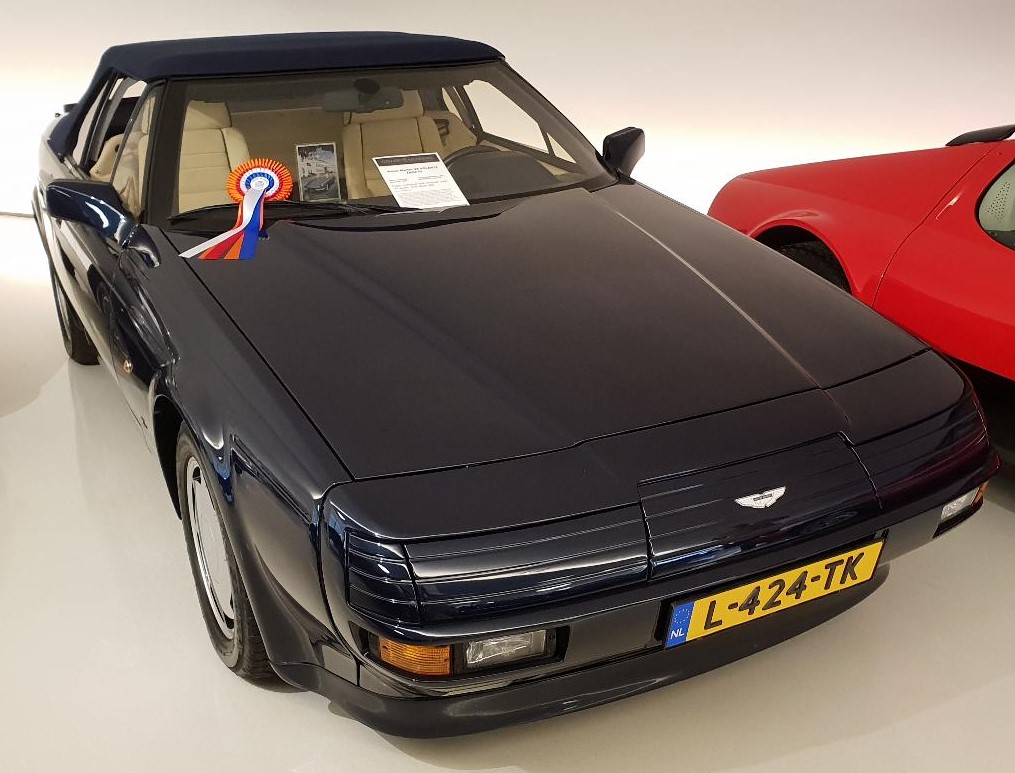
The photograph’s source identifies a 1990 V8 Volante Zagato, photographed in 2023. It illustrates the open model, with linked author, Commons source and licence. Original engine option and later Vantage conversion are not assigned from the image. Preserve that scope when sharing the picture. An enduring chassis archive should hold original order, conversion or upgrade evidence, restoration images and dated presentations together. New documents can then refine an individual finding. The useful historical story remains the distinct open programme, whose thirty-seven-car population does not establish one identical original power specification for every example.
Frequently asked questions
How many V8 Zagato Volantes are recorded?
Thirty-seven in Aston Martin’s model history.
Were all thirty-seven originally Vantage specification?
No. The factory describes the usual injected V8; upgrades require individual evidence.
Why is the reference year 1988?
The factory lists 1988–1990 production after a prototype shown in 1987.
Does a later Vantage conversion create another car?
No. Retain the work under the same physical chassis identity.
Explore related Aston Martin profiles
- Aston Martin V8 Vantage Zagato Coupe
- Aston Martin Short Chassis Volante
- Aston Martin V8 Vantage Le Mans
Sources
- Aston Martin: 1987 prototype, 1988–1990 Volante run and engine differences
- RM Sotheby’s: original Volante later uprated by Works, Monterey 2019
- Aston Martin Zagato Registry: converted-coupe Volante prototype identity
Historical claims follow the linked manufacturer, archive, specialist and catalogue records, with disputed findings retained. Inspection and collecting guidance is editorial analysis. Catalogue condition and custody statements remain dated to their sources.
Photography and credit
Source-identified 1990 V8 Volante Zagato photographed in 2023. Original engine specification and later Vantage conversion are not assigned from the image. Photo: Andrew Bone / Wikimedia Commons · CC BY 2.0. Original image supplied without visual changes.
Why this machine matters
The V8 Zagato Volante opened the 1980s collaboration to a different touring brief. Aston Martin records thirty-seven cars and a 1988–1990 production period after the 1987 prototype. Most importantly, the whole open programme should not be labelled Vantage: the usual injected V8 and later documented upgrades need separate treatment.
Built in limited numbers
The factory records a plan for twenty-five Volantes that expanded to thirty-seven. That total concerns the complete open programme, not a universally Vantage-engined subset. The inventory title is corrected accordingly. Original order records and subsequent work distinguish the engine histories of particular cars. A smaller Vantage-labelled population cannot be established merely by assuming every Volante carried the coupe’s equipment. Keep the complete body-programme count visible, with its scope, and leave unsupported subset fields empty. This makes the rarity statement useful while avoiding an incorrect badge that could misidentify an otherwise well-documented car.
Gallery
Specifications
Factory specifications may vary by model year, market and configuration.
Identity & production
- Official model
- Aston Martin V8 Zagato Volante
- Base model
- V8 Zagato
- Worldwide production
- 37
Powertrain & performance
- Engine
- Normally injected V8 in original open programme; later Vantage upgrades individually evidenced