Aston Martin V8 Vantage Le Mans
The V8 Vantage Le Mans marked forty years since Aston Martin’s 1959 Le Mans victory with a limited road-car programme. The factory states a maximum allocation of forty and offered standard 550bhp or Works Prepared 600bhp specification. The anniversary identity, allocation cap and individual engine history belong in separate, clearly sourced fields.
The V8 Vantage Le Mans marked forty years since Aston Martin’s 1959 Le Mans victory with a limited road-car programme. The factory states a maximum allocation of forty and offered standard 550bhp or Works Prepared 600bhp specification. The anniversary identity, allocation cap and individual engine history belong in separate, clearly sourced fields.
Aston Martin V8 Vantage Le Mans at a glance
| Manufacturer | Aston Martin |
|---|---|
| Model / family | V8 Vantage |
| Profile scope | Historic road-model archive |
| Historical reference year | 1999 |
| Inventory reference | AST-083 |
| Factory allocation limit | 40; completed census not independently certified |
| Historical engine reference | Twin-supercharged V8 family; factory offered 550bhp standard or 600bhp Works Prepared, individually evidenced |
A road-car anniversary rather than a race entry
Aston Martin identifies the Le Mans model as a celebration of the 1959 victory, introduced forty years later. The programme belongs to the roadgoing V8 Vantage family. Its name does not mean that every example raced at Le Mans or that it shares the winning DBR1’s chassis. Any competition activity by an individual car would need its own dated records. The profile uses the factory’s 1999–2000 chronology while keeping original completion and registration evidence at chassis level. This context makes the anniversary meaningful without assigning unsupported race results to a commemorative grand tourer.
Rarity: a maximum forty-car allocation
The factory describes production limited to a maximum of forty examples. This profile records that as the stated allocation cap rather than claiming a reconciled list of forty completed chassis. Exact verified-production metadata remains unset. A cap is useful evidence of intended rarity, but it is not a substitute for delivery or build records. For a particular car, confirm its original Le Mans order and identity before relying on the programme’s limit. Anniversary trim, a later badge or an attractive modern description cannot alone establish that the chassis belongs to the factory allocation.
The 550bhp and Works Prepared 600bhp choices
Aston Martin’s model history allows the standard 550bhp engine or a Works Prepared version of 600bhp. Those are historical offered specifications, not a uniform output claim for every Le Mans example. A source-labelled V600 photograph should therefore retain its individual scope. Compare original order, factory records and later engine-work documentation before describing what a car received or carries now. A later change deserves a date. Measured present output would require separate evidence. The choice is an important part of the edition story precisely because the same anniversary identity can accompany different supported powertrain histories.
The supercharged Vantage family context
The specialist Le Mans account places the model within the twin-supercharged V8 family. That engine architecture provides context for the Le Mans road car without turning an historical specification into an inspection of the pictured example. Record the installed assembly, induction equipment, cooling and any rebuilds in the individual file. Avoid importing naturally aspirated figures from an earlier V8 Zagato or performance data from a later unrelated Vantage. The familiar badge spans distinct generations. A precise profile should identify which programme it concerns before comparing power, body equipment or the scope of its limited allocation.
Exterior changes as supporting evidence
The factory describes distinctive front treatment, wing vents and rear detailing for the Le Mans. These can help explain the edition visually, but parts and appearance should be checked against an individual build record. A component may have been repaired, replaced or fitted later. Dated photographs are especially useful where a car’s presentation changed. Preserve the differences rather than treating a current badge as complete authentication. The inspection should connect exterior evidence with the chassis documents. That gives the styling story a sound basis while allowing conservation work to be described accurately instead of confused with original delivery equipment.
Cabin identity and a careful equipment inventory
The factory account also highlights distinctive cabin details, including metal trim and perforated pedals. Record what the actual car retains, what has changed and what paperwork supports original supply. Interior wear, replacement trim and later upgrades need a dated explanation. A modern image cannot certify the provenance of every component. Associated documents and accessories should receive their own inventory, rather than an assumption that anything accompanying the car left the factory with it. This level of care helps preserve the anniversary package as an identifiable history while leaving room for the particular object’s subsequent use and repairs.
Supporting the individual Le Mans chassis
Build information, original order, delivery records, early photographs and service invoices should connect the named car with the limited programme. Keep later sale catalogues dated, particularly when they discuss condition or custody. Edition numbering can be useful evidence but should agree with the other records. If there is a gap, identify it rather than smoothing the chronology with a repeated claim. A persuasive archive is strongest where identity, specification or ownership changes. This method also prevents an ordinary Vantage with later Le Mans-style equipment from acquiring the original allocation’s history solely through presentation.
Preparation for touring and display
Ask a specialist to assess the actual engine, supercharger installation, fuel equipment, cooling, lubrication, transmission, brakes, steering and tyres before the intended use. The limited-edition story cannot determine current readiness. Define what the owner expects from the car and preserve recommissioning findings in the chassis record. Restored appearance and a historic power rating are different from a present mechanical assessment. If preparation changes specification, record that work separately from original delivery. This lets an individual vehicle remain understandable as both an anniversary object and a maintained road car with a supported sequence of repairs.
Comparing the DBR1 and the Zagato road cars
The DBR1 profile supplies the original racing context, while the V8 Zagato coupe and Volante illustrate different limited road programmes. Compare purpose, era and count scope before using the numbers together. The Le Mans road edition celebrates the race victory; it does not inherit the competition object’s identity or results. Collecting interest depends on the actual car’s records, specification and material history as well as the anniversary. Related profiles should make those distinctions easier to follow. They should not imply that every limited Aston Martin is a race car or that a cap alone proves a completed census.
The credited V600 subject photograph
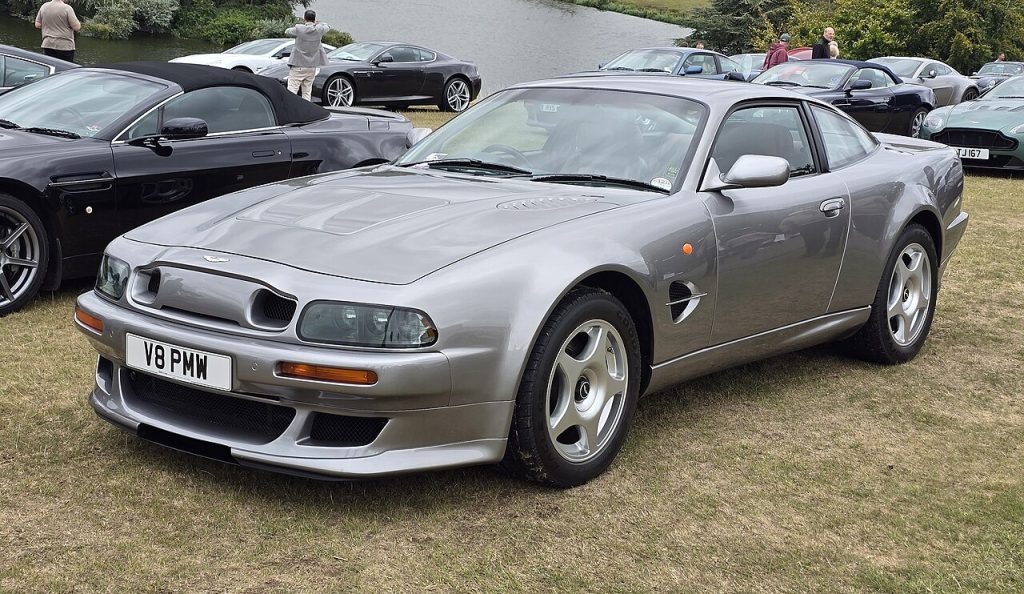
The supplied image is source-identified as a 1999 V8 Vantage V600 Le Mans, photographed at Salon Prive in 2025. Its visible caption preserves that attribution without independently certifying engine internals or claiming the whole edition was V600. Author, Commons source, licence and resizing disclosure accompany the file. Retain the caption when sharing it. An enduring archive should keep original Le Mans identity, engine-option evidence, later Works preparation and dated presentations together. New documents can then refine the individual history without confusing the forty-car allocation with an authenticated list of forty identical completed vehicles.
Frequently asked questions
What limit does Aston Martin state?
A maximum of forty examples; this profile records the cap rather than a certified completed census.
What event did the edition celebrate?
Forty years since Aston Martin’s 1959 Le Mans victory.
Were all Le Mans cars V600?
No. The factory offered standard 550bhp or Works Prepared 600bhp specification.
Does the name establish a racing history?
No. Individual competition activity needs separate evidence.
Explore related Aston Martin profiles
Sources
- Aston Martin: V8 Vantage Le Mans forty-car allocation and two power specifications
- Tim Cottingham: 1999 anniversary presentation and individual Le Mans cars
Historical claims follow the linked manufacturer, archive, specialist and catalogue records, with disputed findings retained. Inspection and collecting guidance is editorial analysis. Catalogue condition and custody statements remain dated to their sources.
Photography and credit
Source-identified 1999 V8 Vantage V600 Le Mans at Salon Prive in 2025. V600 is the photographed source label, not a claim that every Le Mans car had that specification. Photo: MrWalkr / Wikimedia Commons · CC BY-SA 4.0. Wikimedia thumbnail resized from original; no cropping or colour changes.
Why this machine matters
The V8 Vantage Le Mans marked forty years since Aston Martin’s 1959 Le Mans victory with a limited road-car programme. The factory states a maximum allocation of forty and offered standard 550bhp or Works Prepared 600bhp specification. The anniversary identity, allocation cap and individual engine history belong in separate, clearly sourced fields.
Built in limited numbers
The factory describes production limited to a maximum of forty examples. This profile records that as the stated allocation cap rather than claiming a reconciled list of forty completed chassis. Exact verified-production metadata remains unset. A cap is useful evidence of intended rarity, but it is not a substitute for delivery or build records. For a particular car, confirm its original Le Mans order and identity before relying on the programme’s limit. Anniversary trim, a later badge or an attractive modern description cannot alone establish that the chassis belongs to the factory allocation.
Gallery
Specifications
Factory specifications may vary by model year, market and configuration.
Identity & production
- Official model
- Aston Martin V8 Vantage Le Mans
- Base model
- V8 Vantage
Powertrain & performance
- Engine
- Twin-supercharged V8 family; factory offered 550bhp standard or 600bhp Works Prepared, individually evidenced