Aston Martin V8 Vantage Zagato Coupe
The V8 Vantage Zagato Coupe combined a shortened Aston Martin platform with distinctive Italian coachwork. The factory records fifty customer production cars in its model history and fifty-two coupes in its later census. These different scopes deserve visible explanation, alongside the distinction between the carburetted coupe and the usually injected Volante.
The V8 Vantage Zagato Coupe combined a shortened Aston Martin platform with distinctive Italian coachwork. The factory records fifty customer production cars in its model history and fifty-two coupes in its later census. These different scopes deserve visible explanation, alongside the distinction between the carburetted coupe and the usually injected Volante.
Aston Martin V8 Vantage Zagato Coupe at a glance
| Manufacturer | Aston Martin |
|---|---|
| Model / family | V8 Zagato |
| Profile scope | Historic road-model archive |
| Historical reference year | 1986 |
| Inventory reference | AST-068 |
| Original series total | 52 — Manufacturer March 2020 coupe census; dedicated history separately states 50 customer production cars |
| Historical engine reference | Carburetted V8 Vantage coupe programme; individual original and current specifications require records |
The collaboration returned in the 1980s
Aston Martin places the announcement at Geneva in 1985 and the completed design’s appearance there in 1986. The profile uses 1986 for introduction and the factory’s 1986–1988 programme chronology. Announcement, first public display and an individual delivery are separate events. A car’s first registration can occur later without changing the design’s introduction. Preserve those dates in the vehicle file rather than forcing all documents into one year. The attraction of the collaboration lies in its specific engineering and coachbuilt identity, which needs more explanation than simply calling any unusual Aston Martin a Zagato.
Rarity: fifty customers and a fifty-two-car census
The manufacturer’s dedicated history describes fifty customer production cars, while its March 2020 census records fifty-two V8 Vantage Zagato saloons. This profile uses fifty-two as the manufacturer’s broader coupe census and keeps the fifty-customer scope explicit. It does not invent the identities or exact roles of the additional objects from that arithmetic. A surviving-car count would require another register. When comparing an individual chassis with the production population, establish its original role and body history. These supported scopes explain the limited programme without disguising different factory statements as one perfectly interchangeable number.
A shorter platform and a different cabin
The factory describes shortening the chassis and dispensing with the rear seats. That changes the car’s architectural relationship with the longer V8 family, rather than merely applying different panels to an otherwise identical cabin. For research, compare original drawings, dimensions and the particular chassis record before accepting a broad family specification sheet. A later restoration may also have altered trim or equipment. Photographs can help trace those changes when they have reliable dates. The collecting interest is in the documented coachbuilt programme and its surviving material, not an assumption that every large V8 Aston Martin shares its exact layout.
Why the bonnet developed its power bulge
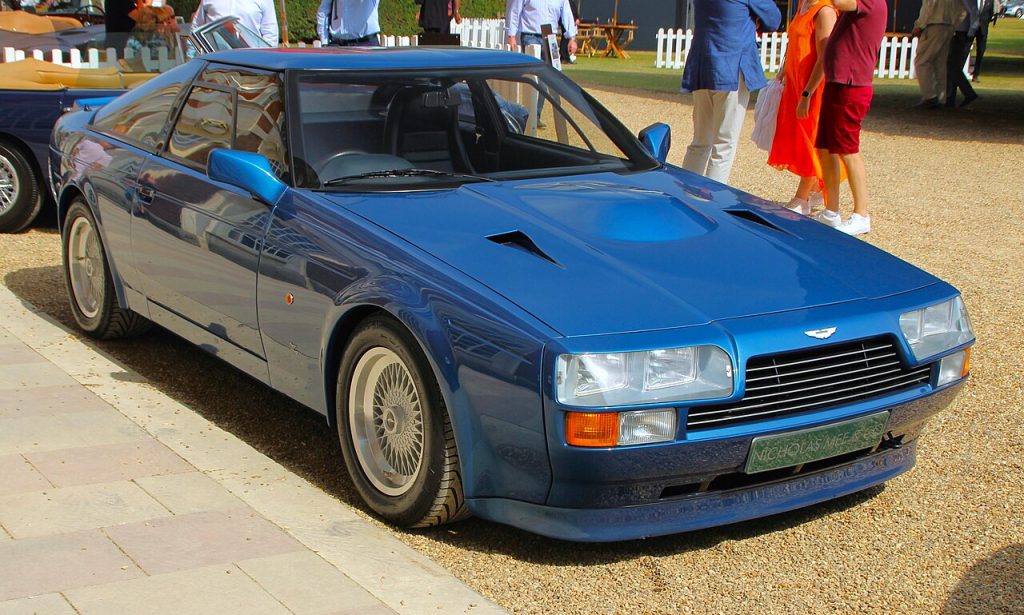
The factory explains that the intended fuel-injection arrangement gave way to carburettors, whose airbox required the prominent bonnet bulge. This is a useful connection between packaging and appearance. It also distinguishes the completed coupe from a sketch or a differently specified open car. A modern engine installation should be described separately if it departs from the original arrangement. Record induction equipment and the relevant work dates before making an output claim. The pictured bonnet can illustrate the design, but it cannot certify all internal engine components or establish the measured performance of that individual example.
The coupe and Volante need separate records
The later V8 Zagato Volante belongs in a connected profile with its own body programme and usual injected-engine specification. Do not transfer the coupe’s Vantage description automatically to every open car. Where a chassis changed body form or received a later upgrade, preserve the dated sequence under one physical identity. A converted object should not become a second newly manufactured car in a combined total. The comparison is most useful when original body, original engine and subsequent changes remain separate findings. This helps readers understand the partnership while keeping an individual vehicle’s supported history intact.
Coachwork conservation and bespoke components
A collecting review should inspect the actual body, supporting structure, mountings, panel repairs, glazing and closures with a specialist familiar with these cars. Record evidence before dismantling uncommon assemblies. Replacement material can be appropriate, but its extent and reason should remain in the restoration record. A fresh finish alone does not establish the originality or condition beneath it. Bespoke exterior and cabin parts deserve their own inventory, including items held off the car. The limited programme makes this documentation particularly useful when a future repair requires an accurately supported pattern rather than an assumption borrowed from a standard V8.
Engine history matters more than an X Pack label
The photograph’s source uses X Pack in identifying its subject. That is preserved as a source description rather than an independently authenticated build-option finding. For the actual car, compare factory order, engine identity, rebuild invoices and any later tuning records. A specification change should receive a date and a clear scope. Avoid treating the model’s most frequently repeated power figure as a current dyno result. The right question is which arrangement this chassis received originally and what it carries now. That approach allows meaningful technical detail without creating an unsupported uniform specification for the entire coupe population.
Preparing the individual car for use
Define the intended use before deciding what inspection and recommissioning are needed. Static display, road touring and a demonstration session place different demands on cooling, fuel equipment, lubrication, tyres, brakes and electrical systems. Ask a marque specialist to examine the present installation and record the findings. Historical performance claims cannot settle current readiness. Keep preparation invoices with the chassis file so that later readers can distinguish conservation work from a change of specification. This is practical assessment guidance for a particular surviving vehicle, rather than a promise about every car carrying the same rare model name.
Collecting significance within the Zagato family
The earlier DB4 GT Zagato offers a useful reference for another distinctive collaboration, while the open V8 Zagato clarifies the contemporary body and engine choices. Compare original purpose, platform and count scope before drawing conclusions from rarity alone. An individual car’s documentation, material history and supported specification remain central to its collecting interest. A chassis with changes can still have a clear history if those changes are accurately recorded. Related profiles should help readers see the differences, rather than suggest that every Zagato has the same engineering or that a celebrated badge replaces an examination of the object.
The photograph and an enduring archive
The supplied coupe was photographed at Hampton Court in 2024. Author, Commons source, licence and resizing disclosure accompany the file and remain visible in the profile. No chassis serial, current custody or measured output is inferred. Keep that caption attached when reusing the picture. An individual archive should retain original delivery records, dated restoration photographs and changes of specification together. New evidence can then refine a particular finding without turning an event photograph into a factory certificate. The fifty-customer and fifty-two-coupe references remain useful because their different scopes are explicit from the beginning.
Frequently asked questions
How many coupes does the factory census record?
Fifty-two in the March 2020 census; the dedicated history separately describes fifty customer production cars.
When did the completed design appear?
At Geneva in 1986, following the 1985 announcement.
Why does the coupe have a bonnet bulge?
The factory links it to carburettor airbox packaging.
Were all Zagato Volantes Vantage models?
No. The open programme normally used an injected V8; individual later upgrades need separate evidence.
Explore related Aston Martin profiles
Sources
- Aston Martin: Vantage Zagato design and fifty customer production cars
- Aston Martin: AM Vantage 1972 and historical Vantage-series census, March 2020
Historical claims follow the linked manufacturer, archive, specialist and catalogue records, with disputed findings retained. Inspection and collecting guidance is editorial analysis. Catalogue condition and custody statements remain dated to their sources.
Photography and credit
Source-identified 1987 V8 Zagato X Pack coupe at Hampton Court in 2024. The source label is retained; no independent build-option or measured-output finding. Photo: MrWalkr / Wikimedia Commons · CC BY-SA 4.0. Wikimedia thumbnail resized from original; no cropping or colour changes.
Why this machine matters
The V8 Vantage Zagato Coupe combined a shortened Aston Martin platform with distinctive Italian coachwork. The factory records fifty customer production cars in its model history and fifty-two coupes in its later census. These different scopes deserve visible explanation, alongside the distinction between the carburetted coupe and the usually injected Volante.
Built in limited numbers
The manufacturer’s dedicated history describes fifty customer production cars, while its March 2020 census records fifty-two V8 Vantage Zagato saloons. This profile uses fifty-two as the manufacturer’s broader coupe census and keeps the fifty-customer scope explicit. It does not invent the identities or exact roles of the additional objects from that arithmetic. A surviving-car count would require another register. When comparing an individual chassis with the production population, establish its original role and body history. These supported scopes explain the limited programme without disguising different factory statements as one perfectly interchangeable number.
Gallery
Specifications
Factory specifications may vary by model year, market and configuration.
Identity & production
- Official model
- Aston Martin V8 Vantage Zagato Coupe
- Base model
- V8 Zagato
- Worldwide production
- 52
Powertrain & performance
- Engine
- Carburetted V8 Vantage coupe programme; individual original and current specifications require records