Aston Martin DB4 GT Zagato Original
The original DB4 GT Zagato combined Aston Martin’s competition GT with Ercole Spada’s lightweight two-seat body for Zagato. Nineteen were completed from the period programme. The original series remains distinct from later Sanction cars and modern factory continuations, even where the names and shapes closely resemble one another.
The original DB4 GT Zagato combined Aston Martin’s competition GT with Ercole Spada’s lightweight two-seat body for Zagato. Nineteen were completed from the period programme. The original series remains distinct from later Sanction cars and modern factory continuations, even where the names and shapes closely resemble one another.
Aston Martin DB4 GT Zagato Original at a glance
| Manufacturer | Aston Martin |
|---|---|
| Model / family | DB4 GT Zagato |
| Profile scope | Historic road-model archive |
| Historical reference year | 1960 |
| Inventory reference | AST-037 |
| Original series total | 19 — Original-period DB4 GT Zagato series only; later Sanction and continuation cars excluded |
| Historical engine reference | Historical 3.7-litre twin-plug six-cylinder Zagato specification |
The 1960 London introduction
Aston Martin records the Zagato-bodied GT’s unveiling at the October 1960 London Motor Show. This gives the original derivative a clear introduction date, while an individual car may have been completed later. Keep those dates separate in a vehicle record. The original model belongs to the period DB4 competition programme, not to a later anniversary collection. A coachbuilder’s contribution should likewise remain attached to the specific design. The name Zagato covers many Aston Martins across decades; it is not evidence that every vehicle bearing it shares the original GT’s chassis, engine or competition history.
Rarity: nineteen completed, rather than the planned 25
The factory account distinguishes a proposed run of 25 from nineteen cars actually completed. This guide uses nineteen for the original historical series and records the planning figure as a different finding. Later Sanction cars and modern continuations are excluded. That distinction matters when a profile displays a rarity total: announced allocation, completed original cars and later related manufacture are different populations. For a particular car, membership of the nineteen needs chassis-specific documentation. A familiar body or a later factory approval should not supply an original-period build date that the individual records do not support.
Spada’s design and the coachbuilding chain
The manufacturer credits Ercole Spada with the body design and describes chassis leaving Newport Pagnell for coachwork in Milan. The model’s identity therefore includes a documented collaboration between British engineering and Italian coachbuilding. For an individual example, examine body records and restoration evidence rather than assuming every current panel was formed in the original workshop. Hand-built construction makes the actual car’s details worth documenting. Variation should be assessed against its own photographs and history. The design’s importance can be appreciated without converting artisanal differences into unsupported additional editions or assigning every surviving component one unverified origin.
The original engine reference
Aston Martin describes a 3.7-litre twin-plug engine with increased compression and a claimed 314 bhp. Those figures belong to the historical model account. They are not a present test result or proof of the unit fitted to a car shown at a later event. Review engine numbering, induction, head specification and capacity changes with the car’s records. A restoration may have been prepared for a particular historic-racing role. State that role and the dated installation. This makes the technical description useful while avoiding confusion with the different engine specifications of later continuation projects.
Lightweight versions within the original series
The factory history identifies four lightweight cars, including two for the Essex Racing Stable. These are within the nineteen originals, not nineteen plus a new four-car production run. An individual lightweight claim should be supported by the relevant chassis history and configuration evidence. Competition repair or later preparation can change weight and material without creating a factory lightweight identity. When comparing cars, separate original delivery specification from current measured weight. A precise account can explain a special period role while leaving an unmeasured modern value open, rather than assigning every Zagato one uniform lightweight figure.
Keeping Sanction and continuation cars separate
Aston Martin’s heritage account records later works-approved Sanction projects. They are important parts of the marque’s coachbuilding story, but they do not become cars completed in the original 1960s run. A collecting archive should identify the actual construction programme before presenting a total or race history. The word original requires a defined scope. If a later car uses an earlier chassis or a period-style body, explain that relationship rather than hiding it behind one model name. The comparison can acknowledge genuine craftsmanship and official involvement while preserving chronology and the individuality of the nineteen period cars.
What makes an authentication file persuasive
Combine the factory chassis documentation with body history, early photographs, engine records and a custody chronology. A famous registration or race number should be corroborated through dated evidence. Where panels or assemblies have been replaced, identify them and explain the car’s intended historical presentation. A specialist opinion is most useful when it states its evidence and inspection limits. Avoid treating an auction catalogue’s condition language as a continuing certificate. The best file can trace the actual car through changes and explain why its identity remains supported, even when its material history is more complex than a short advertisement suggests.
Preserving delicate coachwork and competition history
For practical stewardship, discuss body repairs, structural corrosion, mounting points and mechanical preparation with an appropriate specialist. The desired role matters: static conservation and regular track operation may lead to different choices about replacement material. Retain drawings, photographs and removed components where feasible. A visually immaculate restoration can be historically informative when its methods are documented; patina alone does not prove continuity. This is editorial guidance for evaluating an individual example, not a finding about the photographed car. The priority is to preserve enough evidence that the next custodian can understand what was changed and why.
Comparing Zagato with the standard GT and Jet
The original DB4 GT provides the engineering family context, while the Bertone Jet demonstrates a different coachbuilding interpretation of a related chassis. Compare the specific design and intended role before treating all Italian-bodied cars as one category. Nineteen originals and one named coachbuilt object are counts at different levels. A later Sanction car adds another construction history, not an extra original body style without a date. These related profiles help readers navigate Aston Martin’s collaborations while keeping competition results, physical authenticity and completed production attached to the appropriate subject.
The photograph’s scope and future research
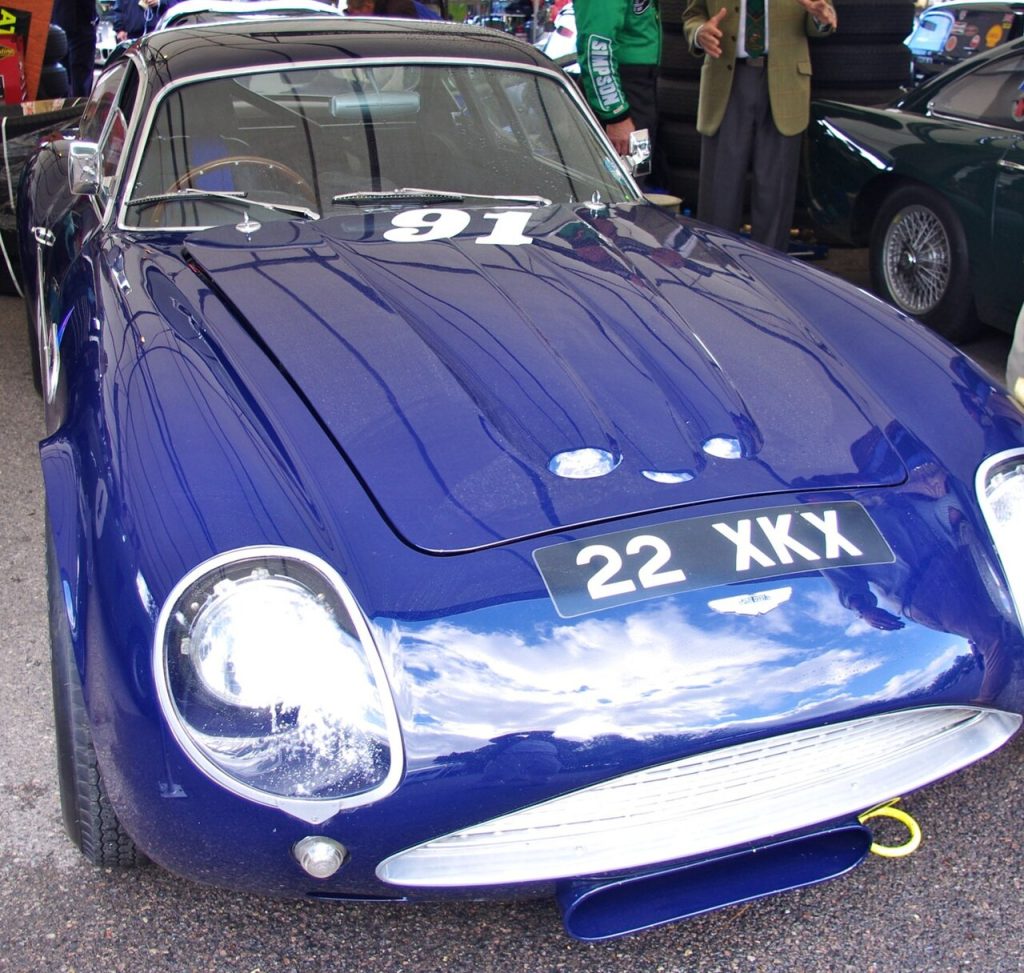
The supplied photograph is source-identified as an original DB4 GT Zagato in later historic use. The visible linked credit preserves its author, Commons source, licence and resizing disclosure. Its appearance does not authenticate every fitted component or establish current ownership. Retain the caption and source identifier when reusing the image. A continuing archive should keep new factory records, body investigations and dated restoration findings with the individual chassis. That allows the record to improve without blurring the original nineteen with later projects. The model’s rarity becomes more meaningful when its design, count and individual material histories are all clearly described.
Frequently asked questions
How many original Zagatos were completed?
Nineteen, according to Aston Martin; 25 was the planned run.
Who designed the original body?
The manufacturer credits Ercole Spada at Zagato.
Are Sanction cars included in nineteen?
No. Later works-approved projects remain separately dated and counted.
Are four lightweights additional to nineteen?
No. The lightweight cars are a subset within the original series.
Explore related Aston Martin profiles
Sources
- Aston Martin: nineteen original DB4 GT Zagatos and later Sanction cars
- Aston Martin Works: 75 original GTs and separate 25-car continuation programme
Historical claims follow the linked manufacturer, archive, specialist and catalogue records, with disputed findings retained. Inspection and collecting guidance is editorial analysis. Catalogue condition and custody statements remain dated to their sources.
Photography and credit
DB4 GT Zagato at Goodwood in 2012; the source identifies 0200/R, registration 22 XKX. No current condition certificate is implied. Photo: David Merrett / Wikimedia Commons · CC BY 2.0. Wikimedia thumbnail resized from original; no cropping or colour changes.
Why this machine matters
The original DB4 GT Zagato combined Aston Martin’s competition GT with Ercole Spada’s lightweight two-seat body for Zagato. Nineteen were completed from the period programme. The original series remains distinct from later Sanction cars and modern factory continuations, even where the names and shapes closely resemble one another.
Built in limited numbers
The factory account distinguishes a proposed run of 25 from nineteen cars actually completed. This guide uses nineteen for the original historical series and records the planning figure as a different finding. Later Sanction cars and modern continuations are excluded. That distinction matters when a profile displays a rarity total: announced allocation, completed original cars and later related manufacture are different populations. For a particular car, membership of the nineteen needs chassis-specific documentation. A familiar body or a later factory approval should not supply an original-period build date that the individual records do not support.
Gallery
Specifications
Factory specifications may vary by model year, market and configuration.
Identity & production
- Official model
- Aston Martin DB4 GT Zagato Original
- Base model
- DB4 GT Zagato
- Worldwide production
- 19
Powertrain & performance
- Engine
- Historical 3.7-litre twin-plug six-cylinder Zagato specification