Aston Martin DB4 GT
The original Aston Martin DB4 GT brought a shorter, lighter competition-focused specification to the DB4 family in 1959. Aston Martin Works identifies 75 original GTs, distinct from nineteen original Zagatos and the later continuation programme. Its appeal combines a usable GT format with a specific period competition identity.
The original Aston Martin DB4 GT brought a shorter, lighter competition-focused specification to the DB4 family in 1959. Aston Martin Works identifies 75 original GTs, distinct from nineteen original Zagatos and the later continuation programme. Its appeal combines a usable GT format with a specific period competition identity.
Aston Martin DB4 GT at a glance
| Manufacturer | Aston Martin |
|---|---|
| Model / family | DB4 GT |
| Profile scope | Historic road-model archive |
| Historical reference year | 1959 |
| Inventory reference | AST-035 |
| Original series total | 75 — Original non-Zagato DB4 GT series per Aston Martin Works; nineteen Zagatos and later continuations excluded |
| Parent / broader count scope | 94; not additive to this profile |
| Historical engine reference | Historical 3.7-litre twin-plug six-cylinder GT specification |
A GT with a competition purpose
The manufacturer describes DB4 GT as a model aimed at GT-class racing, announced at the London Motor Show in October 1959 after prototype DP199/1’s successful Silverstone appearance with Stirling Moss in May. The prototype’s result belongs to that specific entry, rather than to every customer GT. This chronology gives the model a clear place beside the purpose-built DBR racers. A road-derived competition car can be significant without sharing a prototype’s architecture or every works achievement. Keep the model introduction, prototype history and individual customer racing record separate when preparing a collecting description.
Rarity: 75 originals and the broader 94 figure
Aston Martin Works’ 2017 continuation announcement states that 75 original DB4 GTs were built in 1959–1963. The older heritage page gives 94, a broader figure consistent with adding nineteen original Zagatos. This guide uses 75 for the original non-Zagato GT series and records the broader presentation separately, rather than replacing the inventory with an unexplained larger number. Later continuation cars are excluded. A particular coachbuilt chassis needs its own count treatment, and this profile does not infer an extra series total merely from the separate Bertone Jet entry. The scope is part of the number.
A shorter platform changes the comparison
The heritage account describes a platform shortened by five inches compared with DB4. That is a useful design distinction, but a model specification should not be mistaken for a measurement of every restored car. For an individual example, inspect dimensions, body mounting and structural repairs against the appropriate records. The collecting comparison with a regular DB4 should consider purpose and packaging as well as appearance. A shortened competition platform also makes later conversions or replicas worth identifying explicitly. A familiar grille and faired headlights alone cannot establish an original GT chassis.
The twin-plug engine in period context
Aston Martin’s original-model account specifies a 3.7-litre six with twin ignition, triple carburettors and a claimed 302 bhp. These are historical programme figures, not a dynamometer result for the car in a modern photograph. Inspect the fitted block, cylinder head, ignition and induction system alongside the build and restoration records. An enlarged or replacement engine should be documented on its own terms. The GT’s technical interest is clearer when original specification and current installation appear side by side, rather than when an attractive period figure is repeated as a guaranteed present output.
Original cars and the later continuation programme
Aston Martin Works announced a separate run of 25 track-focused continuation cars, drawing on the lightweight originals. Official manufacture does not make a continuation a car that existed in 1959. Its later construction date, chassis documentation and intended use remain important. This guide therefore keeps that programme outside the 75 original-series count and links the distinction in its sources. When assessing a specific vehicle, identify its generation before comparing competition provenance. A continuation can have a strong factory identity without acquiring the race history, retained material or original delivery record of a period GT.
Authenticating the GT specification
Start with the chassis record and original delivery documents, then compare the engine identifier, body history and dated changes. The name GT can appear in descriptions of later upgrades or special engines, so the label needs an identity basis. A build record for a regular DB4 with altered equipment is not automatically an original shortened GT chassis. Equally, a genuine GT may have experienced extensive racing repair. Ask a specialist to explain the relationship between identity and replacement material. A useful authentication report states what was inspected and which archival evidence supports its conclusion.
Body construction deserves precise language
The heritage page and continuation announcement use different descriptions of panel material for their respective accounts. This guide does not turn those descriptions into a universal claim about every original panel. For the car under review, establish material, repair history and construction details directly. Lightweight bodywork can be vulnerable to damage, while excellent paint may conceal old intervention. Review photographs from before restoration and ask which sections were retained. The relevant collecting question is not simply whether the finish looks period-correct, but how the current body relates to the chassis and its chosen historical presentation.
Competition provenance versus present eligibility
Original GT-class purpose is part of the model’s history. A particular car’s historic-event eligibility depends on its documents, actual equipment and the organiser’s requirements. Keep homologation references and period results with the chassis file, and distinguish practice, class positions and overall results. Later participation cannot authenticate an unsupported original race claim. Before planning use, obtain a condition assessment of structure, brakes, steering, wheels, tyres and fuel systems. This lets competition interest inform a realistic preservation decision without assuming that every original GT should be prepared identically or that a past acceptance remains permanent.
Comparing the GT with Zagato and Bertone Jet
The original Zagato combines the competition GT basis with a distinct coachbuilt body and nineteen-car scope. The Bertone Jet is an individual coachbuilt object with its own documentary history. Compare body design, intended role and count scope rather than adding every related profile into a new production census. A DB4 Convertible represents another direction within the wider family: open touring rather than the shortened competition format. These linked subjects make the GT’s position easier to understand. They also show why model, derivative and individual chassis are different levels in a well-organized vehicle archive.
A useful photograph and collecting file
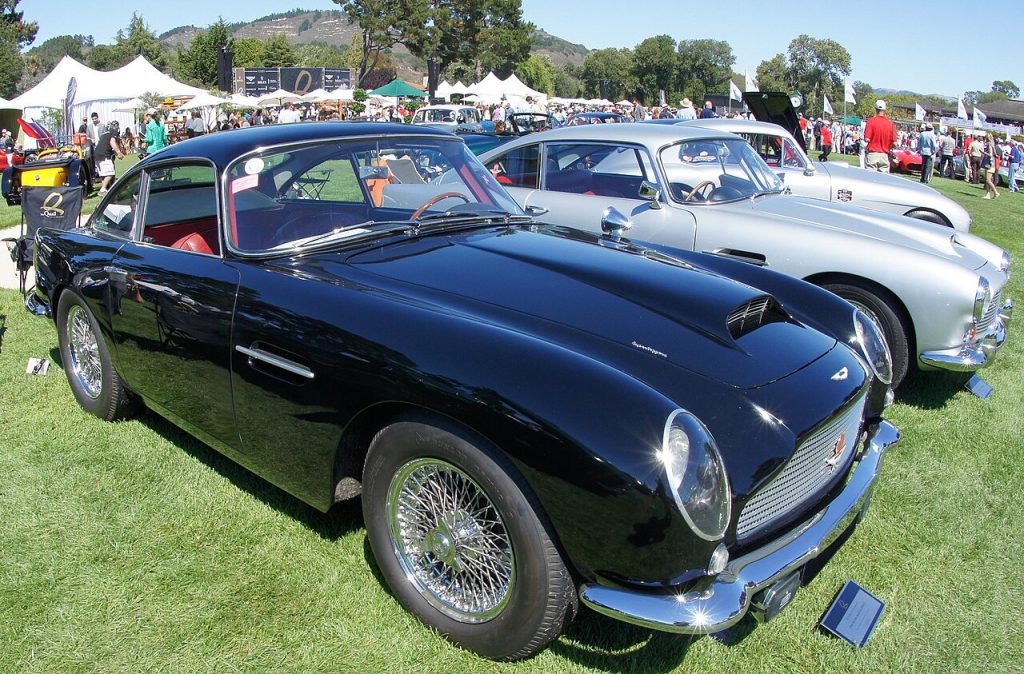
The bundled photograph is source-labelled as an original-period DB4 GT chassis in a later presentation. Its credit preserves the photographer, source, reuse terms and resizing note. A serial in the source description remains attributed unless independently authenticated; the image does not prove engine originality or racing success. Keep a car’s build record, restoration chronology, mechanical specifications and competition documents together. The strongest collecting account can explain why the car is a GT, which period it represents and what has changed. Those concrete distinctions are more informative than relying on rarity or an impressive list of names alone.
Frequently asked questions
How many original DB4 GTs are counted here?
75 in the non-Zagato original series, following Aston Martin Works’ scoped account.
Why does another factory page say 94?
The broader number is consistent with 75 GTs plus nineteen original Zagatos; the different scopes remain visible.
Are continuation cars included in 75?
No. The later 25-car continuation programme is separate.
Does every GT share DP199/1’s debut victory?
No. That result belongs to the prototype’s specific Silverstone entry.
Explore related Aston Martin profiles
Sources
- Aston Martin: DB4 GT heritage account, broader 94-unit count
- Aston Martin Works: 75 original GTs and separate 25-car continuation programme
- Motor Sport: DB4–DB6 engine development history, April 1989
Historical claims follow the linked manufacturer, archive, specialist and catalogue records, with disputed findings retained. Inspection and collecting guidance is editorial analysis. Catalogue condition and custody statements remain dated to their sources.
Photography and credit
DB4 GT at the Quail in 2013. The source labels chassis 0135/L; component originality and current ownership are not inferred. Photo: alijava (Flickr user) / Wikimedia Commons · CC BY-SA 2.0. Wikimedia thumbnail resized from original; no cropping or colour changes.
Why this machine matters
The original Aston Martin DB4 GT brought a shorter, lighter competition-focused specification to the DB4 family in 1959. Aston Martin Works identifies 75 original GTs, distinct from nineteen original Zagatos and the later continuation programme. Its appeal combines a usable GT format with a specific period competition identity.
Built in limited numbers
Aston Martin Works’ 2017 continuation announcement states that 75 original DB4 GTs were built in 1959–1963. The older heritage page gives 94, a broader figure consistent with adding nineteen original Zagatos. This guide uses 75 for the original non-Zagato GT series and records the broader presentation separately, rather than replacing the inventory with an unexplained larger number. Later continuation cars are excluded. A particular coachbuilt chassis needs its own count treatment, and this profile does not infer an extra series total merely from the separate Bertone Jet entry. The scope is part of the number.
Gallery
Specifications
Factory specifications may vary by model year, market and configuration.
Identity & production
- Official model
- Aston Martin DB4 GT
- Base model
- DB4 GT
- Worldwide production
- 75
Powertrain & performance
- Engine
- Historical 3.7-litre twin-plug six-cylinder GT specification