Aston Martin DB4 Convertible
The DB4 Convertible brought open touring to Aston Martin’s DB4 family, with seventy examples in the original programme. Introduced in 1961, it combines Touring’s design with a strengthened open-body chassis. Original engine options and later modifications need individual documentation rather than being inferred from an attractive exterior photograph.
The DB4 Convertible brought open touring to Aston Martin’s DB4 family, with seventy examples in the original programme. Introduced in 1961, it combines Touring’s design with a strengthened open-body chassis. Original engine options and later modifications need individual documentation rather than being inferred from an attractive exterior photograph.
Aston Martin DB4 Convertible at a glance
| Manufacturer | Aston Martin |
|---|---|
| Model / family | DB4 |
| Profile scope | Historic road-model archive |
| Historical reference year | 1961 |
| Inventory reference | AST-041 |
| Original series total | 70 — Original DB4 Convertible body subset; included within parent DB4 production |
| Historical engine reference | DB4 six-cylinder programme; original standard, Vantage or special engine assignment requires build record |
A 1961 introduction, despite the inventory’s 1962 reference
The manufacturer dates the DB4 Convertible to 1961–1963. This guide therefore uses 1961 as the model introduction reference while retaining the inventory’s 1962 value in the selection audit. Sources differ on the precise show attribution: the manufacturer’s heritage page names Paris, while specialist accounts commonly name London. The year is supported; a single reconciled show claim is not necessary to identify the derivative. An individual car’s build year remains another question. Keeping introduction and completion dates separate avoids making all seventy cars appear to have been built in one year.
Rarity: seventy open cars within the DB4 family
Aston Martin identifies seventy convertibles within its broader DB4 production account. That is an open-body subset, not seventy extra cars added to an already inclusive parent count. The profile uses seventy with an explicit scope and does not manufacture a numbered limited-edition scheme. Factory engine options create further subsets within the same convertible population. They should not be summed as separate new vehicles. When comparing rarity, a chassis-specific car with a rare option and the whole open-body model describe different levels. Both can be meaningful when the file makes their relationship clear.
Touring design and the strengthened open structure
The heritage entry credits Touring of Milan with the design and states that the chassis was stiffened to compensate for the missing roof. This is the essential engineering context for an open DB4. A later inspection should examine the actual structure, previous repairs and body alignment rather than assuming the original design guarantees present stiffness. Door fit can be a useful observation, but it is not a complete condition report. Ask a specialist to explain the car’s supporting structure and any restoration interventions. A beautifully fitted hood should complement, rather than replace, that assessment.
The engine option belongs to the build record
The manufacturer records Vantage-engined convertibles and a single example with the twin-plug GT power unit. This does not mean every open DB4 has the shortened GT chassis or the same mechanical specification. Establish the original option from the delivery record, then compare the fitted engine and induction with dated invoices. A later upgrade may be worthwhile for use, but it requires its own description. Model name, original engine option and present capacity are three separate findings. Keeping them apart prevents the most unusual factory combination from being applied to an unidentified photograph.
A hood and hardtop are part of the individual specification
Aston Martin offered a detachable trimmed hardtop as an extra. A surviving top should be assessed for fit, condition and documentary association with the actual car. The presence of a hardtop in a photograph does not prove it was supplied at original delivery, and its absence does not make the car incomplete without checking the order. Review hood framework, seals, drainage and trim with the intended use in mind. Open-body equipment can be expensive or difficult to correct when incomplete. A specific inventory of what accompanies the vehicle is more useful than an assumption based on model-level availability.
Bodywork and restoration evidence
For a collecting assessment, inspect panel condition and the supporting framework with someone familiar with the model. Review photographs of previous repairs, particularly around body mounting, sills and areas where dissimilar materials meet. A restoration file should explain retained and replaced material, not simply state a date and a paint colour. Hand-built panels can have individual features worth recording before work begins. A visual inspection through glossy paint has limits. The goal is to understand how the present body relates to the car’s identity and structural history, with sufficient evidence to plan conservation or repair.
Original convertible identity versus later conversion
An open DB4 appearance should be supported by factory body-type documentation. A converted saloon can have its own honest history, but it should not acquire membership of the seventy original convertibles solely through a roof alteration. Compare chassis documentation, early photographs and the original delivery description. If an identity claim relies on a specialist’s conclusion, retain the report and its reasoning. This question is separate from the quality of a later conversion or restoration. Accurate body-type provenance lets a collecting description explain what the car actually is without overstating its original rarity.
Practical ownership questions beyond appearance
A pre-use inspection should address cooling, lubrication, braking, steering, electrical equipment, tyres and the fitted transmission, as well as open-body weather sealing. Establish the actual specification before budgeting parts or maintenance. A car prepared for occasional display may need different attention from one intended for regular touring. Ask for evidence of recent work and a defined condition assessment. This guide does not diagnose the pictured car or promise reliability from its restoration finish. It offers a framework for connecting historical significance with a realistic use plan for the particular example.
DB4 Convertible compared with DB5 Convertible
The DB5 Convertible continues the open Aston Martin story, but it is a separate derivative and production population. Compare introduction dates, engine programme and original body identity before using a rarity total. The original DB4 GT presents another contrast through its shortened competition format. A DB4 Convertible with a GT engine option does not collapse those records into one model. The linked profiles help readers follow the family relationship while avoiding confusion between an engine option, a body variant and an independently identified competition chassis.
The credited photograph and an enduring file
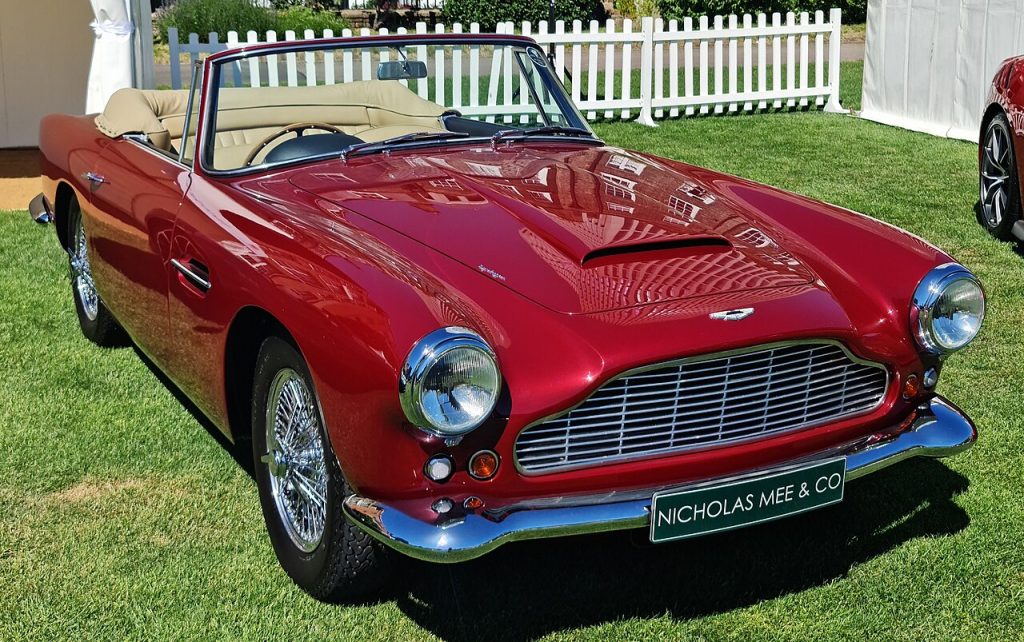
The bundled London Concours photograph shows a DB4 Convertible in a later presentation. Its visible credit retains photographer, source, licence and resizing note; no original engine option or serial is assigned from that view. Keep such images dated alongside earlier photographs and restoration documentation. A useful file should bring together original body type, engine option, major repairs, fitted equipment and custody transitions. That makes the model’s seventy-car scope meaningful for an individual example. Future discoveries can then update the relevant finding without turning every change into a new edition or erasing the car’s documented development.
Frequently asked questions
How many original DB4 Convertibles were built?
Aston Martin records seventy, a subset of the DB4 family.
What introduction year is used?
1961; the inventory’s 1962 reference is preserved in the audit.
Is every DB4 Convertible a Vantage?
No. Original engine options need the individual factory build record.
Does a GT engine make it a DB4 GT chassis?
No. Engine option and original chassis derivative are separate findings.
Explore related Aston Martin profiles
Sources
- Aston Martin: DB4 Convertible introduction, construction and seventy-car count
- Motor Sport: DB4–DB6 engine development history, April 1989
Historical claims follow the linked manufacturer, archive, specialist and catalogue records, with disputed findings retained. Inspection and collecting guidance is editorial analysis. Catalogue condition and custody statements remain dated to their sources.
Photography and credit
DB4 Convertible at London Concours in 2021; a model image without an authenticated chassis serial or engine-option assignment. Photo: MrWalkr / Wikimedia Commons · CC BY-SA 4.0. Wikimedia thumbnail resized from original; no cropping or colour changes.
Why this machine matters
The DB4 Convertible brought open touring to Aston Martin’s DB4 family, with seventy examples in the original programme. Introduced in 1961, it combines Touring’s design with a strengthened open-body chassis. Original engine options and later modifications need individual documentation rather than being inferred from an attractive exterior photograph.
Built in limited numbers
Aston Martin identifies seventy convertibles within its broader DB4 production account. That is an open-body subset, not seventy extra cars added to an already inclusive parent count. The profile uses seventy with an explicit scope and does not manufacture a numbered limited-edition scheme. Factory engine options create further subsets within the same convertible population. They should not be summed as separate new vehicles. When comparing rarity, a chassis-specific car with a rare option and the whole open-body model describe different levels. Both can be meaningful when the file makes their relationship clear.
Gallery
Specifications
Factory specifications may vary by model year, market and configuration.
Identity & production
- Official model
- Aston Martin DB4 Convertible
- Base model
- DB4
- Worldwide production
- 70
Powertrain & performance
- Engine
- DB4 six-cylinder programme; original standard, Vantage or special engine assignment requires build record