Aston Martin DBR2
The DBR2 was Aston Martin’s larger-capacity sports racer of 1957, with two original chassis and a development path distinct from the DBR1. Its connection to the emerging DB4 engine programme, changing racing rules and later American competition gives the pair a different historical identity from their more famous sibling.
The DBR2 was Aston Martin’s larger-capacity sports racer of 1957, with two original chassis and a development path distinct from the DBR1. Its connection to the emerging DB4 engine programme, changing racing rules and later American competition gives the pair a different historical identity from their more famous sibling.
Aston Martin DBR2 at a glance
| Manufacturer | Aston Martin |
|---|---|
| Model / family | DBR2 |
| Profile scope | Sports-racing series archive |
| Historical reference year | 1957 |
| Inventory reference | AST-031 |
| Reported original series total | 2; specialist attribution, not factory certification |
| Historical engine reference | Six-cylinder competition development programme; installed capacity requires individual dated records |
A 1957 programme, correcting the inventory year
The specialist chronology dates DBR2 to 1957–1959 and identifies the two cars as DBR2/1 and DBR2/2. The inventory’s 1956 reference is retained in the selection audit but not used as the introduction year. This matters when comparing the pair with DBR1, whose project began earlier. A model guide should keep development, completion and first competition appearance separate where evidence supports them. Read the source date as a programme reference, then establish the precise milestones of an individual car through its file. Similar bodywork does not make the two DBR programmes the same design.
Rarity: the two original chassis
The historical account identifies a pair of original DBR2s. This guide records two as the original historical series, with the specialist attribution visible. It does not extend that count to later re-creations, however accomplished their workmanship or connections to former factory personnel. A recreation can have its own genuine construction history without becoming a 1957 works chassis. When examining a particular car, begin with its original identifier and documented continuity. A period-looking registration, engine or body is insufficient by itself. The distinction protects both the rare originals and the honest description of later cars.
A development link to the road-car engine
The Motor Sport development history places the emerging six-cylinder DB4 engine in a DBR2 in 1957. This is an important link between racing and the next generation of Aston Martin road cars. It should not be reduced to an assumption that an original racer now carries a standard production DB4 installation. Competition specifications, later capacity changes and replacement components require dated evidence. For interpretation, explain the development relationship and leave exact current output or displacement open until inspected. The interest lies in the engineering path as much as in the visual resemblance to another sports racer.
Rules help explain the car’s changing role
The specialist account describes the 1958 three-litre championship limit and the larger DBR2’s move toward American competition. This gives the programme a regulatory context rather than a simple ranking beneath DBR1. Different events can favour different specifications and capacities. For any individual result, use the entry list and dated report to establish which chassis and engine configuration competed. A model-level account of changing rules should not promise present historic-event acceptance. Modern eligibility is a separate question for the organiser and the car’s documents, even when a period competition role is well established.
Reading contemporary racing reports carefully
Motor Sport’s June 1958 Silverstone report discusses the DBR2 in the actual event context. Such firsthand reporting helps separate what happened at one meeting from a later summary of the whole season. Keep the date, driver, classification and configuration together when building a chassis record. A report that distinguishes a DBR2 from another works Aston Martin is useful evidence, but it should not be asked to settle later ownership or restoration. Contemporary accounts can also contain provisional explanations of failures. Preserve their attribution instead of silently presenting every observation as a final engineering diagnosis.
The original pair versus re-creations
The DBR2 name is also used for later cars built to evoke the originals. For a collecting comparison, inspect how the seller identifies construction date, donor components, chassis and body manufacture. A recreation’s qualities should be assessed on that basis. Do not transfer original works results because a modern car looks convincing or has a familiar engine. Conversely, an original chassis may have received major repairs without automatically losing its documented identity. The relevant inquiry is continuity and disclosed intervention. Original, restored and recreated describe different questions, and a careful file should answer each explicitly.
Bodywork and chassis need their own evidence
An aluminium body can be replaced or altered during a racing car’s life, while the underlying historical identity requires a separate analysis. Obtain dated photographs, measurements, repair invoices and specialist findings for the particular chassis. Recognizable DBR2 proportions are useful context but not a substitute for this work. Compare mounting details and structural changes with the period the car is intended to represent. Where a restoration recreates an earlier appearance, state its chosen reference. This helps an owner understand the object’s present form without treating every visible panel as surviving 1957 material.
Assessing a car for use today
A current inspection should address structure, suspension attachment points, steering, braking, tyres, fuel delivery, cooling and lubrication in the fitted configuration. Larger-capacity historic racers deserve preparation based on their actual hardware and planned use. Static exhibition, demonstration and timed competition do not impose identical demands. Discuss support, spares and maintenance records before assuming a car can repeat an old public appearance. This is editorial collecting guidance rather than a diagnosis of either original DBR2. A documented preparation programme makes the intended role clearer and preserves the rationale for any necessary intervention.
DBR2 compared with the DBR1 and DB4 GT
DBR1 is the smaller-capacity championship prototype programme; DB4 GT belongs to the subsequent road-derived competition GT story. DBR2 sits between those comparisons through its sports-racing purpose and engine-development connection. Compare original programme scope, event context and construction dates rather than using one total as a universal measure of significance. An original DBR2 and a GT continuation can both interest collectors for very different reasons. The linked profiles explain those differences while keeping works results, road equipment and later production projects attached to their correct vehicle populations.
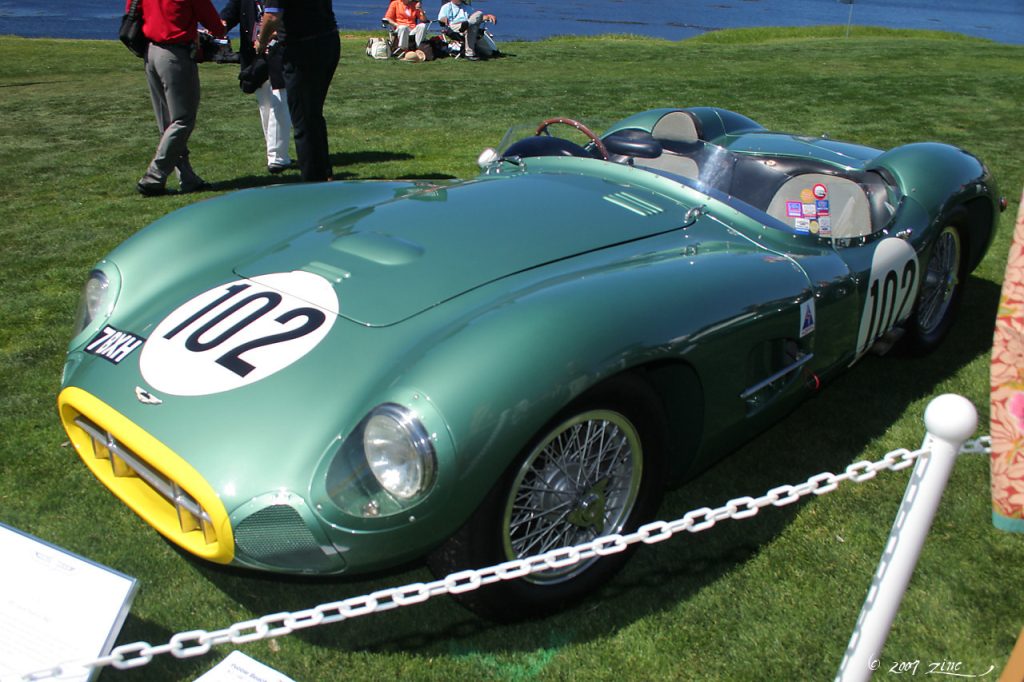
The photograph and a durable research record
The supplied later photograph is source-identified as DBR2/2 at Pebble Beach in 2007. Its licence and photographer are linked; no present ownership or untouched-condition claim follows from that image. Retain the source identification as an attribution and corroborate the physical identity independently when assessing the actual car. A useful archive also keeps dated engine and body configurations, race records and custody transitions under one chassis identifier. Where records remain incomplete, an explicit gap is more useful than a smooth invented narrative. This approach preserves the pair’s historical distinction and gives future research a clear starting point.
Frequently asked questions
What year is used for DBR2?
1957, following the historical programme chronology; the inventory’s 1956 reference is corrected.
How many originals are identified?
Two original chassis, DBR2/1 and DBR2/2, in the linked specialist account.
Is a DBR2 recreation one of the original pair?
No. Later recreations need their own construction dates and records.
Is DBR2 the 1959 Le Mans-winning model?
No. That achievement belongs to DBR1; the two programmes remain distinct.
Explore related Aston Martin profiles
Sources
- Tim Cottingham: DBR2 original pair and dated competition history
- Motor Sport: contemporary Silverstone race report, June 1958
- Motor Sport: DB4–DB6 engine development history, April 1989
Historical claims follow the linked manufacturer, archive, specialist and catalogue records, with disputed findings retained. Inspection and collecting guidance is editorial analysis. Catalogue condition and custody statements remain dated to their sources.
Photography and credit
Source-identified DBR2/2 at Pebble Beach in 2007; no current custody or installed-specification claim. Photo: Rex Gray / Wikimedia Commons · CC BY 2.0. Original image supplied without visual changes.
Why this machine matters
The DBR2 was Aston Martin’s larger-capacity sports racer of 1957, with two original chassis and a development path distinct from the DBR1. Its connection to the emerging DB4 engine programme, changing racing rules and later American competition gives the pair a different historical identity from their more famous sibling.
Built in limited numbers
The historical account identifies a pair of original DBR2s. This guide records two as the original historical series, with the specialist attribution visible. It does not extend that count to later re-creations, however accomplished their workmanship or connections to former factory personnel. A recreation can have its own genuine construction history without becoming a 1957 works chassis. When examining a particular car, begin with its original identifier and documented continuity. A period-looking registration, engine or body is insufficient by itself. The distinction protects both the rare originals and the honest description of later cars.
Gallery
Specifications
Factory specifications may vary by model year, market and configuration.
Identity & production
- Official model
- Aston Martin DBR2
- Base model
- DBR2
Powertrain & performance
- Engine
- Six-cylinder competition development programme; installed capacity requires individual dated records