Aston Martin DB AR1
The DB AR1 was Aston Martin’s roofless American Roadster, with Zagato coachwork and a ninety-nine-car customer programme. Revealed in January 2003, it kept the standard Volante platform rather than simply reproducing the DB7 Zagato coupe without a roof. Its customer total, prototype history and engine/transmission configurations deserve separate explanation.
The DB AR1 was Aston Martin’s roofless American Roadster, with Zagato coachwork and a ninety-nine-car customer programme. Revealed in January 2003, it kept the standard Volante platform rather than simply reproducing the DB7 Zagato coupe without a roof. Its customer total, prototype history and engine/transmission configurations deserve separate explanation.
Aston Martin DB AR1 at a glance
| Manufacturer | Aston Martin |
|---|---|
| Model / family | DB7 / Zagato |
| Profile scope | Historic road-model archive |
| Historical reference year | 2003 |
| Inventory reference | AST-087 |
| Original series total | 99 — Original customer DB AR1 programme only; broader factory 100 reference separately noted |
| Parent / broader count scope | 100; not additive to this profile |
| Historical engine reference | DB7-based V12 roadster; original gearbox and output vary by configuration |
| Displacement reference | 5935 cc; historical programme reference, not current installed measurement |
What DB AR1 means
AR1 stands for American Roadster 1. Aston Martin’s model history explains that the car offered an open alternative to the DB7 Zagato while retaining its own marketing identity. A familiar Z badge does not make the coupe and roadster identical platforms or equipment packages. Use the canonical DB AR1 name in the vehicle record and attach alternative Zagato descriptions as searchable context. The distinction is helpful when reading older sale catalogues, which often emphasise the coachbuilder. It keeps the design partnership visible without erasing the specific roadster’s engineering and customer-programme history.
The January 2003 public unveiling
The factory places the public debut at the Los Angeles Auto Show in January 2003, after private previews. Its prototype used an earlier DB7 Vantage Volante demonstrator as a starting point. That conversion belongs to the development history rather than a newly manufactured customer delivery. The dedicated heritage page spans an earlier development period, while the customer programme is commonly associated with 2003–2004. Keep those dates separate from an individual registration. A useful archive explains what each year represents instead of forcing development, unveiling and delivery into one supposedly interchangeable model-year claim.
Rarity: ninety-nine customer cars and a broader reference
Aston Martin’s paired-model history gives ninety-nine examples for the roadster. The specialist account identifies factory-retained chassis 800100 outside the ninety-nine customer scope, while the dedicated factory page uses a hundred-car run. This profile keeps ninety-nine as the explicitly scoped customer population and preserves the broader hundred reference. It is not a present surviving-car census. Do not add a prototype conversion again without establishing how the register treats that object. A chassis file should connect serial numbering, original order and physical identity before using either historical count to support an individual car’s membership.
The roofless brief changes how to understand it
The factory explains that the roadster was supplied without a folding hood, with parked-cabin protection rather than an ordinary Volante roof. Some cars subsequently acquired weather covers or adaptations. Those belong to individual modification records and should not be described as universal original equipment. For a collecting assessment, review what protection accompanies the actual car and how it attaches. Define the intended use before deciding whether to preserve, repair or alter an adaptation. The open cabin is central to the original brief, so a later solution deserves a clear explanation rather than a silently rewritten factory specification.
Standard platform and the coupe comparison
The DB AR1 retained the normal Volante platform; the coupe’s shortened basis is a different configuration. This makes a direct comparison more useful than simply calling one a convertible version of the other. Preserve original platform, body and market documentation at chassis level. A later move between countries does not establish the original delivery market, and the prototype’s donor identity should remain distinct from series cars. Related photographs can illustrate the family resemblance, but they cannot certify measurements or structural originality. An accurate archive connects visible design cues with the supported construction history of the actual vehicle.
Manual and Touchtronic cars need their own specifications
The factory’s paired page mixes summary references to 435 bhp and Touchtronic, while the specialist account separates manual 435 bhp from automatic 420 bhp configurations. RM’s 2024 catalogue documents a six-speed manual example. This profile therefore avoids one uniform gearbox or output field for every roadster. Obtain original order and fitted-engine records before describing an individual car. A later rebuild or change of equipment needs a date. Historical power references are programme context rather than present measured output. Keeping the configurations explicit prevents a rare manual car’s specification from being silently assigned to all ninety-nine customer examples.
Coachwork and cabin conservation
Inspect the actual body, underlying structure, panel repairs, closures and cabin material with a specialist familiar with the coachbuilt roadster. Bespoke trim and external pieces deserve an inventory before intervention. Record retained and replacement material where evidence permits, including previous repairs hidden beneath a fresh finish. Open-cabin exposure makes a dated condition assessment particularly useful. An event photograph can document appearance at that moment but cannot settle what lies underneath. The strongest conservation record ties observations and workshop evidence to the same chassis, allowing the car’s material history to remain understandable after subsequent work.
Serialised documents and accompanying equipment
Compare factory information, original order, early registration and the numbered documentation associated with the car. Inventory covers, manuals and other pieces separately from the current vehicle. A serialised accessory can support a delivery history when the connection is clear; loose equipment should not authenticate a different chassis. Sale-catalogue condition and custody claims remain dated to the offering. Preserve their underlying evidence rather than repeatedly copying an attractive modern description. This research method helps distinguish a genuine customer roadster, a factory object and a development conversion without multiplying one physical car into several loosely named archive entries.
A considered plan for operation
Ask a marque specialist to assess the installed engine, cooling, fuel system, lubrication, transmission, brakes, steering and tyres before the intended use. A roofless car’s touring plan should also address cabin protection and the equipment actually available. Low mileage or a past concours appearance cannot replace current findings. Keep preparation invoices and any specification changes alongside the original delivery record. These are questions for the individual object, rather than a promise that every DB AR1 can fulfil the same role. Its historical significance is easier to preserve when intended operation and conservation choices are clearly documented.
The supplied photograph and connected profiles
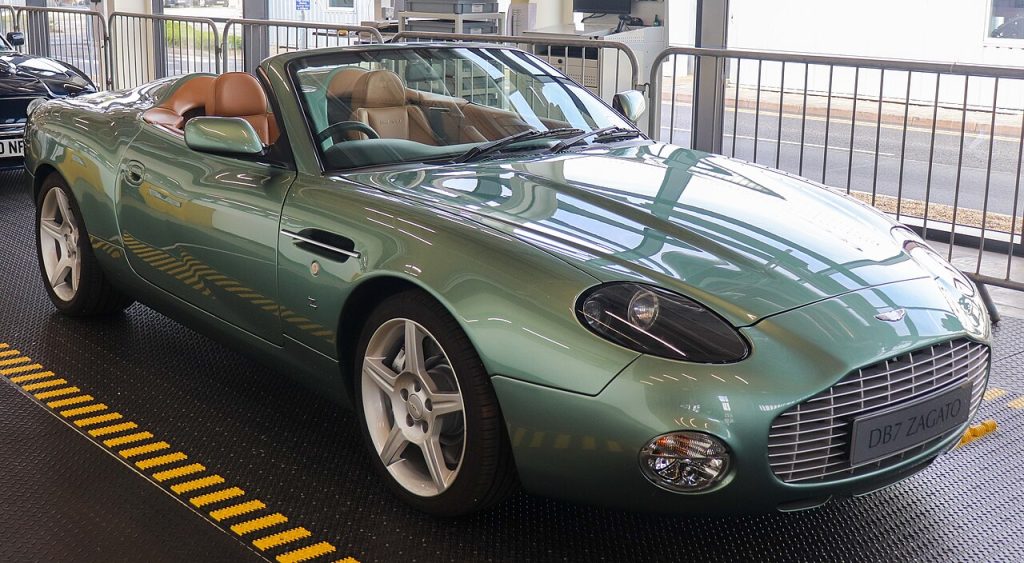
The bundled image shows a DB AR1 photographed at Gaydon in 2019. That location does not establish factory-retained chassis identity or current custody. Photographer, Commons source, licence and resizing disclosure remain visible with the caption. The DB7 Zagato provides the closest comparison, while earlier Zagato Volantes and the CC100 show different interpretations of an open Aston Martin. Compare purpose and count scope before drawing a rarity ranking. A durable vehicle file retains original identity, configuration changes and dated appearances together so that new evidence can refine a particular finding without blurring the roadster into its relatives.
Frequently asked questions
How many customer DB AR1s are recorded?
Ninety-nine; the factory hundred-car reference and specialist-described factory 800100 are retained with broader scope.
Was a folding hood standard?
No. The factory describes the original roofless brief and later individual adaptations.
When was it publicly unveiled?
January 2003 at the Los Angeles Auto Show.
Were all roadsters mechanically identical?
No. Manual and Touchtronic configurations should be checked individually; blanket output and gearbox fields are avoided.
Explore related Aston Martin profiles
Sources
- Aston Martin: DB AR1 prototype, January 2003 unveiling and open configuration
- Aston Martin: separate 99-car DB7 Zagato and DB AR1 programmes
- Tim Cottingham: DB AR1 customer scope, factory 800100 and configuration distinctions
- RM Sotheby’s: DB AR1 073/099, original six-speed manual example, Arizona 2024
Historical claims follow the linked manufacturer, archive, specialist and catalogue records, with disputed findings retained. Inspection and collecting guidance is editorial analysis. Catalogue condition and custody statements remain dated to their sources.
Photography and credit
DB AR1 photographed at Gaydon in August 2019. Model image; its location does not establish factory-retained chassis identity or current custody. Photo: Vauxford / Wikimedia Commons · CC BY-SA 4.0. Wikimedia thumbnail resized from original; no cropping or colour changes.
Why this machine matters
The DB AR1 was Aston Martin’s roofless American Roadster, with Zagato coachwork and a ninety-nine-car customer programme. Revealed in January 2003, it kept the standard Volante platform rather than simply reproducing the DB7 Zagato coupe without a roof. Its customer total, prototype history and engine/transmission configurations deserve separate explanation.
Built in limited numbers
Aston Martin’s paired-model history gives ninety-nine examples for the roadster. The specialist account identifies factory-retained chassis 800100 outside the ninety-nine customer scope, while the dedicated factory page uses a hundred-car run. This profile keeps ninety-nine as the explicitly scoped customer population and preserves the broader hundred reference. It is not a present surviving-car census. Do not add a prototype conversion again without establishing how the register treats that object. A chassis file should connect serial numbering, original order and physical identity before using either historical count to support an individual car’s membership.
Gallery
Specifications
Factory specifications may vary by model year, market and configuration.
Identity & production
- Official model
- Aston Martin DB AR1
- Base model
- DB7 / Zagato
- Worldwide production
- 99
Powertrain & performance
- Engine
- DB7-based V12 roadster; original gearbox and output vary by configuration