Aston Martin CC100 Speedster Concept
The CC100 was Aston Martin’s 2013 centenary speedster concept, connecting modern design with DBR1 inspiration. The manufacturer describes the original celebration object as one-off, while the specialist archive records a second commission with different accents. This profile distinguishes those objects and their appearances without creating a fictitious two-car customer retail edition.
The CC100 was Aston Martin’s 2013 centenary speedster concept, connecting modern design with DBR1 inspiration. The manufacturer describes the original celebration object as one-off, while the specialist archive records a second commission with different accents. This profile distinguishes those objects and their appearances without creating a fictitious two-car customer retail edition.
Aston Martin CC100 Speedster Concept at a glance
| Manufacturer | Aston Martin |
|---|---|
| Model / family | CC100 |
| Profile scope | Concept-project object archive |
| Historical reference year | 2013 |
| Inventory reference | AST-110 |
| Object / count scope | Original CC100 centenary concept and separately reported second commissioned object; no retail series |
| Specialist-reported scoped count | 2; scope explained below, not factory certification |
| Historical engine reference | 6.0-litre V12 concept programme; object-specific installation, output and gearbox require records |
A centenary concept unveiled in 2013
The factory places the CC100’s world debut at the Nürburgring 24-hour meeting in May 2013. The name refers to the centenary celebration rather than a hundred-car production promise. This profile concerns the concept project and its related commissioned object, not a normal showroom derivative. Announcement, demonstration and subsequent appearances should keep their own dates. A vehicle archive can explain the design’s celebratory purpose while leaving an individual object’s completion and later use to its records. That avoids treating a public unveiling as proof of a retail allocation, road approval or a uniform delivered specification.
Rarity: an original concept and a separately reported second object
Aston Martin describes the original CC100 as a one-off celebration. Cottingham’s specialist history separately identifies a second completed commission. Those statements have different object scopes and should not be flattened into a factory-certified two-car retail series. This profile records two as the attributed broader project population while leaving exact completed-production metadata unset. Preserve each object’s own build and appearance sequence. A changed colour or repeated show appearance is not automatically another car, and a related commission should not erase the original concept’s particular role. Clear object identity is more informative than a bare tiny number.
Yellow and blue accents distinguish the reported presentations
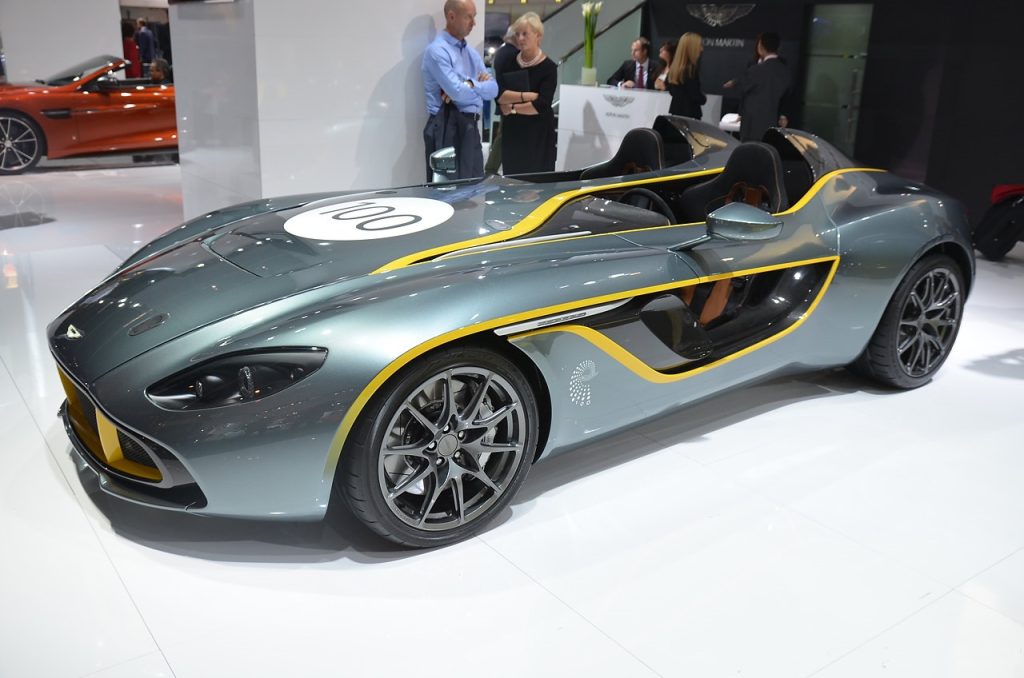
The specialist account distinguishes the original yellow-accent centenary object from a later blue-accent car. Colour is useful presentation evidence when photographs have reliable dates, but it should not replace chassis or construction records. A repaint could change appearance without producing another object. Keep the two reported histories separate and avoid moving an event from one to the other merely because both use the CC100 name. The supplied Frankfurt photograph illustrates the yellow-accent presentation. Its caption retains that context rather than claiming to establish every component or the entire later custody history of the concept.
DBR1 inspiration does not transfer race results
The manufacturer explicitly links CC100 with the DBR1 and describes the centenary demonstration alongside the historic racing car. That inspiration is central to the concept’s design story. It does not mean the CC100 won the 1959 event, shares the DBR1’s chassis or was built as an original 1950s competition object. Any subsequent timed activity by a particular CC100 needs its own evidence. Related profiles can explain the historic reference while preserving distinct identities. This makes the celebration more informative than a vague race-winning description that transfers another physical vehicle’s achievements to a modern design demonstrator.
The exposed-cabin speedster brief
The specialist account describes the open cockpit and distinctive access arrangement. These explain why CC100 should not be treated as a normal Volante with familiar weather equipment. For conservation and intended use, inspect the actual fittings and document any adaptations. An exposed cabin affects how the object is presented and protected, but a modern photograph cannot establish every material’s originality. Preserve workshop evidence before intervention. The concept’s value as design history is stronger when its unusual arrangement is tied to the correct object and stage rather than a generic convertible specification borrowed from the contemporary road-car range.
V12 context and unresolved gearbox references
The manufacturer identifies a 6.0-litre V12 programme. Cottingham’s page contains different transmission references between its narrative and specification list, so this profile avoids an exact universal gearbox field or an invented output. Original build and current installation records should establish the particular object’s configuration. A concept can evolve through development, commissioning and later preparation. Date those changes rather than assume one static showroom specification. This is a source-quality distinction: a conflicting technical page should be preserved as evidence to reconcile, not silently copied into a definitive table merely because the vehicle is exceptionally rare.
Demonstration and road approval are separate findings
The Nürburgring presentation establishes a public demonstration context. It does not by itself certify road registration, current approval or eligibility for a future event. A commissioned object’s intended operation also requires its own supported record. Check build documentation, later work and the relevant individual approvals before describing it as ready for a particular role. Keep that inquiry specific rather than assuming every concept sharing the name has identical status. The historical profile can describe the original celebration confidently while leaving unsupported current operating claims unset until the actual object’s evidence is available.
Conserving an experimental design object
Review the structure, body pieces, cabin, access panels, controls and installed mechanical systems with specialists familiar with the actual object. Document retained material and replacements before work. A concept’s exhibition purpose and later operating role may call for different decisions, so define the intended use clearly. Preserve removed assemblies or patterns where feasible and record why changes were made. A fresh finish alone cannot establish original construction. The most useful conservation file explains the sequence from development to demonstration and subsequent preparation, allowing the rare design project to remain understandable rather than simply describing it as restored to factory condition.
Comparisons with DB AR1 and Bulldog
The roofless DB AR1 offers a customer-roadster comparison, while Bulldog supplies an earlier experimental design and speed-demonstration history. Compare original purpose, population scope and supported configuration before making a rarity ranking. The CC100’s second reported object is a distinct research question from ninety-nine delivered roadsters or one enduring Bulldog concept. Collecting interest also rests on material continuity, build documentation and dated appearances. Related profiles should help readers follow those differences without treating every open or unusual Aston Martin as an interchangeable speedster edition or granting one concept the operating status of another.
The Frankfurt image and required linked credit
The bundled photograph shows the yellow-accent CC100 at the Frankfurt motor show in September 2013. It is credited to Raphael Jahn through MotorBlog.com, with the requested MotorBlog.com backlink, Commons source and Creative Commons licence visible. The file is supplied at its source width without visual alterations. Retain the full credit when sharing it. Original construction records, dated demonstrations and evidence concerning the second reported commission should remain connected but separately scoped. New research can then refine a particular finding without turning two related concept objects into an invented numbered retail programme or assigning an unsupported current configuration.
Frequently asked questions
Does CC100 mean a hundred cars were planned?
No. The name belongs to the centenary celebration.
Why does one-off appear beside a report of two?
The factory describes the original concept; the specialist archive separately records a second commission.
Did CC100 inherit the DBR1’s race victories?
No. It is a modern concept inspired by the historic competition car.
Is an exact gearbox populated here?
No. Conflicting source references remain a review finding pending object-specific evidence.
Explore related Aston Martin profiles
Sources
- Aston Martin: original CC100 concept and May 2013 demonstration
- Tim Cottingham: first and second CC100 objects, appearances and inconsistent gearbox references
Historical claims follow the linked manufacturer, archive, specialist and catalogue records, with disputed findings retained. Inspection and collecting guidance is editorial analysis. Catalogue condition and custody statements remain dated to their sources.
Photography and credit
CC100 at the Frankfurt motor show in September 2013. The yellow-accent presentation is distinct from the specialist-described later blue-accent second car. No road-homologation or race-result claim. Photo: Raphael Jahn / MotorBlog.com / Wikimedia Commons · CC BY 2.0. Original image supplied without visual changes. Image: MotorBlog.com.
Why this machine matters
The CC100 was Aston Martin’s 2013 centenary speedster concept, connecting modern design with DBR1 inspiration. The manufacturer describes the original celebration object as one-off, while the specialist archive records a second commission with different accents. This profile distinguishes those objects and their appearances without creating a fictitious two-car customer retail edition.
Built in limited numbers
Aston Martin describes the original CC100 as a one-off celebration. Cottingham’s specialist history separately identifies a second completed commission. Those statements have different object scopes and should not be flattened into a factory-certified two-car retail series. This profile records two as the attributed broader project population while leaving exact completed-production metadata unset. Preserve each object’s own build and appearance sequence. A changed colour or repeated show appearance is not automatically another car, and a related commission should not erase the original concept’s particular role. Clear object identity is more informative than a bare tiny number.
Gallery
Specifications
Factory specifications may vary by model year, market and configuration.
Identity & production
- Official model
- Aston Martin CC100 Speedster Concept
- Base model
- CC100
Powertrain & performance
- Engine
- 6.0-litre V12 concept programme; object-specific installation, output and gearbox require records