Aston Martin Bulldog
The Aston Martin Bulldog is the unique experimental road-car concept developed in 1978–1980. Its dramatic shape and twin-turbo engine pursued a 200-mph ambition that the restored object later fulfilled in 2023. That demonstration remains distinct from an original-period production-car record or a guarantee of unchanged components.
The Aston Martin Bulldog is the unique experimental road-car concept developed in 1978–1980. Its dramatic shape and twin-turbo engine pursued a 200-mph ambition that the restored object later fulfilled in 2023. That demonstration remains distinct from an original-period production-car record or a guarantee of unchanged components.
Aston Martin Bulldog at a glance
| Manufacturer | Aston Martin |
|---|---|
| Model / family | Bulldog |
| Profile scope | Historic prototype archive |
| Historical reference year | 1980 |
| Inventory reference | AST-066 |
| Object / count scope | One documented Bulldog concept object; no completed retail series |
| Historical engine reference | Twin-turbo experimental V8 programme; actual configuration dated to each development/restoration stage |
An experimental object unveiled in 1980
The AMHT firsthand account places construction between 1978 and 1980 and the public unveiling in 1980. A source filename describing 1979 can refer to the development phase without replacing that launch chronology. The Coachmakers background credits William Towns with the design and identifies the concept as a one-off. This profile therefore concerns one historical object rather than a retail series. Its successive configurations, ownership transitions and public appearances should remain attached to the same supported identity, with dates that distinguish original development from later conservation and operation.
Rarity: one concept, not a one-car retail allocation
Bulldog’s one-off status describes the sole experimental object. It does not create a numbered customer edition or a production run that can be compared directly with a completed road-model series. The original production ambition was not fulfilled as a retail programme. Conventional edition and worldwide-production fields remain unset here. A useful rarity account explains the project’s purpose and actual outcome. For the physical car, seek the continuous object history and conservation record rather than treating the number one as proof that every visible assembly has remained untouched since the original launch.
The design and experimental engineering context
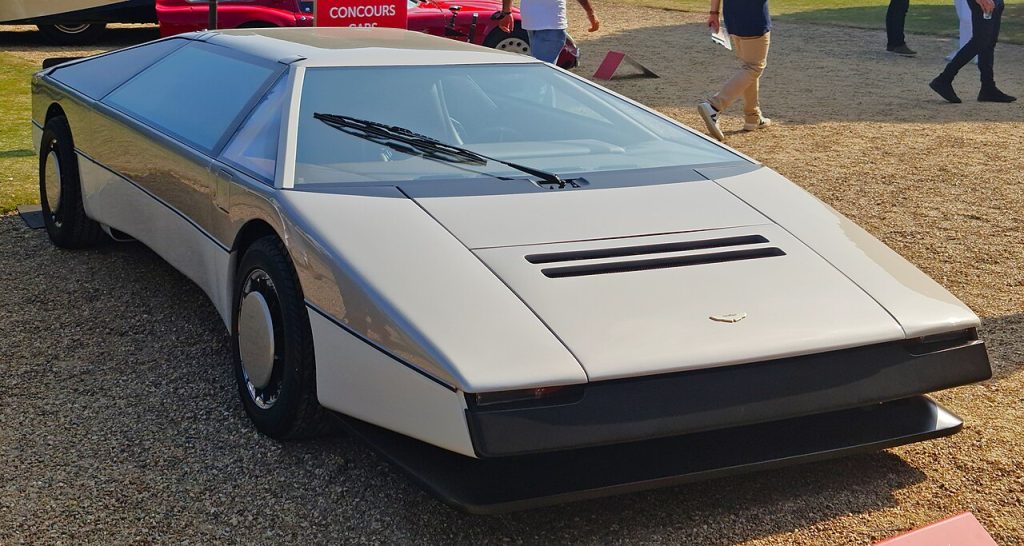
The Towns-designed wedge and gullwing doors express the project’s experimental purpose. The AMHT account identifies the twin-turbo engine as central to the later restoration effort, rather than a simple cosmetic substitute. For a technical record, separate original programme references from the documented installation at each later appearance. Output figures repeated in broad summaries should not become a modern measured value without supporting evidence. The concept’s interest lies in an ambitious engineering exercise and the material object that survived it. Its dramatic presentation is useful context but not a condition certificate.
Period testing and a later achievement
AMHT records an original-period 191-mph run and a much later attempt to exceed 200 mph. Those events require separate dates and contexts. A car developed in 1980 and prepared again decades later does not have one timeless performance specification. Keep test site, driver, equipment and configuration with each result. The guide does not rewrite the later speed as an untouched 1980 outcome. This distinction strengthens the history: the original ambition and the restored object’s eventual performance can both matter without collapsing their chronology or implying unchanged preparation.
The 2023 witnessed run
AMHT’s June 2023 firsthand account records Darren Turner driving at Machrihanish with a 205.4-mph readout. The writer separately reports hearing of an opposite-direction result and an approximate average. This guide treats the witnessed readout as the reported demonstration result, not a certified new production-car world record. The source itself explains that Bulldog was a concept rather than a production vehicle. Preserve those limits when quoting the achievement. An impressive speed can be historically meaningful without being presented as an official category record or a guaranteed capability today.
Restoration is part of the object’s history
The AMHT narrative describes the later commission to restore Bulldog toward its earlier appearance and return it to operation. That is a distinct stage in the concept’s life, not evidence of untouched original material. A conservation file should identify retained assemblies, replacements, engineering decisions and the preparation used for the speed demonstration. Removed parts and workshop photographs can help explain continuity. A future custodian should be able to distinguish original development, intervening changes and the restoration programme. This makes the unique object’s survival more informative than a broad statement that it simply returned to factory condition.
Photographs from different phases should stay dated
Bulldog’s appearance has changed over its long life. A photograph from a public display belongs to that phase, rather than proving a configuration at an earlier test or later high-speed run. Preserve photographer, exposure date, source identification and any visible equipment. The supplied Hampton Court photograph is from 2021, before the 2023 achievement. It illustrates the concept’s later presentation, not the moment it passed 200 mph. A dated image sequence can be valuable evidence of changes when combined with workshop records, but no single view can establish every installed mechanical detail.
Stewardship of a unique operating concept
Any proposed operation should follow a specialist assessment of structure, doors, braking, steering, tyres, fuel delivery, cooling and the actual turbocharged installation. Bespoke systems can require decisions that differ from those for a normal production model. Static conservation and high-speed demonstration impose very different demands. Preserve the rationale for changes and establish support for the fitted hardware. A past public run does not settle current readiness or event eligibility. The use plan belongs to the actual object and its present condition, with the historical test record informing research rather than substituting for preparation.
Comparing Bulldog with Ogle and Lagonda
The Ogle project offers a coachbuilt promotional-design comparison, while the Series 1 Lagonda pursued low-volume four-door touring. Bulldog’s experimental speed purpose differs from both. Compare role, completion scope and object history before treating one, two and seven as interchangeable rarity measures. Later Aston Martin hypercars can provide design context without becoming additional Bulldogs. Connected profiles help explain the marque’s experimentation while preserving each physical subject. The strongest collecting account combines design authorship, supported identity and material history, rather than applying a generic limited-edition label to every unusual prototype.
Credits and the continuing research file
The bundled subject image retains linked photographer, Commons source, exact reuse licence and resizing disclosure. Its caption states the 2021 display context and separates the source’s 1979 development label from the 1980 unveiling. Keep those distinctions when sharing the photograph. The object archive should retain construction documents, restoration evidence, test records and dated appearances together. New findings can refine a particular component or event claim without multiplying the unique concept into several nominal editions. Bulldog’s story is compelling because both its original ambition and its later preparation can be described honestly and precisely.
Frequently asked questions
How many Bulldogs are profiled?
One documented experimental object, not a numbered retail edition.
When was it unveiled?
1980, following development in 1978–1980.
What later speed is recorded by AMHT?
A 205.4-mph readout during Darren Turner’s 2023 run at Machrihanish.
Was that a new production-car world record?
No. The AMHT account distinguishes the concept demonstration from a production-car record.
Explore related Aston Martin profiles
- Aston Martin DBS V8 Ogle Sotheby Special
- Aston Martin Lagonda Series 1
- Aston Martin V8 Vantage Le Mans
Sources
- AMHT: firsthand Bulldog 200-mph run account, June 2023
- Coachmakers: Bulldog design, one-off construction and 1980 launch background
- Tim Cottingham: Bulldog history and dated presentation photographs
Historical claims follow the linked manufacturer, archive, specialist and catalogue records, with disputed findings retained. Inspection and collecting guidance is editorial analysis. Catalogue condition and custody statements remain dated to their sources.
Photography and credit
Bulldog at Hampton Court in September 2021, before its 2023 speed demonstration. The filename uses a development date; public launch was 1980. Photo: MrWalkr / Wikimedia Commons · CC BY-SA 4.0. Wikimedia thumbnail resized from original; no cropping or colour changes.
Why this machine matters
The Aston Martin Bulldog is the unique experimental road-car concept developed in 1978–1980. Its dramatic shape and twin-turbo engine pursued a 200-mph ambition that the restored object later fulfilled in 2023. That demonstration remains distinct from an original-period production-car record or a guarantee of unchanged components.
Built in limited numbers
Bulldog’s one-off status describes the sole experimental object. It does not create a numbered customer edition or a production run that can be compared directly with a completed road-model series. The original production ambition was not fulfilled as a retail programme. Conventional edition and worldwide-production fields remain unset here. A useful rarity account explains the project’s purpose and actual outcome. For the physical car, seek the continuous object history and conservation record rather than treating the number one as proof that every visible assembly has remained untouched since the original launch.
Gallery
Specifications
Factory specifications may vary by model year, market and configuration.
Identity & production
- Official model
- Aston Martin Bulldog
- Base model
- Bulldog
Powertrain & performance
- Engine
- Twin-turbo experimental V8 programme; actual configuration dated to each development/restoration stage