Aston Martin Lagonda Series 1
The first-series V8 Lagonda was the low-volume four-door Aston Martin introduced in 1974, before the radically different wedge-shaped Lagonda. Seven cars were completed in period. The earlier prototype and chassis 12008, finished decades later, require separate scope so the original-series count remains meaningful.
The first-series V8 Lagonda was the low-volume four-door Aston Martin introduced in 1974, before the radically different wedge-shaped Lagonda. Seven cars were completed in period. The earlier prototype and chassis 12008, finished decades later, require separate scope so the original-series count remains meaningful.
Aston Martin Lagonda Series 1 at a glance
| Manufacturer | Aston Martin |
|---|---|
| Model / family | Lagonda Series 1 |
| Profile scope | Historic road-model archive |
| Historical reference year | 1974 |
| Inventory reference | AST-061 |
| Original series total | 7 — Seven original-period Series 1 completions; MP230 prototype and later 12008 completion excluded |
| Historical engine reference | V8 saloon programme; later installed capacity and transmission by chassis |
The 1974 four-door programme
The indexed Bonhams catalogue dates the Series 1 introduction to the London Motor Show in October 1974. The inventory’s 1976 reference is therefore retained as a source value rather than used as the launch year. This guide concerns the earlier V8-related four-door design, not the wedge-shaped Lagonda unveiled in 1976. Similar naming does not imply a continuous body or electronics specification. An individual car should be identified by its actual chassis and original programme. The distinction makes the first series intelligible before discussing its rarity, restoration or later upgrades.
Rarity: seven period completions
Bonhams describes seven cars built in period. This guide uses seven with that explicit completion scope, excluding the earlier prototype and the later-finished eighth chassis. It does not claim that only seven related physical structures have ever existed. A period-production total and a census of all later completed objects answer different questions. When a particular car is described as one of seven, establish which chassis it is and when it was completed. This keeps the rarity statement supported while avoiding a count that silently incorporates a much later completion or duplicates an earlier prototype.
The earlier prototype is a separate object
Cottingham’s history identifies the 1969 four-door prototype MP230 as preceding the public Series 1 programme. It provides development context without becoming an additional period retail car in the seven. A prototype can share design or mechanical ideas with a later series while retaining its own identity. Its photographs and modifications should not be transferred to customer chassis. Keep original object identifiers and dates alongside any familiar public names. This helps an archive explain the long development path without compressing every related four-door Aston Martin into one supposedly uniform production run.
Chassis 12008 and the later completion
The firsthand specialist account describes an eighth factory chassis and superstructure, 12008, left unfinished and ultimately completed in 2007. This is significant because a structure’s original manufacture and a finished car’s completion can be decades apart. The later object should be described through that sequence rather than presented as an eighth period delivery. Its mechanical and trim choices also need their own records. A supported history can recognize the factory-origin structure without erasing the later work that produced the finished vehicle. The seven-car original completion scope remains separate.
Individual engine upgrades must stay individual
The Bonhams show-car catalogue identifies a later 7.0-litre specification for its particular Series 1 example. That is not the original engine capacity of every car. A collecting description should distinguish factory delivery, subsequent specialist upgrades and the actual installation now fitted. Engine, transmission and body changes can all affect the present ownership proposition. Obtain dated invoices and component records before repeating an upgrade claim. The model’s V8-family relationship is useful context, but a rare saloon should not receive a powerful later specification merely because another well-known chassis was modified in that way.
Series 1 is not the wedge-shaped Lagonda
The later Lagonda’s body and digital-instrumentation story belong to a different programme. Do not attach those features to the earlier four-door model through a broad Lagonda name. For photo research, inspect the actual body shape and source description before selecting an image. A dated Series 1 photograph can show its relationship to the contemporary Aston Martin V8 without implying a shared later cabin or electronic architecture. This separation is particularly useful in a global encyclopedia, where search results often emphasize the more visually dramatic successor and obscure the earlier seven-car series.
Structure, body and restoration documentation
A specialist should review the extended four-door structure, panel mounting, corrosion, previous repairs and closure alignment on the individual car. Restoration photographs can help explain how the present body was achieved. Identify retained and replaced material, especially where later styling updates altered the original presentation. A polished finish alone cannot establish untouched construction. The collecting file should connect the original chassis identity with the work that followed. This is assessment guidance, not a finding about the pictured example; its relevance comes from the bespoke scale of the programme and the possibility of substantial individual intervention.
Mechanical preparation for a large touring saloon
Confirm the fitted engine, gearbox, cooling, brakes, steering, tyres and electrical equipment before planning regular use. A later engine upgrade may imply associated changes that deserve documentation rather than assumption. Discuss service support and the intended role with a specialist. Static conservation, occasional display and frequent touring can lead to different preparation decisions. Keep those choices in the file and preserve removed components where practical. A historical rarity count does not diagnose current condition or guarantee reliability. The aim is a use plan that follows the actual configuration of the particular car.
Comparing rare saloons and experimental designs
The Ogle and Bulldog profiles illustrate different forms of Aston Martin experimentation, while Series 1 Lagonda pursued a four-door touring format. Compare purpose, original completion scope and individual documentation before comparing numbers. Seven period saloons, a promotional pair and one concept object are counts at different levels. A later completion or bespoke restoration can have significance of its own when properly dated. These connected guides help readers explore the marque’s limited programmes without converting every unusual object into a retail edition or treating rarity alone as an assessment of condition and collecting interest.
The photograph and a complete object record
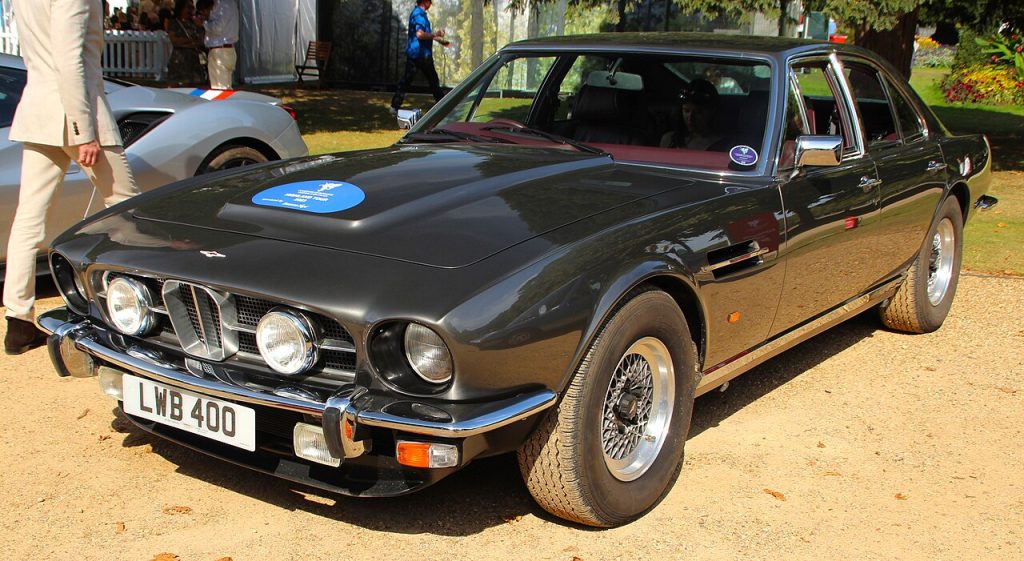
The bundled Hampton Court image is source-identified as a Series 1 Lagonda, photographed in 2023. Its visible credit links the photographer, Commons source, reuse licence and resizing disclosure. No original engine capacity or authenticated serial is assigned from that view. Keep the caption intact when sharing it. A useful individual record should retain original completion date, factory identity, later work and custody transitions. New evidence can refine those points without changing the scope of the original seven merely because another related object or later modification becomes better documented.
Frequently asked questions
When was Series 1 introduced?
October 1974, according to the Bonhams catalogue chronology.
What does seven count?
Cars completed in the original period, excluding the earlier prototype and later 12008 completion.
Was 12008 completed in the original run?
The specialist account dates its eventual completion to 2007.
Did every Series 1 have a 7.0-litre engine?
No. Later upgrades belong to individual chassis histories.
Explore related Aston Martin profiles
Sources
- Bonhams: period seven-car Lagonda Series 1 and show-car identity
- Tim Cottingham: 1969 prototype, period Series 1 and later 12008 completion
Historical claims follow the linked manufacturer, archive, specialist and catalogue records, with disputed findings retained. Inspection and collecting guidance is editorial analysis. Catalogue condition and custody statements remain dated to their sources.
Photography and credit
Source-identified 1975 Lagonda Series 1 at Hampton Court in 2023. Engine modifications, chassis serial and current custody are not inferred. Photo: MrWalkr / Wikimedia Commons · CC BY-SA 4.0. Wikimedia thumbnail resized from original; no cropping or colour changes.
Why this machine matters
The first-series V8 Lagonda was the low-volume four-door Aston Martin introduced in 1974, before the radically different wedge-shaped Lagonda. Seven cars were completed in period. The earlier prototype and chassis 12008, finished decades later, require separate scope so the original-series count remains meaningful.
Built in limited numbers
Bonhams describes seven cars built in period. This guide uses seven with that explicit completion scope, excluding the earlier prototype and the later-finished eighth chassis. It does not claim that only seven related physical structures have ever existed. A period-production total and a census of all later completed objects answer different questions. When a particular car is described as one of seven, establish which chassis it is and when it was completed. This keeps the rarity statement supported while avoiding a count that silently incorporates a much later completion or duplicates an earlier prototype.
Gallery
Specifications
Factory specifications may vary by model year, market and configuration.
Identity & production
- Official model
- Aston Martin Lagonda Series 1
- Base model
- Lagonda Series 1
- Worldwide production
- 7
Powertrain & performance
- Engine
- V8 saloon programme; later installed capacity and transmission by chassis