Aston Martin AM Vantage
The 1972 AM Vantage was the rare six-cylinder successor within the revised DBS-era range, with seventy cars in Aston Martin’s account. Its two-headlamp appearance and lower-output role make it an exception to the usual Vantage naming story. It should remain distinct from the later V8 Vantage introduced in 1977.
The 1972 AM Vantage was the rare six-cylinder successor within the revised DBS-era range, with seventy cars in Aston Martin’s account. Its two-headlamp appearance and lower-output role make it an exception to the usual Vantage naming story. It should remain distinct from the later V8 Vantage introduced in 1977.
Aston Martin AM Vantage at a glance
| Manufacturer | Aston Martin |
|---|---|
| Model / family | AM Vantage |
| Profile scope | Historic road-model archive |
| Historical reference year | 1972 |
| Inventory reference | AST-058 |
| Original series total | 70 — Original six-cylinder AM Vantage model only; later V8 Vantage excluded |
| Historical engine reference | Six-cylinder AM Vantage programme; current installed details require individual records |
A Vantage with an unusual place in the range
Aston Martin’s historical account describes the April 1972 revised DBS with two headlamps and the AM Vantage name. Unlike many uses of Vantage, it occupied the less powerful position in the contemporary range. This makes it a useful reminder that a familiar badge does not carry one unchanging meaning across decades. The profile concerns the specific early-1970s six-cylinder model, not later V8 performance cars or an engine option on every DBS. An individual record should state model, period and original delivery specification before drawing conclusions from the name.
Rarity: seventy cars with the correct identity
The manufacturer records seventy AM Vantages. That is the original model population rather than an allocation of later V8 Vantages or every six-cylinder DBS. A car’s membership should be supported by its chassis and factory documents. Body alterations and later engine work need their own history. The count explains why the model is scarce, but it is not a certificate for an unidentified two-headlamp Aston Martin. When comparing rarity, keep the named 1972 derivative and its surrounding family separate so that overlapping names do not become duplicate physical vehicles in an archive.
The six-cylinder context
The manufacturer situates the AM Vantage within the continuing DBS-era six-cylinder story. This guide retains that engine-family identity without assigning a modern measured output or installed capacity to the pictured car. A surviving example may have been rebuilt or altered. Obtain its actual engine records and compare current induction, ignition and assembly identifiers with the original order. The important technical distinction is the six-cylinder model’s role alongside the V8 range. It should not acquire a V8 power figure merely because a later catalogue or photo search uses Vantage without the AM qualifier.
Recognizing the two-headlamp presentation
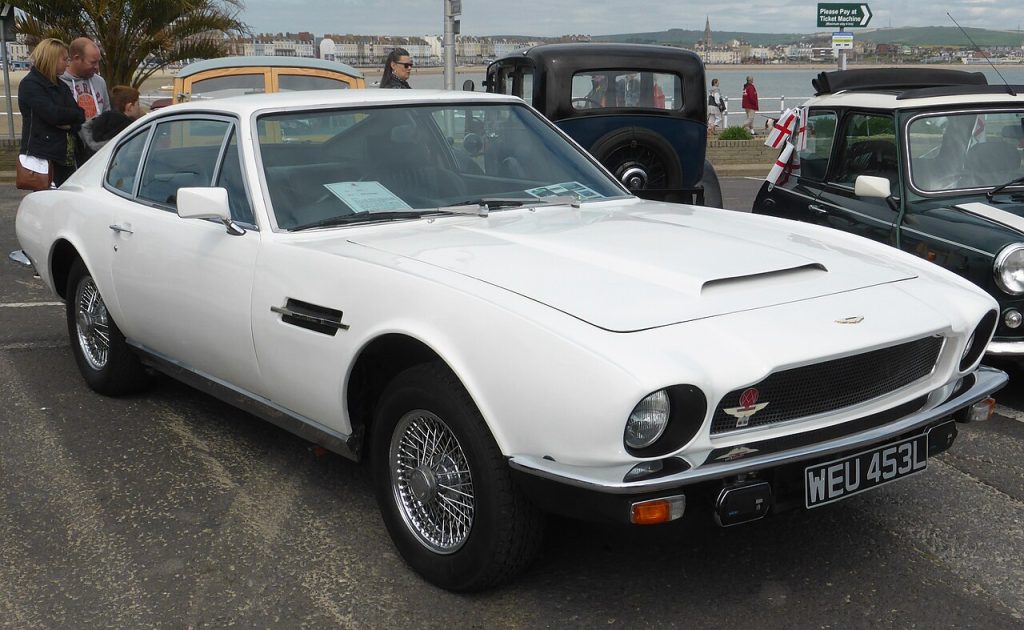
The historical two-headlamp description provides useful visual context. It cannot establish the engine or complete model identity from a photograph alone. Compare the chassis documentation and original body specification with dated images, including any changes to grille, bonnet, trim or wheels. A restored car may represent one selected point in its history. State that point when known. This keeps recognition useful without converting a familiar front-end appearance into an authentication conclusion. Model identification is strongest when visual features and documentary evidence support each other rather than being treated as substitutes.
Separating AM Vantage from the 1977 V8 Vantage
The later V8 Vantage has a different period, engine and performance role. A guide that mixes the two because of a shared name would give the earlier model inappropriate specifications and collecting comparisons. Keep build dates and engine-family fields clear. Original records may use terminology that needs explanation, so retain the actual wording and a supported interpretation. A short historical distinction helps a reader navigate searches and advertisements. For an individual vehicle, the conclusion still needs its own file rather than relying on the confidence of an online model title.
A useful authentication and custody file
Bring together the build record, chassis identifiers, original order, early photographs and ownership transitions. Where a mechanical or body change occurred, record its date, purpose and evidence. A list of owners is less informative than a file explaining how the car moved between them and what happened during each period. Specialist correspondence should remain associated with the question it addresses. This allows a future custodian to distinguish factory model identity from restoration choices and installed specification. The result is a clearer collecting account of a scarce derivative, rather than a generic narrative about all Aston Martins called Vantage.
Condition beneath the presentation
A specialist assessment should examine structural condition, panel mounting and previous repairs as well as the visible finish. Review photographs from before restoration and establish what material was retained. Door fit and paint quality can provide observations but not a complete report. The actual cooling, lubrication, braking and electrical systems also deserve attention. These principles apply to an individual car, not to a diagnosis of the supplied image. A rare model’s historical interest does not eliminate the need to understand the physical object’s current state and the evidence behind major restoration claims.
Planning road use with the actual specification
Confirm the fitted transmission, engine configuration, steering, brakes, tyres and service history before budgeting for regular use. Discuss parts support with a specialist familiar with the early six-cylinder model. A car prepared for static display may need different work from one used frequently for touring. Document any proposed upgrades and retain the original components where feasible. The model’s place in the range should inform expectations, but a period label does not guarantee present performance or reliability. A realistic use plan should follow the condition and equipment of the actual example.
Comparing AM Vantage with Ogle and later Zagato
The Ogle project is connected through the DBS/V8 period but pursued a bespoke promotional design. The V8 Vantage Zagato represents a later performance and coachbuilding programme. These are useful contrasts because a shared era or name does not make the cars equivalent. Compare original purpose, engine family, body and count scope before treating the smallest number as the strongest collecting proposition. Documentation, condition and intended use also matter. Related guides help readers navigate Aston Martin’s changing design and performance choices while preserving the AM Vantage’s unusual six-cylinder identity.
Photography and future research
The bundled photograph is source-identified as a 1973 Vantage, photographed at a Weymouth car-club meeting in 2017. Its visible credit retains the photographer, Commons source, licence and resizing disclosure. It is a model illustration, with no chassis serial or installed-engine inspection claimed. Keep that attribution and date attached when sharing it. A continuing archive should retain new factory evidence, repair findings and dated appearance photographs under the supported vehicle identity. The rare model’s significance is easier to understand when its naming exception and individual car history remain clearly connected.
Frequently asked questions
How many AM Vantages are recorded?
Aston Martin identifies seventy.
Was the 1972 AM Vantage a V8 model?
No. This profile concerns the six-cylinder model.
Is it the same programme as the 1977 V8 Vantage?
No. The later performance model has a different period and engine family.
Does the photograph authenticate the engine?
No. Installed specification needs individual records and inspection.
Explore related Aston Martin profiles
- Aston Martin DBS V8 Ogle Sotheby Special
- Aston Martin V8 Vantage Zagato Coupe
- Aston Martin V8 Vantage Le Mans
Sources
Historical claims follow the linked manufacturer, archive, specialist and catalogue records, with disputed findings retained. Inspection and collecting guidance is editorial analysis. Catalogue condition and custody statements remain dated to their sources.
Photography and credit
Source-identified 1973 AM Vantage at the Yeovil Car Club meeting in Weymouth in 2017. No installed engine or chassis inspection claim. Photo: Andrew Bone from Weymouth, England / Wikimedia Commons · CC BY 2.0. Wikimedia thumbnail resized from original; no cropping or colour changes.
Why this machine matters
The 1972 AM Vantage was the rare six-cylinder successor within the revised DBS-era range, with seventy cars in Aston Martin’s account. Its two-headlamp appearance and lower-output role make it an exception to the usual Vantage naming story. It should remain distinct from the later V8 Vantage introduced in 1977.
Built in limited numbers
The manufacturer records seventy AM Vantages. That is the original model population rather than an allocation of later V8 Vantages or every six-cylinder DBS. A car’s membership should be supported by its chassis and factory documents. Body alterations and later engine work need their own history. The count explains why the model is scarce, but it is not a certificate for an unidentified two-headlamp Aston Martin. When comparing rarity, keep the named 1972 derivative and its surrounding family separate so that overlapping names do not become duplicate physical vehicles in an archive.
Gallery
Specifications
Factory specifications may vary by model year, market and configuration.
Identity & production
- Official model
- Aston Martin AM Vantage
- Base model
- AM Vantage
- Worldwide production
- 70
Powertrain & performance
- Engine
- Six-cylinder AM Vantage programme; current installed details require individual records