Aston Martin Cygnet & colette
The Cygnet & colette was a 2011 city-car collaboration combining Works Tailored craftsmanship with the Paris retailer’s distinctive colours and details. Fourteen was the announced programme; a later specialist account attributes a belief of only two completions to the Aston Martin Register. Those scopes remain separate, with exact completed-production fields held.
The Cygnet & colette was a 2011 city-car collaboration combining Works Tailored craftsmanship with the Paris retailer’s distinctive colours and details. Fourteen was the announced programme; a later specialist account attributes a belief of only two completions to the Aston Martin Register. Those scopes remain separate, with exact completed-production fields held.
Aston Martin Cygnet & colette at a glance
| Manufacturer | Aston Martin |
|---|---|
| Model / family | Cygnet |
| Profile scope | Historic road-model archive |
| Historical reference year | 2011 |
| Inventory reference | AST-101 |
| Specialist-reported scoped count | 2; scope explained below, not factory certification |
| Historical engine reference | Original1.33-litre four-cylinder Cygnet city-car programme; not later V8 commission |
The collaboration belongs to 2011
The contemporary June 2011 announcement text and specialist history place Cygnet & colette in 2011. The inventory’s 2010 year corresponds to an earlier phase of the broader Cygnet story and is retained in the audit. It should not become the retailer edition’s introduction by default. Original order, completion and registration are distinct dates for an individual example. A clear profile also preserves the lower-case colette styling as part of the name. This identifies the particular collaboration while keeping it separate from a standard Cygnet with personalised trim or a later unrelated bespoke commission.
Rarity: fourteen planned versus two register-reported completions
The 2011 text describes fourteen cars to be created through Works Tailored. Cottingham’s later account attributes to the Aston Martin Register a belief that only two were produced. This guide keeps fourteen as the planned programme and two as an explicitly attributed reported outcome. It does not claim a factory-certified completed chassis census. Numbering, original orders and delivery records would be needed to strengthen that finding. The rarity story remains useful precisely because the announcement and later register belief are not compressed into one unqualified count. Exact verified-production fields therefore remain unset in the vehicle metadata.
Works Tailored and the retailer’s role
The collaboration demonstrated how materials, colours and details could be coordinated through Works Tailored with an outside partner. The retailer association is an edition identity, not proof that every Cygnet purchased in Paris belongs to the group. An individual file should connect chassis, original order and collaboration documentation. Later personalisation can resemble the package without sharing its original history. Keep that work dated if it exists. The significance lies in the supported design and tailoring programme, which can be explained without turning a city-car colour treatment into an invented separate engineering platform or a universal performance upgrade.
Lightning Silver and colette blue
The contemporary account describes Lightning Silver paint and colette blue accents, while the specialist adds detail about the branded fittings. Those colours explain the visual theme but cannot establish membership alone. Check original build information and early photographs before deciding what an individual car received when new. Repainted panels, replaced mirror caps and refurbished wheels need their own work history. A correctly coloured present car may be an original with repairs or a later imitation of the package. The useful assessment connects appearance with documentary identity rather than allowing the familiar silver-and-blue combination to authenticate itself.
The Bitter Chocolate cabin and associated pieces
Cottingham describes a Bitter Chocolate cabin with blue stitching and coordinated details, together with branded accessories. Inventory the actual pieces accompanying the car and record any evidence linking them to its delivery. Loose retailer items cannot authenticate another chassis, while missing accessories do not alone erase original membership. Photograph retained and replacement trim separately where records permit. This is particularly helpful for a tailoring collaboration, whose appeal rests partly on coordinated material choices. A later sale description should not blend original supply, replacement components and unrelated merchandise into one apparently complete package without explaining the connections.
A1.33-litre city-car basis
Aston Martin’s original Cygnet specifications identify a 1.33-litre four-cylinder front-wheel-drive programme. That distinguishes this collaboration from the later V8-powered Cygnet commission shown elsewhere in the manufacturer’s history. The colette edition should not acquire that unrelated V8 output or running gear because the exterior outline is familiar. For an individual example, inspect original order, fitted equipment and maintenance history. Programme-level specification is context rather than proof of its present mechanical condition. The right technical comparison begins with the original small-engine city car and then records any actual changes with their dates and supporting evidence.
Identifying a genuine collaboration car
Start with chassis identification, factory order, delivery documents and the edition-specific records available for the actual vehicle. Check branded fittings against those documents rather than treating a badge as the complete argument. If an item was replaced, preserve the earlier evidence and the reason for replacement where possible. Photographs with reliable dates can help establish continuity through changes of colour or trim. A modern catalogue’s repeated edition name remains a research lead. The strongest archive explains why this physical object belongs to the original collaboration without relying solely on its current presentation or a reported tiny population.
Condition review for urban use and collection
Inspect the actual body, supporting structure, exterior fittings, cabin and mechanical installation with a specialist. Determine whether the intended role is regular urban use, occasional display or another purpose before planning repairs. Cosmetic finish alone cannot settle condition or originality. Record work to distinctive trim with enough detail for future conservation, especially where generic replacements may alter the original look. The city-car format changes the practical assessment but does not remove the need for a chassis history. Historical scarcity and present readiness are separate findings, supported by different forms of evidence.
How retailer editions differ from halo models
The DB7 Neiman Marcus Volante offers a useful comparison with another retailer-associated programme, while One-77 demonstrates a very different technical route to exclusivity. Compare original purpose, platform and supported count scope before judging collecting interest by the smallest familiar number. The colette programme’s announced fourteen and register-reported two should not be added as separate populations. An individual car’s documentation and retained material also matter. Related profiles can help readers understand bespoke design choices without implying that a fashion collaboration, limited roadster and purpose-built halo car share one mechanical or authentication framework.
The reference photograph and exact-image requirement
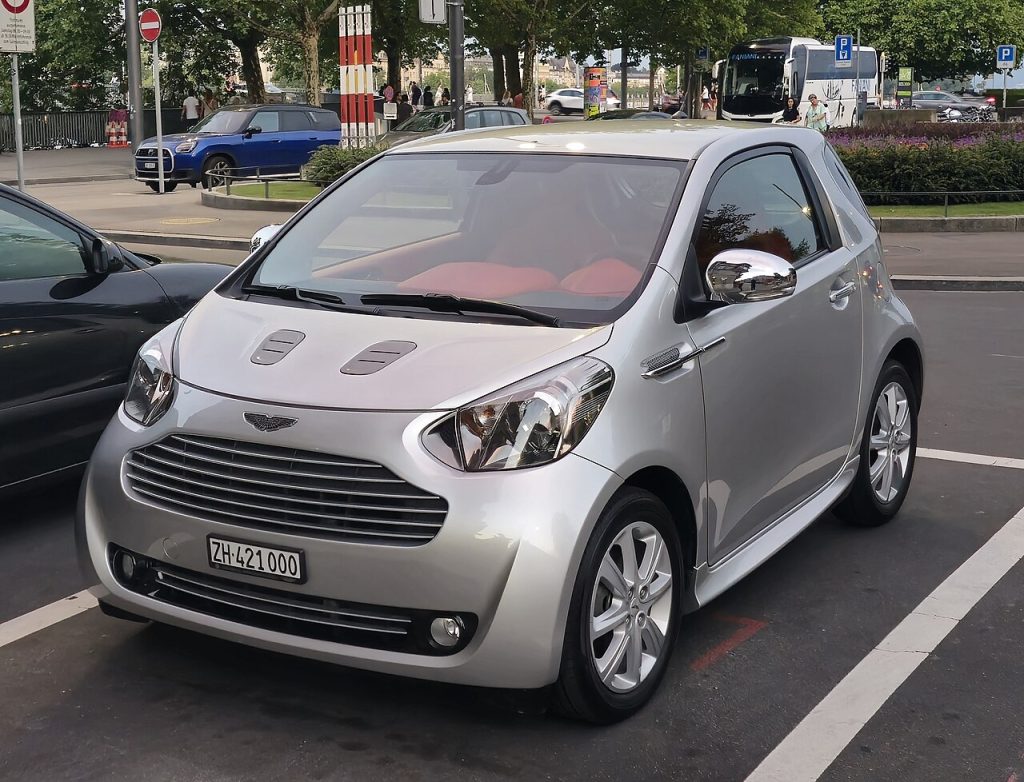
The supplied photograph shows a Cygnet in Zurich in July 2025. It is a family reference and is not authenticated as Cygnet & colette. The caption makes that limit visible, with linked photographer, Commons source, licence and resizing disclosure. An exact-edition licensed photograph remains a publication hold. The presence of ordinary Cygnet badges or a light exterior does not remove it. Keep original collaboration documents, trim evidence and dated photographs together so later imagery can be tied to the right chassis. This allows a useful sourced draft while preserving the verified limits of both the image and completed-count evidence.
Frequently asked questions
When was Cygnet & colette introduced?
2011, following the contemporary June announcement; inventory 2010 is corrected.
Were fourteen definitely completed?
Fourteen was planned; the later specialist account attributes a belief of two completions to the Aston Martin Register.
Was it the V8-powered Cygnet?
No. The original collaboration belongs to the 1.33-litre city-car programme.
Is the bundled photo authenticated as colette?
No. It is a clearly labelled Cygnet family reference pending an exact-edition image.
Explore related Aston Martin profiles
Sources
- Contemporary June 2011 colette announcement text reproduced by OneShift
- Tim Cottingham: colette planned 14 and later register belief of two completions
- Aston Martin: original Cygnet 1.33-litre city-car specifications
Historical claims follow the linked manufacturer, archive, specialist and catalogue records, with disputed findings retained. Inspection and collecting guidance is editorial analysis. Catalogue condition and custody statements remain dated to their sources.
Photography and credit
Cygnet family reference photographed in Zurich in July 2025. Not authenticated as a Cygnet & colette; exact-edition licensed photograph remains a publication hold. Photo: Calreyn88 / Wikimedia Commons · CC BY-SA 4.0. Wikimedia thumbnail resized from original; no cropping or colour changes.
Why this machine matters
The Cygnet & colette was a 2011 city-car collaboration combining Works Tailored craftsmanship with the Paris retailer’s distinctive colours and details. Fourteen was the announced programme; a later specialist account attributes a belief of only two completions to the Aston Martin Register. Those scopes remain separate, with exact completed-production fields held.
Built in limited numbers
The 2011 text describes fourteen cars to be created through Works Tailored. Cottingham’s later account attributes to the Aston Martin Register a belief that only two were produced. This guide keeps fourteen as the planned programme and two as an explicitly attributed reported outcome. It does not claim a factory-certified completed chassis census. Numbering, original orders and delivery records would be needed to strengthen that finding. The rarity story remains useful precisely because the announcement and later register belief are not compressed into one unqualified count. Exact verified-production fields therefore remain unset in the vehicle metadata.
Gallery
Specifications
Factory specifications may vary by model year, market and configuration.
Identity & production
- Official model
- Aston Martin Cygnet & colette
- Base model
- Cygnet
Powertrain & performance
- Engine
- Original1.33-litre four-cylinder Cygnet city-car programme; not later V8 commission