Aston Martin One-77
The One-77 was a purpose-built Aston Martin halo car combining a carbon-fibre monocoque, handcrafted aluminium skin and a 7.3-litre V12. Its staged 2008–2009 appearances preceded the completed seventy-seven-car customer programme. The manufacturer confirms completion in 2012, making the original customer scope distinct from development objects and later related commissions.
The One-77 was a purpose-built Aston Martin halo car combining a carbon-fibre monocoque, handcrafted aluminium skin and a 7.3-litre V12. Its staged 2008–2009 appearances preceded the completed seventy-seven-car customer programme. The manufacturer confirms completion in 2012, making the original customer scope distinct from development objects and later related commissions.
Aston Martin One-77 at a glance
| Manufacturer | Aston Martin |
|---|---|
| Model / family | One-77 |
| Profile scope | Historic road-model archive |
| Historical reference year | 2009 |
| Inventory reference | AST-099 |
| Original series total | 77 — Original completed customer One-77 programme; development objects excluded |
| Historical engine reference | One-77 naturally aspirated V12 programme; historical 750 bhp rating, current output individually evidenced |
| Displacement reference | 7312 cc; historical programme reference, not current installed measurement |
Several public appearances before the completed car
The factory separates the partly covered 2008 Paris display, the 2009 Geneva presentation and the finished car’s April 2009 Villa d’Este appearance. This profile uses 2009 as the finished-model reference rather than claiming the first teaser was a customer delivery. Individual completion and registration need their own evidence. A staged reveal can explain why photographs show different levels of development under the same name. Preserve those milestones with their dates and object roles. The chronology is useful to readers because it distinguishes an ambitious design programme from the later completed cars that actually entered the customer population.
Rarity: seventy-seven original customer cars
Aston Martin confirms that production was completed in 2012 with all seventy-seven examples sold. The count is the original customer programme, not an assertion about every test object, model or later related commission. A present survivor census would need another reconciled register. Do not subtract an accident report as though original production changed, or add a development appearance as an extra customer car without its records. For an individual example, connect chassis identity, original order and completion evidence. This keeps the rare population useful while avoiding unsupported claims about current custody, survival or the condition of all remaining vehicles.
Carbon-fibre structure and aluminium skin
The manufacturer describes a carbon-fibre monocoque clothed in handcrafted aluminium. Those materials play different roles and should not be flattened into a vague carbon-bodied description. An individual condition review needs to distinguish the structural tub, attached components and exterior skin. Repairs to one part do not automatically establish the condition or originality of another. Preserve factory information and workshop evidence before further intervention. A photograph can illustrate form and finish, but it cannot certify the integrity of concealed composite material. The engineering story is strongest when original construction and later material history remain separately supported.
Multimatic’s contribution to the chassis
The 2011 owner book identifies Toronto-based Multimatic with the composite chassis and explains the programme’s suspension technology. That supplier role provides specific engineering context rather than a claim that the completed car was assembled in Canada. Record original and later suspension equipment at chassis level before assigning a current setup. A repair or replacement may preserve function while changing material history. The distinction between supplier contribution and final assembly also helps a geographical archive remain precise. It connects an important technical partner with the supported programme without turning a global supply relationship into an unsupported manufacturing-origin label.
A 7.3-litre V12 developed for this programme
The owner book identifies Cosworth’s engine contribution and a certified historical 750 bhp output. The factory specification page gives 7312cc. Those references describe the original programme rather than present dyno output or an installed measurement for the pictured example. Engine rebuilds, replacements and subsequent work should receive their own dates and identifiers. Avoid borrowing the more familiar DB7 or DBS V12 figures merely because the cylinder count is shared. The technical significance lies in the One-77’s particular development, which can be explained accurately without claiming that every surviving assembly remains untouched or still produces its original rated output.
The six-speed transaxle and source-quality check
The owner book describes the paddle-shift six-speed transaxle. The current factory specification page also contains a conflicting generic manual/five-speed line above its more specific automated-manual description. This profile gives priority to the programme-specific owner-book account and makes the discrepancy visible in review notes. A technical table should not silently copy contradictory headings. For a particular car, original build and current installation evidence remain essential. The useful result distinguishes the supported original architecture from a later change or an unrelated template fragment, preventing a manufacturer page’s formatting issue from becoming a misleading vehicle specification.
Personal specification within a tiny programme
The owner book describes individual cabin choices and a dedicated build process. A small production total does not imply one identical colour or trim arrangement. Obtain the actual order specification and early photographs before deciding what an individual car received originally. Subsequent repair or retrimming can be recorded without losing the vehicle’s identity. Inventory accompanying manuals and special pieces separately, connecting their provenance where evidence permits. Collecting significance can include the supported personal specification, but it should not depend on an invented one-of-one claim derived only from a current finish or a seller’s repeated description.
Composite inspection and a specialist work plan
Have a specialist assess the structure, exterior panels, attachment points, body repairs, glazing and cabin alongside the relevant work history. Restoration photographs should identify the extent of intervention rather than merely show a polished completion. Define whether the intended role is display, touring or another use before agreeing preparation. The condition file should connect observations with the actual chassis and the material involved. A rare halo model warrants careful documentation because its construction cannot be understood from ordinary paintwork alone. The seventy-seven-car figure establishes historical scarcity; it cannot certify the condition of a surviving composite tub.
Historical performance and present readiness
The factory’s period top-speed statement belongs to the programme’s development and marketing history, not a present operating guarantee. Review the fitted engine, cooling, lubrication, transmission, brakes, steering, tyres and control systems for the intended use. Keep inspection findings and preparation invoices dated. A previous demonstration or public appearance does not replace an assessment of the current installation. If work changes specification, record it alongside original delivery rather than overwriting the earlier history. This lets the One-77 remain understandable as both a rare engineering project and an individual maintained object with its own sequence of use and repairs.
The credited subject image and wider context
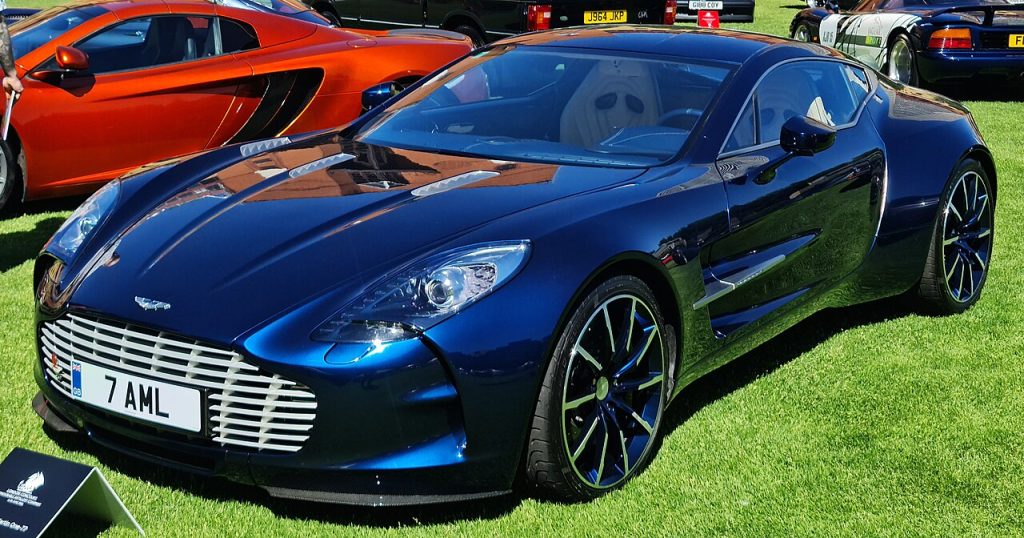
The supplied photograph shows a One-77 at London Concours in 2021. Photographer, Commons source, licence and resizing disclosure remain linked visibly, with no chassis serial or measured-output assignment. The Vanquish S Ultimate provides a preceding flagship comparison, while Bulldog and CC100 illustrate different experimental purposes. Compare construction, original role and population scope before interpreting rarity. An enduring archive should retain original order, completion records, repairs and dated appearances together. That approach allows new findings to strengthen the vehicle’s individual history without confusing the seventy-seven customer cars with models, development objects or later designs associated with the programme.
Frequently asked questions
How many original customer cars are confirmed?
Aston Martin states that all seventy-seven were sold and production was completed in 2012.
Which year is used for the finished-model introduction?
2009, separating the earlier covered display from the finished car’s appearance.
Is the whole body a carbon-fibre monocoque?
The structural monocoque is carbon-fibre; the manufacturer describes handcrafted aluminium exterior bodywork.
Does the picture establish 750 bhp today?
No. That is a historical programme rating; current output requires individual evidence.
Explore related Aston Martin profiles
- Aston Martin V12 Vanquish S Ultimate Edition
- Aston Martin Bulldog
- Aston Martin CC100 Speedster Concept
Sources
- Aston Martin: One-77 displays and carbon/aluminium construction
- Aston Martin: One-77 completion in 2012 and all 77 sold
- Aston Martin One-77 owner book, 2011: Multimatic chassis, Cosworth engine and build process
Historical claims follow the linked manufacturer, archive, specialist and catalogue records, with disputed findings retained. Inspection and collecting guidance is editorial analysis. Catalogue condition and custody statements remain dated to their sources.
Photography and credit
One-77 photographed at London Concours in June 2021. No chassis serial, current ownership or measured-output claim. Photo: MrWalkr / Wikimedia Commons · CC BY-SA 4.0. Wikimedia thumbnail resized from original; no cropping or colour changes.
Why this machine matters
The One-77 was a purpose-built Aston Martin halo car combining a carbon-fibre monocoque, handcrafted aluminium skin and a 7.3-litre V12. Its staged 2008–2009 appearances preceded the completed seventy-seven-car customer programme. The manufacturer confirms completion in 2012, making the original customer scope distinct from development objects and later related commissions.
Built in limited numbers
Aston Martin confirms that production was completed in 2012 with all seventy-seven examples sold. The count is the original customer programme, not an assertion about every test object, model or later related commission. A present survivor census would need another reconciled register. Do not subtract an accident report as though original production changed, or add a development appearance as an extra customer car without its records. For an individual example, connect chassis identity, original order and completion evidence. This keeps the rare population useful while avoiding unsupported claims about current custody, survival or the condition of all remaining vehicles.
Gallery
Specifications
Factory specifications may vary by model year, market and configuration.
Identity & production
- Official model
- Aston Martin One-77
- Base model
- One-77
- Worldwide production
- 77
Powertrain & performance
- Engine
- One-77 naturally aspirated V12 programme; historical 750 bhp rating, current output individually evidenced