Aston Martin DB7 i6 Volante Neiman Marcus Edition
The Neiman Marcus DB7 was a US catalogue edition of the six-cylinder Volante, offered in 1998. The specialist account reports ten cars, with a coordinated black exterior and distinctive trim package. Its retail-offering date, engine generation and reported count need clear scope; an exact edition photograph remains outstanding.
The Neiman Marcus DB7 was a US catalogue edition of the six-cylinder Volante, offered in 1998. The specialist account reports ten cars, with a coordinated black exterior and distinctive trim package. Its retail-offering date, engine generation and reported count need clear scope; an exact edition photograph remains outstanding.
Aston Martin DB7 i6 Volante Neiman Marcus Edition at a glance
| Manufacturer | Aston Martin |
|---|---|
| Model / family | DB7 |
| Profile scope | Historic road-model archive |
| Historical reference year | 1998 |
| Inventory reference | AST-082 |
| Specialist-reported scoped count | 10; scope explained below, not factory certification |
| Historical engine reference | Original supercharged straight-six DB7 programme; present installed specification individually verified |
| Displacement reference | 3228 cc; historical programme reference, not current installed measurement |
A catalogue edition with a 1998 offering date
Cottingham places the Neiman Marcus offering in the retailer’s 1998 Christmas catalogue. The inventory’s 1999 label is retained in the audit rather than promoted as a confirmed introduction date. A particular car’s completion, model-year designation or registration would need its own evidence. The retailer association is part of the edition identity, not simply a descriptive nickname for any black DB7. A vehicle file should connect the actual chassis to the original order and edition documentation. This lets the public profile explain the retail programme while preserving the separate chronology of each delivered example.
Rarity: a specialist-reported ten-car edition
The specialist account states ten cars were available and describes ten built. This profile records that attribution without presenting a factory-certified completed register. Exact verified-production metadata remains unset. A catalogue allocation and a reconciled chassis census are different forms of evidence, even where a source reports the same number for both. For an individual car, confirm edition membership before relying on the rarity statement. The count concerns this retailer-associated group, not every six-cylinder Volante. Future build records could strengthen the production finding without requiring the profile to change its already explicit source scope.
The six-cylinder DB7 rather than the V12 Vantage
Aston Martin’s DB7 history identifies the original supercharged straight-six programme and the Volante’s 1996 debut, followed by the Vantage replacement in 1999. The Neiman Marcus edition belongs to that earlier i6 context. This guide uses the factory’s 3,228cc engine-family reference without claiming the present installed capacity of an unseen individual car. Do not borrow the later V12 Vantage’s specifications because its production overlapped the inventory year. A meaningful technical description begins with the correct engine generation and then records rebuilds, replacements or tuning as dated changes to the actual chassis.
The coordinated colour and trim package
Cottingham describes US left-hand-drive cars with black exterior, grey cabin trim, carbon-fibre detailing and a black hood, together with distinctive brightwork. Those elements provide a starting point for checking an edition, not a complete authentication test by themselves. Repainting or retrimming can reproduce an appearance. Compare build information, original order and early photographs before deciding what the car received when new. Present condition and subsequent changes belong in a separate part of the record. The edition’s interest lies in the supported retailer specification rather than the unsupported assumption that every similarly finished Volante is one of the ten.
Accessories require their own evidence
The specialist description includes matching luggage from Swaine Adeney Brigg. Check what accompanies an individual car, whether its provenance connects it to that delivery and whether replacements are documented. The absence of an accessory does not by itself rewrite the chassis’s original edition identity. Conversely, loose luggage cannot authenticate a different car. Photograph and inventory associated pieces with enough detail to distinguish their current presence from original supply. This approach is useful for a retail package because a sale description may blend build equipment, original accessories and later additions into one attractive but insufficiently explained list.
How to establish membership of the edition
Start with the chassis and factory order, then look for retailer paperwork, early registration, delivery photographs and dated specification records. Keep documents with clear origin attached to the file. A modern seller’s repetition of the edition name is a lead rather than a substitute for those connections. If the evidence is incomplete, describe the claimed identity and the missing link explicitly. This is a practical research method, not a claim that every original document must survive. The strongest archive explains why the particular vehicle belongs to the reported group instead of relying solely on a familiar colour combination.
Inspecting the convertible as a surviving object
Review the actual supporting structure, body repairs, panel fit and underside with a specialist. Restoration photographs and invoices should identify the extent of work rather than merely announce that restoration occurred. The convertible hood, framework, seals and drainage also need an assessment tied to the intended use. Record retained and replaced trim where evidence supports that distinction. A low reported edition total cannot certify present condition. It explains the programme’s scarcity, while the examination establishes what this individual vehicle contains and which conservation or preparation decisions would be appropriate for its material history.
Mechanical readiness within the i6 programme
An individual review should cover the installed engine and supercharger equipment, cooling, lubrication, fuel system, transmission, brakes, steering and tyres. Define whether the intended role is touring, occasional display or another use before planning work. A historic factory specification is context rather than a current inspection result. Keep recommissioning invoices and specification changes in the same chassis file. This makes later descriptions more precise: an edition-specific trim package can remain historically supported while its engine or other equipment has received documented repairs. The technical story should distinguish those events without substituting later V12 figures for the six-cylinder basis.
Comparing the Jubilee and the broader DB7 family
The later DB7 Vantage Jubilee provides another limited-edition comparison, but its V12 generation, celebration and mixed body allocation differ from this US retailer programme. Compare original scope before using the numbers together. The Short Chassis Volante supplies an earlier open-touring reference without implying shared technical equipment. Collecting significance also depends on a particular car’s records and surviving material. Related profiles should help readers understand those differences. They should not make every special DB7 equivalent or turn a shared Volante name into proof of a common engine, market specification or edition authentication standard.
The reference photograph and publication hold
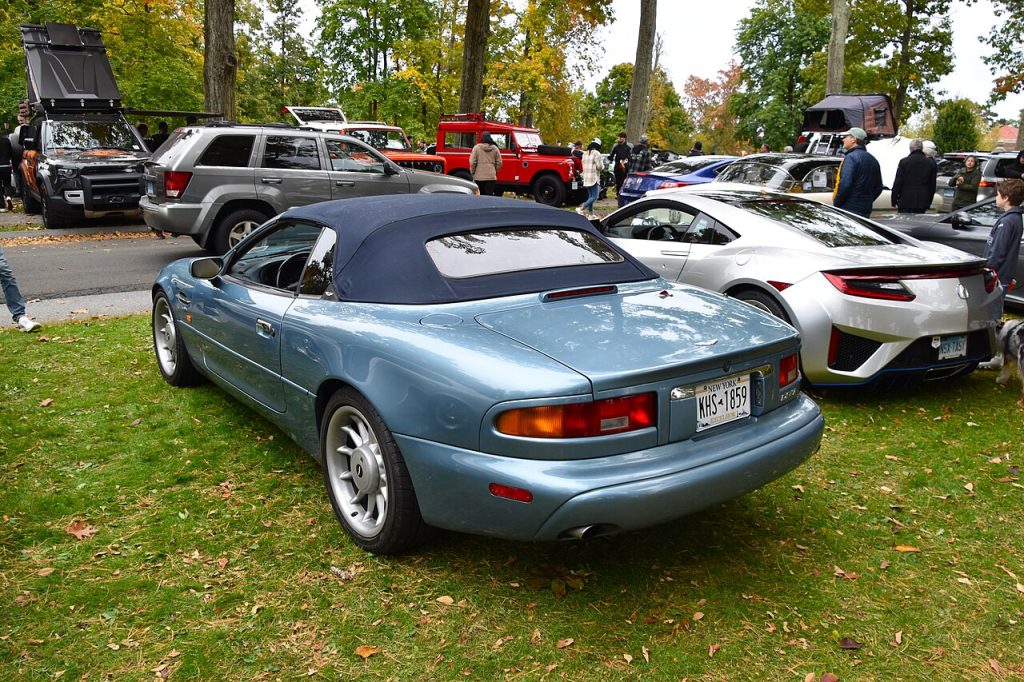
The supplied photograph shows a source-identified 1997 six-cylinder DB7 Volante in New Canaan in 2022. It is a family reference, not an authenticated Neiman Marcus edition image. Its visible caption makes that distinction and links photographer, Commons source, licence and resizing disclosure. An exact-edition licensed photograph remains a publication hold. Black paint or a plausible cabin view alone would not remove it. Keep original edition documents, photographs and accessory records together so a later image can be checked against the correct chassis. This gives readers a useful visual reference while preserving the verified limits of its identification.
Frequently asked questions
How many Neiman Marcus cars are reported?
Ten in Cottingham’s specialist account; a factory-certified completed register is not claimed.
Which engine generation does this concern?
The original supercharged six-cylinder DB7 Volante, rather than the later V12 Vantage.
Why use 1998 rather than the inventory’s 1999?
1998 is the documented catalogue-offering date; individual model-year or registration requires separate evidence.
Is the supplied image an exact edition photograph?
No. It is explicitly a six-cylinder Volante family reference and remains a publication hold.
Explore related Aston Martin profiles
- Aston Martin DB7 Vantage Volante Jubilee
- Aston Martin Short Chassis Volante
- Aston Martin V8 Zagato Volante
Sources
- Tim Cottingham: 1998 DB7 i6 Neiman Marcus catalogue edition, ten cars
- Aston Martin: original six-cylinder DB7 and 1996 Volante programme
Historical claims follow the linked manufacturer, archive, specialist and catalogue records, with disputed findings retained. Inspection and collecting guidance is editorial analysis. Catalogue condition and custody statements remain dated to their sources.
Photography and credit
Six-cylinder DB7 Volante family reference photographed in New Canaan in 2022. This is not an authenticated Neiman Marcus edition image. An exact-edition licensed photograph remains a publication hold. Photo: Charles from Port Chester, New York / Wikimedia Commons · CC BY 2.0. Wikimedia thumbnail resized from original; no cropping or colour changes.
Why this machine matters
The Neiman Marcus DB7 was a US catalogue edition of the six-cylinder Volante, offered in 1998. The specialist account reports ten cars, with a coordinated black exterior and distinctive trim package. Its retail-offering date, engine generation and reported count need clear scope; an exact edition photograph remains outstanding.
Built in limited numbers
The specialist account states ten cars were available and describes ten built. This profile records that attribution without presenting a factory-certified completed register. Exact verified-production metadata remains unset. A catalogue allocation and a reconciled chassis census are different forms of evidence, even where a source reports the same number for both. For an individual car, confirm edition membership before relying on the rarity statement. The count concerns this retailer-associated group, not every six-cylinder Volante. Future build records could strengthen the production finding without requiring the profile to change its already explicit source scope.
Gallery
Specifications
Factory specifications may vary by model year, market and configuration.
Identity & production
- Official model
- Aston Martin DB7 i6 Volante Neiman Marcus Edition
- Base model
- DB7
Powertrain & performance
- Engine
- Original supercharged straight-six DB7 programme; present installed specification individually verified