2015 Peugeot 2008 DKR Works Programme
Explore the 2008 DKR Works Programme: history, verified identity, specification references, rarity evidence and real credited photos.
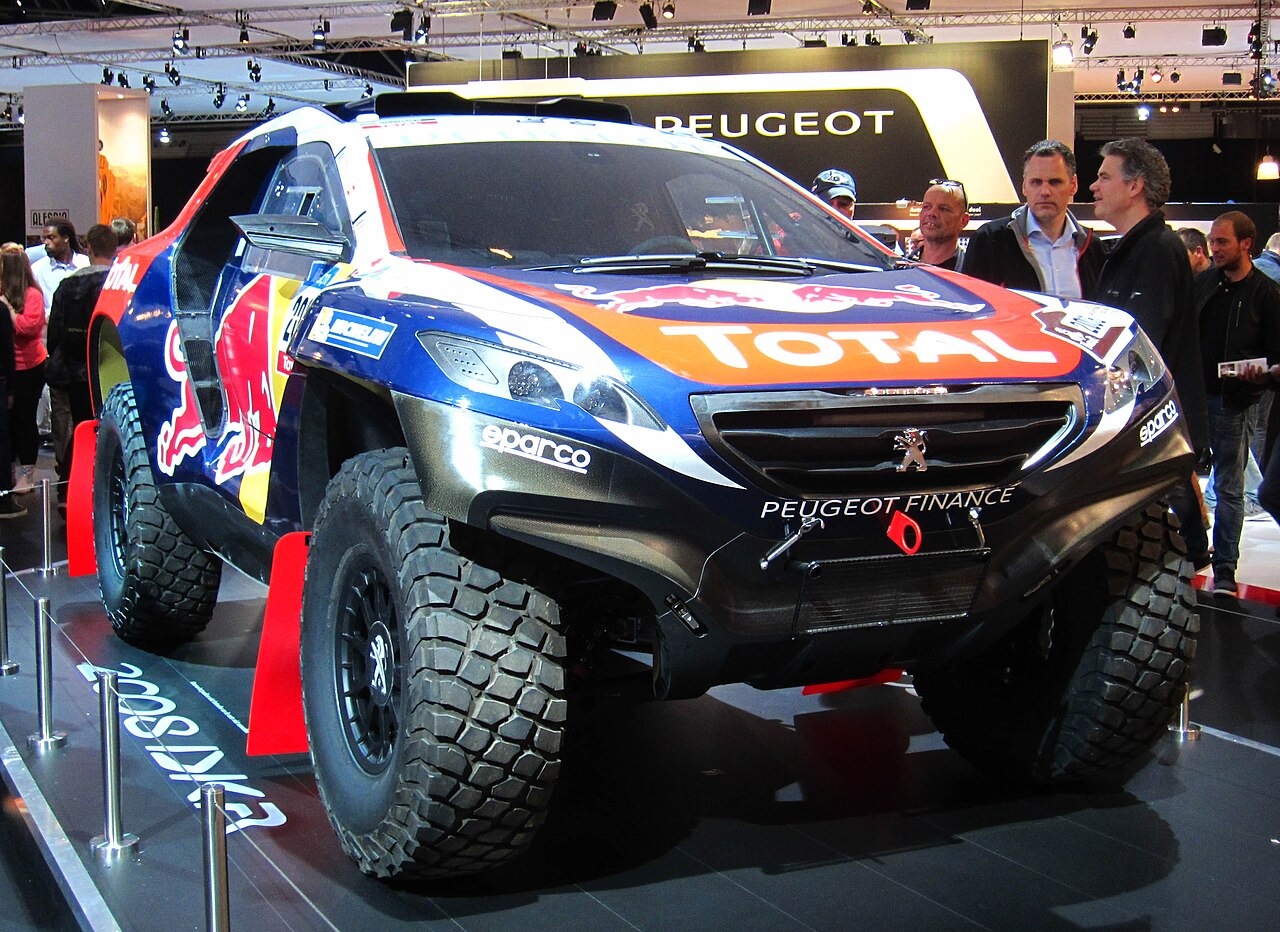
The Peugeot 2008 DKR marked the brand’s return to Dakar in 2015 with a purpose-built two-wheel-drive rally-raid prototype. Its programme developed into the revised DKR16 and achieved Dakar victory with Stéphane Peterhansel and Jean-Paul Cottret in 2016. Those dates belong together but should not be collapsed: the debut car did not win the 2015 event. This profile follows the 2008 DKR programme while keeping the later 3008 DKR identity separate.
A production name on a purpose-built prototype
Peugeot’s pre-Dakar presentation described the 2008 DKR with two-wheel drive, 37-inch tyres and long-travel suspension. The shared name connected it to the crossover range, but it was a competition machine rather than a lightly modified customer SUV. This is the most useful starting point for identification. A road 2008’s body, drivetrain or production total cannot be imported into the rally-raid car’s technical record simply because both carry the same number.
Peugeot: original 2008 DKR pre-Dakar specification
What changed for the DKR16
The September 2015 factory release describes a longer, wider and lower evolution for the 2016 Dakar, with changes to bodywork, suspension and the diesel powertrain. It gives a 350 PS reference for that DKR16. The programme therefore needs dated specifications. Applying a later output figure to the earlier debut configuration would conceal the development work that made the second campaign different. The 2015 and 2016 phases remain within one coherent 2008 DKR programme here.
The 2016 Dakar victory
Peugeot’s January 2016 result account identifies Peterhansel and Cottret as the winning crew and notes that three of the four entered Peugeots reached the finish. These are event results, not a factory construction census. The distinction matters because entries, spares, development vehicles and later rebuilds need not form the same set of physical objects. A count of starters or finishers is useful sporting information, but it cannot establish the total number of chassis manufactured.
Peugeot: original 2008 DKR pre-Dakar specification
Reading a photograph across development phases
The selected picture is identified as a 2015 2008 DKR. It illustrates the programme’s earlier appearance rather than the 2016 winning run. Preserving that caption makes the image useful without asking it to prove the whole programme history. For comparisons, use dated side views and original captions, and avoid assuming that every car wearing the team’s familiar colours has the same bodywork, engine state or specific competition record.
Peugeot: DKR16 development for Dakar 2016
From programme history to a chassis file
A particular works or customer-held survivor needs its own chain of evidence: team identity, entry records, major rebuilds and ownership history. Race numbers can change, and replacement assemblies may alter the technical configuration without changing the story told by an exterior livery. Record those changes openly. The later 3008 DKR has its own profile, so a shared driver, sponsor or broad two-wheel-drive philosophy does not create duplicate coverage of the same named programme.
Specifications and identity reference
| Reference debut | Dakar 2015 |
|---|---|
| Vehicle type | Purpose-built rally-raid prototype |
| Drive concept | Two-wheel drive |
| Engine family | Twin-turbo V6 diesel |
| DKR16 period output | Factory September 2015 reference: 350 PS |
| Key result | 2016 Dakar victory: Peterhansel / Cottret |
| Included phase | 2008 DKR and DKR16 development |
| Separate successor | 3008 DKR / DKR Maxi |
Rarity and production scope
Verified 2008 DKR works programme, including DKR16 evolution and its 2016 Dakar victory. The 2015 debut and 2016 result are distinct. Event-entry counts are not a completed chassis census; no road-production total is assigned.
This is an Archive record. Concepts, restored heritage vehicles, works cars and competition programmes are not added to customer road-production totals. A programme profile does not establish how many physical chassis were made, and repeated exhibition appearances do not create additional vehicles.
What the photograph represents
Peugeot 2008 DKR identified as the 2015 car. This earlier programme illustration is not a photograph of the 2016 Dakar-winning run or proof of a particular winning chassis identity.
Related Peugeot heritage profiles
Frequently asked questions
Did the 2008 DKR win Dakar on its 2015 debut?
No. The winning reference in this profile is the evolved programme’s 2016 result.
Do four entries prove four chassis were built?
No. A particular event’s entries do not reconcile the whole development and construction programme.
What is the production-count boundary for this profile?
Verified 2008 DKR works programme, including DKR16 evolution and its 2016 Dakar victory. The 2015 debut and 2016 result are distinct. Event-entry counts are not a completed chassis census; no road-production total is assigned.
Sources and further reading
- Peugeot: original 2008 DKR pre-Dakar specification
- Peugeot: DKR16 development for Dakar 2016
- Peugeot: January 2016 Dakar result
Research checked 16 October 2026. Linked factory, heritage and specialist-register records support the specifically attributed claims. Photographic descriptions identify the illustrated subject. Design analysis and suggested authentication steps are editorial interpretation.
Built in limited numbers
Verified 2008 DKR works programme, including DKR16 evolution and its 2016 Dakar victory. The 2015 debut and 2016 result are distinct. Event-entry counts are not a completed chassis census; no road-production total is assigned.
Gallery
Specifications
Factory specifications may vary by model year, market and configuration.
Identity & production
- Official model
- Peugeot 2008 DKR Works Programme
Sources and verification
Source citations are being prepared for this profile.