2011 Nissan PIVO 3
Explore the PIVO 3: history, verified identity, specification references, rarity evidence and real credited photos.
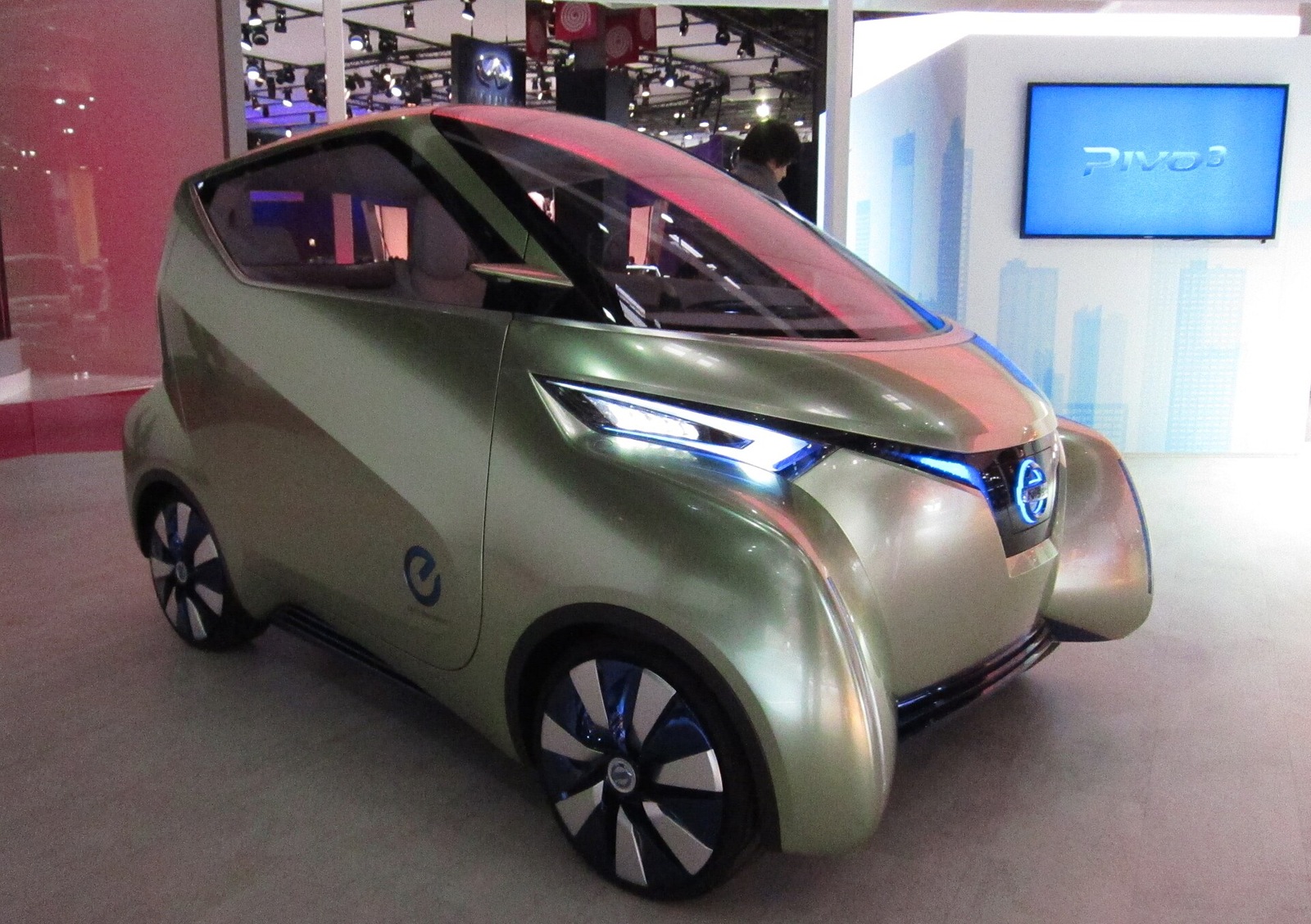
PIVO 3 brought Nissan's small electric commuter studies closer to an imagined urban transport system in 2011. Its three-seat body, central driving position and highly manoeuvrable wheel arrangement were accompanied by a proposal for automated parking and charging in equipped facilities. It is a distinct physical concept from Pivo and Pivo 2. The earlier cars' rotating-cabin features should not be copied into this third study without specific evidence.
The third Pivo direction
Nissan introduced PIVO 3 for the 2011 Tokyo Motor Show and arranged a public preview at its headquarters gallery. The exhibit followed two earlier studies, but it was presented with a more practical-looking commuter body and an infrastructure-focused purpose. Keeping each generation separate makes the development sequence useful. The shared family name does not establish that all three cars used the same cabin mechanism, controls or electric-drive arrangement.
Nissan: 2011 Tokyo show overview and PIVO 3
Three seats in a small footprint
The manufacturer's show account describes a body less than three metres long with the driver centrally positioned. This changes the relationship between vehicle width and cabin accommodation compared with an ordinary two-front-seat layout. It is a design proposition, not a customer seating certification. A photograph of the exhibit can show the arrangement while leaving production crash approval, access regulations and everyday operating practicality outside the evidence available here.
Turning within confined streets
In-wheel motors, wide steering angles and a narrow rear track were intended to let PIVO 3 turn on a four-metre-wide road. Nissan also described the rear wheels following the front without a body-side scraping gap. These claims concern a particular concept architecture. They should not be confused with Pivo 2's separately described ninety-degree wheel movement or assumed to represent a capability fitted to every Nissan city car.
Nissan: 2011 Tokyo show overview and PIVO 3
Parking as a connected service
The automated valet proposal depended on suitably equipped parking infrastructure. Nissan envisaged the car finding a space, charging and returning when called by a smartphone. The infrastructure condition is essential: this was not a promise of unrestricted driverless operation anywhere. The concept is best understood as an early exploration of a vehicle working with its surroundings, rather than evidence of a retail autonomous service being available in 2011.
Nissan: 2011 Tokyo show overview and PIVO 3
An archive record with clear boundaries
Dated manufacturer photographs and exhibit material establish the physical PIVO 3 identity. Later displays can illustrate it without being relabelled as the original Tokyo presentation. A surviving exhibit would need manufacturer records to establish its individual history and operating state. The selected documentation does not provide an audited count of completed show chassis, so repeated images, renderings and scale models are not treated as additional vehicles.
Specifications and identity reference
| Show reference | 2011 Tokyo Motor Show |
|---|---|
| Seats | Three; central driving position |
| Body length | Under three metres, manufacturer description |
| Drive technology | In-wheel electric motors |
| Manoeuvring claim | U-turn on a four-metre-wide road |
| Parking concept | Automated valet in equipped facilities |
| Connected function | Smartphone call-back proposal |
| Production status | Physical concept; no completed census assigned |
Rarity and production scope
Verified physical PIVO 3 concept. Automated functions are manufacturer proposals conditional on supporting infrastructure. The original Pivo and Pivo 2 remain separate profiles and no customer road-production total is assigned.
This is an Archive record. Concepts, restored heritage vehicles, works cars and competition programmes are not added to customer road-production totals. A programme profile does not establish how many physical chassis were made, and repeated exhibition appearances do not create additional vehicles.
What the photograph represents
Nissan PIVO 3 physical concept photographed at a later show. It is distinct from the rotating-cabin Pivo and Pivo 2 studies.
Related Nissan heritage profiles
Frequently asked questions
Does PIVO 3 automatically park anywhere?
Nissan’s proposal specifically depends on equipped parking infrastructure.
Is this another name for Pivo 2?
No. Nissan presented it as a separate third-generation concept in 2011.
What is the production-count boundary for this profile?
Verified physical PIVO 3 concept. Automated functions are manufacturer proposals conditional on supporting infrastructure. The original Pivo and Pivo 2 remain separate profiles and no customer road-production total is assigned.
Sources and further reading
Research checked 16 October 2026. Manufacturer records support identity and the specifically attributed historical figures. Photographic descriptions identify the illustrated subject. Design analysis and suggested authentication steps are editorial interpretation.
Built in limited numbers
Verified physical PIVO 3 concept. Automated functions are manufacturer proposals conditional on supporting infrastructure. The original Pivo and Pivo 2 remain separate profiles and no customer road-production total is assigned.
Gallery
Specifications
Factory specifications may vary by model year, market and configuration.
Identity & production
- Official model
- Nissan PIVO 3
Sources and verification
Source citations are being prepared for this profile.