2011 Nissan ESFLOW
Explore the ESFLOW: history, verified identity, specification references, rarity evidence and real credited photos.
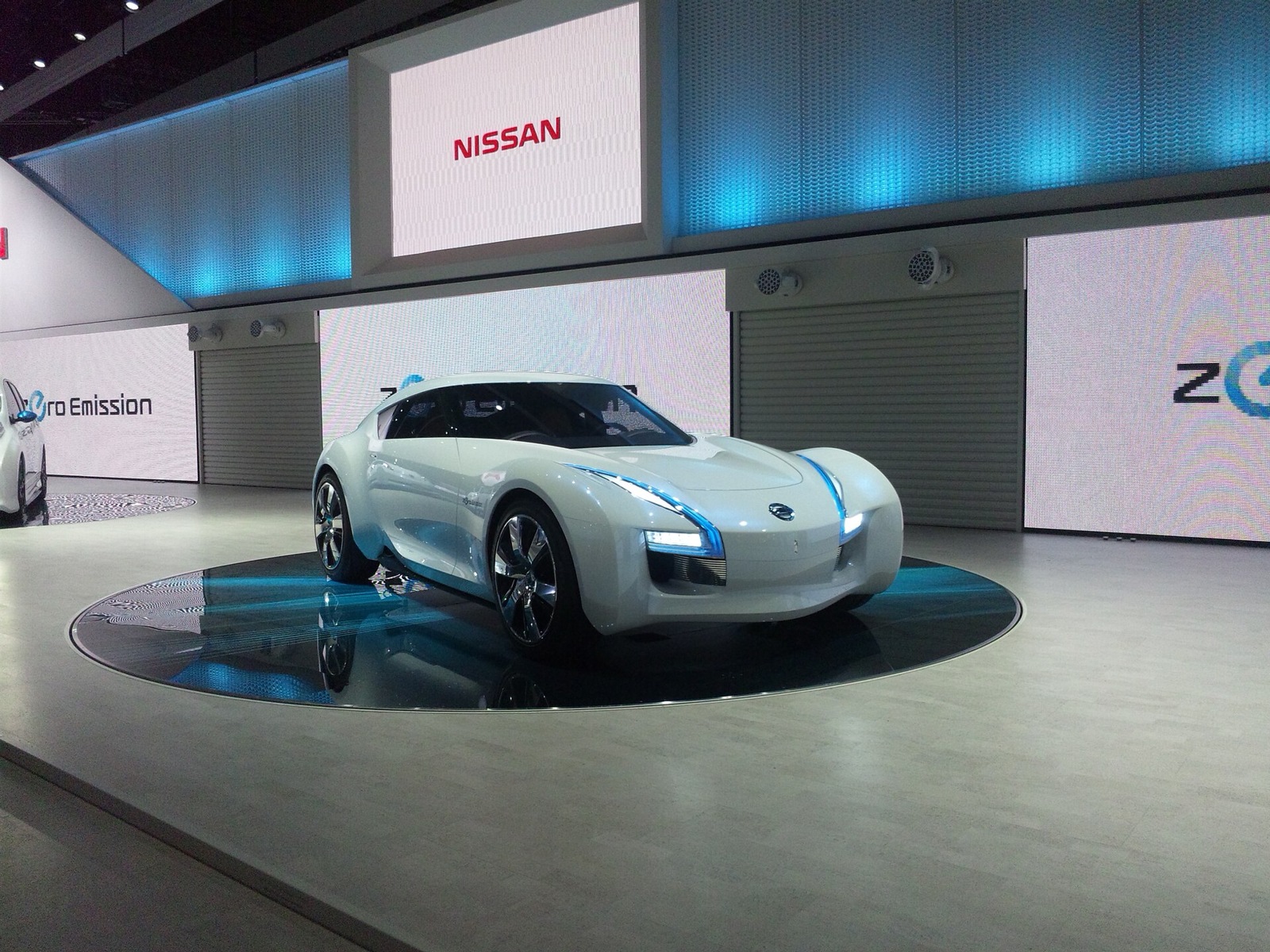
The Nissan ESFLOW proposed an electric sports car designed around its powertrain from the outset. Revealed for the 2011 Geneva Motor Show, the two-seat concept used independently controlled rear electric motors and carefully located battery packs. It belongs to Nissan's experimental sports-car history, rather than the production Z range or an electric conversion of a customer coupe. Its published acceleration and range remain manufacturer concept claims with their original context.
An electric sports-car brief
ESFLOW appeared while Nissan was establishing the production LEAF, but its design question was different: how could electric architecture serve a compact sports car? Nissan described a purpose-built vehicle rather than a combustion model converted after development. That distinction makes the physical concept valuable as an exploration of packaging. It should not be treated as evidence that Nissan offered a retail ESFLOW or approved a series of customer conversions.
Nissan: original ESFLOW description
Two motors driving the rear wheels
Each rear wheel had its own motor, allowing independent control rather than relying on one conventional mechanical differential. Nissan located the motors around the rear axle and arranged laminated lithium-ion packs to concentrate mass effectively. The relationship between components matters more than assigning an unverified battery capacity. It illustrates how an electric sports-car layout can differ from both a front-drive hatchback and a conventional front-engine coupe.
Structure, seating and visibility
The manufacturer described an aluminium chassis and composite body, with structural protection behind the occupants supporting a clearer forward view. Seats were shaped into the rear bulkhead, while steering and pedals adjusted to the driver. These are concept-specific packaging ideas. They cannot be copied into a production LEAF specification merely because ESFLOW used related battery technology, and photographs alone do not establish how the mechanisms operate today.
Nissan: original ESFLOW description
Reading the performance claims correctly
Nissan projected acceleration to 100 km/h in under five seconds and travel beyond 240 kilometres on a charge. Its Tokyo show material later attached an LA4-mode context to the range. Those figures describe a manufacturer demonstration proposition, not a contemporary independent road test or current battery-health assessment. They also should not be converted into a modern regulatory range figure without a valid test comparison.
Nissan: Tokyo show technical context
The physical concept and its record
Identify ESFLOW through Nissan's dated unveiling material and photographs of the actual exhibit. Later show appearances should retain their venue and date rather than being called the Geneva debut. For a surviving object, manufacturer custody and exhibition records would establish continuity more reliably than a generic concept-car caption. The available record confirms the programme without providing a complete worldwide chassis census, so no exclusive one-car total is assigned.
Specifications and identity reference
| Debut reference | 2011 Geneva Motor Show |
|---|---|
| Configuration | Two seats; rear-wheel drive |
| Motors | Two; independently driving the rear wheels |
| Structure | Aluminium chassis; composite body |
| Battery description | Laminated lithium-ion packs |
| Acceleration claim | 0–100 km/h in under five seconds |
| Range claim | Over 240 km; manufacturer LA4 reference |
| Status | Physical concept; no audited exhibit census |
Rarity and production scope
Verified physical ESFLOW concept. Manufacturer performance projections are attributed and are not current independent test results. No road-production or exclusive worldwide prototype total is assigned.
This is an Archive record. Concepts, restored heritage vehicles, works cars and competition programmes are not added to customer road-production totals. A programme profile does not establish how many physical chassis were made, and repeated exhibition appearances do not create additional vehicles.
What the photograph represents
Nissan ESFLOW physical concept photographed at a later display; appearance reference, not an independent test of its projected range or acceleration.
Related Nissan heritage profiles
Frequently asked questions
Was ESFLOW a converted 370Z?
Nissan describes a purpose-built electric sports-car concept, rather than an adapted production combustion car.
Is the range a modern certified customer figure?
No. It is a manufacturer concept claim with an LA4-mode reference.
What is the production-count boundary for this profile?
Verified physical ESFLOW concept. Manufacturer performance projections are attributed and are not current independent test results. No road-production or exclusive worldwide prototype total is assigned.
Sources and further reading
Research checked 16 October 2026. Manufacturer records support identity and the specifically attributed historical figures. Photographic descriptions identify the illustrated subject. Design analysis and suggested authentication steps are editorial interpretation.
Built in limited numbers
Verified physical ESFLOW concept. Manufacturer performance projections are attributed and are not current independent test results. No road-production or exclusive worldwide prototype total is assigned.
Gallery
Specifications
Factory specifications may vary by model year, market and configuration.
Identity & production
- Official model
- Nissan ESFLOW
Sources and verification
Source citations are being prepared for this profile.