2010 Citroën Lacoste Concept
Explore the 2010 Citroën Lacoste Concept: sourced history, design, specifications and rarity evidence, with credited documentary photos.
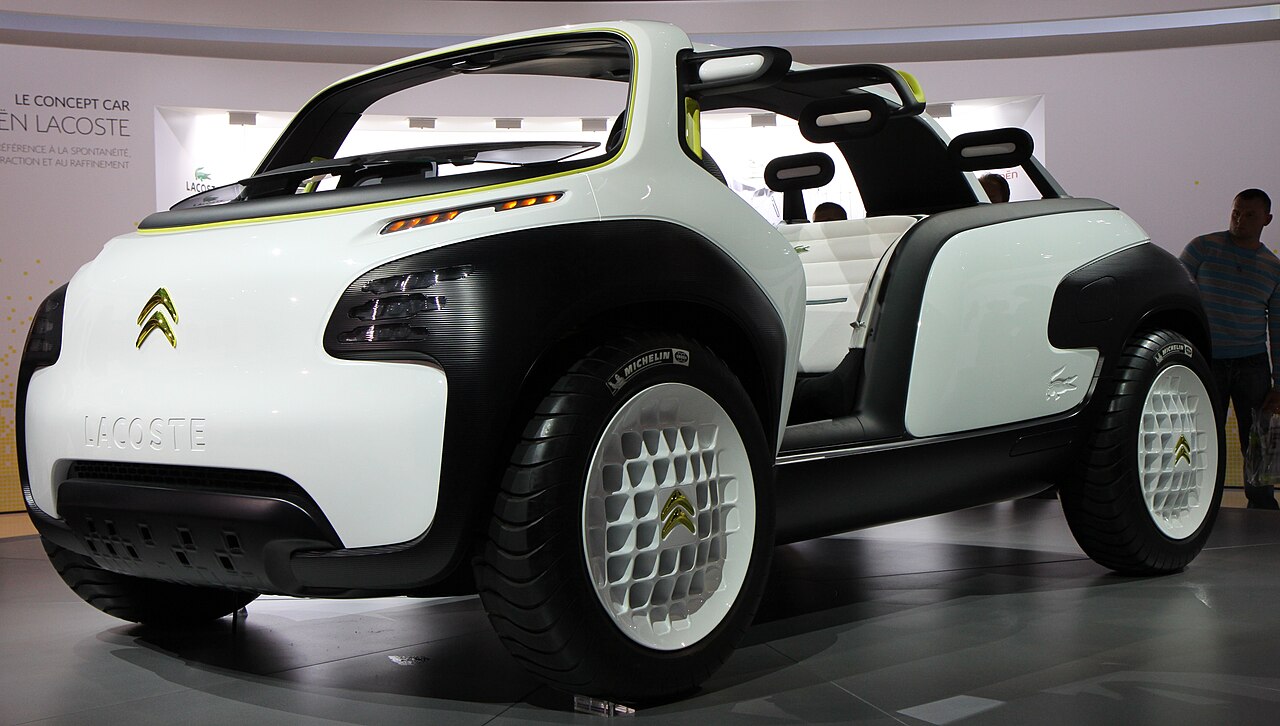
The 2010 Citroën Lacoste Concept turns a collaboration with the clothing brand into a complete visual vehicle proposal. Its white body, exposed passenger space and bold upper frame make the leisure theme legible before the viewer notices any branding.
A collaboration expressed through an object
Citroën’s September 2010 announcement identifies the joint Lacoste project and places its brief at the intersection of motoring, leisure, fashion and sport. The profile concerns the physical concept shown that year. It is not a production special edition and does not use an unsupported one-car manufacturing total merely because one display object is visible.
A brand collaboration can be more substantial than adding a badge or a colour. This concept is interesting because the visual experience is organized around the collaboration’s theme. The open body, frame and contrasting details create a coherent proposal whose meaning can be explored through the object itself.
The Paris photograph shows the open architecture
The supplied 2010 Paris image presents a white body with dark grille and lamp sections. A prominent upper structure spans the cabin, while the sides remain open. The wheels carry an unusual repeated pattern, and small yellow accents enliven the upper frame. The exhibition hall and neighbouring visitors remain visible in the background.
The body looks deliberately simple at the front, but the opening and frame make the whole form distinctive. The contrast between the smooth white lower volume and the exposed upper space draws attention to the occupants’ environment. This interpretation is grounded in the visible design; it does not assert weather protection or driving comfort that the photograph cannot establish.
Leisure as a design theme
The concept invites the reader to consider how a vehicle can signal an informal experience through shape and exposure. Fashion and sporting references can contribute to that signal without becoming engineering specifications. A patterned wheel or a coloured rail may carry visual meaning even when the technical record says little about its mechanism.
A full archive presentation would show the seating, entry points and upper structure in detail. Those views can connect the broad leisure theme to the physical fittings. The history becomes more credible when the parts that create the experience are documented, instead of letting the collaboration name stand in for an explanation.
A natural comparison with C-Buggy
C-Buggy offers a useful earlier example of an exposed leisure-car proposition. The Lacoste concept’s white body and structured upper frame communicate a different visual character. Revolte provides a contrasting small-car study with a more enclosed, luxurious identity. The three profiles let readers explore distinct kinds of playful design.
For preservation, record colour, surface texture, trim and the unusual frame fittings carefully. Those elements are essential to understanding the collaboration. A documentary photograph with its original credit preserves a real encounter with the concept, while design and conservation records can explain how the physical object supports the theme.
Specifications and verified rarity
| Reference year | 2010 |
|---|---|
| Model / project | Lacoste Concept |
| Body / role | Open leisure concept |
| Collaboration | Citroën and Lacoste |
| Reference year | 2010 |
| Design brief | Leisure, fashion and sport |
| Body theme | Open passenger space with a prominent upper frame |
| Rarity scope | Physical Citroën × Lacoste concept announced and displayed in 2010; exact fabrication tally unset. |
| Exact manufacturing tally | Not established |
| Inventory reference | CIT-138 — Verified |
Frequently asked questions
Is it a production Lacoste trim?
No. The profile concerns the separate 2010 physical concept.
Which organizations collaborated?
Citroën and Lacoste.
Does the leisure brief establish a powertrain?
No. A design brief cannot supply an undocumented propulsion specification.
What makes the photographed body distinctive?
Its white lower body, open sides and prominent upper frame.
What rarity or archive scope is verified?
Physical Citroën × Lacoste concept announced and displayed in 2010; exact fabrication tally unset.
Who took the supplied photograph?
Thesupermat via Wikimedia Commons, under CC BY-SA 3.0. Keep the photographer, original-file link and licence credit with the image.
Related Citroën profiles
Sources and photo credits
Photograph: Thesupermat via Wikimedia Commons original file, CC BY-SA 3.0. Source photograph supplied without local cropping, retouching or text removal. A source-provided thumbnail is used where available. Citroën Lacoste concept at the 2010 Paris Motor Show.
Built in limited numbers
Physical Citroën × Lacoste concept announced and displayed in 2010; exact fabrication tally unset.
Gallery
Specifications
Factory specifications may vary by model year, market and configuration.
Identity & production
- Official model
- Lacoste Concept